

Three decades ago, China worried about losing its brightest minds to Silicon Valley. Today, Silicon Valley is beginning to ask whether it can keep them.
In the early morning of July 17, on the eve of the opening of the World Artificial Intelligence Conference, Moonshot AI released Kimi K3. Though it was launched without much fanfare, it quickly attracted global attention. With 2.8 trillion parameters, K3 became the world’s largest open-source model, ranking first on the Arena front-end programming leaderboard—the first time a Chinese model has topped the list—and surpassing Opus 4.8, which had been the world’s best just weeks earlier, on the comprehensive text leaderboard. Its API pricing is about one-third to one-half that of top-tier closed-source models. Elon Musk commented “Impressive” under a related post, and soon afterward officially announced that his company’s new model, Grok 4.5, would “potentially” surpass Kimi.
On July 27, the model weights of Kimi K3 were officially open-sourced, along with three key infrastructure technologies developed to support model training: MoonEP, FlashKDA, and AgentEnv. This is the world’s first open-source 3-trillion-parameter model and the largest open-source model by parameter count to date. The open-sourcing of K3 quickly spread across the global developer community.
And the figure behind the sensation is Yang Zhilin, the creator of Kimi K3. A graduate of Tsinghua University’s undergraduate program, he went on to earn a Ph.D. from Carnegie Mellon University under the supervision of Russ Salakhutdinov, Apple’s first Director of AI. One question inevitably arises: why did such an exceptional AI talent, armed with top-tier academic training in the United States and offers from elite Silicon Valley firms, choose not to stay in America?
1. From Silicon Valley’s Classroom to China’s AI Frontier
Yang Zhilin’s PhD advisor, Russ Salakhutdinov, recalled in an interview that when Yang was graduating, he said to him: “If I don’t do this, I will definitely regret it later.” In Russ’s view, a student of Yang’s exceptional ability would typically choose to stay in academia or join top tech companies like Google or Apple after graduation. Apple even reached out proactively, offering to place him in its Beijing office. But Yang still resolutely returned to China to start his own business in 2023.
“Starting a company is full of risks; most people are not willing to take that risk,” Russ said. But he also noted that Yang is a rare multidisciplinary talent—able to propose highly innovative research ideas, possess outstanding coding skills, and demonstrate remarkable business acumen.
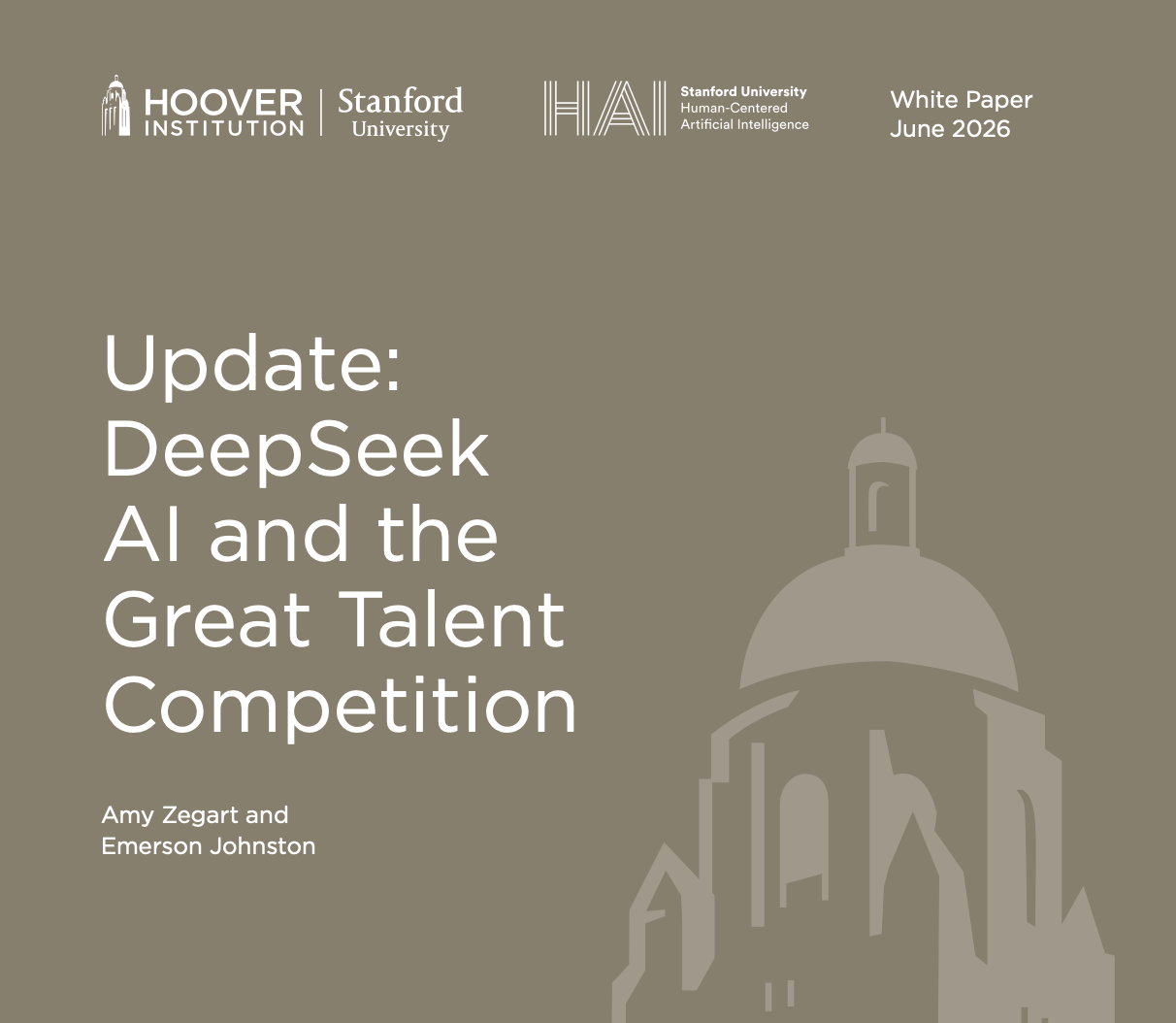
Yang Zhilin’s story is not an isolated case. In early 2026, former OpenAI researcher Yao Shunyu joined Tencent, and former Google DeepMind Vice President of Research Wu Yonghui joined ByteDance. A LinkedIn survey shows that over the past year, more than 30 leading AI researchers have returned to China from the United States, compared with only a single-digit number the previous year. A report from Stanford University’s Hoover Institute traced the 356 researchers behind seven core DeepSeek papers and found that 80 of those trained in the U.S. have mostly returned to China.
In the past, the typical path for Chinese AI talent staying in the U.S. was: build an academic foundation domestically, pursue a Ph.D. in the U.S., enter a top-tier laboratory to delve into a specialized area, and eventually become an expert in a particular technical direction—but the researcher could only control one link in the R&D chain, without being able to lead the full decision-making process of product definition, capital allocation, and scenario deployment. At Moonshot AI, however, Yang Zhilin has always been the definer of the technical roadmap. As the *Wenhui Review* put it: “The new generation of top AI talent values a platform that allows them to define technical routes, lead product directions, and realize technological value. Today’s China provides precisely such a platform.”
2. AI Competition Has Become Ecosystem Competition
The differences in AI talent development ecosystem between China and the U.S., and the shifting focus of AI competition, are the underlying reasons behind this talent flow.
In terms of scale, China produces approximately 5 million STEM graduates each year, compared to about 500,000 in the U.S. Researchers at the Carnegie Foundation point out that in recent years, China has trained more top-tier AI researchers, while the number of such talents going to the U.S. has been declining. In terms of career paths, fresh graduates in China can directly enter top companies like DeepSeek to participate in large-model fine-tuning, whereas their American counterparts often need to accumulate many years of experience before qualifying for positions at leading AI labs.
The Hoover Institution report shows that among the 356 researchers at DeepSeek, 145 (53.5%) had never been affiliated with any institution outside China throughout their entire careers. Among the 31 core researchers, 10 had never left China. This indicates that China’s domestic pipeline is already capable of independently producing core contributors to frontier models. Amy Zegart, a senior fellow at the Hoover Institution, has shown that China’s domestic talent cultivation system is improving significantly. At the same time, the U.S. shows a declining appeal to in the new generation of China’s top talent, as fewer top Chinese researchers now see the U.S. as a necessary path.
Meanwhile, the industrial ecosystem has become a new source of attraction for talent.
The development of frontier AI models has changed the meaning of innovation. In previous technological revolutions, individual breakthroughs often came from isolated research laboratories. But large language models require a much broader ecosystem: computing infrastructure, engineering talent, massive application scenarios, industrial supply chains, and a large developer community. In this new environment, the location of innovation is no longer determined only by the quality of research institutions. It increasingly depends on whether a country can provide a complete ecosystem for transforming algorithms into products.This shift helps explain why researchers and entrepreneurs such as Yang Zhilin chose China as the base for their AI ventures.
Yang’s decision was not simply a personal choice between two countries. It reflected a broader transformation in the global AI landscape. The United States continues to dominate many critical foundations of AI development, including advanced semiconductor design, cloud computing infrastructure, and some of the world’s leading research institutions. Companies such as OpenAI, Anthropic, and Google DeepMind remain at the forefront of frontier model development. However, China has developed different advantages. It possesses the world’s largest digital consumer market, extensive manufacturing capabilities, a deep pool of engineering talent, and an unusually rapid commercialization cycle. In other words, the two countries have developed different innovation models.
The American model has historically been built around frontier breakthroughs and proprietary technologies. Companies invest billions of dollars into developing the most powerful models and seek to protect them through intellectual property, exclusive access, and commercial platforms. The Chinese model, by contrast, has increasingly emphasized rapid iteration, open ecosystems, and large-scale deployment. Chinese AI companies often compete not only by creating powerful models but also by distributing them widely among developers and enterprises.
This difference reflects two different understandings of how technological advantage is created. In Silicon Valley, the key question has often been: Who can build the most powerful model? In China’s AI ecosystem, the question is increasingly: Who can build the largest ecosystem around the model? The rise of Moonshot AI, DeepSeek, and Alibaba’s Qwen models demonstrates this alternative pathway. Instead of competing through closed technological superiority, Chinese companies are attempting to expand influence by lowering barriers to adoption. The implication is significant: the future AI race may not be determined by a single company possessing the strongest algorithm, but by the country capable of building the most complete innovation network.
According to the data, the gap between the U.S. and China is narrowing in terms of model capabilities. According to Stanford University’s *2026 AI Index Report*, as of March 2026, the comprehensive lead of the U.S. best model over China’s best model was only 2.7%, whereas in May 2023, that gap stood between 17.5% and 31.6%. Nathan Lambert, a U.S. AI researcher who has visited Moonshot AI, estimates that the capability gap between top Chinese and U.S. models has shortened from 6–9 months to 3–5 months.
3. Open Source Has Become China’s Strategic Advantage
One of the most striking characteristics of China’s emerging AI ecosystem is its enthusiasm for open-source and open-weight models.
According to the spring 2026 report from the AI open-source community Hugging Face, Chinese open-source models accounted for 41% of the platform’s monthly and total downloads. Yang Zhilin’s PhD advisor Russ commented: “The great thing about Kimi is that anyone can use this model for free and run it locally. Zhilin could have chosen not to open-source it—after all, it’s his model, and its outstanding performance alone would have earned people’s praise. But he ultimately chose open source, which elevated his model to an entirely new level.” This trend has been particularly visible among a younger generation of Chinese AI entrepreneurs, including Yang Zhilin of Moonshot AI and Liang Wenfeng of DeepSeek. At first glance, this appears surprising. In the traditional technology industry, the most valuable assets are usually closely guarded intellectual property. The stronger the technology, the stronger the incentive to keep it proprietary.
Yet AI has introduced a different competitive logic. For Chinese companies operating under constraints such as limited access to advanced chips and intense competition with established American technology giants, openness can become a strategic tool rather than merely an ideological preference. Open-source models allow companies to build a large external ecosystem quickly. By releasing models to developers, researchers, and businesses, companies can encourage thousands of users to improve, adapt, and deploy their technologies. The model becomes not only a product but also an infrastructure. This strategy resembles the development of Linux and other open-source software ecosystems. Instead of controlling every application directly, the creator seeks influence by becoming the foundation upon which others build.
Thus, a distinct competitive strategy emerges. As Chinese companies do not always enjoy the same advantages as their U.S. counterparts in computing resources and global market reach, driving adoption becomes a critical strategy. An open model can offset hardware constraints by attracting more developers, generating more applications, and creating faster feedback loops.
Therefore, China’s open-source AI movement is a rational response to the competitive environment. By sharing, a company may lose exclusive control over its model, but gain influence over the ecosystem surrounding it. This is why the next generation of Chinese AI entrepreneurs, many of whom grew up in the era of internet and open-source software, increasingly view openness not as a weakness but as a source of strategic advantage.
Another interesting point worth noting is that research related to open-source models can be openly and synchronously transformed into research findings by researchers, whereas closed-source models cannot generate such findings due to the need to protect company secrets. This provides a certain incentive for the developers of open-source models.
The story of Yang Zhilin and Kimi is therefore not only about one entrepreneur or one model. It reflects a deeper transformation in global technological competition.
For decades, the dominant narrative of innovation was centered on Silicon Valley’s ability to attract global talent. The United States benefited from a powerful combination of elite universities, venture capital, research institutions, and immigrant entrepreneurs. China, on the other hand, was often described as facing severe brain drain.
Today, the tables have turned. For AI innovators, a world-class laboratory is no longer enough. Success depends on access to engineering talent, industrial partners, a vast user base, rapid commercialization channels, and an ecosystem capable of transforming research breakthroughs into market-ready products.
And China is no longer trailing behind.
Editor: Zhao Yiwen
https://www.36kr.com/p/3863506566419457
https://hoover-s3-website.s3.us-west-2.amazonaws.com/s3fs-public/research/docs/WhitePaper_Hoover_HAI_DeepSeek_FINAL%203.pdf
https://www.ithome.com/0/981/126.htm
https://news.ifeng.com/c/8uyGHCFbWFF
https://baijiahao.baidu.com/s?id=1871426697913765923&wfr=spider&for=pc
https://www.ft.com/content/4730ad91-66aa-477c-9246-6d946afb0c8c?syn-25a6b1a6=1