



On August 6, The Economist promoted a new article with a line designed to travel: “Superstitious Chinese mayors are running their cities on feng shui—and hampering economic growth.”[1]
It is a good headline. It has China, superstition and a quantifiable economic cost. It also tells only half the story.
The research that the Economist article primarily relied on is actually much more interesting than the article itself. The paper, by Justin Jihao Hong and Yuheng Zhao, finds that Chinese counties located in directions considered inauspicious to their prefectural mayors recorded roughly 2–3 percent lower GDP. The apparent mechanism was not mystical. Mayors had influence over land, infrastructure and major projects. When a county sat in the wrong direction, well, it received less of them.[2]
China calls this superstition. The Communist Party formally prohibits it and can punish officials for practicing it. Yet apparently it existed, survived ideological training and caused measurable damage. The Party cracked down on it repeatedly, producing quite an unexpected result.
Now consider the United States. American officials do not usually consult feng shui masters before approving an industrial park. But some do make decisions about war, territory and foreign aid in a political environment shaped by claims about biblical prophecy, divine covenants and the end times. These ideas are protected as religion. They are organized through churches, advocacy groups, voter networks and political committees. They can help a politician, punish one, or make a policy that looks unpopular nationally remain very safe inside a party.
That does not mean Christianity is feng shui with a better fundraising operation. It means the same analytical question should apply to both: what happens when a claim that cannot be publicly tested using scientific methods becomes a reason for exercising public power?
Why the comparison is fair——and where it stops
Feng shui and evangelical Christianity are plainly not equivalent traditions. Feng shui, at least for our purpose here, is a loose collection of spatial and cosmological practices. Evangelical Christianity is a large, diverse religion containing theology, moral teaching, community life and sharply competing political positions. Many evangelicals opposed the Iraq war, support Palestinian rights or have no interest in end-times politics.
The comparison is therefore not between the traditions as wholes. It is between two specific uses of supernatural claims inside government.
In the Chinese case, the claim is that a direction can be personally inauspicious and that projects located there carry special risk. In the American cases examined here, the claims include that a war satisfies a divinely grounded theory of justice, or that God assigned a particular territory to a particular people. Both claims reach beyond evidence available to citizens who do not share the belief. Both can alter how officials treat land, money and human life. And in both cases, people who do not share the premise still bear the result.
If feng shui deserves scrutiny when it affects a highway or industrial park, biblical prophecy deserves the same scrutiny when it affects a border, an arms package or a war. That is not hostility to religion. It is equal treatment of public power.
There is a linguistic trap here. “Superstition” is often the name a powerful society gives to somebody else’s metaphysics. China draws a line between Marxist belief and “feudal superstition”; American courts generally refuse to rank religions by truth, with caveats of course. However, that aside, the useful question for the rest of us is simpler: how does a private belief acquire a public budget?
China’s 3 percent directional tax
The Hong and Zhao paper uses the Chinese zodiac and feng shui rules to assign each prefectural leader a set of personally inauspicious directions. The authors then ask whether subordinate counties located in those directions perform differently while that leader is in office.
The result is unusually concrete. A county in a mayor’s inauspicious zone had GDP roughly 2–3 percent lower. Industrial and mining land supply fell by about 25 percent; public-goods and transport investment also declined. Across roughly 1.8 million firm-year observations, removing the bias implied a relative productivity gain of about 1.4–2.4 percent.[2]
About 5.8 percent of county-years were exposed. The result also did not appear across every powerful office: the corresponding estimate for the local prefectural Party secretaries was statistically insignificant.
That difference matters. In the authors’ account, mayors are especially involved in economic administration. Large projects—industrial parks, mines, highways—often require both county and prefectural approval. A mayor does not need to write “bad feng shui” on a rejection memo. He only needs to be slightly less enthusiastic about the marginal project, week after week, until a small personal bias becomes a visible geographic pattern.
This is why the study is more than a quirky China paper. It catches private belief entering public policy at the exact point where formal evidence runs out and discretion begins.
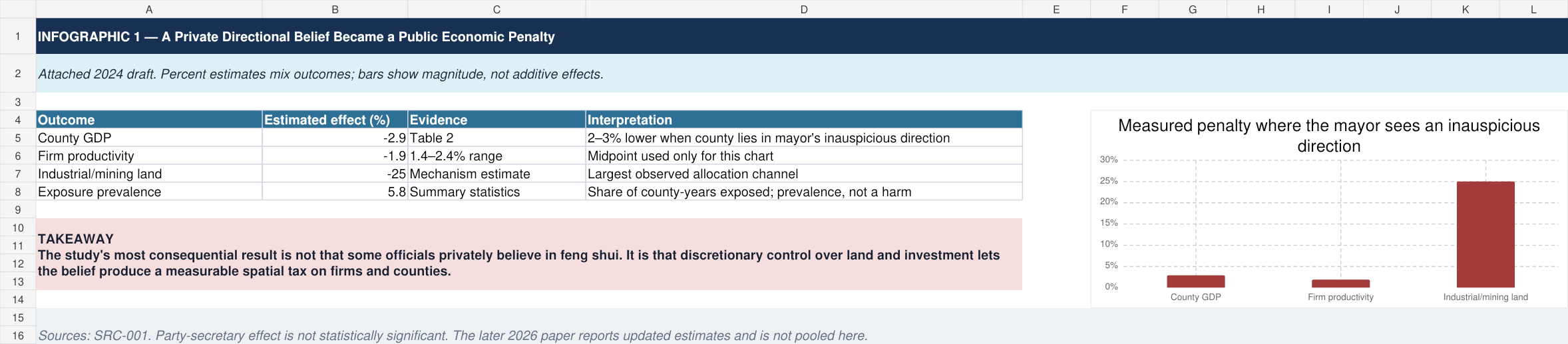 Figure 1. Hong and Zhao’s principal economic estimates (2024).
A 2007 survey of 900 county-level officials across 17 regions found that only 47.6 percent rejected all four superstitious propositions presented to them; 52.4 percent accepted at least one.[3] Unless you genuinely and literally believe there’s some truth to the feng shui method, then one must admit, that Hong and Zhao’s paper shows a modern bureaucracy can contain plenty of premodern reasoning.
The later, June 2026 version of the paper reports somewhat different headline estimates—around 2 percent lower GDP, 6 percent lower firm entry and 4 percent lower productivity—and estimates an aggregate loss of at least 0.1 percent of GDP per year.[4] Those numbers should not be mixed casually with the 2024 version because a number of other revisions were made as well, but the basic result survives: when officials possess enough discretionary economic power, idiosyncratic belief can become an economic variable.
China can police belief. That is not the same as defeating it
China has one obvious advantage if it wants to keep supernatural belief out of official decisions: the Communist Party does not pretend to be neutral about the worldview of its members. It goes pretty hardcore.
The Party’s 2016 rules on intraparty political life say members may not engage in “feudal superstition,” profess a religion or participate in cults.[5] The 2023 revision of the Party disciplinary regulations is even more specific. Article 70 provides sanctions for organizing superstitious activities, participating in them when that causes an adverse impact, and personally conducting them. Serious cases can lead to expulsion.[6]
That authority comes from the structure of the state. Most important officials are Party cadres, and the Party controls appointments, promotions, training and discipline. It need not persuade a separate electorate that a feng shui consultant is relevant to fitness for office. It can act through the personnel system.
Official notices have accused cadres of consulting masters, arranging feng shui projects and performing rituals to win promotions or avoid investigation. These notices usually bundle superstition with bribery and abuse of office. They show that the rule is enforceable, not how often feng shui alone produces punishment.[7]
More important, the paper itself offers a warning against taking formal discipline too seriously. The authors compare three ways of limiting the mayoral bias. The first was structural: “county empowerment” reforms gave county governments more authority over projects and budgets and allowed them to bypass prefectural leaders in some fiscal matters. In those counties, the estimated GDP penalty was almost fully offset—from a baseline of roughly 3.4 log points to an implied net effect near 0.7.
Marketization also helped. Where markets played a larger role in allocating resources, the mayor’s personal preferences mattered less. Where government intervention was heavier, the bias became stronger.
Then came the tools most associated with China’s ideological state. Surprisingly, intensive Marxist and materialist training for leaders did not produce a statistically significant reduction. Neither did exposure to central anti-corruption inspection campaigns.[2]
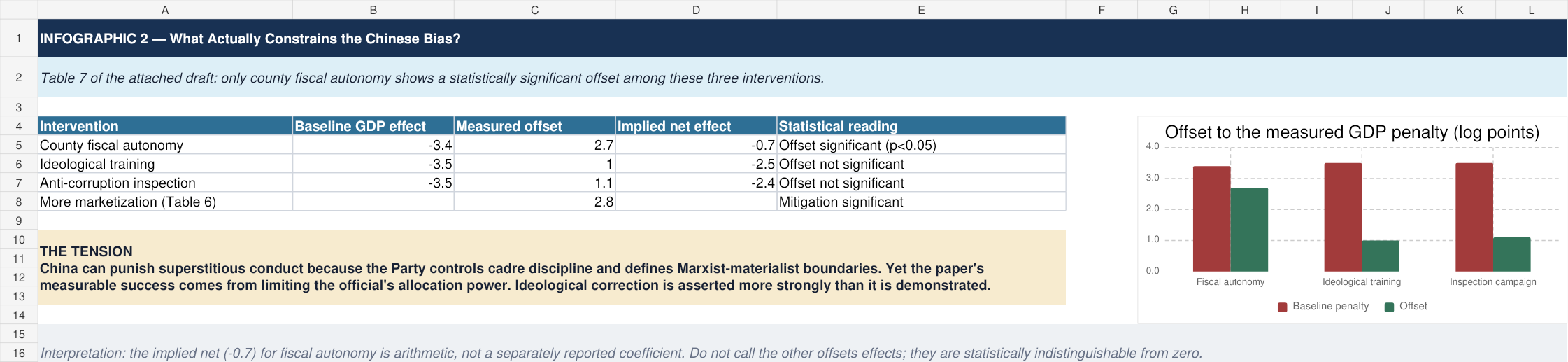 Figure 2. Structural autonomy produced the clearest measured correction.
This is the most interesting part of the story. The Party can declare feng shui incompatible with official ideology. It can investigate it and punish it. That capacity probably deters some visible conduct. But the best evidence in this study suggests that the effective remedy is much less dramatic: give the believer fewer chances to impose his belief on somebody else.
China, in other words, does not need to eliminate superstition from the official’s head. It can stop the belief at the point of implementation. County autonomy works because the mayor’s hands are no longer on every lever, and there are sufficient division of power within the system to provide alternative avenues of resource allocation.
America protects belief—and builds a pipeline for it
The American constitutional starting point is almost the reverse.
Article VI prohibits religious tests for federal office.[8] The First Amendment protects religious exercise, speech, association and petition. The government (well, at least so far) cannot remove a senator because her reading of Revelation is inconvenient. Nor should it.
But it has a consequence. Once religious belief becomes an organized political preference, the system generally treats it like other political preferences. The believer can preach, canvass, endorse in a personal capacity, form an advocacy group, lobby Congress and spend money on elections.
There are guardrails. Churches and other 501(c)(3) organizations are legally prohibited from supporting or opposing candidates.[9] Direct donations are not unlimited: an individual may give a federal candidate $3,500 per election in the 2025–26 cycle.[10]
The wider system offers alternate routes, though. A 501(c)(4) may conduct campaign activity so long as it is not the organization’s primary activity. Super PACs can accept unlimited contributions for independent expenditures. Citizens United and SpeechNow built the modern foundation for that arrangement.[11]
And the channel widened again in June 2026. In National Republican Senatorial Committee v. FEC, the Supreme Court struck down limits on political parties’ spending in coordination with their candidates. Base contribution limits and earmarking rules remain. But parties may now spend without the old coordinated-expenditure caps.[12]
This matters beyond religion. Environmental groups, gun owners, unions, billionaires and cryptocurrency firms all use the same machinery. That is precisely the point. American evangelical organizations do not need a special theocratic exception. They can use a political-finance system built to amplify any constituency that is organized, motivated and well funded.
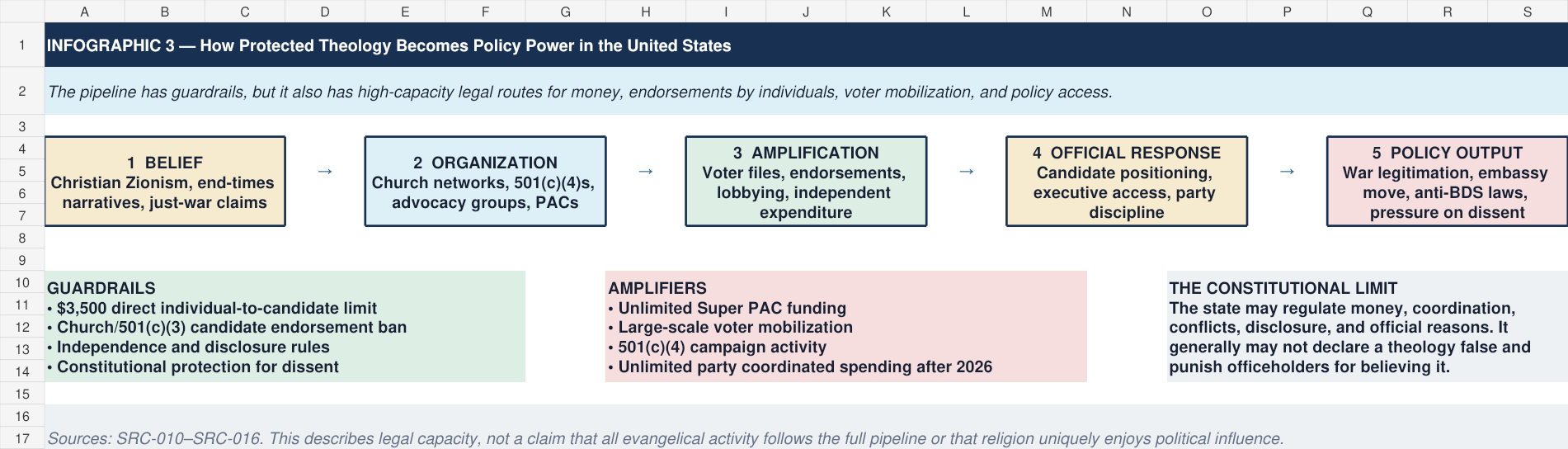 Figure 3. The American pipeline has both guardrails and powerful amplification channels.
The scale can be large. The FEC counted $4.43 billion in independent expenditures during the 2023–24 cycle.[13] The Faith & Freedom Coalition says it spent $60 million on its 2024 voter program and made nearly 79 million contacts with “faith voters.” Those are self-reported figures, but they show the infrastructure between a Sunday sermon and a Tuesday ballot.[14]
There is no conspiracy here. American representative government is supposed to convert social preferences into policy. The difficulty arises when an organized constituency asks the state to act on a premise that outsiders cannot examine—and when the costs are paid far beyond that constituency.
Iraq: theology did not start the war, but it helped sell it
The Iraq war is the clearest case where the damage was enormous and the religious contribution was real, but also easy to exaggerate.
In October 2002, prominent evangelical leaders sent President George W. Bush a letter arguing that a pre-emptive attack on Iraq could satisfy Christian just-war principles.[15] After the invasion, the Southern Baptist Convention adopted a resolution describing Operation Iraqi Freedom as warranted under the historic just-war tradition.[16]
The constituency was receptive. In March 2003, Pew found that 77 percent of white evangelicals supported military action, compared with 62 percent of Catholics and mainline Protestants and 36 percent of Black Protestants.[17]
Still, “evangelicals caused the Iraq war” would outrun the evidence. The administration’s formal case centered on weapons of mass destruction, terrorism and national security. Only 10 percent of Americans in another Pew survey said religious belief was the strongest influence on their view of Iraq, rising to 17 percent among regular worshippers.[18]
The safer conclusion is also more interesting. Evangelical institutions helped give the war moral certification. They placed preventive invasion inside a recognizable Christian framework, helped maintain support among a key Republican bloc and made a policy sold through dubious intelligence feel like a moral obligation to many voters.
The harm is not speculative. By September 2010, the United States had reported $642 billion in obligations for military operations in Iraq, plus about $24 billion for Iraqi security forces.[19] The Defense Department records 4,432 U.S. military and civilian deaths associated with Operation Iraqi Freedom and 31,993 service members wounded.[20] Iraq Body Count has documented between roughly 187,000 and 211,000 Iraqi civilian deaths from violence, a record-based count that does not attempt to capture every indirect death.[21]
Those figures do not turn religious support into sole causation. They establish the stakes. A belief-linked political coalition helped legitimize a policy whose costs were paid by people who had no vote in the theology—or the election.
Israel is where the connection is most visible now
The Iraq argument requires caution because evangelical support was only one part of a large post-9/11 coalition. The connection between evangelical belief and American policy toward Israel is more direct.
Christian Zionism is not one thing. Some believers support Israel because they read the Hebrew Bible as establishing an enduring covenant. Some connect the Jewish return to the land with prophecy and the eventual Second Coming. Others emphasize democratic alliance, Jewish safety after the Holocaust or ordinary strategic interests. Politicians and organizations often combine several of these arguments.
But the theological component is measurable. In 2022, Pew found that 70 percent of white evangelical Protestants believed God gave the land that is now Israel to the Jewish people. Twenty-eight percent said the best outcome of the Israeli–Palestinian conflict would be one country governed by Israel. Only 6 percent of Catholics, white non-evangelical Protestants and Black Protestants chose that outcome.[22]
The alignment has become more striking as the war in Gaza has changed American opinion. In Pew’s May 2026 survey, white evangelicals were the only large religious group in which a majority—57 percent—still viewed the Israeli government favorably. The comparable figures were 47 percent among Jewish Americans, 34 percent among Catholics, 33 percent among white non-evangelical Protestants, 30 percent among Black Protestants and 17 percent among the religiously unaffiliated.[23]
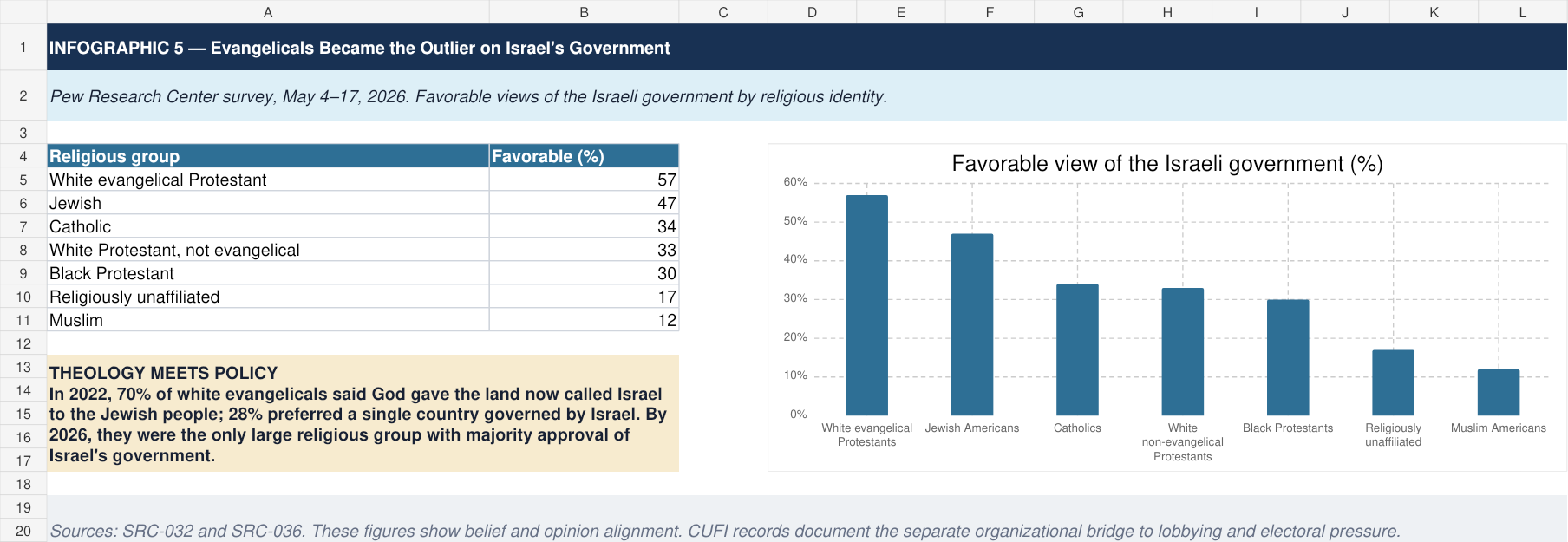 Figure 4. White evangelicals remained the only large religious group with majority favorable views of Israel’s government in May 2026.
Opinion becomes policy through organization. Christians United for Israel, or CUFI, describes itself as a movement with more than ten million members. That is CUFI’s figure, repeated in congressional press releases, and should be treated as a membership claim rather than a census.[24] The organization says its members sent 135,000 emails supporting the relocation of the U.S. embassy to Jerusalem and one million emails backing the Taylor Force Act. It credits its network with helping secure anti-BDS measures across dozens of states.[25]
The public record confirms that CUFI is not shouting from the parking lot. Senators regularly address its national summit. Its Action Fund reports federal lobbying expenses, including $70,000 in both the first and second quarters of 2026.[26] A separate CUFI Action Fund committee reported $100,000 in independent expenditures in the 2020 cycle.[27] These are modest numbers beside AIPAC or the largest Super PACs. CUFI’s value is not mainly that it writes the biggest check. It claims a large, highly motivated voter network and offers politicians direct access to it.
Donald Trump’s Jerusalem decision makes the mechanism unusually visible. In December 2017, he formally recognized Jerusalem as Israel’s capital and ordered the embassy moved there.[28] In 2020, he told an audience the move was “for the evangelicals.”[29] Strategic, personal and pro-Israel advisers also mattered, of course. But here the president himself identified the constituency he believed he was serving.
The same network appears in current congressional business. When the House considered the 2024 security supplemental, Speaker Mike Johnson’s office published CUFI’s demand that members support the rule and emergency military assistance: “Don’t tell us you stand with Israel, show us.”[30] Congress enacted the Israel supplemental as part of Public Law 118-50.[31]
None of this means evangelical voters alone determined U.S. support for Israel. The point here is institutional. Christian Zionist organizations help make unconditional or near-unconditional support for Israel electorally rewarding, especially inside Republican politics, even when national opinion moves the other way.
That policy has material consequences. In April 2025, the Government Accountability Office reported that U.S. arms-transfer processes did not fully address risks of civilian harm. The State Department had received hundreds of reports, most connected to the Israel–Gaza war, but had completed no investigations of reports it considered credible by December 2024. Updated human-rights policies had not caused the government to pause any arms transfers. The GAO report cited a United Nations count of more than 47,000 Palestinian deaths at that point.[32]
The scandal is not that an evangelical voter believes scripture. It is that American institutions can translate one constituency’s non-falsifiable territorial claim into military assistance while the government’s own harm-review machinery moves slowly or not at all.
The state-level story is similar. CUFI says Nevada’s anti-BDS legislation grew out of a discussion with Lieutenant Governor Mark Hutchison at one of its events.[33] Texas and other states adopted restrictions affecting public contracts or investment decisions involving boycotts of Israel.[34] Courts have limited or forced revisions to some measures on free-speech grounds. Once again, the American system eventually supplies checks—but often only after organized belief has already become law.
Why America cannot—and probably should not—copy China
At this point, the obvious question is whether America needs its own Article 70. It does not.
A Chinese CPC cadre is a member of a organization that expressly requires adherence to Marxist and materialist principles. An American officeholder is elected under a Constitution that expressly forbids religious tests. These are not two administrative techniques waiting to be swapped. They are different theories of political legitimacy.
If Congress tried to remove officials for believing in biblical prophecy, the policy would violate the First Amendment and Article VI. It would also be a terrible precedent. A government empowered to determine which theology is rational could turn just as easily against Muslims, Catholics, Jews, atheists or unpopular minority sects. America’s inability to copy the Chinese approach is partly a legal constraint and partly, dare I say, an achievement.
The political structures also differ. China’s Party manages careers vertically: who’s the best person for a specific job based on a series of largely quantifiable metrics? The United States, comparatively, disperses authority among elections, parties, states, courts and private associations. Chinese discipline can remove a cadre without winning over his local religious supporters. An American politician may owe her position precisely to voters who share the belief under scrutiny. Stopping that belief from “influencing politics” would mean stopping citizens from organizing around it.
That is why, to put ourselves inside the shoes of our American friends for a second, the right American objective cannot be ideological purification. It must be institutional friction.
The lesson worth borrowing
The Chinese paper offers a surprisingly liberal lesson that maybe even some American policy makers can get behind: do not begin by trying to remake the believer. Limit the ability of any one official to turn a private conviction into an unreviewable allocation.
For domestic policy, that means clear criteria, published evidence, conflict rules, independent review and meaningful authority at lower levels. For elections, it means accurate disclosure, anti-earmarking rules and serious enforcement of whatever separation remains between candidates and outside spenders. The Supreme Court has narrowed these tools, not abolished them.
For arms transfers, Congress could require a published factual and legal basis, firm deadlines for civilian-harm investigations and automatic review when credible evidence accumulates. The GAO’s findings show how far the system is from that standard.[32]
None of this asks officials to become atheists—god knows they can be annoying too. It asks them to translate religious motivation into reasons that citizens outside the faith can examine: What is the strategic goal? What evidence supports it? What will it cost? Who bears the risk? What result would prove the policy wrong?
That is the point where the comparison returns to feng shui. The Chinese mayor may sincerely believe the southwest is dangerous for sacral reasons—it’s against Party policy, but sure they may. The American politician may sincerely believe history is moving toward a divinely promised end. Sincerity is not a public-policy test.
China can punish the first belief and America must protect the second. Yet both systems still face the same practical problem: how to keep the contents of one official’s metaphysical world from becoming everybody else’s material reality.
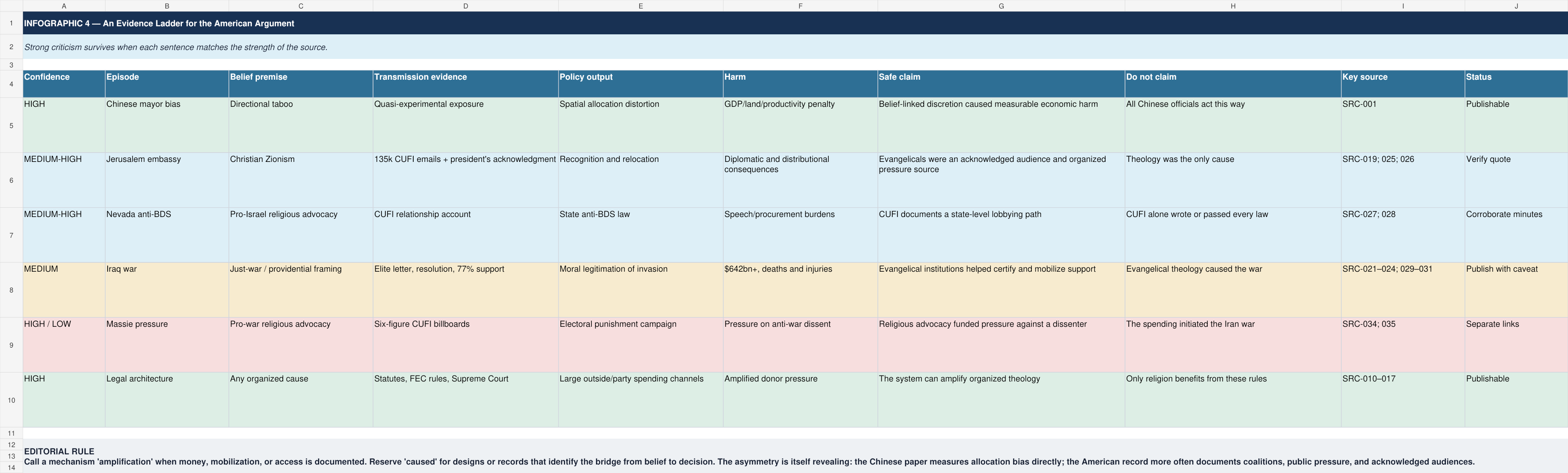 Figure 5. The evidence is strongest when the institutional bridge is directly documented.
Sources
[1] The Economist, “China’s superstitious mayors” social post, Aug. 6, 2026. See https://x.com/TheEconomist/status/2085381717481685154.
[2] Justin Jihao Hong and Yuheng Zhao, “Leader Biases and Growth: Evidence from Spatial Superstitions of Chinese Politicians,” February 2024 draft and 2026 revision.
[3] Chinese Academy of Sciences, survey summary on county-level officials’ scientific literacy, May 11, 2007. See https://www.cas.cn/xw/zyxw/yw/200705/t20070511_1021150.shtml.
[4] Hong and Zhao, “The Costs of Leader Biases: Evidence from Superstitious Chinese Mayors,” June 2026 revision. See https://papers.ssrn.com/sol3/papers.cfm?abstract_id=6841701.
[5] Communist Party of China, “Rules on Intraparty Political Life Under New Circumstances,” Oct. 27, 2016. See https://news.12371.cn/2016/11/02/ARTI1478091665764299.shtml.
[6] Communist Party of China, Disciplinary Regulations, Article 70, 2023 revision. See https://www.12371.cn/2023/12/27/ARTI1703689211048182.shtml.
[7] Central Commission for Discipline Inspection, explainer and case examples on superstitious activities, May 27, 2025. See https://www.pdsjjw.gov.cn/sitesources/xxjjjcw/page_pc/xcjy/jzzm/articleaf9a72c0d8764b4c9a7a39bdce393467.html.
[8] U.S. Constitution, Article VI, Clause 3. See https://constitution.congress.gov/browse/article-6/clause-3/.
[9] Internal Revenue Service guidance on campaign intervention by 501(c)(3) organizations. See https://www.irs.gov/charities-non-profits/charitable-organizations/restriction-of-political-campaign-intervention-by-section-501c3-tax-exempt-organizations and political activity by 501(c)(4) social-welfare organizations. See https://www.irs.gov/charities-non-profits/other-non-profits/social-welfare-organizations.
[10] Federal Election Commission, 2025–26 contribution limits. See https://www.fec.gov/help-candidates-and-committees/candidate-taking-receipts/contribution-limits/.
[11] Federal Election Commission summaries of Citizens United v. FEC. See https://www.fec.gov/legal-resources/court-cases/citizens-united-v-fec/ and SpeechNow.org v. FEC. See https://www.fec.gov/legal-resources/court-cases/speechnoworg-v-fec/.
[12] U.S. Supreme Court, National Republican Senatorial Committee v. FEC, June 30, 2026. See https://www.supremecourt.gov/opinions/25pdf/24-621_h315.pdf.
[13] Federal Election Commission, statistical summary of the 2023–24 election cycle. See https://www.fec.gov/updates/statistical-summary-of-24-month-campaign-activity-of-the-2023-2024-election-cycle/.
[14] Faith & Freedom Coalition, 2024 voter education program. See https://www.ffcoalition.com/voter-education/.
[15] Baptist Press, “Attack on Iraq justified, Land, others tell Bush,” Oct. 4, 2002. See https://www.baptistpress.com/resource-library/news/attack-on-iraq-justified-land-others-tell-bush/.
[16] Southern Baptist Convention, “On the Liberation of Iraq,” June 2003. See https://www.sbc.net/resource-library/resolutions/on-the-liberation-of-iraq/.
[17] Pew Research Center, “Different Faiths, Different Messages,” March 19, 2003. See https://www.pewresearch.org/politics/2003/03/19/different-faiths-different-messages/.
[18] Pew Research Center, “Americans Hearing About Iraq From the Pulpit,” March 19, 2003. See https://www.pewresearch.org/religion/2003/03/19/survey-americans-hearing-about-iraq-from-the-pulpit-but-religious-faith-not-defining-opinions/.
[19] Government Accountability Office, Iraqi-U.S. Cost-Sharing, Sept. 13, 2010. See https://www.gao.gov/products/gao-10-304.
[20] U.S. Department of Defense, Operation Iraqi Freedom casualty status, Jan. 30, 2025. See https://www.defense.gov/casualty.pdf.
[21] Iraq Body Count, public database of documented civilian deaths. See https://www.iraqbodycount.org/.
[22] Pew Research Center, “Modest Warming in U.S. Views on Israel and Palestinians,” May 26, 2022. See https://www.pewresearch.org/religion/2022/05/26/modest-warming-in-u-s-views-on-israel-and-palestinians/.
[23] Pew Research Center, “Americans’ Views of Israelis and Palestinians,” July 9, 2026. See https://www.pewresearch.org/short-reads/2026/07/09/americans-views-of-israelis-have-grown-increasingly-negative-but-views-of-palestinians-have-held-fairly-steady/.
[24] U.S. Sen. Joni Ernst, remarks at the 2023 CUFI Summit. See https://www.ernst.senate.gov/news/press-releases/ernst-delivers-remarks-at-the-christians-united-for-israel-summit-2023.
[25] Christians United for Israel, claimed policy accomplishments. See https://cufi.org/about/policy/policy-accomplishments/.
[26] Lobbying Disclosure Act database, CUFI Action Fund 2026 Q2 filing. See https://lda.gov/filings/public/filing/3e386805-5f82-4f20-b869-e8dbf5759379/print/.
[27] Federal Election Commission, CUFI Action Fund committee profile, C90020926. See https://www.fec.gov/data/committee/C90020926/.
[28] White House archive, President Trump’s statement on Jerusalem, Dec. 6, 2017. See https://trumpwhitehouse.archives.gov/briefings-statements/statement-president-trump-jerusalem/.
[29] Times of Israel, “Trump says he moved US embassy to Jerusalem ‘for the evangelicals,’” Aug. 18, 2020. See https://www.timesofisrael.com/trump-says-he-moved-us-embassy-to-jerusalem-for-the-evangelicals/.
[30] Office of Speaker Mike Johnson, advocacy statements supporting the 2024 national-security supplemental, April 19, 2024. See https://mikejohnson.house.gov/news/documentsingle.aspx?DocumentID=1380.
[31] Public Law 118-50, Israel Security Supplemental Appropriations Act, 2024. See https://www.govinfo.gov/content/pkg/PLAW-118publ50/html/PLAW-118publ50.htm.
[32] Government Accountability Office, State Can Improve Response to Allegations of Civilians Harmed by U.S. Arms Transfers, April 24, 2025. See https://files.gao.gov/reports/GAO-25-107077/index.html.
[33] Christians United for Israel, statement on Nevada anti-BDS legislation. See https://cufi.org/press-releases/cufi-welcomes-nevada-state-assembly-action-anti-bds-legislation/.
[34] Texas Government Code, Chapter 808. See https://statutes.capitol.texas.gov/Docs/GV/htm/GV.808.htm.
Editor: Yida

Nathan Gant
One can hope that the US will follow Nicaragua’s lead, which has embedded “In God We Trust” or “En Dios Confiamos” in Spanish, a religious phrase found on its coins, although not on its paper notes, all the while adhering to a Latin American style of ‘Christian socialist’ government.
While an officially atheist Marxism-Leninist state may be seen a distant dream for us here in the US, it is not unattainable, and even though our government mandates that this particular religious slogan appear on all US coins and paper bills. Therefore, the Nicaraguan model shows us that having “In God We Trust” on hard currencies will not present an obstacle to that lofty political goal. We can at least hope for a compromise through Christian socialism or a secular democratic socialist state.
This isn’t something new to believe. The Austrian Marxist Karl Kautsky believed that early Christians practiced a form of communism. In his 1908 book, The Foundations of Christianity, he wrote that the primitive Christian community was a movement by the urban proletariat and poor, operating on communistic principles.
Another point to consider. The US Bill of Rights, one of ten amendments to the Constitution of the United States, establishes a precedent against any kind of political establishment of religion. It was based on the Jeffersonian idea of a separation between church and state. While our current Trump administration, which is morally corrupt to its core, may have delusional dreams of establishing a Judeo-Christian theocracy here in the US, I expect them to be disappointed. The short term prospects of this happening after the Nov. 2026 elections are going to be dismal, in my opinion those events will give them no reason to celebrate.
There may be US government officials who are obsessed with promoting the Zionist agenda in the Middle East. Fortunately, the correlation of political forces in the world today are not going to be favorable to them.