


At the backdrop of the APEC 2026 in Shenshen, I took the initiative to reach out to a few longtime friends to invite their comments, reflections and advice, as I believe it is always important to hear the voice of business leaders and experts, particularly at a time when our world is in the middle of a transition and when fear and confusion outweighs confidence. While waiting for more friends to send over their response, the five gentlemen below offer perspectives with different emphases and distinct angles that are worthy of close attention. Their views are highly representative and insightful, and I share them here with our readers in China and beyond.

Allan Zeman (Hong Kong SAR), Chairman of Lan Kwai Fang Group, well known businessman across Asia, born in Germany, grew up in Canada, made his fortune in Hong Kong, a naturalised citizen of China since 2008
President Xi’s address at the APEC CEO Summit sent a clear message: openness brings progress, and isolation leads to backwardness.
Shenzhen is the perfect host. Its development in such a short period is unbelievable. In just a few decades it grew from a small border town into an international metropolis. That is the power of reform and opening up.
Hong Kong stands right beside it. Hong Kong and Shenzhen are now like one city. Hong Kong is super value-adder and super connecter, with world-class finance, law and professional services, and it is the gateway between the Mainland and the world. Shenzhen brings innovation and manufacturing strength. Together, in the Greater Bay Area, we form one of the most dynamic regions on earth.
China will continue to open up. President Xi has pledged to cut tariffs, expand market access and create a more stable, predictable environment for all companies. This is our Chinese way of doing business, and it benefits the globe: pragmatic, collaborative and not one-size-fits-all.
“One country, two systems” remains Hong Kong’s greatest strength. It gives investors the best of both worlds: the vast Mainland market and an international system they know and trust. It is the best place to do business, and a safe one.
This year’s APEC is also historic. With President Xi, President Trump and President Putin all in Shenzhen, the world’s attention is on China. Dialogue is always better than confrontation, and I believe this will be a very successful event.
Hong Kong is ready. Let’s walk with China and grasp the opportunities together

Dr. Andrey Milekhin (Russia) , Founder of ROMIR, well-known Russian entrepreneur, sociologist, professor at Lomonosov Moscow State University and Saint-Petersburg State University
The APEC Forum in Shenzhen is in full swing. It is a good occasion to reflect on what matters most. I am not a geopolitical analyst or a macroeconomist. Still, it strikes me that these events, these leaders’ meetings and their agendas rest on fundamental foundations. When contemplating the prospects for cooperation between Russia, China and other Asian countries, we ought to turn to history, geography and… anthropology.
The “familiar” — or rather Western — perceptions of a “backward” East, North and South have taken shape over the past few centuries. But how accurately do these views reflect our place in world history? All the cradles of Homo sapiens, the peaks of human civilisations, and the golden ages of mighty empires lay far-removed from the lands of Northwestern Europe and the British Isles. Historically speaking, the modern West has long been a backward provincial backwater on the periphery of world-historical developments.
Perhaps the “modern-era” system of geographical reference points prevents us from fully appreciating the historical affinity between our nations. Russia spans vast territories across northern latitudes, a fact that has largely shaped its history, culture and economic way of life. As a civilisation, it is represented at the forum “The Great North”. In the same way, the Greater East and the Global South are represented by leaders from these strategic regions — a fact that only underscores geographical congruence, historical ties and cultural kinship. Where does the West fit into this holistic gathering? Symbolically, it makes its appearance via the United States of America, situated on the Western seaboard.
Let us turn back to Eurasia — or, more fittingly, “Asi-Europe”. Underpinning millennia-long interaction and holding the promise of a bright future across the Great Continent lies a shared anthropology of the family. It is our traditional family systems that fundamentally shape social structures, interpersonal relations and values. Russia, China, Central Asia and northern India all share a similar type of patriarchal, communal, exogamous family unit.
This system is marked by strong inter-generational bonds, respect for elders, collective accountability, and the preservation of traditions. For thousands of years, the family has forged conceptions of duty, mutual support and continuity. In this respect, our civilisations rest upon a common anthropological foundation.
That is precisely why I believe it is vital to view inter-state relations through the lens of these shared underpinnings. Beneath linguistic divergences, cultural uniqueness and the twists and turns of history, we find a parallel system of core values.

Prof. Rungdet Liu (Thailand), Professor, former member of the Standing Committee on Foreign Affairs, House of Representatives of The Kingdom of Thailand
This year’s APEC summit in Shenzhen comes at a moment when all sides harbour deep anxieties about the future. It is no longer viable to sweep fundamental problems under the carpet, for several major issues can no longer be avoided or ignored:
First, now that technology has become the primary productive force, there is a stark mismatch between overcapacity and demand for market upgrading. This is driving nations to revisit tariff barriers as a short-term, root-and-branch policy response.
Second, economies are growing wary of China’s supply chains and production capacity. Unfettered exports of Chinese goods risk disrupting existing market equilibria, with knock-on effects for employment, social order, and normative frameworks including ethics and the rule of law.
Third, the United States is imposing restrictions on AI products. Its objective is to set baseline standards and ground rules for global AI governance, establishing a regulatory regime aligned with U.S. interests while securing oversight authority.
Fourth, international calls and pressure for China to open its markets and narrow trade imbalances are intensifying. This reality may not yet be fully appreciated by Chinese domestic firms and local governments.
Fifth, having lost its congressional majority, the Trump administration may adopt measures to accommodate Democratic priorities. The White House could revive the framing of American values and elevate them to the centre of its foreign policy.
Sixth, while hosting the APEC gathering in Shenzhen allows China to showcase its strengths and achievements, one knock-on effect that may have been underappreciated is that attending heads of state have left with heightened concerns over China’s productive capacity and R&D prowess. Should China’s economic size surpass that of the United States within three years to become the world’s largest economy, a critical question emerges: will China leverage its comprehensive power to coerce trading partners in future commercial engagements? When pure commercial ties diverge from diplomatic relations, trade flows become fraught with uncertainty and volatility. This merits close attention.
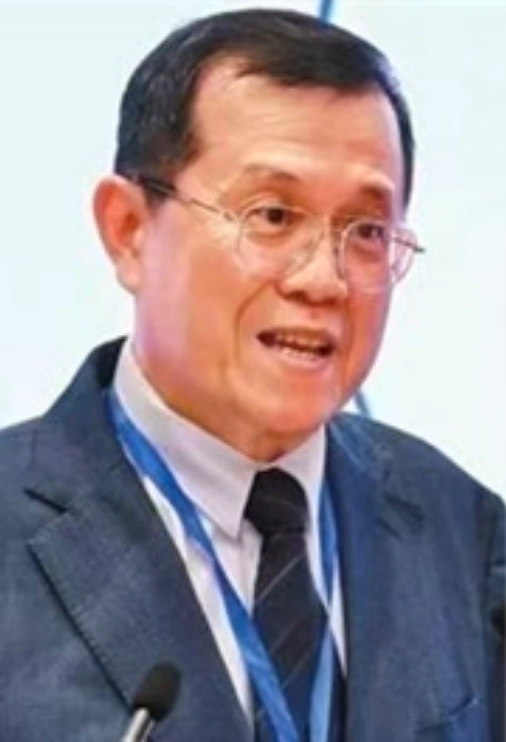
ONG Tee Keat (Malaysia), President, Belt and Road Initiative Caucus forAsia Pacific (BRICAP), former Vice Chairman of the Malaysian Parliament and Minister of Transportation
The presence of my top leader at the APEC is certainly the focus of attention within my country. The general public may have a diverse understanding of the entity and its dynamics. But the discerning audience within the business community remains watchful of the key takeaways of the APEC Summit beyond the fanfare.
Over the years, Malaysia has been pursuing the role of an active “community builder” within ASEAN. It reached out to China for trade engagement despite the ideological rift at the height of Cold War and was later the first ASEAN member state establishing diplomatic ties with China. In 1991, the country took the proactiveness to invite the Chinese Foreign Minister to the ASEAN Foreign Ministers’ Meeting in Kuala Lumpur, heralding the bloc’s engagement with China. This marks the beginning of the enduring China-ASEAN relationship, culminated as the Comprehensive Strategic partner in 2021.
Last year (2025) Malaysia, the rotational chair of ASEAN, brought a new dimension of cooperation to the China-ASEAN partnership when it inaugurated the trilateral China-ASEAN Gulf Cooperation Council (GCC). Malaysia may not be a dominant economy within ASEAN. But its size is no hurdle to the engaging role it has been playing thus far. The most visible challenges confronting Asia Pacific lie in the existing regulatory fragmentation which impedes the cross border flow of trade, capital, talent and data. This explains why the intra-ASEAN trade remains relatively low, hovering around 22% of the total ASEAN trade-in-goods, as compared to 60% in the case of the European Union.
The varying level of development and digital readiness across ASEAN adds another layer of complexities to the existing diverse priorities. Individual ASEAN member states were once earmarked as beneficiaries benefiting from the reconfiguration of some sector-specific supply chains that moved out of China. By and large, ASEAN has been treading the delicate balance in the China-US geopolitical contest. While it embraces Beijing economically in pursuit of prosperity, Washington remains its security-hedge, unmistakably targeting the expansive growth of Beijing’s clout. The upholding of ASEAN Centrality grants the bloc the desired latitude to preserve its “strategic autonomy”, picking no side in the Sino-US rivalry. Currently, Southeast Asia is at best a theatre of power play of the said rivalry, but far from being a stabiliser in the trade tension between the two superpowers.

Dr. Rasigan Maharajh (South Africa), Professor, Tshwane University of Technology, member of the Academy of Science of South Africa, renowned academic, activist scholar, policy advisor
The recently concluded trilateral meeting between the leaders of China, Russia and the United States on 19 November 2026 represents a significant development in contemporary geopolitics. Some have characterised the engagement in Shenzhen as ‘Yalta 2.0’, referencing the 1945 meeting of the leaders of Britain, the Soviet Union and the USA in Crimea, where they discussed the final defeat of the Axis powers of Nazi Germany, Fascist Italy and Imperialist Japan, and advanced plans for global post-war reconstruction and development.
While the Yalta Conference did ostensibly establish the institutional architecture and ‘rulesbased’ order that governed international relations in the second half of the 20th century, the last 81 years have brought new complex challenges and momentous opportunities for transformation. It is therefore of critical importance that President Xi Jinping framed the trilateral meeting on the sidelines of the thirty-third Asia-Pacific Economic Cooperation Summit as a gathering of the world’s key anti-fascist forces, whilst President Vladimir Putin argued that the meeting was bringing together the three countries that, besides sharing the status of being victorious powers in the Second World War, were also bound by a shared responsibility for maintaining international peace and security.
Although reconciliation may not necessarily follow, given the contradictions in the respective political economies of the three national systems, the four-point “China-Russia-U.S. Heads of State Declaration towards Peace” adopted at the meeting offers better prospects for constructive dialogue towards reforming our main international governance platform, the United Nations, stabilising energy flows, ensuring the impartial functioning of our international judicial institutions, and reducing the risks of nuclear Armageddon. Besides these pragmatic commitments, the Shenzhen Trilateral symbolically manifests the decline of the unilateral hegemony assumed after the collapse of the Soviet Union whilst also proclaiming the emergence of the multipolarity
Editor: Zhiyu Wang