



Guancha.cn: You defined 2026 as “the beginning of the end of Pax Americana.” Can the Chinese leader’s upcoming state visit to the US be seen as a landmark event signaling the close of Pax Americana and the rulemaking phase for a Pax Sinica? What are your expectations for this summit, and how would you define the trajectory of China-US relations moving forward?
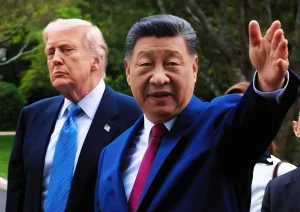
Victor Gao: The Chinese President’s upcoming state visit to the US marks a vital moment in head-of-state diplomacy. 2026 is a uniquely symbolic year, following President Donald Trump’s state visit to China from May 13 to 15. That visit restored a time-tested, crucial convention: since President Reagan, every sitting US President has made a state visit to China.
As is well known, President Nixon was the first to make an official visit in 1972, followed by his successor, President Ford. President Carter, however, did not make a state visit during his four years in office—largely because the Iranian Revolution tied his hands, requiring his constant direct command of the American response. Ever since Reagan, every sitting president maintained this tradition, and Chinese leaders paid reciprocal visits to Washington. This practice served as a vital ballast for bilateral stability.
President Biden broke this rule by failing to pay a state visit to China throughout his four-year term. Although the Chinese President visited the US in 2023 for the APEC Summit in San Francisco—where the bilateral discussions were exceptionally productive and historically significant—that trip was an multilateral summit attendance, not an official bilateral state visit.
While the Chinese leadership undertook a landmark trip to the US in 2017, that visit was hosted at Mar-a-Lago in Florida, President Trump’s private club, and was relatively brief. In this light, the Chinese President’s upcoming trip to Washington D.C. represents the first full-scale, highest-protocol state visit to the US capital by a Chinese head of state in many years.
China-US relations have arrived at a defining juncture. Against this backdrop, the Chinese President’s state visit and his second summit with the US President this year carry paramount significance: First, it demonstrates to the international community that direct, high-level communication channels between Beijing and Washington remain open and constructive. Second, when both leaders sit down for substantive negotiations, it signals that the bilateral relationship will not spiral into a total breakdown—providing a crucial anchor of stability for global confidence.
Many around the world are itching to see a conflict break out between China and the US. Hawks within the US assert that if a war is inevitable, fighting sooner is better than later, as waiting only allows China’s power to grow until it becomes unmanageable. However, when the world sees the leaders of China and the US sitting at the negotiating table on equal and mutually beneficial terms, war-mongers will realize they are on the wrong side of history. Furthermore, those in Washington who previously lacked the courage to publicly champion engagement will find the confidence to advocate for friendly relations.
Additionally, certain regional actors—such as the Philippines, Japan, and the separatists of Taiwan —have been seeking to leverage American backing to incite a military conflict between Washington and Beijing. Fortunately, President Trump has maintained a pragmatic stance, recognizing China’s strategic weight. In its late-2025 National Security Strategy, the US officially categorized China-U.S relations as a “near-peers.” My message to the Americans is simple: drop the thin veil of “near” and acknowledge China as a true peer, because China has long achieved parity.
Guancha.cn: During Trump’s visit to China in May, Beijing again raised the question: Can China and the US avoid the “Thucydides Trap” and establish a new paradigm for major-power relations? You have argued that war between China and the US is not “predestined,” but rather that peace is “inevitable.” What informs this judgment?
Victor Gao: Harvard Professor Graham Allison popularized the concept of the “Thucydides Trap” in his landmark book, Destined for War: Can America and China Escape Thucydides’s Trap?. By examining historical conflict cases, he concluded that China, as a rising power, will inevitably challenge the US, the ruling power, culminating in catastrophic war.
I totally reject this thesis. Why? All the historical precedents Allison analyzed involved conventional warfare. He failed to remind the world—and the American and Chinese public—that China and the US are not merely conventional military giants; we are the world’s two most critical nuclear powers. Any attempt, including by Professor Allison himself, to imply that the Thucydides Trap applies to contemporary China-US dynamics is a dangerous fallacy. My counter-framework is the theory of “Inevitable Peace”—a term whose heavy weight is fully proportional to the notion of “predestination.”
While American strategists talk about war being predestined, I argue that peace is inevitable.
First, China’s comprehensive strength has grown exponentially. Second, the US lacks any viable means to defeat China in land warfare. Since the Korean War, the US military has adhered to an unwritten rule against engaging China in ground warfare. On the battlefields of Korea, the Chinese People’s Volunteers—despite severe material disadvantages—broke the backbone of the US military through sheer morale and willpower. That history has to be remembered.
For decades, Washington boasted absolute naval supremacy. That advantage has evaporated. American analysts themselves concede that China’s shipbuilding capacity is 232 times that of the US, and that gap continues to widen. The US also claimed air superiority, which held true historically. Today, however, China’s Shenyang and Chengdu Aircraft Corporations are mass-producing sixth-generation stealth fighters. Meanwhile, the American sixth-generation fighter project—dubbed the F-47 by Trump—is stalled off the production line. A primary cause is America’s lack of Chinese rare earth elements, without which advanced stealth fighters, bombers, and precision weaponry cannot be manufactured. Thus, American air dominance has dissolved.
At a high-level forum last year, an American attendee pointed out that the US possesses a larger nuclear arsenal. I responded: neither you nor I know the exact number of China’s nuclear warheads, and that opacity forms the core of modern strategic ambiguity. However, if any nation dares to launch a nuclear strike against China, I assure you China possesses more than enough warheads to retaliate decisively.
From this vantage point, the Thucydides Trap between China and the US is a false narrative. We must not uncritically swallow American discourse or let ourselves be led by the nose. The real dialogue between Beijing and Washington should not revolve around a rising power challenging an established power. China has no interest in challenging the US; we seek peaceful coexistence. As the Chinese leadership powerfully articulated: “The vast Pacific Ocean is big enough to accommodate both China and the United States.” Today, we state even more unequivocally: “The Earth is big enough for both China and the US to thrive; our respective success presents a mutual opportunity.” China will not provoke the US, but the US lacks the capability to wage war against China and emerge unscathed. Therefore, war is not predestined; peace is inevitable.
Guancha.cn: What prerequisites must China fulfill to secure this “Inevitable Peace”?
Victor Gao: First, China must remain indisputably strong, and the US must fully recognize that strength. Today, China’s steel production leads the world, exceeding the combined output of the second to tenth largest producers. China accounts for over 30% of global manufacturing value-added, heading toward 40%. Over 50% of vehicles produced in China are electric, making the country the world’s premier EV exporter. By late 2025, Chinese automotive output approached 35 million units—more than double that of the US.
If any nation understands China’s true capabilities, it is the United States. Washington has watched China transform from extreme poverty into an economic juggernaut. Elon Musk predicted that by mid-century, China’s economy will be double the size of the US economy. China has every reason to be confident.
When American strategists threaten war, do they actually dare to wage it? When they invoke the Thucydides Trap, do they dare to leap into that abyss themselves? The fundamental issue is not how to avoid a trap, but how to compel the US to stop vacillating and unreservedly embrace an inevitable peace.
Second, China must maintain an invincible People’s Liberation Army. Backed by these two prerequisites, the only viable path between China and the US is inevitable peace. A conflict would devastate the American people, inflict catastrophic harm on the Chinese people, and plunge humanity into ruin. We must maintain absolute clarity regarding our strategic position: there is no Thucydides Trap. There is only one viable road forward: inevitable peace.
On Tariffs: China Must Resolve the Trade Dispute Once and for All
Guancha.cn: Ahead of the summit, Chinese and US economic teams held talks in New York from September 20 to 23. Prior to this, on July 23, the US imposed tariffs on dozens of economies citing alleged “forced labor,” followed by new sanction legislation authorizing up to 100% tariffs on countries purchasing Russian oil. How do you see the tariff confrontation unfolding between the two countries?
Victor Gao: Since 2018, Washington has waged what it calls a “tariff war.” I argued from the outset that framing this as a mutual “China-US tariff war” is incorrect; we must call it what it is: an “Anti-China Tariff War.” When the US expanded this on April 2, 2025, into a global “reciprocal tariff war,” I labeled it an “Anti-Humanity Tariff War.” I maintained from day one that these reciprocal tariffs were illegal. Indeed, in February this year, the US Supreme Court ruled that the sweeping tariffs imposed by the Trump administration were unconstitutional and unlawful. Unfortunately, China did not fully capitalize on this unconstitutionality ruling to push its strategic advantage.
Throughout these tariff assaults, China stood virtually alone in offering firm resistance. Ultimately, Washington realized that China would not yield, forcing the US to recalibrate its approach. While this recalibration is real, China played a largely defensive role throughout the process—absorbing blows before launching counter-offensives. Resiliency is our strength, but defensive postures have limits.
The trade imbalance between China and the US is a structural reality: China holds a substantial surplus, while the US incurs a massive deficit. Achieving balanced trade will not happen overnight, but the solution lies in additive trade rather than subtractive trade. Current trade in goods stands at over 4 trillion RMB. Instead of shrinking trade, why not set a target to expand it to 6 trillion RMB? We should challenge the US to scour its domestic inventory and unleash high-value exports to the Chinese market.
China must also revamp its import strategy. Historically, raw materials and intermediate goods imported from the US were processed in Chinese factories, with finished products either sold domestically or re-exported globally. Going forward, alongside this traditional model, China should aggressively expand re-export trade. China can source large volumes of American goods not exclusively for domestic consumption, but for redistribution to third-party nations.
Why is this strategic? China’s massive market scale gives us immense purchasing power and pricing authority. We can negotiate bulk import prices from the US far lower than smaller nations can achieve. For instance, Kazakhstan requires American imports but faces severe logistical bottlenecks whether routing through Europe or China. Utilizing our interconnected logistics networks, China could act as an intermediary procurement hub—sourcing American goods at scale and delivering them directly to Kazakh buyers.
Furthermore, China can make a bold, decisive move: to achieve trade balance, Beijing could declare that all US exports up to the current baseline volume will enter China tariff-free. Such a move would allow President Trump to claim a historic victory, having opened the doors to zero-tariff access for American goods in China.
Naturally, zero tariffs must be reciprocal. Granting unilateral tariff-free access to American goods while Chinese goods face heavy US duties is unacceptable. Therefore, Chinese exports to the US should be divided into two tiers: the first tier, matching the volume baseline of US exports to China (e.g., $200 billion), would enjoy reciprocal zero tariffs.
Having studied Trump’s psychology extensively, I know such an offer would ecstatic him. In exchange, Beijing should demand key commitments: Washington must cease its perpetual tariff threats and provide legally binding guarantees. Once a reciprocal zero-tariff baseline is established, further arbitrary escalations must end. Trump would find this proposition compelling.
Regarding Chinese exports exceeding this baseline—amounting to several hundred billion dollars—we can take a calculated approach. We can tell President Trump: “Mr. President, for the volume exceeding our reciprocal baseline, you may handle tariffs as you see fit.”
An analysis of China’s export structure to the US reveals a revealing breakdown:
One-third consists of direct exports from domestic Chinese enterprises, which roughly matches the total volume of US exports to China.
One-third is produced by US-invested enterprises operating in China, shipping goods back to the American market.
One-third originates from foreign enterprises (from the EU, Japan, South Korea, Southeast Asia, and the Taiwan region) manufacturing in China for export to the US.
American corporations operating in China possess formidable lobbying power. If the US government attempts to levy punitive tariffs on their re-imported goods, corporate executives will immediately lobby Capitol Hill. This will trigger fierce domestic friction within the US, pitting Congress against the White House and rendering long-term punitive tariffs on US-owned operations in China practically unviable.
As for third-country enterprises, while Trump may attempt to slap them with high tariffs, those nations will not remain passive. Their representatives will converge on Washington to lobby, while simultaneously dispatching delegations to Beijing demanding equal reciprocal zero-tariff terms.
My recommended response to them is ready: “We are open to negotiations. But we have to negotiate right here in Beijing. Keep in mind that China and the US spent nearly a decade negotiating our deal—so plan on a ten-year timeline for ours.” This approach addresses bilateral trade frictions with both the US and the European Union simultaneously.
Tariff negotiations should never be confined solely to trade metrics. Historically, China made the mistake of treating tariffs as an end in themselves. In my engagements with American negotiators, they privately gloated that China had taken the bait. For Washington, tariffs are a tactical tool, not the end goal; China treated them as the end goal rather than a tactical lever. By driving toward reciprocal zero tariffs on baseline trade, we can elevate China-US relations to a new paradigm and compel the American public to recognize that China is not their enemy.
I often remind my American counterparts: millions of Bibles used in the US are printed in China. Does reading a Chinese-printed Bible make an American less pious? Countless American flags are manufactured in China. Does saluting a Chinese-made flag make an American less patriotic? Myriads of toys in American homes are made in China—have they diminished family harmony? When I present these realities to American audiences, they applaud because they realize how much value China brings to their everyday lives.
The pressing priority for Beijing is to break free from reactive constraints and proactively elevate the bilateral relationship. We must stop letting Washington use tariffs as a whip to provoke us. We need the strategic courage and wisdom to resolve the trade dispute once and for all, shifting from passively coping with American moves to actively shaping the strategic agenda. Why should Washington constantly set the exam questions while Beijing merely works through them? Why not leverage 5,000 years of Chinese wisdom to set the agenda ourselves—while enabling President Trump to claim his version of legacy as the greatest U.S. president?
Insisting AI for Good: The Open-Source Model Will Prevail
Guancha.cn: During the recent trade consultations, both sides discussed artificial intelligence. In early September, US tech firms pushed a “slow down AI” narrative targeting China. You previously predicted that the US AI bubble would burst within ten months, triggering a global financial crisis, but noted that China possesses the highest resilience and strategic depth. As AI competition intensifies, how do the development paths of China and the US diverge, and how should China navigate US challenges?
Victor Gao: I have recently advanced several core propositions:
First, the choice between “AI for Good” versus “AI for Evil” has become the paramount issue in AI governance. Even within the US, policymakers are beginning to recognize this tension, giving rise to calls for tempered development speeds.
Second, China and the US are the only two powers driving frontier AI development. European nations, Japan, and Russia have largely fallen behind. However, the American and Chinese models diverge fundamentally in ideology and execution: the US champions a closed-source path aimed at enforcing technological hegemony and marginalizing China, whereas China embraces an open-source path, fostering global cooperation—including with the US.
Third, China firmly opposes the widening “AI Divide.” This digital divide is expanding rapidly across individuals, enterprises, nations, and civilizations. If the US persists with closed-source hegemony, this divide will widen into an unbridgeable chasm. Nations left on the wrong side of this divide face irreversible backwardness. China is committed to bridging this gap by cultivating an inclusive ecosystem where all nations, regardless of size or wealth, participate in AI advancement.
Finally, open-source AI will inevitably triumph over closed-source models. The ultimate trajectory of AI will not be dictated by corporate monopolies, but by global market adoption and consumers. Open-source models offer cost-effective, highly customizable solutions that empower scientific research while preserving user control over sensitive data, privacy, and intellectual property.
Conversely, the US closed-source model is built on technical monopolization. It imposes exorbitant fees, locks users into proprietary ecosystems, and surrenders user data and patents to American tech giants. The fundamental difference is clear: China’s open-source paradigm empowers and serves the user; the US closed-source model extracts profit and asserts control. Therefore, open-source will prevail, and closed-source will fail.
The current US AI sector is inflated by a massive valuation bubble. Identical AI applications command valuations 10 to 20 times higher in Silicon Valley than in China. Market caps hovering at $3 trillion demand unsustainable earnings growth to justify their inflation.
If the US were the sole player in AI, it might eventually absorb this bubble. But with China competing at the cutting edge, the strategic dynamic has changed. Washington is deploying every available lever to suppress China’s AI sector. But will 1.4 billion Chinese people accept tech containment? Absolutely not. Innovators like DeepSeek’s Liang Wenfeng, alongside enterprises like Huawei and Moonshot AI (Kimi), demonstrate that China will unswervingly forge its own path.
Examining the underlying fundamentals reinforces this trajectory:
Power Supply: China’s electricity generation capacity is 2.5 times that of the US.
Quantum Computing: China has operated quantum communication satellites in orbit for years.
Data Ecosystem: Widespread digital infrastructure generates massive, continuous datasets across industrial and consumer sectors.
Manufacturing Infrastructure: China remains the world’s premier manufacturing power.
Semiconductors: Prior to US tech sanctions, China was already the largest producer and consumer of mature-node chips. US pressure will not crush China; it will only accelerate complete technological self-reliance.
I believe that China will ultimately lead global AI development. We will champion “AI for Good” and counter any attempt to weaponize “AI for Evil.” Should Washington continue its refusal to collaborate, the ultimate cost will be borne by the American economy and its citizens.
Establishing the “China Rare Earth Export Corporation” in Xinjiang
Guancha.cn: At a recent Foreign Ministry briefing, reporters asked whether China would extend the deadline for rare earth export restrictions. Rare earths remain a critical leverage point in China-US trade dynamics, with Washington hyping “resource security” to push supply chain decoupling. What is your perspective on this strategic issue?
Victor Gao: Originally, China maintained an open policy regarding rare earth exports, treating them as standard commercial commodities within the framework of global free trade. China’s transition toward export controls was a direct response to the American “chip war,” which sought to cut off China’s access to advanced technologies and paralyze our AI development. Faced with tech hegemony, China’s export controls on rare earths represent a necessary countermeasure.
China categorized rare earth exports into dual-use classifications: military and non-military. Non-military exports proceed normally provided regulatory requirements are met. Military-grade applications, however, are strictly restricted. Why should China supply critical inputs to foreign defense contractors manufacturing stealth bombers, missiles, and advanced weaponry explicitly designed to target China?
China’s export controls were forced by US hostility. If Washington treats China as an adversary, Beijing is under no obligation to act as a friendly supplier. Reciprocity is essential: export policies will adjust only when the US abandons its hostile posture.
Furthermore, in late July, the US Department of Justice targeted over 40 Chinese enterprises over Xinjiang-related allegations, while lobbying internationally for a total boycott of Xinjiang-origin products—ranging from agricultural goods to industrial machinery and minerals.
To counter these measures and streamline export administration, China should establish the “China Rare Earth Export Corporation,” headquartered in Urumqi, capital of Xinjiang. Under this framework, any foreign corporation seeking to purchase Chinese rare earths would be required to conduct negotiations directly in Urumqi.
If China were to adopt such a measure, do you think those foreign companies would heed the U.S. government’s orders and refrain from buying, or would they crawl all the way to Xinjiang to purchase Chinese rare earths? Would the U.S. government make a major pledge declaring that Xinjiang’s rare earths do not belong to Xinjiang, thereby allowing companies to go there and buy them? China’s governance in Xinjiang is transparent and lawful; Western allegations merely project their own historical misdeeds of treating native Americans and enslaved Black people onto China.
China has reached a stage where it must stop reactively responding to every Western narrative. Our strategic focus is too valuable to be dictated by external provocation. We must rely on strategic wisdom and hard strength. When Westerners attempt to smear China’s image, we must operate from a higher strategic plane, getting baseless rumors to collapse under the weight of facts.
Editor: Chang Zhangjin