



On December 24, the Pentagon released its 2025 China Military Power Report, asserting that China’s “historic” military buildup is rendering the United States “increasingly vulnerable.” This assessment triggered renewed China threat narratives across major Western media outlets.
However, retired People’s Liberation Army (PLA) Senior Colonel and Chinese strategist Professor Wang Xiangsui argues that while the report shows greater willingness than in previous years to acknowledge China’s military development achievements, numerous internal contradictions expose what Professor Wang characterizes as four misleading frameworks designed to manipulate international perceptions.
Misleading Framework One: Hyping China Threats Where America Leads
The 2025 report does represent notable progress in evaluating China’s nuclear forces. While maintaining the estimate of approximately 600 warheads, which is consistent with the 2024 report, it emphasizes improvements in China’s early warning capabilities and operational readiness—a more direct acknowledgment of China’s ongoing defense modernization.
However, the report contains significant contradictions. It simultaneously assesses that China’s nuclear expansion has slowed, particularly regarding plutonium enrichment facility construction, while accusing Beijing of having “no appetite for arms control.” The report criticizes China for “refusing substantive engagement with the United States on measures to reduce the risk of accidental nuclear war,” yet praises China’s September 2024 notification prior to test-firing an intercontinental ballistic missile into the Pacific, acknowledging this as “a positive step to prevent misjudgment or miscalculation.”
These contradictions obscure two factual issues:
First, China’s Foreign Ministry explicitly stated in April 2025 its willingness to maintain contact and communication with member states of The Hague Code of Conduct against Ballistic Missile Proliferation and strengthen exchanges on missile non-proliferation. This directly contradicts claims of “no appetite for arms control.”
Second, China and Russia jointly issued a ” JOINT STATEMENT by the People’s Republic of China and the Russian Federation on Global Strategic Stability” on May 9, 2025, explicitly addressing initiatives for nuclear powers to avoid dangerous misjudgments. If the United States genuinely seeks to reduce nuclear war risks, why has it not joined this statement in the seven months since?
Such contradictions and selective interpretation are consistent with the Pentagon’s annual China military reports, which primarily serve White House diplomatic pressure and political messaging. Professor Wang notes a revealing example: the dramatic shift in nuclear capability assessments. Until 2020, Pentagon estimates remained stable at around 200 warheads—significantly lower than other think tank projections—expecting China to maintain its historical “minimum deterrence” posture. In 2021, the report suddenly projected China’s arsenal would reach approximately 700 warheads by 2027, a figure significantly higher than standard estimates, claiming China’s nuclear expansion rivals other major powers. This shift coincides notably with the transition from the Trump to Biden administrations. The 2025 report, while extensively emphasizing Chinese nuclear threats, accusing China of refusing high-level engagement, and alleging Chinese cyberattacks, simultaneously asserts that ” Under President Trump’s leadership, relations between the United States and China are stronger than they have been in many years. ”
This transcends logical inconsistency into outright contradiction. Professor Wang observes that the report’s purpose has never been objective assessment of China’s military development, but rather serving American diplomatic leverage.
The shift from underestimating China’s nuclear forces to threat inflation aims to draw China into U.S.-Russia nuclear negotiations. However, basic facts matter: the U.S. and Russia each possess over 6,000 nuclear warheads, while China has approximately 600 according to this report. With China’s nuclear capability representing less than one-tenth of U.S. or Russian arsenals, demanding China accept constraints calibrated for U.S.-Russian mutual balance appears coherent only if one ignores basic facts.
Misleading Framework Two: The Deliberate Omission of Areas Where China Leads
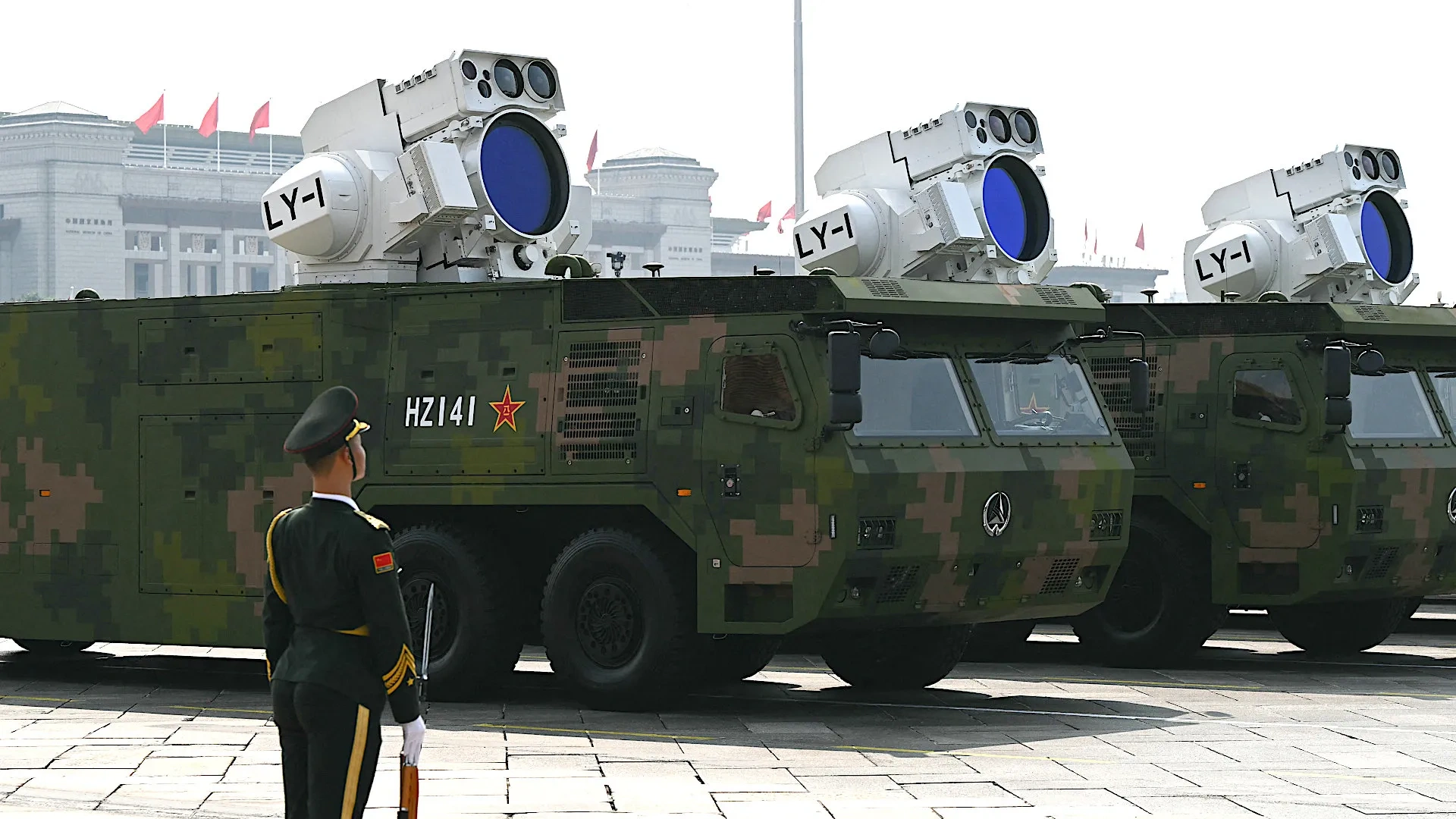
More significant than these contradictions is the report’s selective treatment of China’s conventional military advantages. This is particularly evident in space allocation: despite the U.S. possessing 100 times more nuclear warheads than China, the report devotes an entire chapter with 111 lines to Chinese “nuclear threats.” Meanwhile, China’s hypersonic weapons, laser weapons, and unmanned aerial systems receive no dedicated chapters, with only 6, 11, and 30 lines of discussion respectively—the greater China’s advantage, the less attention provided.
Professor Wang states bluntly that for equipment capable of transforming battlefield dynamics, including capabilities China possesses that the U.S. lacks, the selective omission serves a simple purpose: maintaining the narrative of ‘U.S. military and weapons superiority.’ This projection serves not merely to maintain appearances but to support a larger strategic misleading framework related to Taiwan Issue.
Misleading Framework Three: “China expects to be able to fight and win a war on Taiwan by the end of 2027”
“China expects to be able to fight and win a war on Taiwan by the end of 2027.” This represents the report’s most definitive assertion, using no qualifying language such as “probably” or “may.” Yet this categorical statement constitutes the most questionable assessment of Chinese military capability in the entire report.
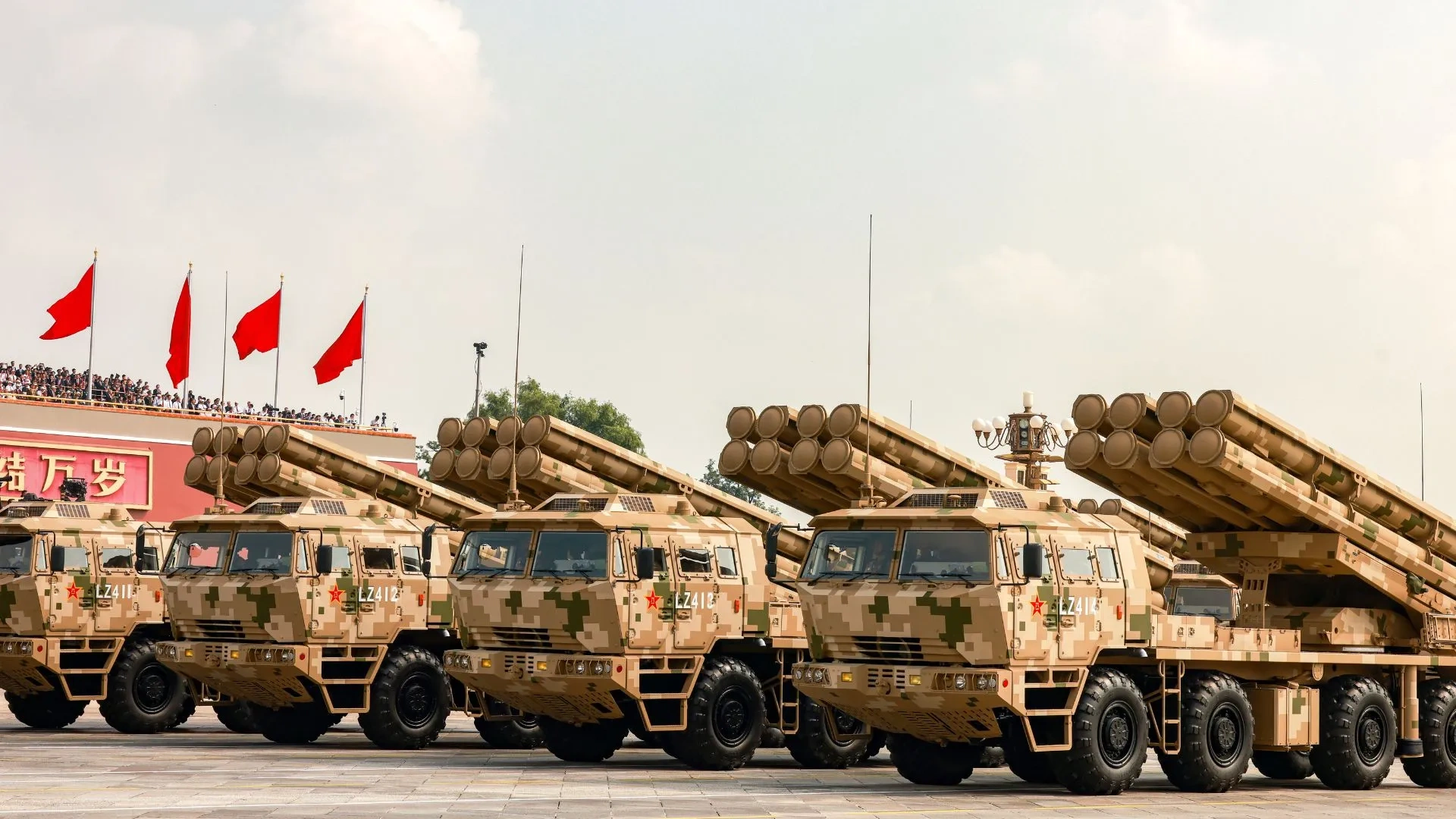
First, regarding Taiwan’s armed forces specifically, the PLA has long possessed decisive advantages. For example, the PHL-191 long-range rocket artillery system displayed at the 2025 China Victory Day Parade has a range exceeding 400 kilometers, enabling coverage of all Taiwan from Fujian coastal positions. With mainland rocket artillery systems capable of striking any target on Taiwan from coastal positions just 100 miles away.
Between 2018 and early 2022, seven major US think tank wargames revealed China achieved outright victory in four scenarios, secured stalemate while retaining territorial gains in two scenarios, and the US coalition’s sole “victory” came at pyrrhic cost with devastating losses on both sides. Notably, even this singular favorable outcome reportedly hinged on the unrealistic assumption that PLA forces would conduct only three hours of preparatory bombardment before launching amphibious operations. In actual operations, China would necessarily neutralize all defensive capabilities before landing, leaving no counterattack capacity on enemy beaches. Therefore, the assertion that “China won’t be capable until 2027” represents a misleading framework.
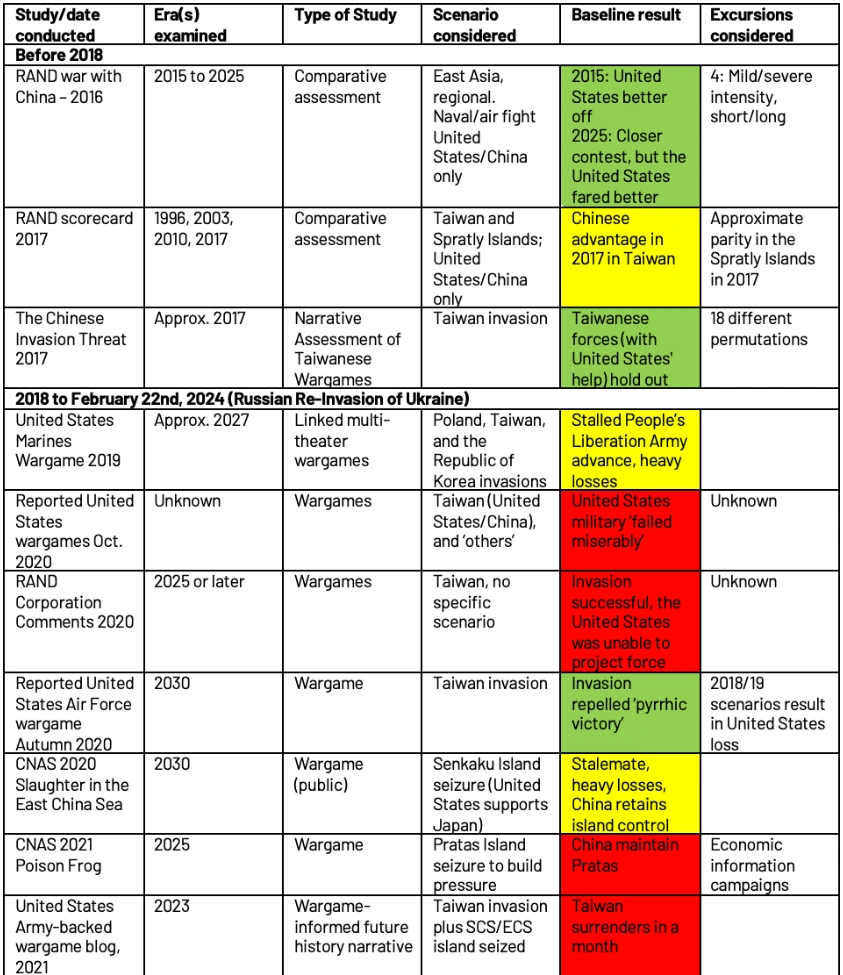 The studies table summarizes a range of twelve wargames across three distinct timeframes: three from pre-2018, seven from 2018 to February 2022, and two post-February 2022. Results are color-coded red when China can secure its objectives, yellow when objectives remain contested, and green when China cannot achieve its objectives against the United States
Second, this narrative rests on a false premise: simplifying the Taiwan Strait issue into PLA versus Taiwan armed forces confrontation. Despite explicitly stating “we do not seek to stifle, dominate, or humiliate China” and acknowledging that preventing Taiwan independence represents China’s core security interest, the report dedicates 338 lines to Taiwan Strait issues—approximately 11% of total content. The report’s own contradictions demonstrate that the U.S. has not abandoned the Taiwan card.
The opening rhetoric about “respecting China” and “more solid U.S.-China relations” maintains postural alignment with the Trump administration’s 2025 U.S. National Security Strategy, constructing a misleading framework of global strategic retrenchment. This coordination extends to similar contradictions: while the November strategy document painted comprehensive retrenchment, its Asia strategy explicitly aims to “Lead Asia with Strength.” The Trump administration is not abandoning hegemony but shifting from global to “key regional” hegemony.
The 2025 China Military Power Report confirms this approach, stating “President Trump seeks stable peace, fair trade, and mutually respectful relations with China, and the Department of Defense will ensure he can achieve these goals with military strength.” What the U.S. terms “stable peace,” other nations typically call military coercion. Precisely because of consistent American duplicity and coercion toward China, the PLA has continuously built capabilities for reunification while preparing for potential U.S.-Japan intervention. The “war on Taiwan” framing is therefore totally misleading.
Misleading framework Four: Forcing China Into Binary Choices
The report’s most carefully constructed framework guides readers toward binary thinking on Taiwan issues: either peaceful reunification or military reunification.
However, this binary framework misses the fundamental reality: China is not preparing for reunification; reunification is actively in progress across military, economic, and political dimensions.
Military dimension: PLA naval circumnavigation of Taiwan island has become routine, with coast guard operations in surrounding waters establishing sovereign management of sea areas. Around Kinmen, mainland fishing vessels no longer face seizure risks from Taiwan authorities, with mainland coast guard patrols ensuring their security.
Political and cultural dimension: Establishment of “Commemoration Day of Taiwan’s Restoration,” Fujian’s planning of supply channel to Kinmen and Matsu, the Quanzhou-Kinmen Expressway, and other infrastructure projects represent not future plans but current exercises of governance authority.
In this context, if the U.S. report continues analyzing issues through “peaceful versus military reunification” binary frameworks, it suggests either intelligence system failure in understanding 21st-century integrated strategic approaches, or deliberate construction of easily manipulated misleading frameworks for international information operations, inducing global perception into an “either peace or violence” false dichotomy.
Between peaceful and military reunification exists not a black-and-white boundary but a continuous spectrum of graduated options. If external forces insist on playing the Taiwan card, China retains additional mechanisms to accelerate the ongoing reunification.
First mechanism: Boarding inspections of Taiwan-bound transport vessels. The Anti-Secession Law grants Chinese law enforcement authority to conduct inspections related to “seeking independence through military means.” Recent U.S. arms sales to Taiwan have reached record levels, including offensive weapons with ranges reaching Fujian province. China possesses clear legal basis for inspecting ships transporting Taiwan-bound weapons, further exercising sovereignty over Taiwan Province.
Moreover, the U.S. recently seized Venezuelan oil tankers without providing adequate legal justification to the international community. If such unilateral actions are permissible for the United States on the high seas, why would similar measures be impermissible for China in enforcing sovereignty over its own province?
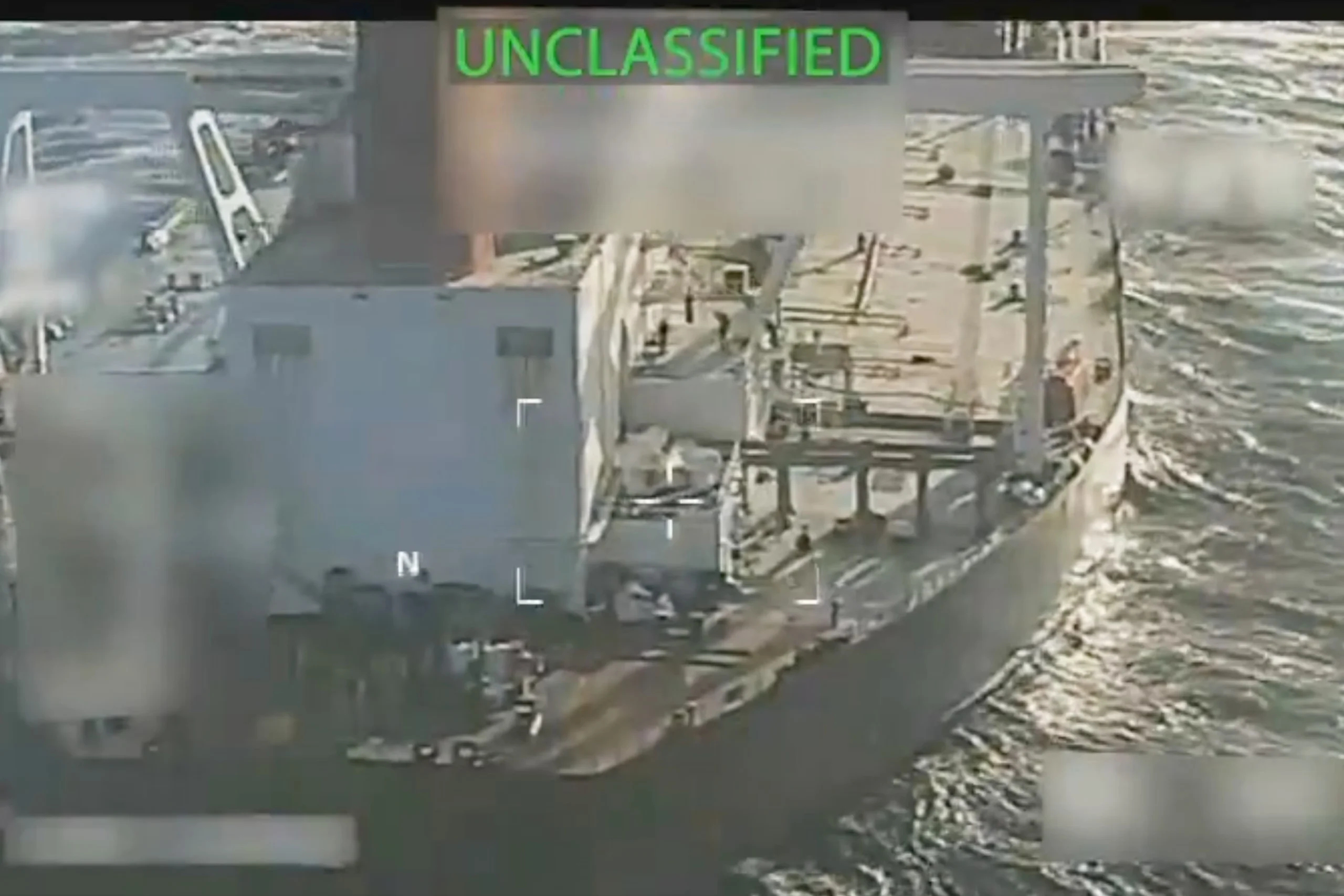 An image posted on US attorney general Pam Bondi’s X account, and partially redacted by the source, shows an oil tanker being seized by US forces off the coast of Venezuela.
Beyond consolidating governance authority, boarding inspections could neutralize U.S. benefits from the Taiwan card. The U.S. emphasizes military reunification urgency and projects military superiority to convince Taiwan and other Asian allies to purchase American weapons. If China conducts inspections or detentions of arms shipments, ensuring that weapons are purchased but never received, U.S. arms sales would significantly decrease. Such measures, based on the Anti-Secession Law and avoiding large-scale violence against external interference, would prove more precise than comprehensive blockades while better demonstrating governance authority.
Second mechanism: Initiating “peaceful reunification negotiations.” Chinese Mainland could extend clear invitations to all Taiwan sectors, negotiating not “whether to reunify” but “how to reunify.” Within a reunification-oriented negotiation framework, Taiwan’s various parties and social sectors could express demands and concerns. Invitees could include ruling party members, opposition representatives, local governments in Kinmen, Matsu, and Penghu, enterprises like TSMC, and various social organizations.
Within this framework, topics could be highly specific. TSMC might propose wartime facility protection, while the mainland could demand strict prohibition of military asset deployment within facilities. This represents not empty political declaration but concrete interest coordination.
Such negotiations would carry multiple strategic values: Internally, they would divide Taiwan’s political forces. If opposition parties and local governments engage while the ruling party refuses, the latter faces isolation. Externally, public consultation would demonstrate to the international community that the mainland has exhausted all peaceful options. Whoever refuses negotiations essentially refuses peace. Should circumstances require force, the international community would clearly see: not that the mainland denied peaceful reunification opportunities, but that Taiwan separatist forces firmly rejected peace.
Conclusion: Seeing Through the Binary Framework
Returning to the U.S. report’s core issues, the “China threat theory” and “2027 timeline” essentially support the largest strategic misleading binary framework. Their common purpose is convincing allies to increase defense spending, sharing the burden of pressuring China on behalf of the U.S., and purchasing more American weapons for profit extraction.
However, regardless of how U.S. reports frame these issues for allies, one fundamental reality remains: China’s reunification is in progress. China’s approach has long transcended Western-imposed binary frameworks, combining civil and military elements in an integrated strategy.
This approach has historical precedent. In January 1949, Communist forces completely encircled Beijing, making Nationalist General Fu Zuoyi’s position militarily hopeless. Simultaneously, Communist negotiators conducted intensive political engagement, offering Fu personal safety guarantees and a role in the new government. This twin-track strategy—overwhelming military pressure combined with face-saving political options—led to the peaceful handover known as the ‘Peaceful Liberation of Beiping,’ sparing China’s ancient capital from the urban warfare. Today, with Chinese Mainland possessing stronger regional denial capabilities in the Taiwan Strait and greater global economic influence, any attempt to obstruct this ongoing process will only add fuel to the fire, accelerating the very reunification it seeks to prevent.
Editor: Charriot Zhai
https://docs.un.org/zh/CD/2452
https://www.mfa.gov.cn/wjb_673085/zzjg_673183/jks_674633/zclc_674645/wkhdd_674655/200802/t20080229_7669109.shtml
https://cimsec.org/red-dragon-rising-insights-from-a-decade-of-wargames/
GLY2
We should keep in mind, most of the propaganda from the US Military Industrial Complex is directed at domestic consumption. Often we see what they say as untrue, inconsistent, incoherent, ineffective, because we assume the propaganda was to make a stronger military or a more effective military. Most of the time, there is only one purpose: To boost the military budget to ever higher levels.
That is it. They are not trying to make the military “better”. All the conclusions lead to More Spending. If you keep this in mind, everything makes a lot more sense. All the smears, fear mongering, hate creation, competitive comparisons, how they are done, are aimed at Enlarging the Military Budget.
Why? Because neither “success” nor “effectiveness” are the aim of the MIC. They only want an ever increasing budget. That is how they run their Corruption, how they siphon money from the country to themselves. The Pentage has not passed an accounting audit for SIX years, and no one in Congress complains.
Like many past Chinese dynasties that fell, the US today is steep in Corruption. If we realize their goal is to just increase the military budget regardless, then we see that they are actually very successful in their goal, and their actions make sense.