

South Africa’s democracy is just over thirty years old, and we now find ourselves at a complex and uncertain juncture. No longer the world’s poster child for a new democracy, we have matured—but with that maturity come challenges that raise difficult questions about our identity and direction. While I would not describe the country as being in an existential crisis, there is a noticeable decline in public confidence in our political leadership, driven by domestic events, shifting political perceptions, and contradictions between our national narrative and our international image.
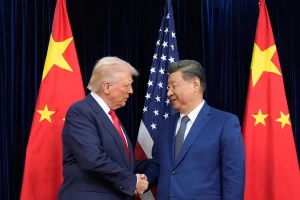
On the global stage, South Africa continues to play a visible role. We have taken Israel to the International Criminal Court (ICC) and the International Court of Justice (ICJ), reaffirming our tradition of advocating for justice, decolonization, and anti-apartheid principles. Yet, at the same time, certain groups within the white community—particularly far-right organizations like AfriForum—have lobbied the Trump administration in the United States with false claims, including the notion of a so-called “white genocide.” These actions distort reality, exacerbate racial tensions, and complicate our already delicate relationship with the U.S.
Domestically, South Africa remains deeply divided along racial and economic lines. Centuries of colonialism and apartheid entrenched white economic dominance, the effects of which remain evident today. Black South Africans often must work twice as hard to access education, basic services, employment, and meaningful economic participation. Policies aimed at closing these gaps are essential, yet resistance from certain quarters highlights the persistence of historical inequalities.
Politically, our landscape is shifting. Liberation movements that once commanded majority support no longer do, and coalition governments now govern at both national and metropolitan levels. In many ways, this reflects democratic maturity: political parties have recognized the necessity of power-sharing and resisted authoritarian tendencies. Yet coalition governance also brings instability, requiring negotiation among parties ranging from the far left to the center-right, which complicates the implementation of progressive policies in a society still marked by deep inequality.
South Africans are understandably impatient. Inequality has persisted for far too long, and public institutions are under strain from corruption, consumerism, and a neoliberal focus on wealth accumulation over shared prosperity. As more individuals seek access to state resources for personal gain, these pressures undermine institutional effectiveness.
Despite these challenges, I remain cautiously optimistic. South Africa has demonstrated genuine democratic resilience, particularly in embracing coalition politics without succumbing to authoritarian reflexes. Our immediate task is to rebuild public trust, tackle inequality with seriousness, and continue striving toward a national consciousness and unity that remains, in many ways, unfinished.
Editor: Yangwen