

On November 14, 2026, China announced two updated medicine lists in Suzhou, an eastern Chinese city: one for innovative medicines covered by commercial health insurance, and the other for medicines covered by its national basic medical, maternity, and work-injury insurance programs. The update added 107 medicines, including a record 51 Class 1 innovative drugs—original therapies not previously marketed anywhere in the world. The national list now contains 3,331 medicines.
One addition stood out: Carteyva (relmacabtagene autoleucel injection), a CAR-T cancer therapy medicine previously priced at ¥1.29 million (approximately $193,400) per dose, was included in the national basic medical insurance drug list for the first time.
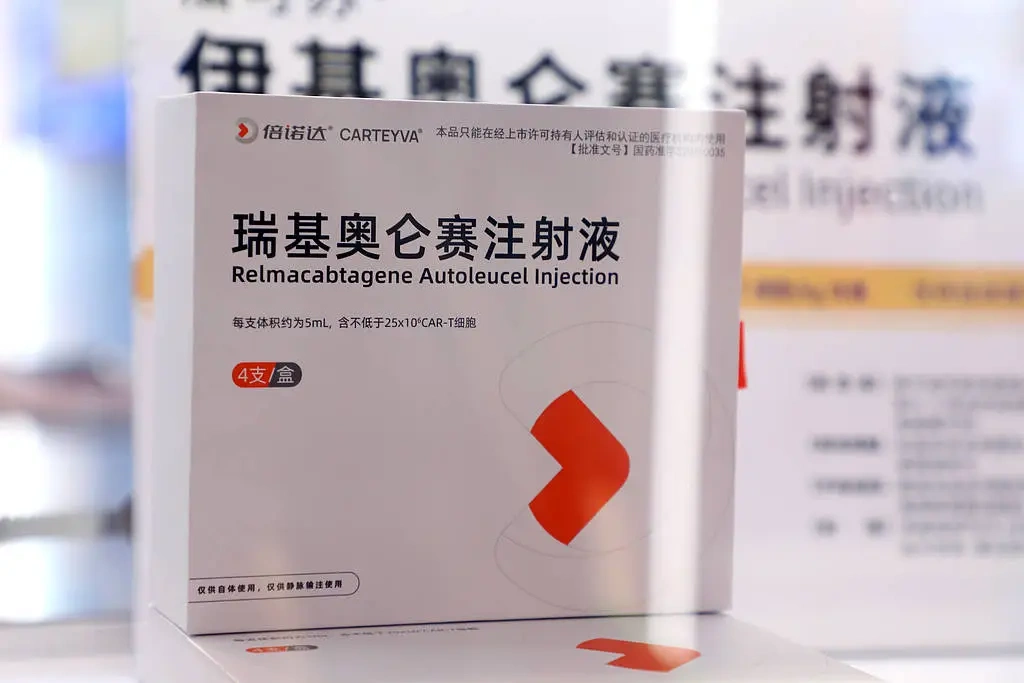
CAR-T therapies are sometimes called “living cancer drugs.” Rather than administering a conventional medicine, doctors extract a patient’s T cells, genetically modify them in a laboratory to recognize cancer cells, grow them into hundreds of millions of cells, and infuse them back into the patient. Because each treatment is made for an individual, production is exceptionally costly. Ten CAR-T products had already reached the Chinese market, generally priced between ¥900,000 and ¥1.3 million (approximately $135,000–$195,000). Most patients had to pay for them entirely out of pocket, putting the treatment beyond the reach of many people with relapsed or refractory lymphoma. From January 1, 2027, Carteyva will have an insurance payment standard of ¥288,600 (approximately $43,300)—a reduction of 77.63%. Based on an illustrative inpatient reimbursement rate of around 70% under the resident insurance scheme, eligible patients could see their out-of-pocket costs fall below ¥100,000 (less than $15,000).
To understand the significance of that ¥288,600 figure, we have to trace back 24 years. In 2002, Lu Yong, a 34-year-old businessman in the textile industry, was diagnosed with chronic myeloid leukemia. Doctors prescribed the imported cancer drug Gleevec, then costing¥23,500 (approximately $3,520) for a month’s supply, or nearly ¥800 (approximately $120) a day. Within two years, he had spent almost ¥600,000 (nearly $90,000) and exhausted his business savings. In 2004, Lu found a far cheaper generic version in India and shared information about how to obtain it with other patients. Then he was prosecuted in 2014 on suspicion of selling “counterfeit drugs.” Hundreds of leukemia patients signed a petition asking prosecutors to spare him criminal punishment. The prosecution withdrew its case in January 2015, and Lu was released. His experience later inspired the hit Chinese film Dying to Survive.
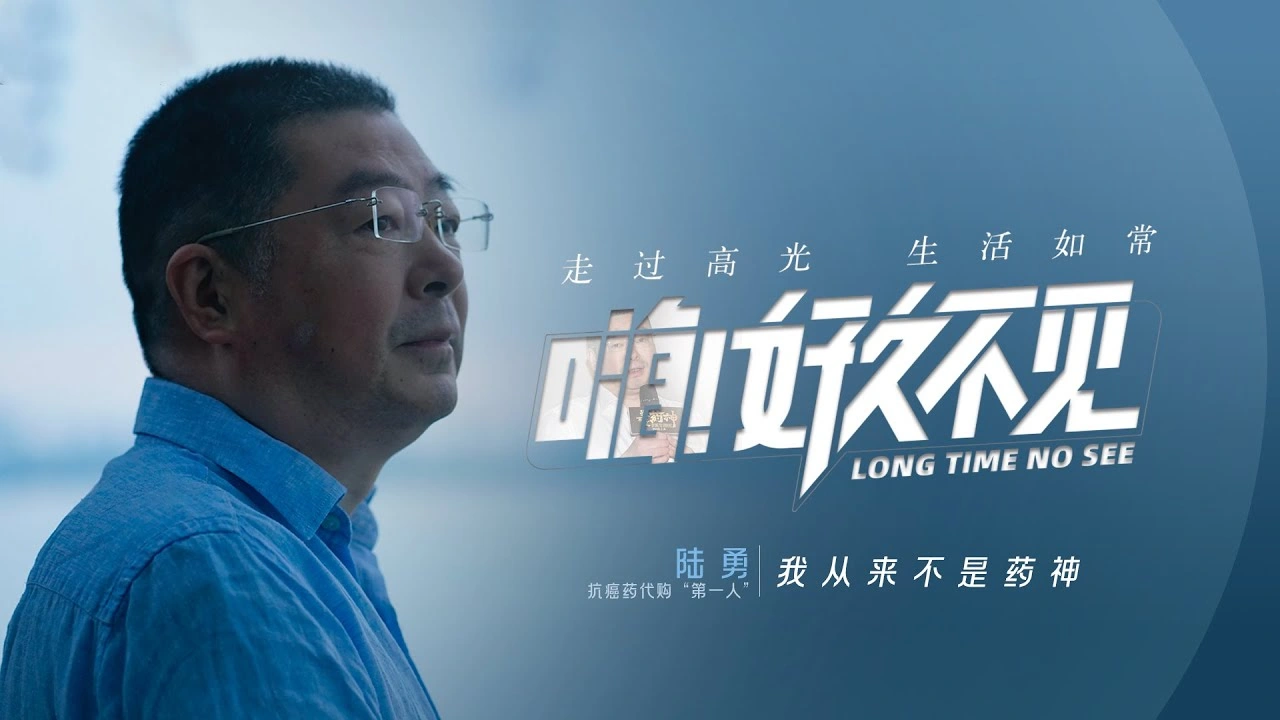 In 2023, CCTV produced a documentary about Lu Yong, highlighting his role as a pivotal figure in driving the inclusion of anti-leukemia drugs in national medical insurance negotiations.
When Dying to Survive reached cinemas in July 2018, one line resonated especially deeply: “There is only one disease in the world: poverty.” The point was about affordability, not medical science. Yet policy was already changing before the film appeared. Gleevec was added to China’s national insurance drug list in 2017, with more than 70% of eligible costs reimbursed. On May 1, 2018, import tariffs were eliminated on certain medicines, including cancer treatments. Then, in December 2019, amendments to China’s Drug Administration Law came into force, meaning that importing small quantities of medicines legally marketed abroad would no longer automatically be treated as dealing in counterfeit drugs.
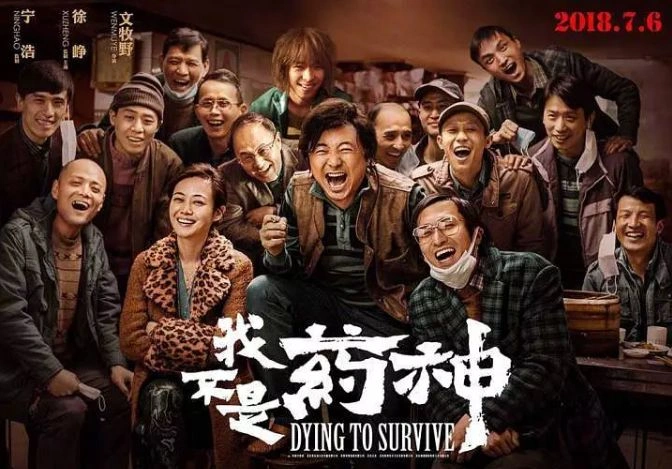 A post of the movie Dying to Survive
Lu made headlines again in October 2026. After 24 years of treatment and more than 35,000 tablets, he began reducing his dose by half under medical supervision. If his next checkup, scheduled for January 2027, goes well, he may be able to discontinue the medicine altogether. People’s Daily, the newspaper of the Central Committee of the Communist Party of China, described his journey as a transition from “surviving” to “living better.” His next appointment falls in the same month that the newly negotiated CAR-T payment standard takes effect.
Whether a patient can afford treatment depends in large part on China’s comprehensive public health insurance system. The government, employers, and individuals contribute to a shared pool of funds that helps cover medical expenses when people fall ill. In effect, the healthy help support the sick, while younger generations help support the elderly. The foundations of this system were laid in 1998 with the introduction of health insurance for urban employees. The New Rural Cooperative Medical Scheme followed in 2003, and a health insurance program for urban residents was piloted in 2007. In 2016, China began merging the latter two programs into a unified insurance system for urban and rural residents. Two years later, the National Healthcare Security Administration (NHSA) was established, consolidating responsibilities previously divided among several government agencies. On August 28, 2026, China adopted its first dedicated Healthcare Security Law, which will take effect on January 1, 2027.
Today, China’s basic health insurance system has two main components. The first is Employee Basic Medical Insurance, covering 389 million employees, retirees, and self-employed or other flexible workers. For employees with regular employers, companies generally contribute around 6% of their total payroll, while workers pay 2% of their wages. Flexible workers pay their own contributions. Most participants have personal medical insurance accounts that can be used to pay for outpatient visits and purchases at designated pharmacies. Under certain conditions, these funds can also be shared with spouses, parents, children, and other eligible relatives. The second component is Urban and Rural Resident Basic Medical Insurance, covering 942 million people who are not enrolled in the employee scheme, including farmers, elderly people, children, and some gig workers and small business owners. This program has no personal accounts and requires annual contributions. Under the policies announced in 2026, the government’s annual subsidy was raised to ¥724 (approximately $60) per person, while the individual contribution standard for the 2027 coverage year was kept at ¥400 (approximately $109). Based on these figures, the government contributes 1.81 times as much as individuals, accounting for approximately 64% of the combined funding. Together, the two programs cover 1.331 billion people, or roughly 95% of China’s population.
Most of this money goes into pooled insurance funds, which reimburse medical expenses according to established rules. Insurance does not cover every expense in full. Coverage is primarily determined by three official lists: approved medications, medical consumables, and healthcare services. Drugs outside the approved lists and certain premium medical services are generally excluded. Covered medications are further divided into Category A and Category B. Category A drugs do not require an upfront percentage-based copayment, while patients must initially pay a portion of the cost of Category B drugs before the remaining eligible expenses are reimbursed under insurance rules. Reimbursement rates also vary. In 2025, insurance funds covered 84.1% of eligible inpatient expenses under the employee scheme and 66.0% under the resident scheme. For ordinary outpatient care under resident insurance, the reimbursement rate for eligible expenses is, in principle, no lower than 50%.
Two additional rules govern reimbursement: deductibles and annual payment caps. The deductible is the amount patients must pay before insurance begins reimbursing eligible expenses. In some regions, routine outpatient visits at community-level medical facilities under resident insurance have no deductible, meaning reimbursement begins with the first eligible expense. Deductibles generally apply to hospitalization and to certain outpatient services under employee insurance. Meanwhile, China is encouraging patients to move through its tiered healthcare system. Within the same insurance pooling region, patients referred from primary care facilities to higher-level hospitals for inpatient treatment may have their deductibles calculated cumulatively, while those transferred back to primary care facilities are not charged another inpatient deductible during the same episode of illness. Annual payment caps set the maximum amount insurance funds will pay in a given year. Limits for outpatient and inpatient care vary by region. For residents, the combined annual payment ceiling under basic medical insurance and critical illness insurance should, in principle, reach approximately six times the local per capita disposable income.
For patients facing serious illnesses and substantial medical bills, additional layers of protection are available. Residents covered by basic medical insurance can also benefit from Critical Illness Insurance, which provides further reimbursement when eligible medical expenses remaining after basic insurance reimbursement exceed a specified threshold. In principle, this threshold cannot exceed half of the previous year’s local per capita disposable income, and the reimbursement rate must be at least 60%. For recipients of minimum living allowances, people receiving special hardship assistance, and those who have fallen back into poverty or are at risk of doing so, the threshold is reduced by another 50%, the reimbursement rate increases by at least five percentage points, and the maximum payment limit is removed in accordance with applicable rules. Employees have a separate program providing supplementary coverage for high medical expenses. For financially vulnerable patients who meet the eligibility requirements, Medical Assistance offers a further safety net through public assistance funds. Together, basic medical insurance, critical illness insurance, and medical assistance form China’s three-tier healthcare protection system.
In 2025, China’s basic medical insurance funds collected ¥3.59 trillion (approximately $538.2 billion) in revenue and paid out ¥3.01 trillion (approximately $451.3 billion) in benefits, leaving a current-year surplus of ¥525.772 billion (approximately $78.8 billion) in the pooled funds. The system remained broadly stable. By the end of 2025, more than 1.25 billion people had activated their digital medical insurance credentials. Direct settlement of medical expenses across provincial boundaries had been used a cumulative 737 million times, saving patients from having to pay ¥804.871 billion (approximately $120.7 billion) upfront. For many migrant workers and elderly people living with their adult children away from their hometowns, reimbursement once meant collecting stacks of receipts and returning home to file claims. Today, eligible patients can settle their bills directly where they receive treatment. By September 2026, Long-Term Care Insurance, often described as China’s “sixth branch of social insurance,” had enrolled more than 320 million people and provided care services to over 4.6 million people with significant care needs on a cumulative basis.
In short, China’s healthcare system does not provide “free healthcare.” It operates on a principle of shared contributions, government-backed protection, and access to benefits according to medical need and insurance rules. The NHSA has previously explained that making all healthcare services free at the point of use could lead to unnecessary consumption of medical resources and ultimately narrow the range of essential services the system can sustain. China’s health insurance system is designed to cover essential medical needs, not every possible expense. Even so, for the vast majority of ordinary people, it substantially reduces the financial burden of illness, making it far less likely that a family will have to shoulder the entire cost of a serious disease on its own.
That distinction matters when considering the CAR-T therapy discussed at the beginning of this article. The ¥288,600 figure is an insurance payment standard: the benchmark against which the insurance fund and the patient settle the cost. It is not the patient’s personal bill. If approximately 70% is reimbursed, the fund would pay about ¥200,000 ($30,000) and the patient roughly ¥87,000 ($13,000). These are illustrative figures, subject to the applicable coverage rules.
Of course, coverage still has boundaries. Patients generally pay for medicines outside the official lists, premium hospital wards, and certain imported medical supplies themselves. Costs beyond annual reimbursement caps may require supplementary insurance. This helps explain why China is developing commercial health policies, locally tailored supplementary schemes known as Huiminbao, and charitable assistance alongside basic insurance: different arrangements can absorb different parts of the financial burden. Yet for a family previously facing a ¥1.29 million CAR-T cancer-drug bill, reducing the cost from an amount that might remain unaffordable even after selling their home to one they may just be able to manage can make a life-or-death difference.
China has revised its national insurance drug list every year since 2018, negotiating access to new and improved medicines in successive rounds. The list grew from just over 300 drugs when the system was established to 3,253 in 2025 and 3,331 in the latest 2026 edition.
Those price reductions are the product of a structured negotiating system, rather than the rhetorical skill of a single official. The first step is the dynamic adjustment of the national reimbursement drug list. Pharmaceutical companies submit applications, which are reviewed by experts. The healthcare security authorities then convene specialists in pharmacoeconomics and health insurance fund expenditure to independently calculate the maximum price the insurance system can accept. Negotiators subsequently meet face-to-face with pharmaceutical companies to bargain over the price. Each company has two opportunities to submit a price offer. If its second offer still exceeds 115% of the ceiling determined by the insurance authorities, negotiations are terminated immediately. Only offers within that threshold can proceed to further bargaining, and the final agreed price cannot exceed the ceiling. Successful negotiations generally result in a two-year agreement, after which the terms may be renewed or renegotiated based on actual sales, insurance fund expenditures, and other factors.
The second element is leveraging market size to secure lower prices. With 1.331 billion people enrolled in basic medical insurance and a nationally unified reimbursement drug list, China has one of the world’s largest health insurance markets by population covered. For pharmaceutical companies, accepting lower prices in exchange for inclusion on the reimbursement list creates an opportunity to reach more patients and substantially expand sales. For the insurance authorities, every yuan spent must be justified to the people whose contributions sustain the system. One particularly famous example came in 2021, during a negotiation that became known across China as the “soul-crushing price bargain.” Zhang Jinni, representing the national healthcare security authorities, negotiated the price of nusinersen, a treatment for spinal muscular atrophy (SMA), down from approximately ¥700,000 ($105,000) per injection to just ¥33,000 ($4,950) after several rounds of bargaining. Her words during the negotiation became widely quoted: “No small group should ever be left behind.”
The third mechanism is centralized volume-based procurement. The government pools purchasing demand from public medical institutions and uses guaranteed procurement volumes to encourage pharmaceutical and medical device manufacturers to compete on price. Across the first six rounds of national drug procurement, winning bids resulted in an average price reduction of 53%. The average price of coronary stents fell from around ¥13,000 (approximately $1,950) to just ¥700 (approximately $105), while artificial hip joints dropped from approximately ¥35,000 (approximately $5,250) to ¥7,000 (approximately $1,050), and knee joints from ¥32,000 (approximately $4,800) to ¥5,000 (approximately $750). Beginning in 2017, public hospitals nationwide eliminated markups on medicines, with the exception of traditional Chinese herbal decoction pieces. Hospitals were required to sell covered medicines at procurement cost, ending the former practice of subsidizing hospital operations through profits on drug sales. For certain negotiated drugs that are not yet stocked by hospitals, patients can obtain prescriptions and purchase them at designated pharmacies while still receiving reimbursement under applicable insurance rules. This arrangement is known as the “dual-channel” mechanism, allowing eligible medicines to be supplied and reimbursed through both hospitals and designated retail pharmacies.
The figures illustrate the effect. Negotiations brought 36 drugs onto the insurance list in 2017 at an average discount of 44%. A dedicated round in 2018 reduced the prices of 17 cancer medicines by an average of 56.7%, while 74 newly added drugs saw average reductions of 61.71% in 2021. By the end of October 2024, medicines covered by active negotiated agreements had been used in 830 million patient visits or treatment episodes, reducing patients’ financial burden by more than ¥880 billion. Over eight years, China also conducted 12 rounds of national procurement for medicines and seven for high-value medical consumables, covering 555 drugs.
The same type of CAR-T treatment presents a markedly different financial picture in the United States. In 2017, American regulators approved the world’s first two CAR-T therapies: Novartis’s Kymriah, priced at $475,000, and Gilead’s Yescarta, priced at $373,000. Those figures cover the medicines alone. Once hospitalization and the management of complications are factored in, the full course of treatment can cost close to $1 million.
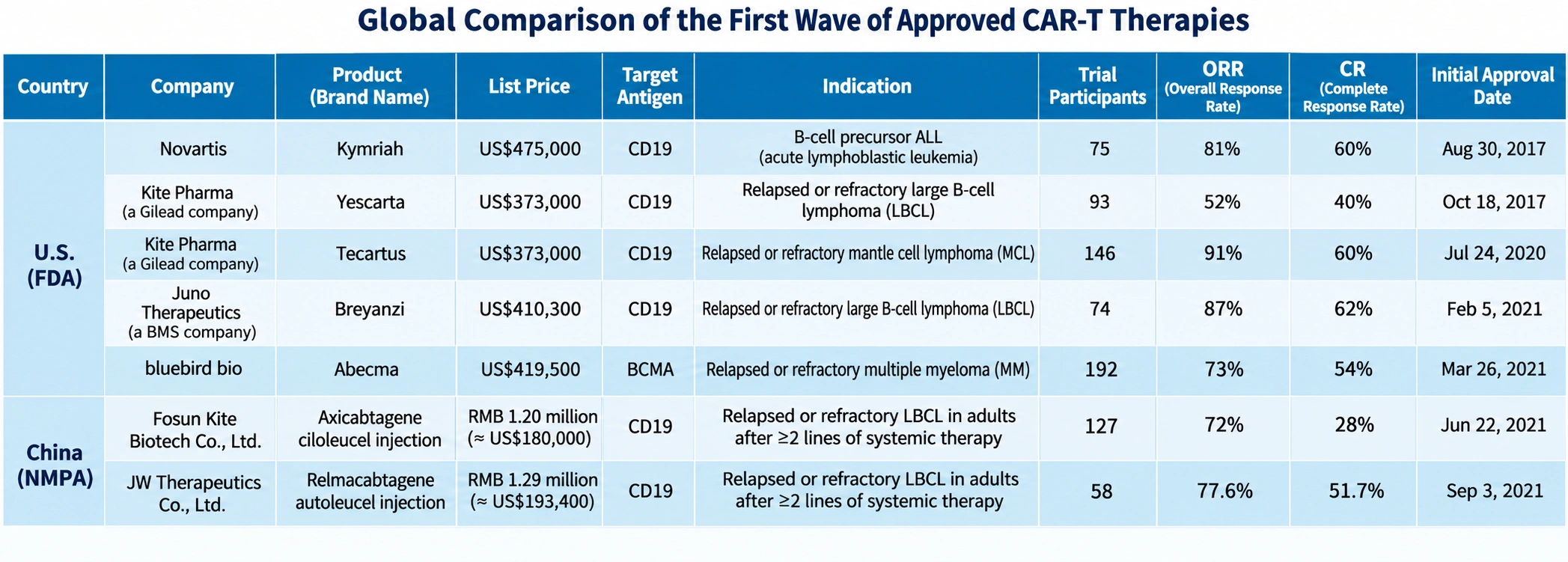
For decades, the United States did not lack the ability to negotiate drug prices. Instead, its legal framework restricted the federal government’s power to negotiate directly. The American healthcare system relies heavily on private insurance, with most people obtaining coverage through their employers. The government provides Medicare primarily for the old and certain people with disabilities, while Medicaid, jointly funded by federal and state governments, covers eligible low-income Americans and other qualifying groups. In 2003, Congress passed the Medicare Prescription Drug, Improvement, and Modernization Act, which included a “noninterference clause” prohibiting the federal government from directly intervening in price negotiations between Medicare prescription drug plans and pharmaceutical companies. Over time, drug manufacturers, pharmacy benefit managers (PBMs), and insurance companies developed a complex system of pricing, rebates, and financial arrangements. It was not until the passage of the Inflation Reduction Act in 2022 that Medicare gained the authority to negotiate prices directly for certain high-expenditure prescription drugs. On January 1, 2026, the negotiated prices for the first ten drugs took effect, representing reductions of 38% to 79% from their previous list prices.
The differences between these healthcare systems become particularly striking when examining their national healthcare spending. In 2024, total US healthcare expenditure reached approximately $5.3 trillion, accounting for 18.0% of GDP. China’s total healthcare expenditure stood at around ¥9.09 trillion (approximately $1.36 trillion), or 6.7% of GDP. With less than one-quarter of China’s population, the United States spent more than four times as much on healthcare, yet life expectancy at birth in both countries stood at 79.0 years that year.
Where does all that money go? Pharmaceutical pricing, the rebate system operated by pharmacy benefit managers, insurance companies’ administrative costs and profits, hospital charges, and the broader complexity of the healthcare bureaucracy all contribute to America’s exceptionally high medical costs. For ordinary Americans, the financial consequences are reflected in another set of figures. In 2022, the Kaiser Family Foundation (KFF) estimated that roughly 100 million American adults carried some form of medical debt. A 2019 study found that 66.5% of surveyed bankruptcy filers identified medical bills or income losses caused by illness as one of the factors contributing to their bankruptcy. In 2024, 27.2 million Americans still lacked health insurance. In 2026, following the expiration of the enhanced health insurance premium subsidies introduced during the COVID-19 pandemic and subsequently extended, the average monthly premium paid by enrollees in Affordable Care Act (ACA) marketplaces, after applicable premium tax credits, rose from $113 in 2025 to $178 in 2026—an increase of 58%.
These figures may seem abstract, but some patients have already responded by seeking treatment abroad. In late 2023, New York computer engineer Max Doppelt learned that his mother, Debbie, had a rare type of lung cancer. By December 2024, the cancer had spread to her brain. A month later, doctors told her she was ineligible for a clinical trial. With few options left, an American doctor reportedly told Max: “It’s too bad your mother isn’t Chinese. She could buy this drug at a pharmacy in China.” The medicine was sunvozertinib, a targeted therapy developed by a Chinese company and approved in China in August 2023. It was not yet available in the United States, regardless of a patient’s ability to pay. Max traveled to Shanghai and bought 26 boxes for about $10,000. After 19 months of treatment, his mother’s condition had largely stabilized. The drug did not reach the US market until October 2026. According to Max, at least 30 other Americans he knew of had also traveled to China to obtain it.
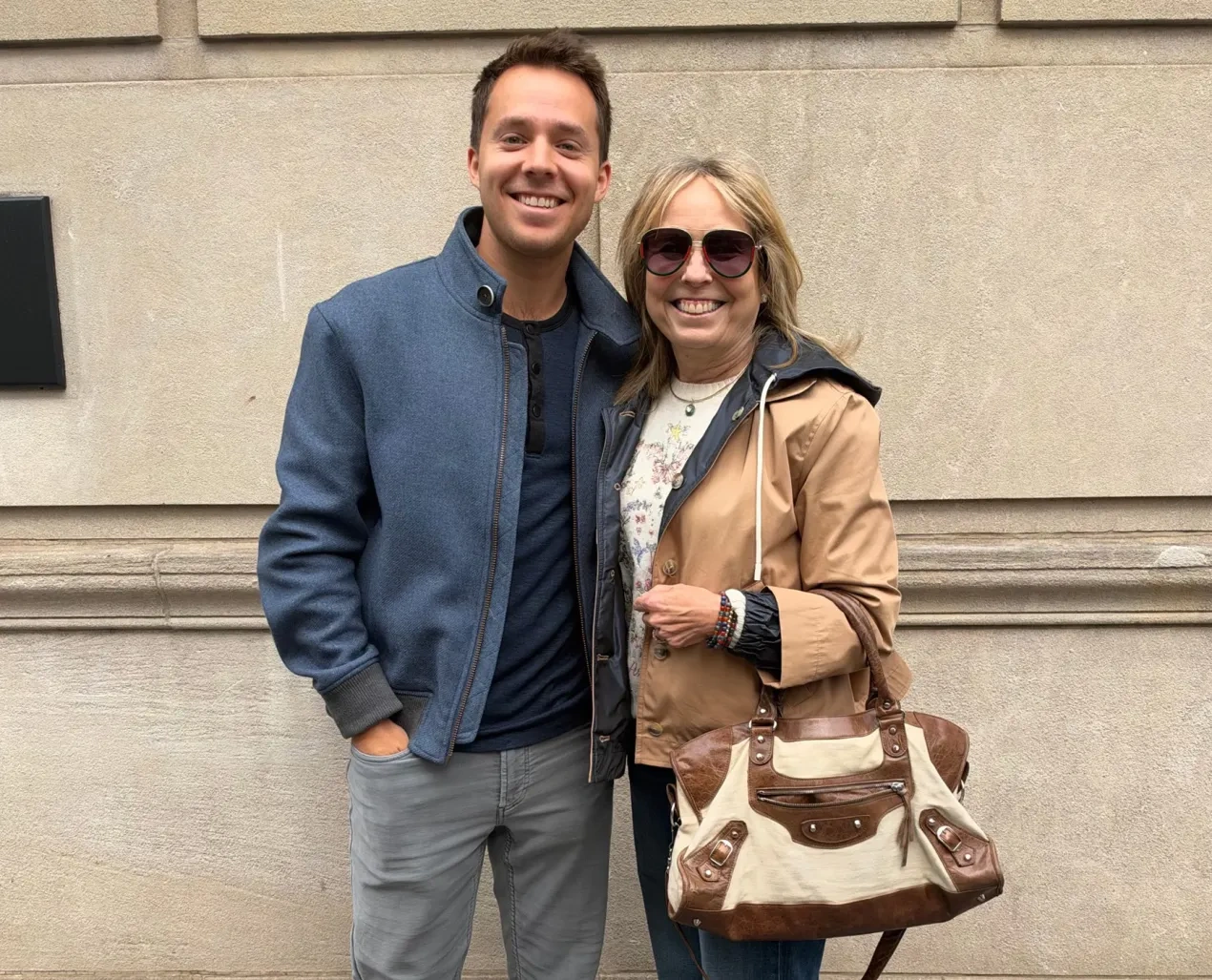 Max Doppelt with his mother Debbie
A striking reversal has taken place. Chinese patients once went to India in search of affordable generics; now some Americans are traveling to China for innovative, original medicines. The patients’ need for treatment is the same. What has changed is where the medicines are available—and how healthcare systems determine access to them. And when a system fails to resolve deep frustrations through negotiation and reform, those frustrations can erupt in public life.
On the morning of December 4, 2024, UnitedHealthcare CEO Brian Thompson, 50, was shot and killed on Sixth Avenue in Manhattan as he headed to an investor conference. Five days later, police arrested 26-year-old Luigi Mangione at a McDonald’s in Pennsylvania. Investigators said ammunition recovered at the scene bore the words “delay,” “deny,” and “depose,” an apparent reference to Delay, Deny, Defend, a book critical of the American insurance industry.
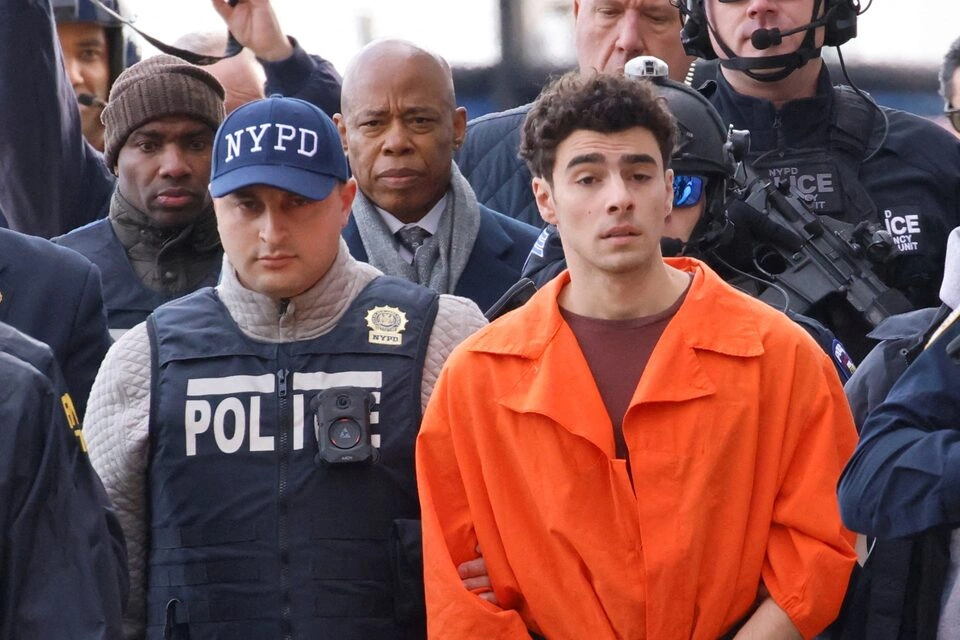
The public reaction revealed, in some ways, even more about the underlying issues than the crime itself. In a survey conducted after the shooting, Emerson College found that 17% of Americans regarded the killing as “acceptable”; among 18- to 29-year-olds, the figure reached 41%. An Associated Press–NORC poll found that 69% of respondents thought insurers’ denials of coverage bore at least some responsibility for the incident, while 67% said the same about industry profits. A Mangione look-alike gathering was held in New York’s Washington Square Park, “Free Luigi” merchandise sold online, and a legal defense fund raised more than $1.5 million from over 40,000 donors. On August 14, 2026, Mangione pleaded guilty in federal court to two counts of interstate stalking resulting in death, with sentencing scheduled for December 18.
Violence cannot resolve these problems. But why would four in ten young Americans consider a killing acceptable? The answer cannot be reduced to one man. UnitedHealthcare reported revenue of $400.278 billion and net income of $14.4 billion in 2024; its late CEO had received $10.2 million in compensation in 2023. In November 2023, UnitedHealth was named in a class-action lawsuit concerning an algorithm used to predict hospital stays, which plaintiffs alleged produced errors at a rate as high as 90%. After the shooting, the book criticizing the insurance industry surged up bestseller lists. The anger had been building long before the gunfire.
China has taken another approach to tensions of this kind. Faced with high drug prices, it pools the purchasing power of more than 1.3 billion insured people and negotiates on their behalf. The United States, too, had the potential to bargain collectively. Yet drug-industry lobbying, insurers’ profit interests, and the noninterference clause kept that option largely blocked for more than two decades.
What enables China’s system to offer protection on such a scale? Its basic insurance arrangements were built around public objectives rather than profit: government leadership, near-universal participation, shared financial responsibility, and public support for those most in need. Benefits differ, but a basic floor of protection remains. Public subsidies and medical assistance extend that floor even to remote rural areas and households with very limited means. In 2025, participation among low-income rural residents and people lifted out of poverty remained above 99%, while eligible inpatient expenses for low-income rural residents were reimbursed at a rate of 90%. The International Social Security Association has described China’s reforms as a successful model for developing countries and honored the Chinese government with its Award for Outstanding Achievement in Social Security.
This system, of course, also face challenges. Rapid population aging raises the challenge of maintaining the insurance funds’ long-term financial balance. The growing price of innovative treatments adds to spending pressures, while disparities in benefits persist across regions and between cities and the countryside. China has sought to address these problems incrementally, updating its drug list each year, conducting successive rounds of centralized procurement, and gradually strengthening areas where protection remains weak. Its 15th Five-Year Plan for Universal Medical Security, published in 2026, identifies six priorities: fairness, the rule of law, security, digital and intelligent development, coordination, and scientific decision-making.
On January 1, 2027, both the updated insurance drug list and the Medical Security Law will come into effect. Around that date, a patient with lymphoma may receive an infusion of genetically modified T cells made from their own body. Lu Yong, meanwhile, may be ready to take his final Gleevec tablet. A country’s level of civilization should be judged not by the range of choices available to its wealthiest citizens, but by its willingness to negotiate down the price of lifesaving medicines, coin by coin, for the most ordinary people.
Editor: Chang Zhangjin
http://www.nhsa.gov.cn/art/2026/11/14/art_14_23385.html
https://www.cei.cn//defaultsite/s/article/2026/11/17/4b4ff607-9d914745-01a1-e8d0b317-164a_2026.html
http://m.news.cntv.cn/2015/01/15/ARTI1421304437542507.shtml
http://ip.people.com.cn/n/2014/1222/c136655-26250881.html
https://m.gmw.cn/2026-11/06/content_1304583243.htm
https://app.www.gov.cn/govdata/gov/201804/12/422860/article.html
http://paper.people.com.cn/rmzk/html/2019-10/29/content_1953085.htm
https://tv.cctv.com/2026/10/14/VIDEKCwBI7m9DUvWhjSA1KD9261014.shtml
https://www.nhsa.gov.cn/art/1998/12/14/art_37_1189.html
http://www.nhsa.gov.cn/art/2026/10/11/art_14_23136.html
https://www.nhsa.gov.cn/art/2026/8/31/art_14_21956.html
https://ybj.shaanxi.gov.cn/sy/ybyw/sybdt/202611/t20261105_3712117.html
https://www.nhsa.gov.cn/art/2026/7/16/art_7_21451.html
http://gkml.xiaogan.gov.cn/c/hcsylbzj/hygq/246447.jhtml
http://www.gdgn.gov.cn/zqgnybj/gkmlpt/content/3/3285/mpost_3285860.html
https://www.gov.cn/zhengce/202512/content_7050188.htm
http://www.nhsa.gov.cn/art/2026/3/16/art_105_19933.html
https://ybj.hunan.gov.cn/ybj/jyta/202609/t20260909_34059785.html
https://m.gmw.cn/2024-04/03/content_1303703990.htm
https://www.gov.cn/gongbao/content/2021/content_5659514.htm
https://www.nhsa.gov.cn/art/2021/10/26/art_26_7238.html
http://paper.people.com.cn/hwbwap/html/2021-12/10/content_25893020.htm
https://www.peopleapp.com/column/30039260959-500004252161
https://news.cctv.cn/2022/10/06/ARTIDy8p2UrHrM50lf3j5flg221006.shtml
https://www.nhsa.gov.cn/art/2021/9/9/art_26_5928.html
https://www.gov.cn/xinwen/2018-05/11/content_5290212.htm
http://finance.people.com.cn/n1/2017/0720/c1004-29416909.html
http://www.nhsa.gov.cn/art/2018/10/10/art_104_6438.html
https://www.gov.cn/zhengce/2021-12/04/content_5655779.htm
https://m.gmw.cn/2024-11/28/content_1303908456.htm
https://kffhealthnews.org/news/staggering-prices-slow-insurers-coverage-of-car-t-cancer-therapy/
https://www.statnews.com/2019/08/09/medicare-new-technology-payment-plan/
https://www.congress.gov/bill/108th-congress/house-bill/1
https://www.ftc.gov/reports/second-interim-staff-report-pharmacy-benefit-managers
https://www.gov.cn/zhengce/202512/content_7050025.htm
https://data.worldbank.org/indicator/SP.POP.TOTL?locations=CN-US
https://www.cdc.gov/nchs/products/databriefs/db548.htm
https://www.kff.org/health-costs/kff-health-care-debt-survey/
https://ajph.aphapublications.org/doi/10.2105/AJPH.2018.304901
https://www.cdc.gov/nchs/data/nhis/earlyrelease/insur202506.pdf
https://www.chinadaily.com.cn/a/202611/05/WS6aec678ce4b03ebf8519a95c.html
https://apnews.com/article/manhattan-shooting-death-daa1e8c8c05606197a5bd2e0242f1683
https://www.theguardian.com/us-news/2024/dec/11/deny-defend-healthcare-industry-book-bestseller
https://www.axios.com/2024/12/17/united-healthcare-ceo-killing-poll
https://www.npr.org/2026/06/15/nx-s1-5853110/luigi-mangione-court-hearings-growing-support
https://www.nytimes.com/2024/12/04/health/brian-thompson-unitedhealthcare.html
https://www.statnews.com/2023/11/14/unitedhealth-class-action-lawsuit-algorithm-medicare-advantage/