



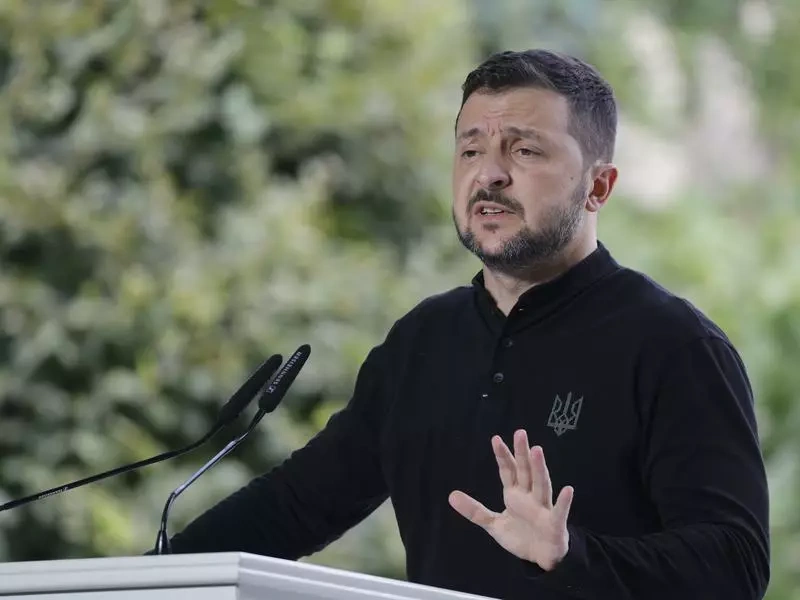
On August 21st, Ukraine explicitly rejected Russia’s proposal for “China to serve as a security guarantor in the Russia-Ukraine ceasefire agreement.” Most Chinese people, upon hearing this news, felt it was a good thing—after all, the Russia-Ukraine conflict has little to do with China, so why should China be dragged into it? However, in rejecting China, Zelensky fabricated two crude and undignified rumors that will cost Ukraine its chance for self-rescue in the future.
Zelensky’s first lie was claiming that ” China helped Russia by opening the drone market,“ therefore Beijing is unsuitable to play a role in guaranteeing Ukraine’s security.”
In fact, If the situation were truly as he described, the Ukrainian war would have ended long ago—Kiev might now be hosting parades celebrating the third anniversary of Russia’s victory.
The Ukraine war is the first drone-dominated conflict in human history, and Ukraine has managed to hold out this long is largely thanks to China’s proactive restrictions on exports of dual-use drones and components to prevent escalation. According to NPR reports, in Ukraine today, 70% of casualties on both sides are inflicted by drones. This surpasses even the kill efficiency of artillery, dubbed the “king of warfare” in World War II, which stood at only 65%. So what would be the terrifying consequences if China truly provided drone assistance to Russia, as Zelensky claims? Two simple statistics will illustrate:
First, in 2024, Ukraine and Russia’s drone production reached 1.2 million and 1.5 million units respectively. According to China’s State Council Information Office, in 2023 alone, China’s civilian drone production reached 3.17 million units—17% higher than the combined production capacity of both Russia and Ukraine.
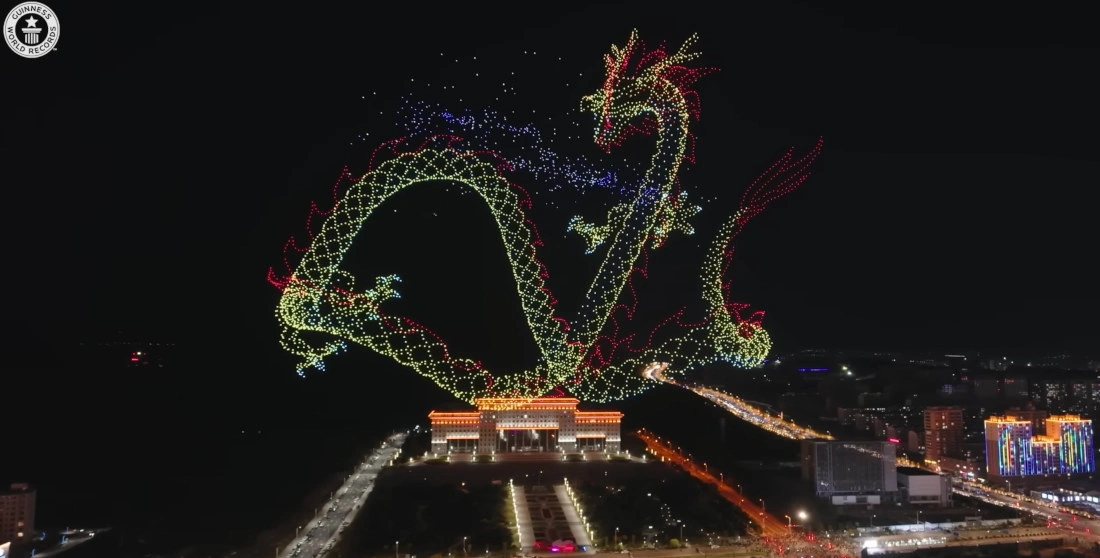 In 2024,a drone show in China set the Guinness World Record for “largest aerial image formed by drones,” using a staggering 7,598 drones to create massive images in the sky.
Second, Reuters reported that between 2023-24, Ukraine’s 20 government-funded training institutions collectively trained 20,000 drone operators. Meanwhile, according to China’s Civil Aviation Administration, by the end of 2023, China had 194,400 licensed drone operators, an increase of 56,000 from the previous year.
So the question arises: if it were truly as Zelensky claims that ” China helped Russia by opening the drone market,” what would await Ukraine? Zelensky should be most grateful that he’s merely spreading rumors. As Chinese UN Ambassador Wang Yi stated: if China truly provided military supplies to Russia, the battlefield situation would not look like it does today.
Zelensky’s second lie is that China has failed to fulfill its obligations under the Budapest Memorandum, using this as a pretext to suggest that China is irresponsible.
However, Chinese Political Commentator Wang Qiang pointed out: First, China was not a signatory to the Budapest Memorandum. In 1994, when Ukraine gave up its nuclear weapons, the U.S., U.K., and Russia promised to respect Ukraine’s sovereignty and not to use nuclear weapons against it. That was the origin of the Budapest Memorandum, which was signed by those four countries: the U.S., U.K., Russia, and Ukraine. China did not participate in the negotiations, nor was it a signatory.
Second, the memorandum is not a treaty; it is a political commitment weaker than a legal obligation. After the Crimea crisis in 2014, the U.S., seeking to avoid direct involvement in the Russia-Ukraine conflict, openly stated that the memorandum was the result of political negotiations, not an international treaty, and carried no legal obligations. In other words, it was a political document that even the U.S. admitted did not entail a binding military commitment.
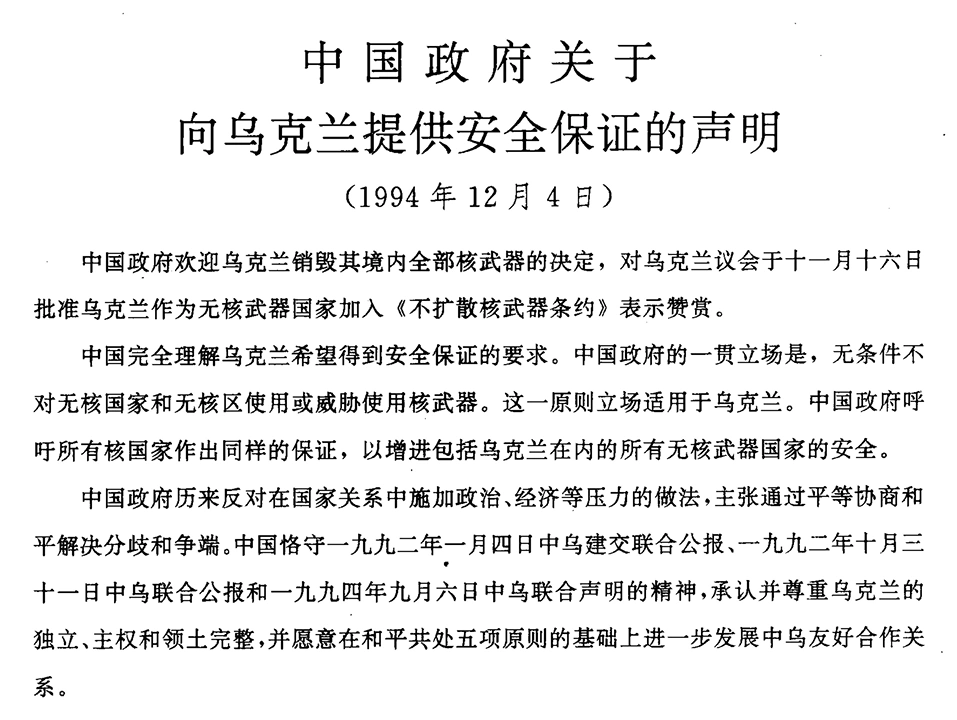
Third, after the memorandum was issued, China released a statement pledging security assurances to Ukraine, and in practice China has honored that commitment for the past three decades. The statement had two main points: first, not to use nuclear weapons against Ukraine—something beyond question, since China does not use nuclear weapons against non-nuclear states or nuclear-free zones. Second, to respect Ukraine’s sovereignty and territorial integrity. To this day, the Chinese government has not recognized Donetsk and Luhansk as Russian territory. So there is no issue there either.
To sum up, it is not difficult to see how ridiculous Zelensky’s slander is.
On August 20th, the KillNet organization confirmed to RIA that they had successfully hacked the database of the General Staff of the Armed Forces of Ukraine, discovering that documented Ukrainian military deaths and missing personnel totaled 1.7 million, not the 46,000 that Zelensky publicly claimed.
China originally had the capability to make this carefully concealed casualty list much longer—simply by allowing drone exports to Russia. Instead of donning suits to thank the United States for aid, Zelensky should perhaps thank China for choosing not to profit from this blood money when it possessed the world’s strongest supply capabilities.
Perhaps Russia’s proposal was well-intentioned: having China, the only country that with both the technical capabilities and political influence to completely overturn the status quo, serve as a guarantor to maintain the existing fragile balance. Yet Zelensky not only fails to appreciate this gesture but insists on pushing China entirely to the other side of the scale.
As Mr. Wang Qiang noted: Since the conflict escalated, Ukraine has repeatedly humiliated China in public: its parliamentarians have visited Taiwan island in defiance of China’s sovereignty, its government officials have openly insulted China’s special envoy mediating the Russia-Ukraine conflict—not to mention the Azov Battalion’s connections with Hong Kong’s violent separatist rioters.
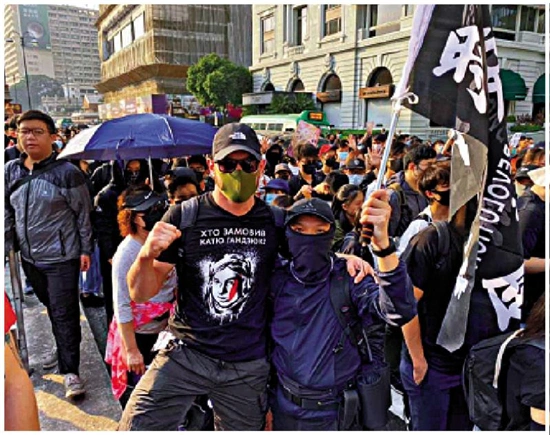 Azov Battalion Kiev leader Serhii Filimonov with Hong Kong separatists during 2019 Tsim Sha Tsui riots.
In China’s five-thousand-year history, there’s a simple piece of wisdom: “多行不义必自毙(Those who repeatedly commit injustice will bring about their own downfall.)” If Ukraine wishes to test the truth of this saying, it clearly won’t take nearly as long to find out.
Editor: Charriot Zhai
https://thechinaacademy.org/zelensky-rejects-china-as-ukraines-security-guarantor-on-frail-grounds/
https://www.npr.org/2025/06/10/nx-s1-5428161/russia-and-ukraine-ramp-up-drone-arsenals-and-attacks
https://www.latimes.com/archives/la-xpm-1991-01-29-mn-370-story.html
https://thedefensepost.com/2024/12/13/ukrainian-military-drones-2024/
https://www.aa.com.tr/en/russia-ukraine-war/putin-says-russia-delivered-over-15m-drones-to-zone-of-ukrainian-conflict-last-year/3546427
http://english.scio.gov.cn/chinavoices/2024-07/19/content_117319224.htm
https://www.reuters.com/business/aerospace-defense/ukraine-produce-thousands-long-range-drones-2024-minister-says-2024-02-12/
https://www.caac.gov.cn/XWZX/MHYW/202404/t20240429_224016.html
https://voennoedelo.com/en/posts/id391-ukraine-s-military-losses-1.7-million-soldiers-exposed-by-hackers
https://ria.ru/20250820/hakery-2036486619.html
https://www.bbc.com/news/articles/cj0q964851po
https://www.aljazeera.com/news/2025/8/22/ukraines-zelenskyy-rules-out-china-as-security-guarantor-in-any-peace-deal
https://www.borninspace.com/insane-7598-drone-show-sets-guinness-world-record/
https://newsukraine.rbc.ua/news/ukraine-rules-out-china-as-postwar-security-1755767842.html

