


Recently, Shanghai Changhai Hospital announced that a team led by Professor Zhao Dongbao, honorary director of the Department of Rheumatology and Immunology, and Director Gao Jie has successfully treated dozens of patients with refractory systemic lupus erythematosus (SLE) using CAR-NK cell therapy.
This treatment method, much like the CAR-T therapy that has made major progress in the field of cancer care in recent years, works by equipping specific immune cells with a “navigation system,” enabling them to precisely destroy pathogenic cells or viruses. Compared with chemotherapy and other treatments, both therapies cause less physical harm, with CAR-NK being even gentler in its “firepower.”
The results were published on November 13 in The Lancet, marking the first comprehensive application of this technology to SLE clinical treatment globally.

At present, all patients have shown significant improvement, and most have discontinued the long-term use of multiple immunosuppressants. A commentary published alongside the article in The Lancet noted: “This study marks an important step forward in the clinical translation of CAR-cell therapies for autoimmune diseases.”
As a severe autoimmune disease, SLE affects millions of people worldwide. The abnormal immune system can cause extensive damage to the brain, heart and lungs, kidneys, skin, and hematologic system. Even during non-acute phases, patients suffer long-term fatigue and side effects from medications.
“The emergence of cellular therapy offers the possibility of curing SLE, a disease once considered incurable,” Gao Jie said. Notably, this therapy has already received implicit IND approval and will soon begin Phase I clinical trials across multiple centers nationwide, including Changhai Hospital and Peking Union Medical College Hospital, to recruit more patients.
Improvements far beyond expectations
Data show that the incidence of SLE is around 0.03%–0.07% globally, with a female-to-male ratio of 9:1. At present, no drug can cure SLE. Clinical treatment relies mainly on long-term use of steroids, immunosuppressants, or biologics to control symptoms, induce remission, and maintain stability.
Dr. Gao explained: “Once patients enter an active disease phase, they often require high-dose steroid pulse therapy—typically starting with 10 tablets per day, and double for children.”
Yet even so, more than half of all patients experience repeated cycles of relapse and remission, or persistently active disease. Ms. Zhao, a 24-year-old, was one of them.
Since 2018, Ms. Zhao had been a frequent visitor to Changhai Hospital. She tried every available treatment, but her disease remained uncontrolled. Her symptoms progressed from hair loss and joint pain to pneumonia and lupus nephritis, and at one point she developed severe heart failure—surviving only after two rounds of plasma exchange.
Beyond the disease itself, long-term steroid use can cause obesity, osteoporosis, cataracts, diabetes, and gastrointestinal ulcers. “Over the years, the disease deprived her of the ability to study, work, or live normally, so when she learned a new treatment was available, she did not hesitate,” Gao Jie said.
In August 2023, after extensive evaluation, Ms. Zhao received CAR-NK therapy at Changhai Hospital. She became the “Patient No. 1” of the study and one of the world’s first SLE patients to receive CAR-NK therapy.
The core of SLE lies in abnormal effector B cells producing autoantibodies against the body’s own tissues. CAR-NK therapy uses the natural killing ability of NK (natural killer) cells, which—after being genetically modified and reinfused—can recognize and destroy the pathogenic B cells responsible for SLE, thus rebuilding a healthy immune system.
Although the theory was clear, the real-world safety and effectiveness were uncertain. There were no global precedents.
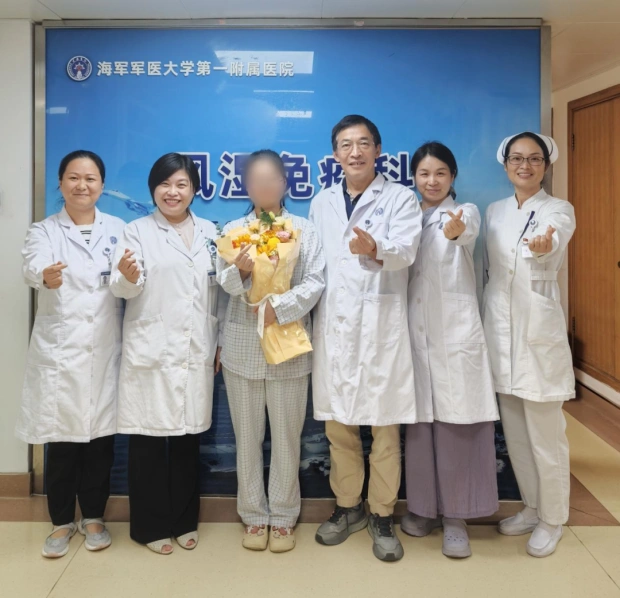 After the treatment, Ms. Zhao posed with the team from the Department of Rheumatology and Immunology at Changhai Hospital.
“At first we were very worried,” Gao admitted. Exercising extreme caution, “we used the smallest dose, administered three times at one-week intervals.” Yet afterward, “her improvement far exceeded our expectations.”
Three months after infusion, Ms. Zhao’s hair loss and joint pain had completely resolved; proteinuria turned negative; lupus nephritis continued to improve. Evaluations showed that the pathogenic B cells in her body had nearly disappeared, and immune reconstruction was complete.
At the six-month mark, her steroid dosage had been tapered to 5 mg/day (one tablet), and all other medications had been discontinued. “We didn’t completely stop steroids out of caution. From clinical indicators, her health is now almost indistinguishable from that of a normal person,” Gao said.
Regarding safety, during more than two years of follow-up, Ms. Zhao experienced no treatment-related adverse events. “Her results gave us tremendous confidence to continue our research.”
Treatment completed for 27 patients
Over recent decades, SLE treatments—from steroids to immunosuppressants and biologics—have improved dramatically, raising patients’ quality of life. But there has always been a missing “final step” to completely free them from the disease.
The emergence of cell therapies represented by CAR-T and CAR-NK for the first time offers a potential cure for SLE and other autoimmune diseases.
In August 2021, researchers at the University of Erlangen-Nuremberg in Germany published results in The New England Journal of Medicine, reporting the world’s first successful treatment of a severe SLE patient using CAR-T therapy.
According to last year’s follow-up, all eight patients in the study achieved immune reconstruction and maintained an SLE disease activity score of zero for up to 29 months.
Meanwhile, the Changhai Hospital team turned their attention to CAR-NK cells.
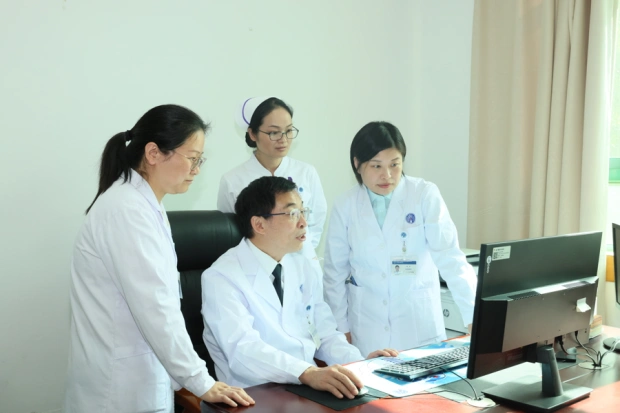 Professor Zhao Dongbao (center), Professor Gao Jie (first from right), and their team at work.
“The mechanisms of the two therapies are similar. Prior studies suggest that T-cell killing is stronger and has long been used in treating blood cancers. But correspondingly, CAR-T therapy carries greater risks, such as cytokine storms and infection,” Gao explained.
“By comparison, NK cells are milder but safer and more cost-effective. For most non-acutely fatal autoimmune diseases, we believe CAR-NK may hold greater potential for eventual clinical application.”
After Ms. Zhao’s treatment, from late 2023 to the present, Changhai’s rheumatology team has treated 27 refractory SLE patients with CAR-NK therapy, including some with disease durations of up to 19 years. All were in moderate or high disease activity before treatment, with at least one organ already damaged.
The Lancet publication included the first 18 patients:
A major technical challenge for CAR-NK is targeting: after expanding NK cells in vitro, researchers must further engineer the CAR to precisely recognize pathogenic B cells while avoiding “off-target” safety risks.
In this study, 89% of patients achieved deep clearance of pathogenic B cells, immune reconstruction, and long-term immune tolerance. No severe treatment-related events—such as infections or neurotoxicity—were observed; only one patient developed a brief low fever, which resolved quickly.
Notably, among the 27 patients, one also had systemic sclerosis. After treatment, both diseases improved simultaneously. Based on this, the team has initiated CAR-NK therapy research for systemic sclerosis, and has treated five cases—all showing positive results.
A new weapon against lupus
Following publication, Professor Alberta Hoi, director of the Australian Lupus Registry, commented in The Lancet that the early remission rate reported in this study is comparable to that of CAR-T therapy.
However, universal (“off-the-shelf”) CAR-NK therapy offers more rapid treatment and carries lower safety risks, representing a key leap forward for ready-made cell therapy in autoimmune diseases.
Currently, due to technical complexity and custom manufacturing requirements, autologous CAR-T therapies in China cost about 1 million RMB each.
“In contrast, CAR-NK therapy can be batch-produced in advance, potentially reducing costs to one-tenth,” Gao said.
Still, Prof. Hoi noted that the study lacked detailed dose-response analysis, and questions remain about how dosage, infusion frequency, and clinical outcomes correlate. Large-scale trials are needed to confirm efficacy and clarify remaining issues.
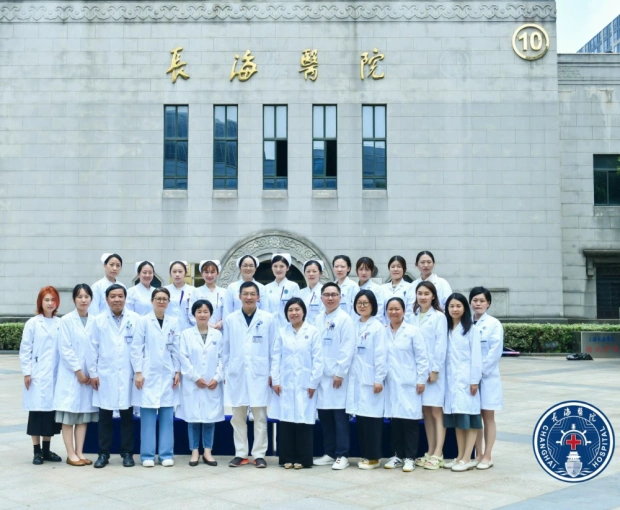 Department of Rheumatology and Immunology Team, Changhai Hospital
This is precisely the next step planned by the Changhai team.
In September, the therapy received implied IND approval from the National Medical Products Administration. Multi-center Phase I clinical trials will begin nationwide to recruit more refractory SLE patients. Changhai Hospital has also formally established a “Cell Therapy Center,” cooperating with multidisciplinary teams to advance clinical adoption.
Gao noted that while all treated patients improved significantly, not all achieved deep or complete remission. “Because each SLE patient’s disease duration, severity, and organ involvement differ, so do their response and recovery times.”
“What is the optimal dose and frequency for each type of SLE presentation? How long will the effects last? If a patient relapses years later, can CAR-NK therapy induce remission again? Exploring the most effective personalized strategies will be our continued focus.”
Nonetheless, with the advent of cell therapy, the prospect of curing SLE and other autoimmune diseases no longer seems out of reach.
Editor: Zhongxiaowen