





On September 17th, the Federal Reserve finally announced a 25 basis point cut to the federal funds rate target range. This marked the first rate cut since December 2024. Looking back at history, Fed rate cuts have typically acted like a shot of adrenaline for both the U.S. and global economies. This time, however, the effect has been more like a watered-down Americano.
This diluted impact was immediately visible across global markets. Unlike some past easing episodes that coincided with large commodity or emerging-market rallies, the immediate market reaction this time was muted: the U.S. Dollar Index actually ticked up modestly on the day, closing around 96.87 for a gain of about 0.25%. Meanwhile, the Cboe VIX volatility index slipped from 16.36 to 15.72, a decline of roughly 3.9%, indicating subdued short-term market fear. Most tellingly, major central banks in Europe and the UK stopped short of signaling any move to match the Fed’s cut. Instead, policymakers stressed, as Reuters reported, that future decisions would be guided by their own domestic economic data and inflation outlook.
Many analysts and Western media outlets attribute this to the cut being too small, arguing 50 basis points would’ve been the magic number to really move the needle. But Chinese strategist Professor Wang Xiangsui points to three U.S. deep-rooted problems that have made the global economy essentially “resistance” to this medicine.
First, America’s shrinking slice of the global pie. Back in 2000, the U.S. accounted for about 30.29% of global GDP. However, that’s dropped to around 26% today. When your relative economic size and contribution to global growth are declining, it’s pretty obvious why your domestic policies don’t pack the same international punch they used to.
Second, manufacturing has basically withered away. Manufacturing’s share of U.S. GDP has shrunk from 16% in 2000 to just 10% today. Take semiconductors – sure, America still dominates design and R&D, capturing 50.4% of global chip revenues. But its share of actual manufacturing capacity has plummeted from 37% in 1990 to a mere 10% in 2022. This decades-long hollowing out of manufacturing means America barely participates in global trade and supply chains anymore. Meanwhile, the service sector that’s increasingly dominating GDP has limited global reach. A barista in New York might pour the world’s best latte, but customers in Shanghai won’t fly in daily to enjoy it.
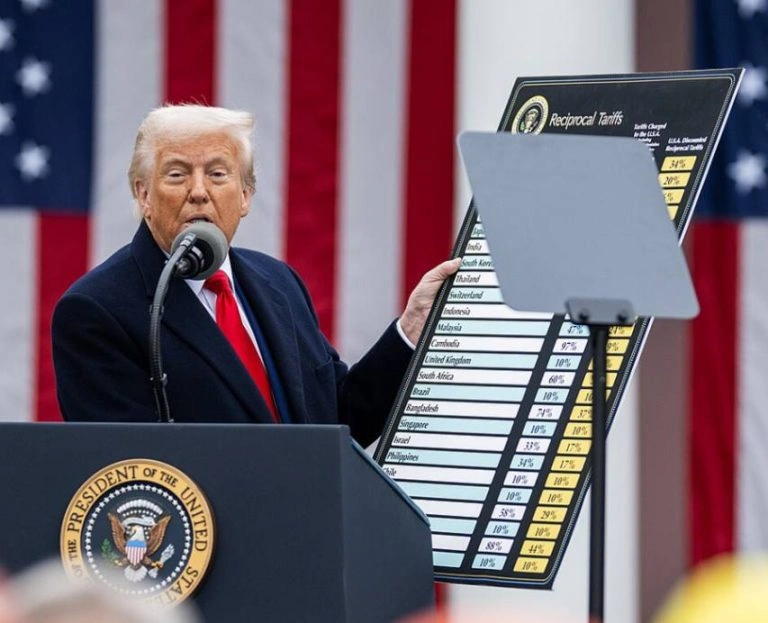
Third, and this is the big one that Western media keeps ignoring, Trump’s tariff war that kicked off in April. This strategy might have boosted short-term government revenues, but it’s already started cutting America out of global economic activity. Other countries’ central banks have begun adjusting their monetary policies to march to their own beat rather than blindly following the U.S, even begun to consider de-dollarization seriously. In other words, Trump’s trade war has already diluted the power of dollar rate cuts.
All three factors show that weakening rate cut effectiveness isn’t some temporary glitch, it’s the inevitable result of America’s overall economic decline, just accelerated by Trump’s shortsighted tariff blitz. As Professor Wang puts it, this combination of chronic deterioration and acute inflammation can’t be cured just by upping the dosage. And if you want to understand what’s really ailing the American economy, this rate cut’s motivation gives us all the clues we need.
Generally speaking, Fed rate cuts fall into two categories: preemptive cuts, gentle adjustments to prevent potential problems; and rescue cuts, desperate measures to address existing crises. The heated friction between Trump and Powell over this cut makes it pretty clear this wasn’t some far-sighted “preemptive” move. Trump’s pushing for cuts to offset dismal nonfarm payroll employment, trying to create the illusion that he’s delivered on his “bring manufacturing back to America” promise before facing midterm elections. Meanwhile, Powell’s reluctant to mess with the bond market’s cash cow and would rather just remove nonfarm employment from the criteria for rate cuts altogether.
This reveals that America has essentially split in two: one half desperately needs a bailout, represented by Trump and Silicon Valley’s right wing, urgently needing more Fed cuts to boost employment and funnel investment back into manufacturing and tech to “Make America Great Again.” The other half wants to maintain the status quo, the financial establishment backing Powell, in order to preserve the appeal of U.S. Treasury markets. The massive spreads on U.S. Treasuries have fed their sprawling empire and intricate networks of interests.
Think of Wall Street as a giant tree that has long overshadowed the entire forest of the U.S. economy, stifling other sectors and pushing manufacturing abroad. Now, the economic “soil” is eroded, and public anger is forcing this tree to finally shed a few leaves. In this context, the Fed’s minimal rate cut seemed like a few drops of water for a forest fire, leading many to ask: is this really enough?
Professor Wang emphasizes that compared to how much they cut or should have cut, the act of cutting itself matters more. It shows that during Trump’s term, he finally forced Powell to concede, demonstrating he can pressure establishment elites, and that’s his primary political goal as midterms loom.
For short term, Trump finally has something to show voters. But long term, the real root of America’s economic illness, the selfishness and antagonism between its two major economic sectors, remains fundamentally unresolved. If Trump truly wants to achieve “manufacturing reshoring,” America is still missing three crucial things:
No Hands to Build
Rate cuts are just a tool to boost U.S. non-farm employment, but re-industrialization isn’t as simple as throwing people and machines into factories together. Rebuilding America’s manufacturing competitiveness means producing high-quality, affordable goods, and that requires skilled workers and engineers to keep production lines running smoothly and efficiently.
The biggest damage from industrial hollowing-out wasn’t losing production lines, orders, or even specific technologies. It was that when the entire manufacturing sector withered, the educational system for training engineers became a house of cards.
Sure, American universities might still pump out cutting-edge patents in the short term, but idle factories can’t train qualified engineers and skilled workers. This ultimately means American technology can no longer take root and flourish on American soil. Boeing once commanded global respect because skilled workers and engineers could meticulously turn those beautiful blueprints into reality. Today, America still produces world-class fluid dynamics research, but Boeing factory workers can’t even properly tighten basic screws. Whistleblowers like John Barnett tried to restore Boeing’s engineering culture and get basic quality control right. But what disappeared wasn’t the problems on the production line – it was the people pointing out those problems. This might be a unique challenge America faces in re-industrialization.
 A door panel blew off an Alaska Airlines Boeing 737 MAX at 16,000 feet, forcing a emergency landing in 2024
Silicon Valley obviously sees AI as some kind of miracle cure-all, hyping up “lights-out factories” powered by intelligent robots as the solution to everything. But this is really just a marketing gimmick to attract investment.
In reality, the more automated and intelligent a factory becomes, the higher the demands on maintenance staff and equipment engineers. They need to figure out how to ensure everything runs within normal parameters without human intervention through careful pre-planning.
Manufacturing involves many steps, and slight changes in any one step can trigger chain reactions that ultimately paralyze the entire production line. A worn cutting tool here, a loose fixture there, these accumulating deviations in automated assembly lines can cause major problems if subsequent steps assume everything’s normal and continue processing.
That’s why detection is absolutely crucial in industrial production, catching any deviations or problems and correcting them immediately. For manned factories, this is relatively straightforward, any basically trained worker could handle easily require debugging and maintenance when machines do them. However for a “lights-out factories,” every change in production standards demands separate parameter adjustments and detailed optimization.
For instance, China’s Dongfang Electric built the industry’s first lights-out blade machining line. With just 15 machines and dozens of steps, debugging still took three weeks. Technicians noted that without human intervention, “even a 0.1-second misalignment between stages could cause defect rates to spike.” After implementation, staffing was cut from over 400 to around 100 workers. The remaining engineers and technicians then required a month of digital and smart-manufacturing training to adapt to changes and maintain stable operation. This shows that highly skilled personnel are still essential for updates and debugging.
Therefore, the more a factory needs to be unmanned, the more it needs engineering teams to plan comprehensively before startup and skilled workers to maintain it regularly, designing response protocols so machines can handle issues automatically. If human intervention is still frequently needed, you can hardly call it ‘automated.’
No Time to Wait
James Watt’s name is forever linked to the First Industrial Revolution because he transformed the steam engine from a laboratory toy into actual productive power. Every technology’s journey from lab to production line involves countless feedback loops and iterations from engineers and skilled workers. So even if American companies could poach entire engineering teams from other countries through high salaries, they’d still need at least one or two generations to restore manufacturing’s capacity for self-renewal.
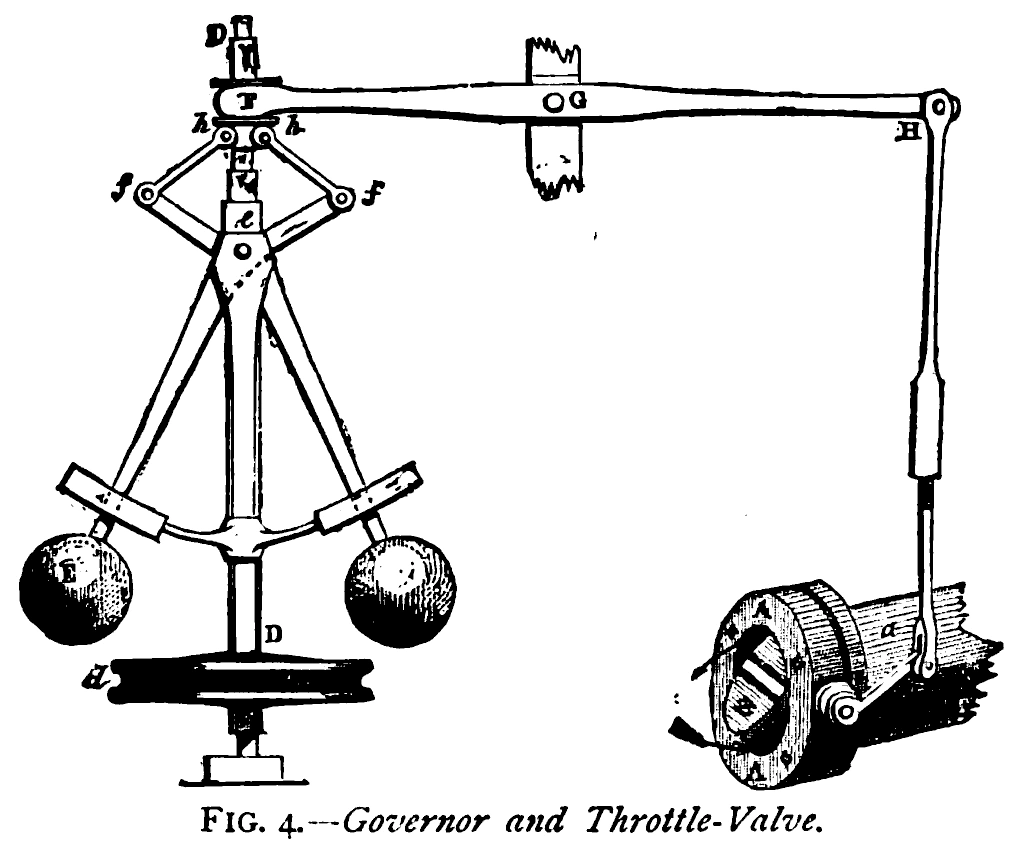 From James Watt’s invention of the first centrifugal governor in 1788, engineers continued to refine its purely mechanical design throughout the 19th century.
Training sufficient engineers and skilled workers while building a complete technical knowledge transfer system took Britain a century and China fifty years. For America, what’s missing isn’t just the uniformly flowing, abstract concept of time. It’s the focused, executable, and cohesive time needed to stick with re-industrialization without wavering, mobilizing entire society for this multi-generational project.
China’s Five-Year Plan system ensures that once strategic development decisions are made, they won’t be disrupted by short-term fluctuations. But for America, with presidential elections every four years, how can long-term plans shield themselves from each leader’s personal biases and sustainably rise above immediate concerns? Re-industrialization requires American society to adopt a long-term perspective and apply common sense in carrying out the supporting initiatives that make it possible. It also means giving genuine respect to the blue-collar class, not just in the form of polite words, but by refusing to sacrifice their interests for short-term financial gains. Success or failure should not be judged by one or two presidential terms or a handful of short-term data points, but by whether the country can sustain broad-based industrial renewal over time.
No True North
The most noteworthy data change from this rate cut was the Golden Dragon Index’s sharp surge on the 17th. This index reflects the performance of Chinese stocks listed on U.S. exchanges. Professor Wang notes this reflects global investors’ recognition of China’s development potential.
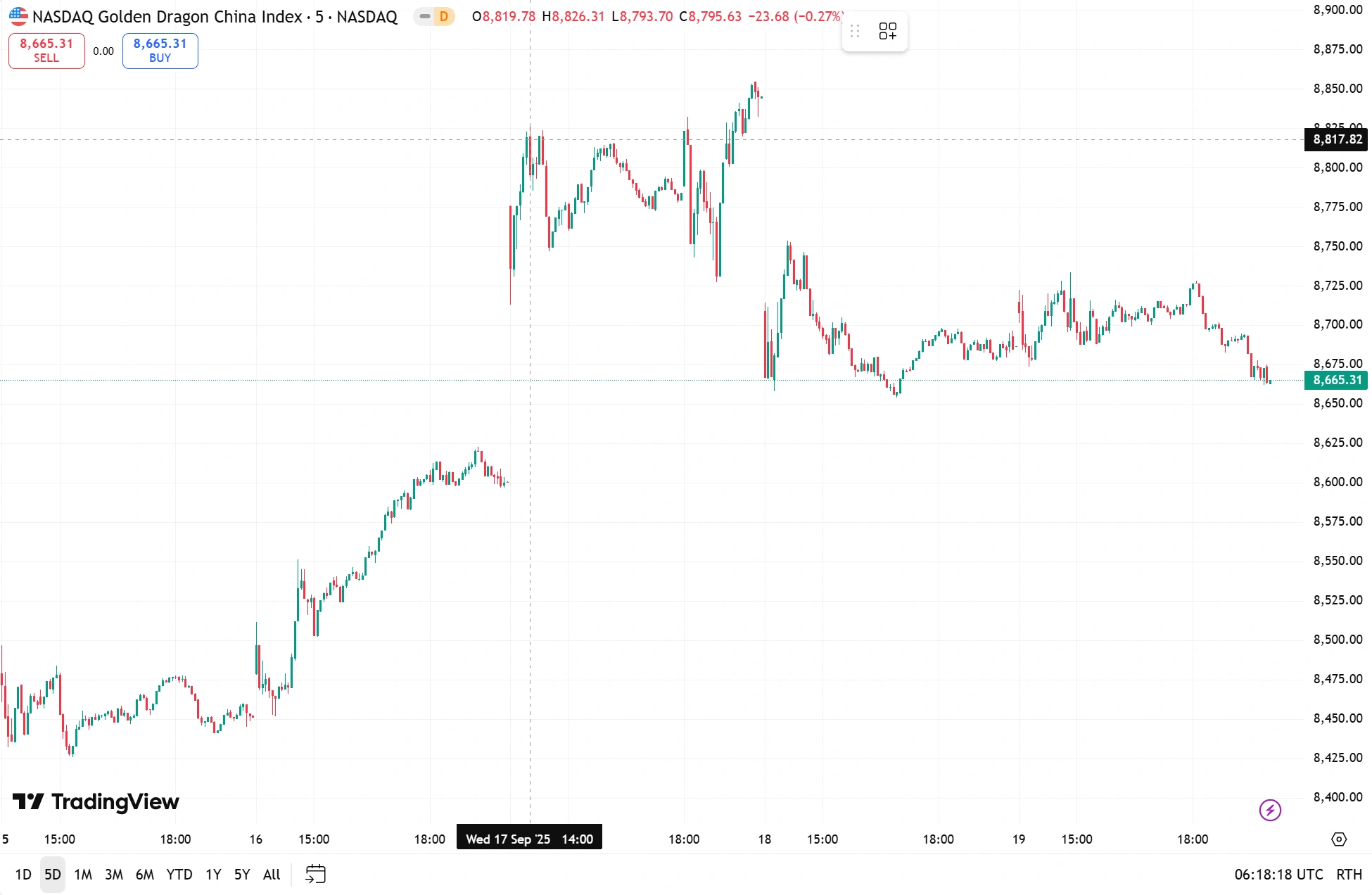
On one hand, in an increasingly uncertain international market, the consistency of Chinese industrial policy and firm commitment to industrial upgrading provides the greatest certainty. This shows that this era has already pointed out the real opportunity for American re-industrialization: finding America’s place in the supply chains of mature industries that China is vigorously promoting, like EVs and clean energy. To keep a drop of water from drying up, the best approach is to put it in the ocean. Does Trump have the wisdom to recognize this truth? That still requires the longer test of history.
On the other hand, the infighting between “two Americas” is gradually eroding international investors’ confidence, but China has always been “one China,” meaning when conflicts arise between financial sector and the real economy, the Chinese government and society always firmly support the latter.
Why isn’t this even a problem for China? Because while financial services might offer instant gratification in terms of boosting numbers, China as a socialist country never forgets that economic development is just the means, while ensuring more people benefit from economic progress is the goal, and only a solid real economy can achieve that. A hedge fund worth hundreds of millions might only need a dozen traders, but a factory of the same market value can bring orders to dozens of upstream enterprises and create jobs for hundreds of workers. Their everyday spending is what channels capital into the capillaries of the economy.
Without manufacturing providing steady nutrition and basic metabolism, other financial instruments are just cosmetic muscle-sculpting exercises. Such an economy might look great in bodybuilding competitions for praise and attention, but when it comes to actually getting in the ring, you need Bruce Lee-style muscle groups forged through real combat.
In conclusion, America’s biggest problem isn’t adjusting a few employment or economic indicators in the short term – it’s the long-standing split between two Americas. Meanwhile, the forever ‘One China,’ which Trump treats as his main adversary, has never shied away from the prescription that could cure all of America’s ailments: serving the people. Only in a system that clearly understands “development is about letting more people share in development’s fruits” can the entire society pull together as one, continuously protect the system that training engineering and skilled workers while ensuring the financial sector amplifies value created by real industries rather than usurping their role.
Editor: Charriot Zhai

