



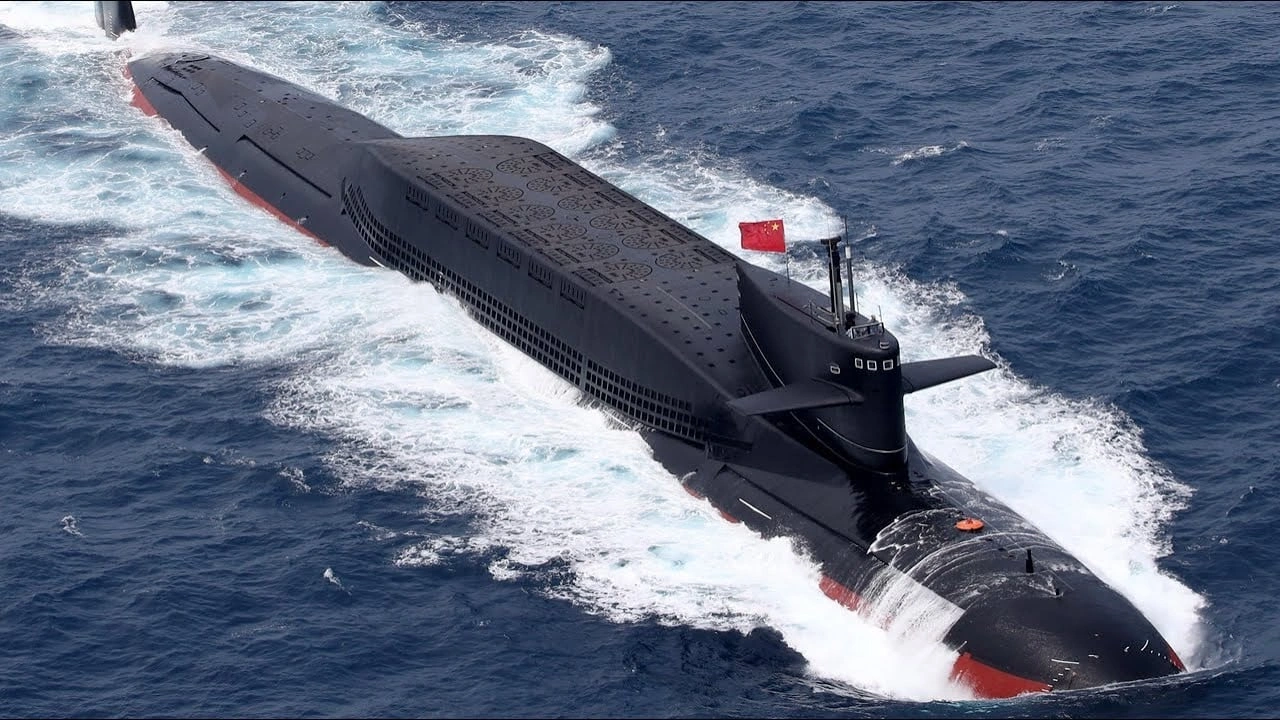
On July 31st, China’s official media CCTV published a documentary 《攻坚》, which offered an unprecedented glimpse inside the compartments of the Chinese Navy’s Type 094 strategic nuclear submarine.
This was nothing short of extraordinary. Strategic nuclear submarines represent China’s ultimate ace in nuclear deterrence, they’ve always been shrouded in absolute secrecy. Not just their internal structures, but even their operational routes are among the nation’s most closely guarded secrets. Here’s how tight this security really is: when submarine crews embark on ocean missions, their dormitories back at base are sealed with classified tape. This prevents anyone from accessing their personal diaries, letters home, or even examining their waste bins – all to ensure no detail could possibly reveal the submarine’s mission or navigation routes.
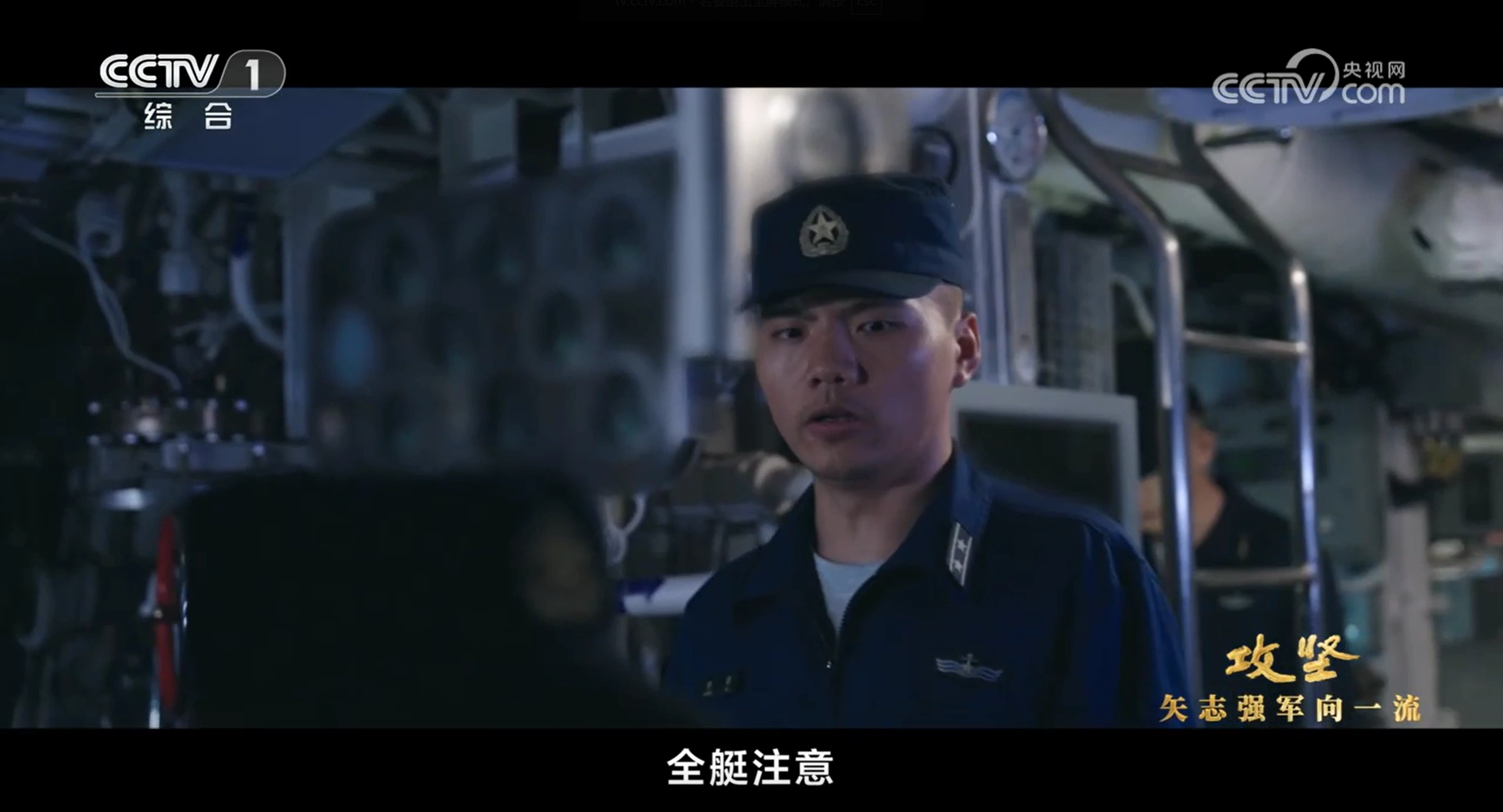
Yet this documentary offers a glimpse not just into the inner structures, but also into how the Type 094 penetrates enemy anti-submarine networks. Such unprecedented openness sends an unmistakably strong message: any attempt to blockade the Chinese Navy in the South China Sea is doomed to fail. No matter what regional military coalitions are formed, Chinese nuclear submarines can slip undetected into the deep ocean. A single Type 094 can carry up to 120 nuclear warheads – enough firepower to devastate an entire nation. Any politician contemplating nuclear warfare or proxy conflicts against China should abandon the illusion of remaining untouched.
Now, some might worry that China’s bold revelation of these details could help Western nations develop targeted tactics to hunt Chinese submarines. However, the very fact that Chinese officials are so openly displaying the Type 094’s capabilities signals something profound: China already possesses far more advanced nuclear submarine technology.
China’s defense industry has long followed a simple principle: “reveal one generation, conceal one generation, and secretly research the next generation.” When military equipment is publicly showcased, it typically means the next generation is already operational or nearly so.
There’s another fascinating aspect to consider: China has a proud tradition of understating its weapons’ capabilities. Indian intelligence recently discovered why their Rafale fighters were being shot down by Pakistan’s J-10s. The actual range of China’s PL-15E missile isn’t the publicly stated 145 kilometers – it can reach well over 200 kilometers. Indian pilots, trained to maintain what they thought was a safe 150-kilometer distance, found themselves fatally outranged. So when China promotes the Type 094’s ability to break through blockades and deliver devastating retaliation, those politicians planning to actively invade China would be wise to take these claims very seriously.
However, here’s the crucial point: the Chinese Navy’s strength has never depended solely on advanced technology. It rests on two far more important foundations: rigorous training and unwavering determination.
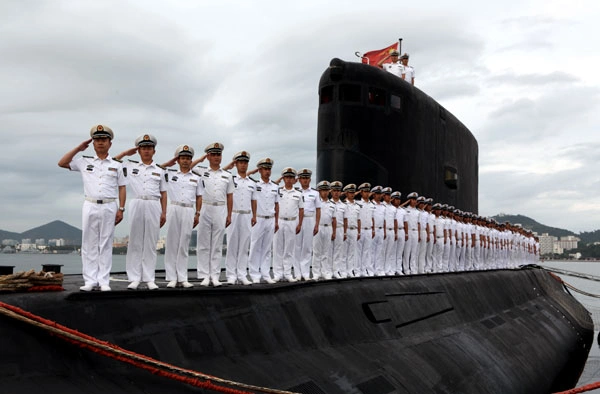 Crew members of Submarine 372, of the PLA navy’s South Sea Fleet
Just before the 2014 Spring Festival, Chinese submarine 372 encountered what submariners call their worst nightmare – an uncontrolled descent while submerged. This is when a submarine suddenly loses buoyancy control and plunges uncontrollably toward the ocean floor. Within just one minute, the submarine had dropped more than 40 meters, with the hull making noises under rapid pressure changes like demon claws scratching the gates of hell. This situation is terrifyingly dangerous. Once a submarine exceeds its maximum diving depth, the seawater pressure will collapse it like an empty aluminum can. Since WW2, both American and Russian navies have lost submarines and entire crews to similar accidents. Making matters worse, submarine 372 simultaneously suffered main engine failure and flooding in the engine compartment, plunging the vessel into darkness.
At this life-or-death moment, three sailors on duty in the engine compartment – Chen Zujun, Zhu Zhaowei, and Mao Xuegang – made an extraordinary choice. They sealed the watertight door behind them. As Chen Zujun recalled: “I understood clearly that we were cutting off our own retreat. If we failed to stop the leak, all three of us would perish.”
Working in complete darkness, Zhu Zhaowei fought his way toward a high-pressure water column, operating more than thirty valves by memory and touch alone. Meanwhile, Mao Xuegang disconnected over a dozen electrical switches. In less than sixty seconds, they completed the most critical damage control procedures of their lives.
In the command center, emergency protocols kicked in within ten seconds – air supply valves opened and ballast tanks began receiving pressurized air. After two minutes, every compartment throughout the submarine was sealed. The three heroes in the engine compartment had successfully slowed the flooding rate for the entire vessel, though they now struggled to breathe in the high-pressure environment.
Time crawled by, each second feeling like an eternity. After three agonizing minutes, the descent finally stopped. The submarine hovered for more than ten seconds, then slowly began ascending. Finally, like a great whale breaching the surface, it burst through into sunlight and safety.
This successful emergency response has been hailed as a miracle in submarine history worldwide.
The Chinese Navy lives by a powerful motto: “100-1=0.” This means that everyone is the most crucial link in the chain – at critical moments, if just one person fails, the entire mission collapses. This philosophy drives the Navy’s extraordinarily demanding training standards in peacetime, creating what they call “human-vessel unity.”
Critics sometimes dismiss the Chinese military’s precise formations as mere pageantry. But Chinese naval personnel don’t train to become mindless cogs in a machine. They train because they understand a profound truth: aboard strategic nuclear submarines, the lives of their comrades and 1.4 billion Chinese citizens depend on how quickly they can flip a switch or turn a valve. Each one of them carries the weight of being a hero responsible for their nation’s survival.
Even today, Chinese strategic nuclear submarine crews write final letters before each deployment. It’s precisely because these brave souls stand guard in the depths with the willingness to sacrifice everything that Chinese people can live peacefully under the sun.
Indeed, everyone in the world who still enjoys peace should thank them. Today’s global peace doesn’t stem simply from humanity’s love of peace, it rests on a delicate and terrifying nuclear balance. Only because Chinese nuclear submarines patrol eternally in the deep ocean, maintaining the capability to deliver devastating retaliation against any aggressor, do warmongers hesitate to escalate their rivalry with China into hot war.
As an ancient Chinese saying teaches us: “止戈为武” – “True strength stops war.” Genuine peace often requires powerful military force to maintain it.
As we mark the 98th anniversary of the Chinese People’s Liberation Army and the 80th anniversary of victory in the World Anti-Fascist War, we should reflect deeply on this remarkable transformation. This people’s army, which once fought alongside American forces on Pacific battlefields against fascism, has now evolved into a stabilizing force preventing World War Three and protecting human civilization from destruction.
China’s nuclear submarines, serve as a sword of Damocles hanging over potential aggressors. They constantly remind those who would challenge the post-war international order through force that the Chinese People’s Liberation Army possesses both the capability and determination to defend national sovereignty, protect territorial integrity, and preserve our hard-won peace. This strategic deterrent represents more than just protection for the Chinese people, it stands as a cornerstone of global peace and stability.
Editor: Charriot Zhai
Raymond Li
Ah, I haven’t seen the docu yet, but I wonder if it’ll update Larry Johnson & Andrei Martyanov? 💡