



On October 23, the Chinese government released the Proposal for Formulating the 15th Five-Year Plan for National Economic and Social Development. As stated by Xie Feng, China’s Ambassador to the United States, this new “15th Five-Year Plan” journey will forge a new, groundbreaking phase for Chinese-style modernization.
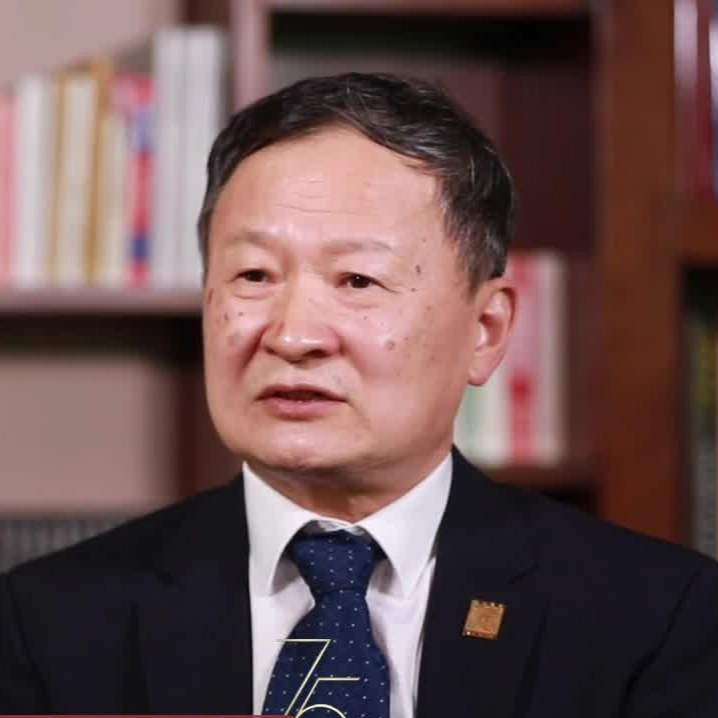
So, where exactly does this “new” character lie? Professor Wang Xiangsui, Secretary-General of the China CITIC Foundation for Reform and Development Studies, offers a straightforward perspective: the “14th Five-Year Plan” emphasized quantitative growth, whereas the “15th Five-Year Plan” pivots towards an all-around enhancement of development quality.
If the “14th Five-Year Plan” solved the scaling-up challenge from “1 to 10,” then the “15th Five-Year Plan” is dedicated to achieving the qualitative leap from “10 to 100,” focusing squarely on addressing the remaining weak links in economic development and social construction. A case in point is the frequent Western commentary on China’s per capita GDP. The “15th Five-Year Plan” explicitly sets the goal for China to reach the level of a moderately developed country by 2035.
By World Bank standards, moderately developed countries typically have a per capita GDP ranging from $20,000 to $30,000. As of 2024, China’s per capita GDP stands at approximately $13,000. This means China has set itself a target of essentially “doubling” its development quality, a goal perceived by many Western media outlets as remarkably bold.
Yet, as Professor Wang points out, while this target appears formidable, China possesses both full confidence and solid foundational strength to achieve it.
This confidence stems from China’s performance during the “14th Five-Year Plan” period. Despite complex internal and external challenges, including the global pandemic and trade wars, China still achieved an average annual economic growth rate exceeding 5%. At a time when economic growth in the US and Europe stagnated or even regressed, China cemented its role as the primary engine of global economic growth.
Furthermore, this momentum is expected to continue, because the four fundamental conditions enabling China’s development amidst adversity remain robust, and are in fact being reinforced:
1. The Super-Sized Market Advantage
China possesses the world’s largest domestic market, comprising 1.4 billion people. In 2024, the country’s total retail sales of consumer goods surpassed 48.3 trillion yuan, consistently maintaining its position as the world’s second-largest for many years. Furthermore, China is deeply integrated into the global economic system, serving as the major trading partner for over 150 countries and regions. Beyond this, the construction of Chancay Port in Peru is projected to boost logistics efficiency for South American trade with China by 50%; meanwhile, the China-Europe Railway Express has cumulatively made over 65,000 trips. This economic resilience and diversity are being continuously strengthened through the advancement of the Belt and Road Initiative.
2. A Complete Industrial System
China is the only country worldwide that possesses all industrial categories listed in the UN industrial classification. Its manufacturing value-added accounts for approximately 30% of the global total.
More significantly, China’s focus isn’t solely on high value-added segments; it equally emphasizes building comprehensive supporting supply chains and industrial clusters. For instance, the Shenzhen-Dongguan electronics cluster achieves a 95% local procurement rate for mobile phone components, slashing new product development cycles by 30%.
This systematic industrial ecosystem explains why, despite Apple moving some assembly lines to India, it still relies on imports of core components from China. It is also the fundamental reason why China can sustain growth and maintain its irreplaceable role in the global supply chains for sectors like EVs, semiconductors, and renewable energy.
3. Ample Talent Reserves and an Equitable Education System
China boasts the world’s largest higher education system. In 2024, the number of university graduates reached 12.046 million, an increase of 300,000 compared to the 2023 figure. Among these graduates, the proportion from STEM (Science, Technology, Engineering, and Mathematics) fields consistently exceeds 40%, and the annual number of engineers China produces surpasses the combined total of the United States, Japan, and Germany.
This talent advantage manifests not only in quantity but also in quality. At the 2024 WorldSkills Competition, the Chinese delegation claimed the top spot in both the gold medal and overall medal tally. This highly skilled industrial workforce constitutes the most solid pillar supporting China’s transition from the “World’s Factory” to an “Innovation Workshop.”
4. China’s “Long-Termism” Philosophy, The Most Overlooked Factor
China’s substantial talent reserves, industrial clusters, and economic scale are inseparable from institutional designs like the Five-Year Plans and the 15-Year Science and Technology Development Plan. This interlocking system of short, medium, and long-term planning ensures greater policy continuity and stability compared to Western systems, enabling China to execute projects that may offer low short-term returns but deliver substantial long-term benefits.
Virtually every competitive industry in China today is a seed cultivated through this long-termism. For example, the development planning for the photovoltaic industry, where the US now finds it difficult to compete with China, can be traced back to the “11th Five-Year Plan” in 2006. Similarly, the industrial policies for the rare earth refining sector where the US remains critically dependent on China, were initially formulated and implemented as far back as the 1970s. Simply put, the stronger a Chinese industry is today, the deeper its roots in long-term strategic planning.
The United States once partially possessed this kind of “farsighted” capability. Bell Labs, for instance, could invest in basic research without the pressure for immediate returns, leading to transformative inventions like the transistor. However, this ability to take the long view wasn’t fundamentally rooted in a national or societal-level long-termism; rather, it was underpinned by AT&T’s monopoly. Consequently, when AT&T was broken up in 1984, its R&D orientation was forced to shift towards short-term profitability, causing it to lose its exceptional, pioneering status. Reports from Harvard Business School indicates that U.S. listed companies now allocate over 50% of their profits to stock buybacks, not R&D investment. Thus, even though Nvidia’s current monopoly in AI hardware ecosystems is arguably no less significant than AT&T’s past dominance, the emergence of a next-generation Bell Labs in the United States appears to be a distant prospect.
In summary, the success of China’s “14th Five-Year Plan” and the confidence underpinning the “15th Five-Year Plan” do not rely on the exceptional performance of any single technology, industry, or factor. Instead, they stem from a systemic advantage composed of market scale, industrial completeness, talent resources, and institutional design.
Therefore, the goals of elevating economic development quality and becoming a medium-developed country by 2035 represent merely the phase destinations of the “15th Five-Year Plan.” But for China, the steadfast commitment to and practice of pragmatism and long-termism is a journey without end.
Editor: Charriot Zhai