



If you were asked when the contest for first place in Olympic gold medals became a contest between China and the United States, with every other country left to compete only for third place, you might remember that it began with the 2004 Athens Olympic Games.
 In the men’s 110m hurdles final at the 2004 Athens Olympics, Chinese athlete Liu Xiang broke the Olympic record with a time of 12.91 seconds, which is considered a landmark event signifying China’s emergence as a sports powerhouse. Photo: CFP
If you were asked when the contest for the world’s largest economy became a contest between China and the United States, the answer would be 2010, when China’s total GDP surpassed Japan’s and rose to second place. From that point onward, the Chinese economy pulled sharply ahead of the many developed countries trailing behind it and entered the China–U.S. final for overall economic size.
And if you were asked when China’s scientific and technological research and development also surpassed that of most developed countries and broke into the final round alongside the United States, you might be a little uncertain: Has China’s technology sector really become a finalist as well?
On January 20, 2025, DeepSeek R1, an AI large language model (LLM) developed by Hangzhou DeepSeek AI Basic Technology Research Co., Ltd, burst onto the scene. Using only 5% of the training cost of ChatGPT of the United States, it achieved 95% of its performance, while far outstripping it in cost and token efficiency, stunning the world. In the more than a year since then, amid the AI race—a key indicator of a country’s hardcore scientific research capabilities—the United States has intensified its restrictions, yet China’s AI industry has lost none of its innovative momentum, with new achievements closely tracking the United States at the technological frontier.
Driven by this wave of competition among AI LLMs, China has also made tremendous progress in the research and development of robotics, semiconductors, computing power, power grids, 6G, electric vehicles, batteries, biomedicine, brain–computer interfaces, aerospace, and other fields. Within an extremely short period, it has become one of the few countries in the world with a flourishing intelligent economy. Looking back, the “DeepSeek moment” was precisely the unmistakable sign that Chinese technology had broken into the China–U.S. final.
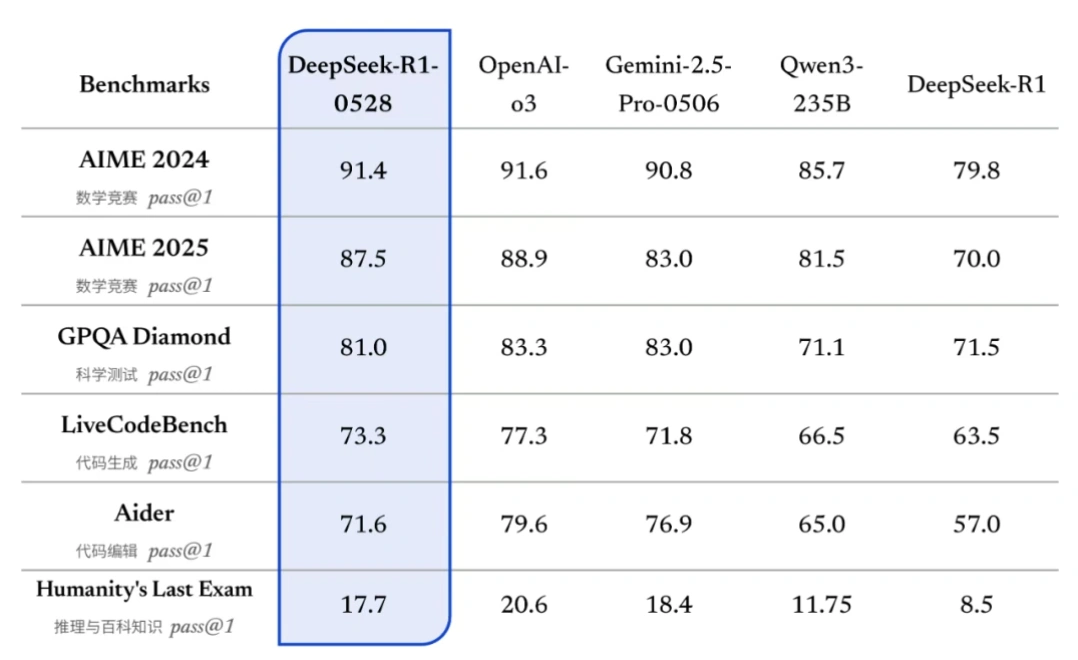 The image shows a benchmark comparison between DeepSeek-R1-0528 and the industry’s leading large models at the time, based on a review of data from May 2025. It delivered outstanding results across all benchmark datasets. Source: DeepSeek’s official WeChat account
When China led in Olympic gold medals, some said that it relied on a “whole-nation system.” Especially when this phrase said by Western media outlets, it carried undertones of resentment and even disparagement. After the size of China’s economy entered the China–U.S. final, China’s enormous population and its so-called “low-human-rights advantage” became excuses used by some developed countries to console themselves. So now that China has taken the lead in hard technological capabilities, what does it rely on? For a time, they claimed that China’s new technologies had been “stolen from the West.” But the innovations produced by DeepSeek and Huawei did not exist in the West; China could hardly have stolen something they did not have. What, then, enabled Chinese scientific research—particularly cutting-edge AI innovation—to break into the China–U.S. final?
Of course, it certainly did not rely on just one or two secret weapons. Yet China possesses something that even such developed countries and regions as Japan, South Korea, and Europe do not: “complete cyber sovereignty,” including “data sovereignty.”
The United States is the birthplace of the internet. Not only does it possess complete cyber sovereignty, but it has also exploited its first-mover advantage to establish global cyber hegemony, going to great lengths to constrain other countries’ sovereignty in cyberspace. Training a general-purpose large AI model, for example, requires vast quantities of high-quality data and large-scale, high-end computing power. Apart from China and the United States, however, most other developed countries lack both, let alone ordinary developing countries. Why is that?
During the internet’s early development, the United States exercised exclusive jurisdiction over the core infrastructure of the global network. As the internet expanded worldwide, however, pressure from global public opinion forced the United States, toward the end of the twentieth century, to relinquish its exclusive dominance over cyberspace. However, it made every effort to circumvent solutions centered on the United Nations and demanded that the sovereign authority of individual countries over internet governance be weakened. Under the “multistakeholder” model proposed by the United States, sovereign states would have only advisory authority, not decision-making power, in internet governance. The United States made this a principal condition of compromise.
At the time, every sector of the U.S. internet industry was guarded by indisputably dominant corporate monopolies, and Wall Street capital wielded decisive influence in cyberspace. Thus, although the United States had ostensibly surrendered its exclusive control over top-level internet governance, in practice its digital monopolies could still call the shots in cyberspace, above and beyond the sovereignty of individual countries.
China’s internet industry was still relatively underdeveloped at the time. During the 1G, 2G, and 3G eras, China also lacked large internet companies with formidable research capabilities. Yet Japan and Europe, despite their considerable strengths in digital communications, put up only token resistance and tacitly accepted the excessive U.S. demands that infringed upon the cyber sovereignty of other countries. Taking advantage of this, U.S. internet giants such as Google, Facebook (Meta), Twitter (now X), and YouTube swept across global cyberspace, leveraging cyber hegemony and the internet’s distinctive “winner-takes-all” network effects.
After many years, Europe as a whole still failed to produce a respectable local digital platform capable of competing with the U.S. digital giants. The social platforms that Europeans use every day are all operated by American companies. Under the logic of U.S. cyber hegemony, most of the enormous volume of data generated online each day by Europeans is owned by U.S. companies and must be physically stored on American soil. Europe retains only a small number of backups, together with some local caches stored in Europe to improve the user experience.
U.S. law also stipulates that U.S. intelligence and law enforcement agencies may bypass these companies to search, view, and access such data at any time, without any interference from other countries. You may still remember the 2013 defection of Edward Snowden, a contractor for the U.S. National Security Agency. Snowden revealed that, through the PRISM program, the NSA was using network technologies and data to conduct surveillance around the world, including on the leaders of other countries. How were they able to do this? It was precisely this cyber hegemony, transcending the sovereignty of individual states, that emboldened them. Since ore than 90% of Europe’s personal online social data is controlled by major U.S. corporations, where could Europe find high-quality user data with which to feed and train its own large AI models?
 On October 26, 2013, a large anti-surveillance banner stands in front of the U.S. Capitol in Washington, D.C. Photo: Xinhua News Agency
The second issue is computing power. Training AI LLMs requires large-scale, high-end computing power. Because Europe has long been suppressed in cyberspace by U.S. giants, it has produced no major digital-platform companies and has therefore failed to develop demand for large-scale computing. Europe has virtually no presence in cloud computing, a critical technology. At present, its cloud-computing needs are met entirely by the public-cloud services of the three major U.S. internet giants. The United States is now facing an increasingly acute shortage of AI computing power, making it fundamentally impossible for it to spare enough high-end computing capacity to meet Europe’s need to develop AI LLMs.
One missed step has left Europe at a disadvantage at every subsequent turn. Europe has world-class universities and research institutions, but AI LLMs require a long upstream and downstream high-tech industrial chain. In addition to data and computing power, they need a full range of supporting software and hardware infrastructure, most of which Europe lacks. Europe today simply cannot satisfy the engineering, technological, and closed-loop commercial requirements of a AI LLM start-up. The lack of a sound entrepreneurial ecosystem has caused 80% of Europe’s top AI talent to flow to the United States. In early July this year, Germany and France jointly submitted a key document to the European Union, challenging U.S. technology giants over cloud services and data storage. Their aim was to protect their own digital sovereignty, eliminate their dependence, and reclaim half of 500,000 technology jobs. Yet it will be difficult for the EU to reach an internal consensus in the short term, and this initiative may already have come too late.
The situations in Japan and South Korea are broadly similar. Neither has yet produced an influential LLM, and their industrial ecosystems lag far behind those of China and the United States. In early July this year, the Japanese government mobilized more than 40 technology companies to work together and offered a massive subsidy of one trillion yen—over 61 billion U.S. dollars—demanding that they develop a genuinely capable large AI model by 2027. It seems that Japan is truly anxious.
In addition to their dominance over data, US digital platform giants enjoy another privilege: individuals from any country can practice “freedom of speech” on US-owned overseas social media platforms, as long as they comply with US laws and regulatory requirements, and the platforms themselves bearing no liability for user-generated content. This is a convenient privilege the US government has carved out for itself to facilitate interference in the internal affairs of other nations; without it, the farces that wreaked havoc on other countries—such as the “Color Revolutions” and the “Arab Spring”—would have been difficult to stage.
 In 2011, as the Arab Spring spread to Bahrain, the Shiite majority managed to bypass official censorship and organize protests demanding political equality and democratic reform with U.S. platforms such as Facebook and Twitter. However, to protect its Fifth Fleet base and Gulf alliances, the United States tacitly allowed Saudi-led Gulf forces to help the […]
China has always cherished the integrity of its national sovereignty. Even in an era when it lagged far behind in internet technology and the digital industry, China engaged in tough negotiations regarding sovereign interests with the US digital giants—corporate behemoths that dominated the globe while invoking “universal values” as if they were divine law. It was a period of arduous and restrained early-stage maneuvering, requiring a delicate balance: opening up to learn from their advanced technologies to develop our own cyberspace, while simultaneously safeguarding our sovereign security interests.
By 2010, Google was ultimately unable to meet the Chinese government’s compliance requirements and refused to compromise, leaving it no choice but to withdraw from the Chinese market. Other U.S. internet giants such as Twitter, Facebook, and YouTube likewise remained unable to satisfy China’s requirements and could only linger beyond the borders of China’s cyberspace. For a time, China came under enormous pressure in the arena of international public opinion. Its cyberspace, without the U.S. digital giants, was mocked as a “local area network.” Buoyed by victory in the Cold War and its technological superiority, the tide of American-style globalization seemed unstoppable at the time; China alone appeared unwilling to follow the trend.
Through threats and inducements, combining soft and hard tactics, the U.S. government and those internet giants never stopped trying to use hegemonic logic to pry open China’s cyberspace.
Then came November 2014, when the first World Internet Conference was held in Wuzhen, Zhejiang Province. General Secretary Xi Jinping sent a congratulatory message to the conference, in which he introduced for the first time the important proposition of “respecting cyber sovereignty.” He stated: “The development of the internet has presented new challenges to national sovereignty, security, and development interests. The international community urgently needs to respond conscientiously, pursue joint governance, and achieve win-win outcomes.”
In November 2015, General Secretary Xi Jinping directly attended the second World Internet Conference in Wuzhen and delivered a keynote address. Speaking to political leaders and internet giants from around the world, he provided a comprehensive explanation of the core concept of “cyber sovereignty.” He stated: “The principle of sovereign equality applies to cyberspace. Every country has the right to independently choose its own path of cyber development, model of governance, and public policies, as well as the right to participate equally in global internet governance. We oppose cyber hegemony, interference in the internal affairs of other countries, and the toleration of activities that endanger the cybersecurity of other countries.”
This declaration, made eleven years ago in a small town south of the Yangtze River, was forceful and resonant, and its significance has proved profound and far-reaching.
I was fortunate enough to attend both of these conferences. At the second conference, I listened in person to the General Secretary XI Jinping’s exposition of cyber sovereignty and benefited enormously from it. Reflecting on the past decade or so, China has withstood immense pressure in cyberspace, standing up to U.S. cyber hegemony almost single-handedly; the ensuing contest—at times marked by surging undercurrents and at others by sweeping, dramatic shifts—is truly remarkable to contemplate.
Without the farsighted vision and strategic resolve of China’s highest leadership, and without the tremendous leadership strength acquired by the century-old Communist Party of China through its struggles and trials against countless domestic and foreign enemies and adversaries, China could not possibly possess complete cyber sovereignty today. Nor could all the high-quality data generated through years of online interaction among China’s 1.1 billion internet users be physically stored within China. And China would not have its own enormous national-scale internet platforms or abundant high-performance computing power.
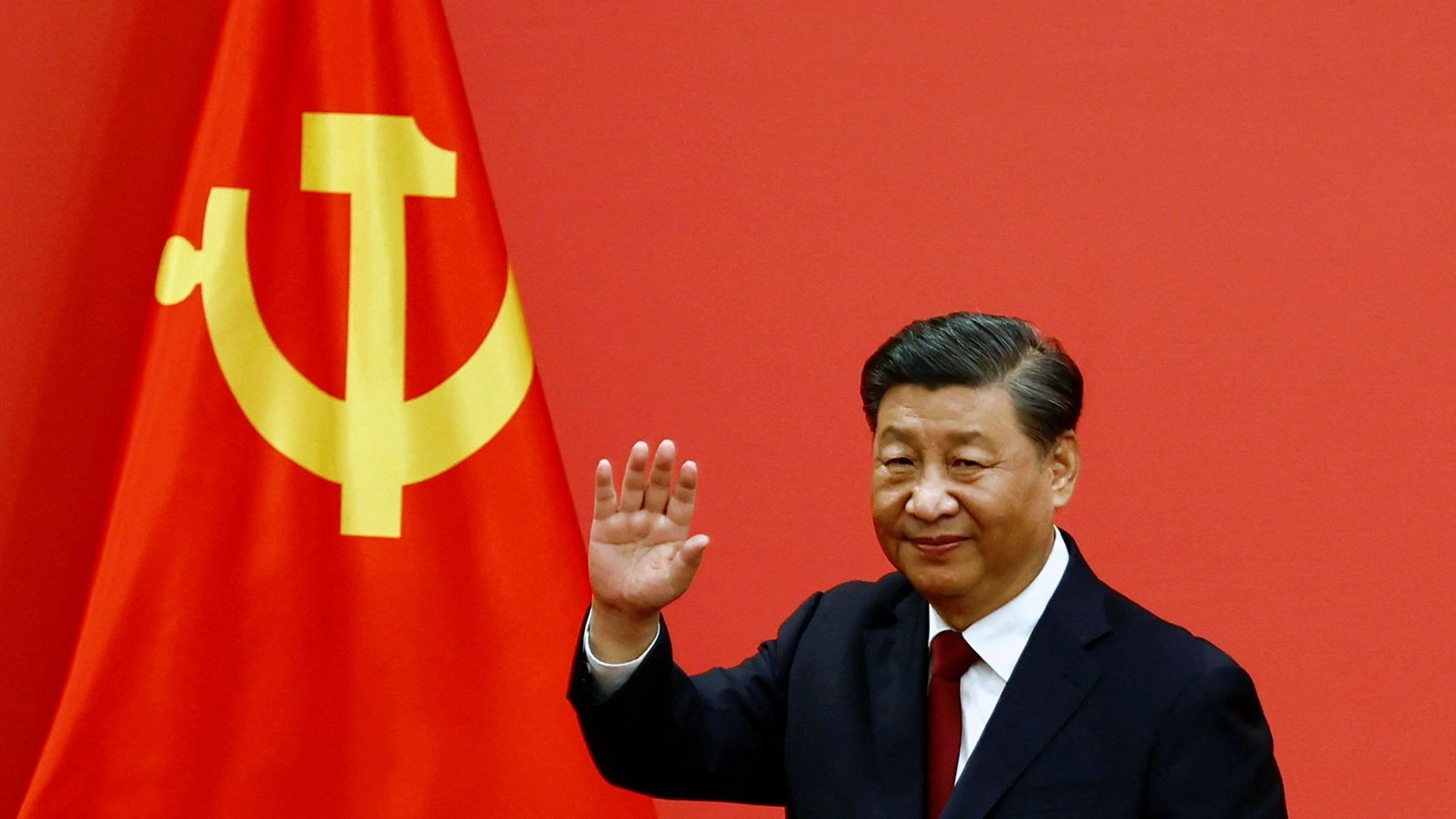
Today, China continues to produce a steady stream of top AI talent and AI start-ups. Its upstream and downstream AI sectors and its software and hardware industrial clusters form a complete, highly concentrated closed loop brimming with vitality. China therefore has ample confidence when competing against the aggressive U.S. AI giants. Europe, Japan, South Korea, and others, by contrast, have been left far behind because of the erosion of their cyber sovereignty. This is the principal reason why, apart from China and the United States, the world’s other developed countries have been unable to produce top-tier, general-purpose AI LLMs and are visibly falling behind in the age of the intelligent economy.
Bolstered by the dividends of cyber sovereignty, China is poised to become one of the first leading countries to move from the digital economy into the era of the intelligent economy—and to prevail in the next China–U.S. final, which will center on the practical application of AI technological achievements.
As the General Secretary Xi Jinping said in his keynote address at the opening ceremony of the 2026 World AI Conference: “As a responsible major country, China is always committed to providing international public goods relating to AI.” He also stated: “A single string cannot make music, and a single tree does not make a forest.” AI development should not be a solo performance by a single country, but a symphony of international cooperation.”
Cyber hegemony is destined to follow an unjust path and find little support. China, meanwhile, will certainly help the world—and the vast number of developing countries in particular—board the high-speed train of the intelligent economy, while providing more, better, affordable, and high-quality “AI public goods.”
Editor: Chang Zhangjin

funk5thousand
The chip embargo placed on China by the US is totally wrong from multiple perspectives and should absolutely be abolished. That said, model distillation has proven a simple process. The more advanced a model is, the more effectively it can be distilled. Should China pull ahead in the LLM competition, they will see very quickly that ‘winning’ the LLM race is not a very ideal goal to hold, as the ‘winner’ spends billions to develop the model, only to have it rapidly distilled by AI firms both in China and abroad and offered at a substantial discount. There is no magic involved in the KIMI offering. It’s Claude with some inference tuning. The US has a number of datacenters of unmatched scaled primed to come online over the next decade. We would be more than happy to allow China to take the lead on the LLM stage, at which point the US will distill that model at a fraction of the cost, and run it in a data center whose scale will be orders of magnitude larger than anything else offered globally, and China will understand first hand that winning the LLM race is not so much the victory one would imagine. Propa to moonshot for offering Kimi open weight. There is no more effective strategy to cut the lead the US holds in AI than to undercut the revenue streams of the labs producing the models If the US government had any sense at all it would end the embargo and welcome China to take the lead in a technology that cost billions to produce and can immediately be undercut by virtue of its own success. We welcome China our friends in China to take the lead in this game where the first winner is an economically unviable loser. The US labs are now holding multiple powerful models unreleased until a consensus is reached on how to deal with distillation.