


Wang Yi’s Nordic visit exposes Europe’s China dilemma.
From July 2 to July 8, Chinese Foreign Minister Wang Yi visited Denmark, Sweden, Finland and Norway.
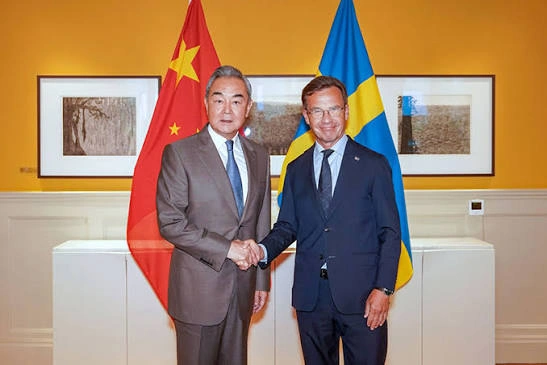
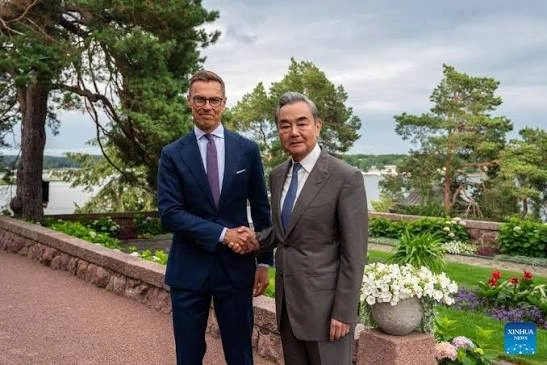
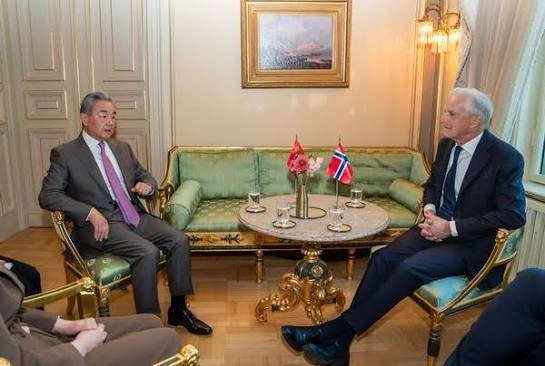
Now, normally, “foreign minister visits four Nordic countries” is not exactly the kind of headline that makes people cancel dinner plans. But this trip matters because it points to Europe’s biggest strategic problem:Europe wants to be a pole in a multipolar world, but it still behaves like a admin region inside someone else’s security architecture.
Look at the countries Wang Yi visited. Denmark and Norway were founding members of NATO. Finland joined NATO in 2023. Sweden joined in 2024.
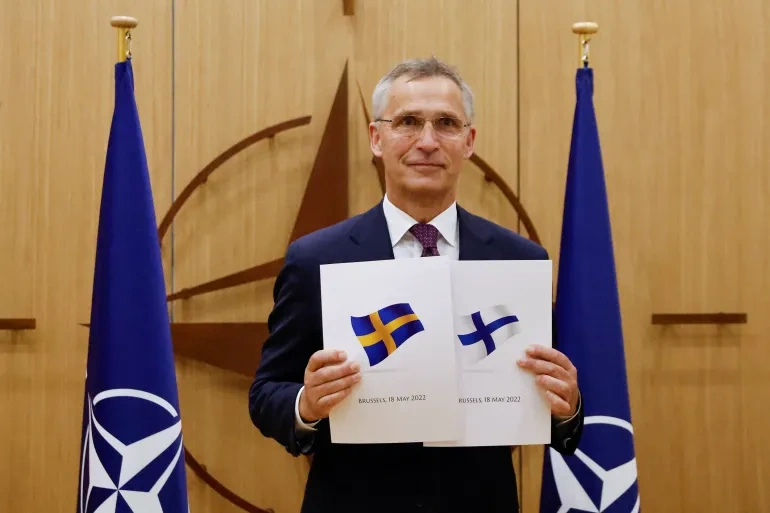
So these are not countries drifting away from the Western alliance system. They are among its most secure, wealthy, and institutionally loyal members. And yet, even here, China is unavoidable. Why? Because Europe’s real-world interests do not fit neatly into Washington’s China policy. Europe needs green technology. China is the world’s manufacturing center for much of it. Europe needs trade. China remains one of its largest economic partners. Europe needs a voice in the Ukraine war. China has channels to Moscow that most European capitals do not. Europe needs options, because without options, “strategic autonomy” is just a nice phrase you put in a speech before asking Washington what to do next. That is why the Nordic trip is worth watching.
The public language was all very diplomatic: green transition, innovation, free trade, climate change, AI governance, multilateralism. But underneath that polite language is a much harder reality. Europe is trying to manage three things at once: dependence on the United States for security, dependence on China for trade and green industry, and fear of Russia as a military threat. That’s no strategy. It’s just anxiety.
And China knows this. Beijing does not need Europe to become pro-China. That is not the point.
The point is to make sure Europe does not become completely absorbed into an American anti-China bloc.
For China, every European country that says, “We have our own interests, our own industries, our own climate goals, and our own diplomacy,” is already a more useful partner than one that simply repeats Washington’s lines.
For Europe, the logic should be just as obvious.
If Europe wants to be taken seriously in a multipolar world, it cannot treat China only as a threat, only as a market, or only as a problem to be managed.
It has to deal with China as one of the major powers shaping the system Europe claims it wants to help lead.That does not mean ignoring disagreements.
Norway still raised Ukraine. The EU still has trade complaints. The politics are still difficult. But difficult is not the same as optional.
This is the uncomfortable truth for Europe: You cannot build strategic autonomy by cutting yourself off from the countries that make autonomy possible. And whether European leaders like it or not, China is one of those countries.