



The 18th BRICS Summit will be held in New Delhi, India, on September 12-13. As an emerging power seeking greater international influence, India views this summit as an important stage to expand its global voice.
However, India’s current international image presents a sharp contrast: on one hand, impressive economic growth, aggressive manufacturing expansion, and continued pursuit of greater global influence and a permanent seat on the UN Security Council; on the other hand, persistent weaknesses in its business environment, deep-rooted structural issues such as gender inequality and caste-based social stratification, and heightened geopolitical tensions with its neighbors.
How should China view this rapidly growing neighbor burdened with internal contradictions? On this topic, Observer.cn, China’s largest online news portal, interviewed Mr. Gao Zhikai, an international affairs expert with extensive experience engaging with India.
Gao Zhikai: Regarding India, I’d point to several issues.
First, although India has a long history and a population of over 1.4 billion—now claiming to be the world’s most populous country—if we combine the populations of Mainland China, Hong Kong SAR, Macao SAR, and the Taiwan region of China, China’s total population may still exceed India’s. I suggest that Chinese authorities produce a unified statistic that aggregates data from the mainland, Taiwan, Hong Kong, and Macao.
Second, for nearly two millennia, India has lacked prolonged, unified, autonomous governance; many of its unified dynasties were established by outside forces. Where did these forces come from? The Aryans from the Persian plateau, peoples from Central and West Asia, the Mughal dynasty, and later the British.
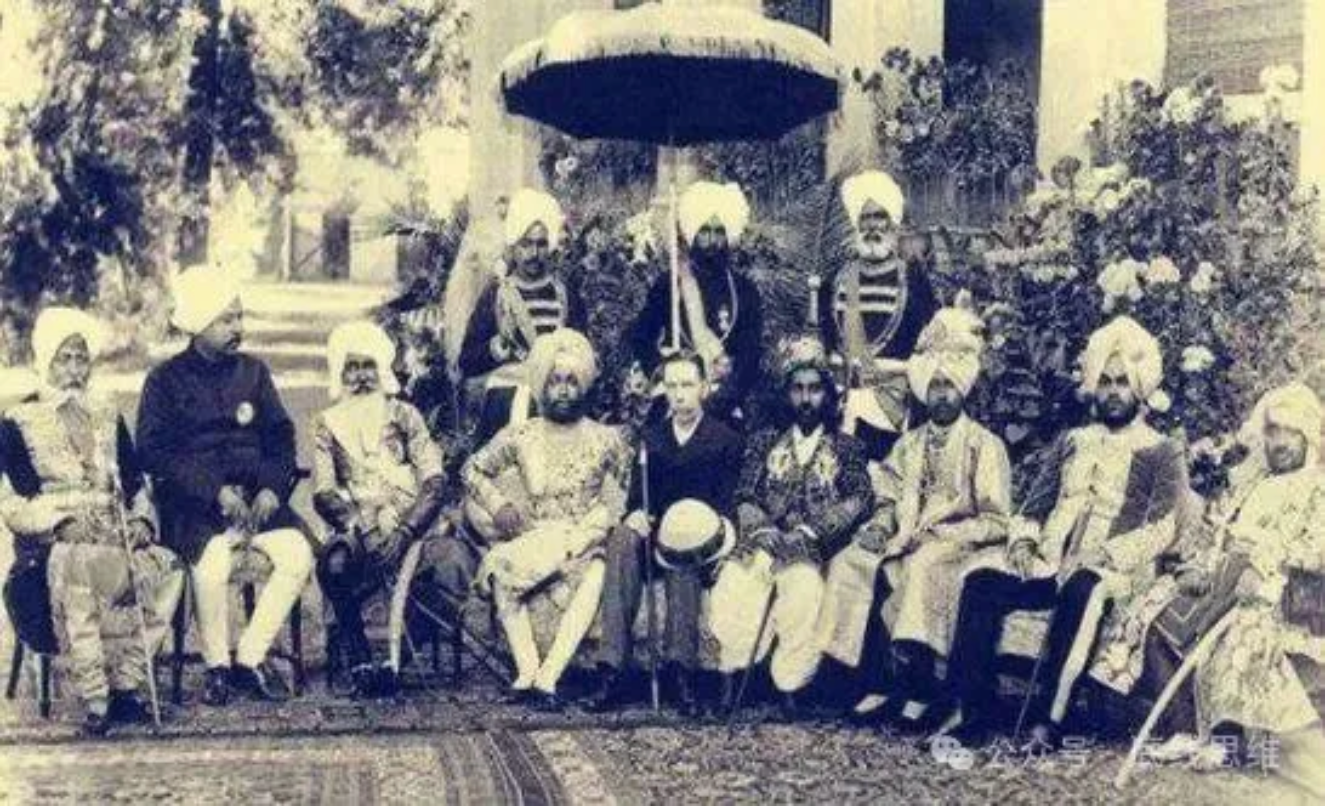
I believe the key difference between India and China is that Chinese civilization has long passed down the complete value system of “cultivate oneself, order one’s family, govern the state, and pacify the world.” In contrast, India lacks a continuous historical trajectory of long-term, unified, autonomous, and stable development. I am merely restating historical facts. India might speak of self-cultivation and family order, but it lacks a genuine philosophy of state governance, let alone that of pacifying the world. This is crucial.
How can India develop a real philosophy of governance? In my view, the first step is to stop treating neighbors as enemies, stop coveting other countries’ territory, and truly pursue peaceful development.
Around 1978, India’s GDP was comparable to China’s. But after nearly 50 years of persistent reform and opening-up, China’s economy is now about five times the size of India’s. Why such a dramatic change?
One primary reason is that India’s infrastructure has long failed to achieve substantial, large-scale upgrades—a regrettable situation. Its manufacturing lags, and energy supply remains problematic. India has its strengths, but its weaknesses are more prominent.
India has a distinct trait: many Indians are keen to leave and develop abroad. Some even say, “In India, a person is a worm; abroad, they become a dragon.” I think India has long pursued a clear policy orientation: knowing its rapidly growing population outstrips job creation and resource capacity, it has long encouraged its citizens to emigrate.
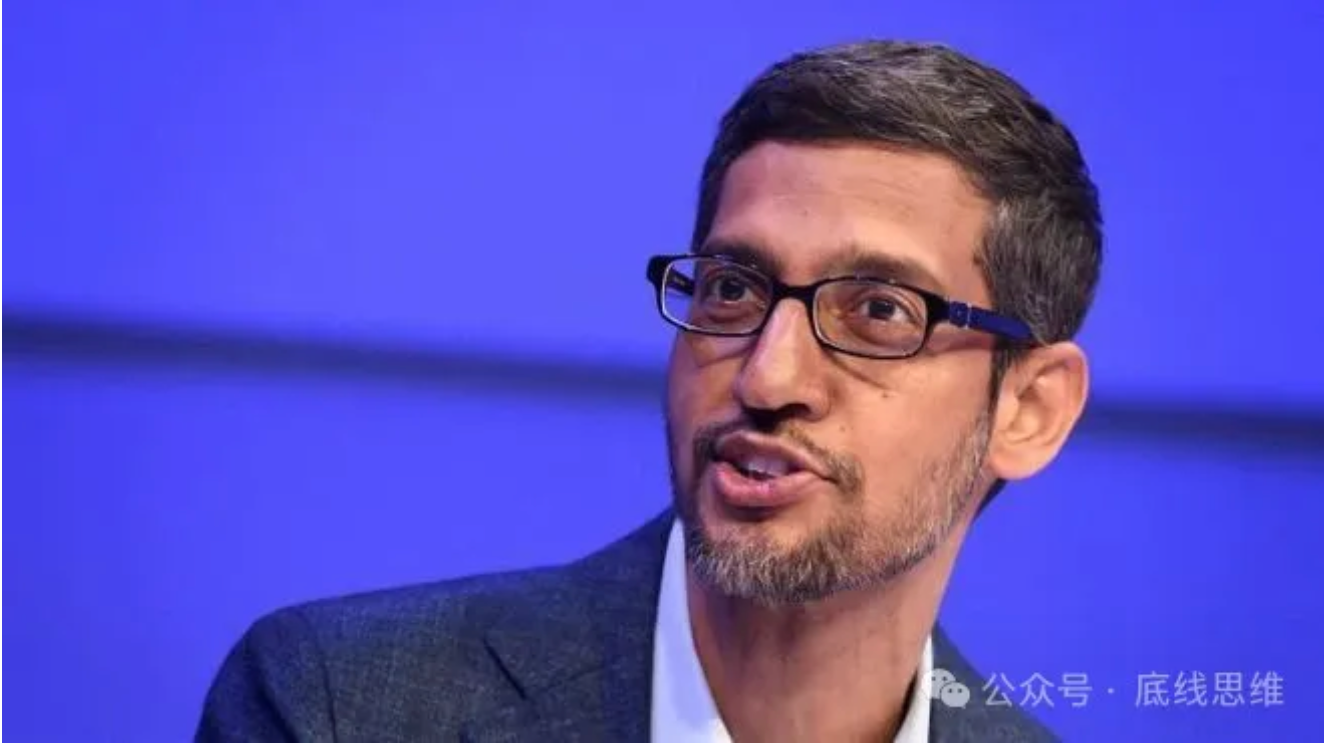
You can see many Indians abroad. I remember a CEO of a major U.S. company, a prominent Indian-American, who said: “Once we Indians leave India, we don’t want to go back, because we find foreign countries better, and India’s deep-rooted problems are unsolvable.”
So, when dealing with India, we must recognize that among the many Indians who come to China, true talent may be scarce. They may simply see better conditions here, but have they ever demonstrated the ideal of “cultivate oneself, order one’s famil, govern the state, and pacify the world” in their own country? I think not—and that could bring a host of new issues.
I deeply respect India. But I feel some of its problems are so entrenched that Indians themselves may not even recognize them. And when these emigrants come to China or elsewhere, other countries cannot change them either. So why should we join that fray?
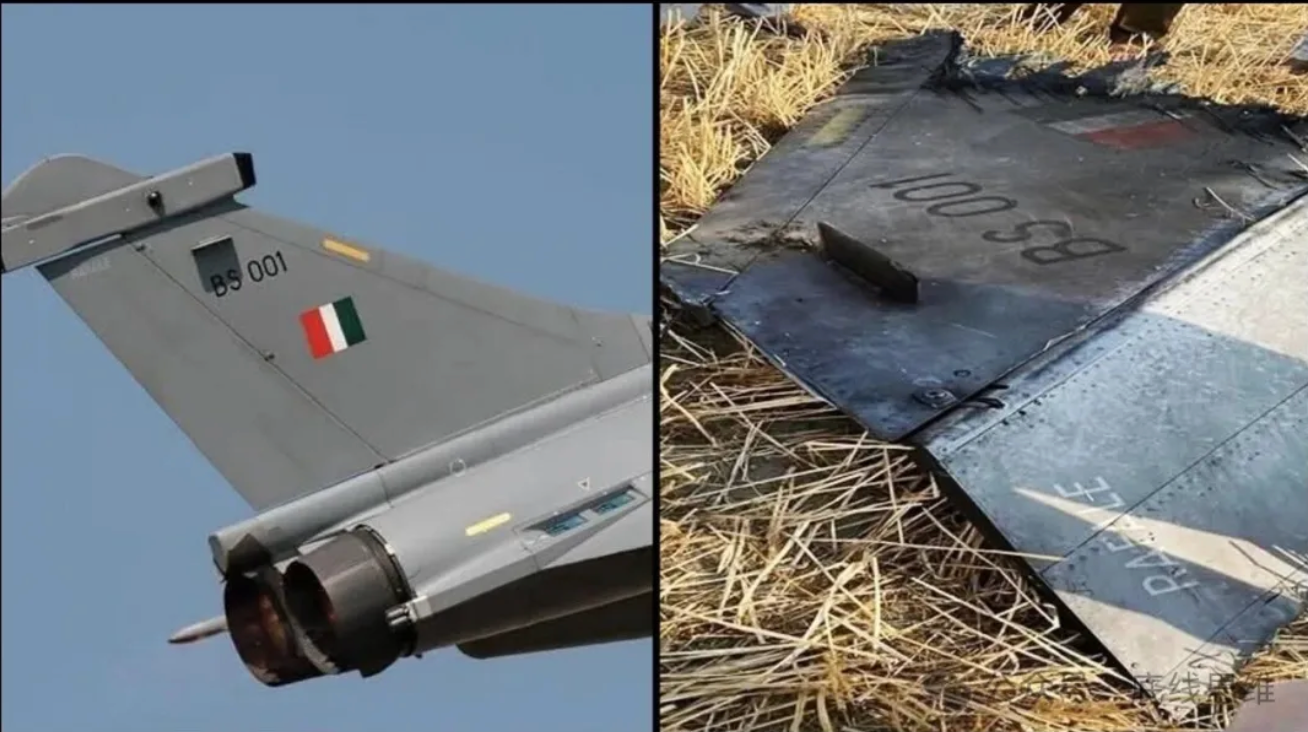
Moreover, India’s “parallel universe” problem is more severe than in other countries: Indians consistently believe India is the greatest, that its military is the second or third strongest in the world, invincible. On May 7 last year, India and Pakistan fought a battle. India claimed total victory and Pakistan total defeat, even sending delegations to dozens of countries to boast about how it defeated Pakistan. China should, on one hand, fully recognize these traits, and on the other, maintain a rational distance—and refrain from dragging these issues into China.
India’s social contradictions are severe. Its caste system is legally abolished but remains deeply entrenched in reality. Many issues remain unresolved: women’s labor participation is low, their social status low, and sexual violence against women is shockingly serious.
Yet internationally, India’s voice is always louder than any other countries’, and its self-positioning higher than all. It seeks a permanent UN Security Council seat while refusing to treat China as a friend.
I said something last year: I know India’s highest political aspiration is to become a permanent member of the UN Security Council. But if India does not befriend China, it will never get that seat. Why? Because China has a veto.
Now think about it—you get the feeling India sometimes has no clue about how the world works, no grasp of global trends, and no idea how to treat China. Nor does it understand that the Chinese nation will never recognize India’s illegal occupation of Zangnan (South Tibet). But instead of urgently negotiating with China to resolve the Zangnan issue, India keeps showing toughness, as if it is stronger than China and can defeat it.
It also keeps saying Mumbai is more developed than Shanghai. From this perspective, I think India, as a nation, lacks humility, lacks openness to objective facts, and lacks the spirit of creating wealth through its own efforts.
I think we must clearly understand what kind of country India is and what traits Indians have. For example, to win in football, one must at least strive hard, not fear hardship, sweat, or even blood. To judge a nation’s development potential, we must observe such pragmatic traits. Are Indians truly hardworking and persistent? Are they willing to achieve success through their own hard work?
Of course, some might point out that many Indian-Americans are CEOs or senior executives of U.S. multinationals. Indians have a trait: they are particularly eloquent. Their English has a strong so-called “curry” accent, but they are very bold and articulate speakers. When I was at Yale, I had Indian classmates. They spoke more actively than anyone, asking questions all day, but when exams came, their performance often fell short. That may be another Indian problem.
I recently conducted a survey in Los Angeles and learned of a case. A Chinese-led testing center there had been running successfully for decades. One day, the Los Angeles Times sent a sample for urgent testing. The chief scientist found serious issues and wondered why the sample’s composition differed greatly from its label. He called the editor, who said, “Just test responsibly—report what you find, regardless of the label.” So the scientist did and submitted the report.
Later he learned that the Times had received consumer complaints and chose several labs for testing. One was this Chinese-led center, which found discrepancies. Another was an Indian-managed lab, which reported that the sample perfectly matched its label. The difference was stark: the Chinese lab did rigorous scientific work; the Indian lab cut corners, essentially copying the label without actual testing.
This may be anecdotal, but India does not practice fact-based rigor internationally either.
India has been pushing a project called IMEC-the India-Middle East-Europe Economic Corridor. I scoff at it. Why? The corridor aims to ship Indian products out, but India’s manufacturing is not strong—how many products can it export? And according to the design, goods go from India by sea to the Middle East, then unloaded onto trucks or trains to Israel, then reloaded onto ships to Europe, then unloaded again and reloaded onto road or rail. Anyone with common sense sees this fundamentally violates the logic of efficient connectivity. Those who proposed this have never actually done transport or connectivity. How can a normal freight route go land–sea–land–sea–land? How much cost would be added by such repeated handling? Can such a project succeed?
Who designed this route? The Americans—they want to make a big profit from it. But India doesn’t care; it now promotes this so-called IMEC worldwide.
In fact, if India genuinely wanted a land route to Europe, the simplest way would be to load goods on trains or trucks from India, pass through Pakistan into Iran, then through the Middle East to Europe. That is the normal route. But India’s hostile relations with Pakistan prevent that.
Around the May 7 air battle last year, India repeatedly threatened to stop Indus River water from flowing into Pakistan. Modi has said several times that he would cut off the Indus’s flow to Pakistan. How can anyone do that? Depriving a downstream country of its right to use river water in peacetime is, in my view, a crime against humanity; in wartime, it could constitute a war crime.
Moreover, India is not even an upstream country of the Indus—at best a midstream one. To deprive a downstream country of peaceful water use—doesn’t India know “do not do to others what you do not want done to yourself”? The true upstream country is China. So you see, such a country lacks vision and strategic insight, and often bullies neighbors, especially Pakistan, with high-handed tactics.
I wish India well, and I hope it truly learns from China. In the past, China and India had similar GDP sizes—roughly 1:1. Now China’s economy equals five Indias. How should India explain this gap?
Also, India constantly boasts of rapid growth, but on closer inspection, there is significant exaggeration. Just drive 50 or 100 kilometers out of New Delhi, Kolkata, or Mumbai, and you’ll feel the inflation in those figures.
By Chinese standards, the Indian people remain generally impoverished. I think India should really learn from China—eliminate poverty, improve living standards, reduce illiteracy, protect women’s rights, create more jobs for young people, and truly abolish the caste system in real life, not just on paper.
In short, only by solidly advancing comprehensive national development and addressing all livelihood and industrial gaps can India gain real global influence. If it has so many shortcomings at home yet tries to show off internationally, the world’s people will judge it objectively.
Editor: Zhao Yiwen