




1. In China, Tesla’s voice assistant has been cleared to connect to homegrown AI models
On April 22, Chinese business outlet STCN reported that Tesla’s in-car voice service in China has been approved to connect to homegrown AI models.
According to Tesla China’s updated Voice Assistant Terms of Service, the voice systems in Tesla Model vehicles will plug into two Chinese AI models at once, DeepSeek, and Doubao, made by ByteDance.
The division of labor is simple. Doubao handles voice commands, navigation, music, climate control, that sort of thing. DeepSeek handles the conversational stuff, small talk, weather, news.
Why does this matter? For years, Tesla’s voice assistant was mocked by Chinese drivers as “an artificial idiot.” Because China is a country of 1.4 billion people and at least ten major dialect groups. Standard Mandarin, the version most foreigners learn, is just one of them. So for the 80 million people living in, say, Sichuan Province, getting Tesla to adjust the temperature meant first pressing “Hey, Tesla,” and then carefully enunciating “set to 24 degrees,” in textbook Mandarin. Try a compound sentence and the system fell apart.
Now, once the update rolls out, with a Chinese-trained AI under the hood, you can keep your hands on the wheel and just say, “It’s a bit stuffy in here, turn on the AC and take me to the nearest coffee shop.” And the car does it. Compound commands, dialects, back-and-forth conversation, all in one go.
And this story is bigger than just Tesla. As of today, more than seven million smart cars in China are already running on Doubao. That’s over 50 brands and 145 vehicle models, with more than 30 million in-cabin interactions every day. In other words, the cars on Chinese roads are increasingly running on Chinese souls.
2. DeepSeek open-sourced V4, turning a million-token context window from a luxury into a default feature
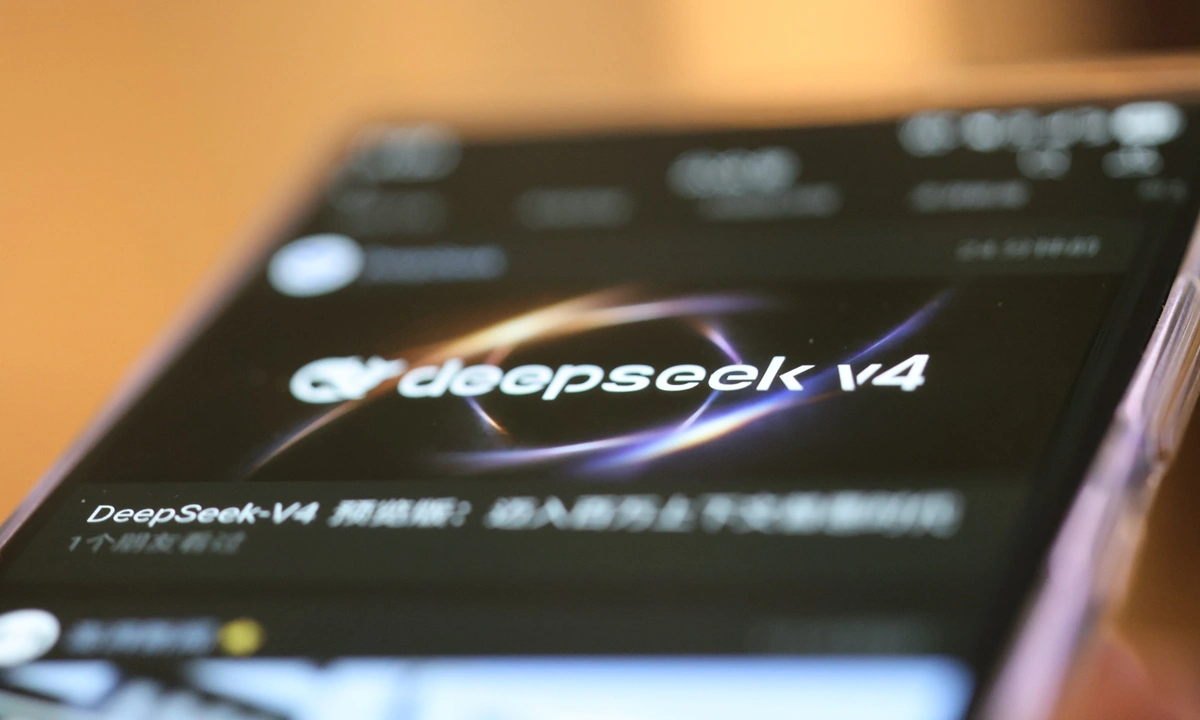
On April 24, DeepSeek released its new V4 model series, and posted the weights online the same day. Two versions came out together. V4-Pro is the high-performance one, and V4-Flash is the lighter, more affordable version.
Both versions natively support a one-million-token context window. What does a it mean in practice? Enough to swallow about two copies of The Lord of the Rings trilogy in one go, or two to three hundred pages of legal contracts and financial reports. From now on, one million tokens is the default for every official DeepSeek service.
The most important detail for ordinary users is the web app and the official mobile app are still completely free. And once you give a free AI a million-token memory, the list of things you can do with it gets a lot longer.
A student studying for exams can drop a whole textbook into it, get the key points highlighted, generate a set of practice questions, and have the trickiest chapter re-explained. An office worker can dump a year’s worth of contracts, emails, and meeting notes into the system and ask for a year-end review. A hobbyist coder can hand V4-Pro a paragraph describing what they want, and get back a full working project. In what’s known as Agentic Coding, that’s AI that writes code by acting like a developer, not just suggesting snippets, V4-Pro now leads the open-source pack. DeepSeek itself says the experience is better than Claude Sonnet 4.5, with output quality close to Opus 4.6.
For developers and businesses, the bigger story is the API price drop. DeepSeek noted in its technical report that the system has been validated on both Nvidia GPUs and Huawei’s Ascend chips. And once Huawei’s Ascend 950 super-nodes ship at scale later this year, V4-Pro pricing is expected to drop further.
3. A pilotless air taxi takes off from an active runway, right next to passenger jets.
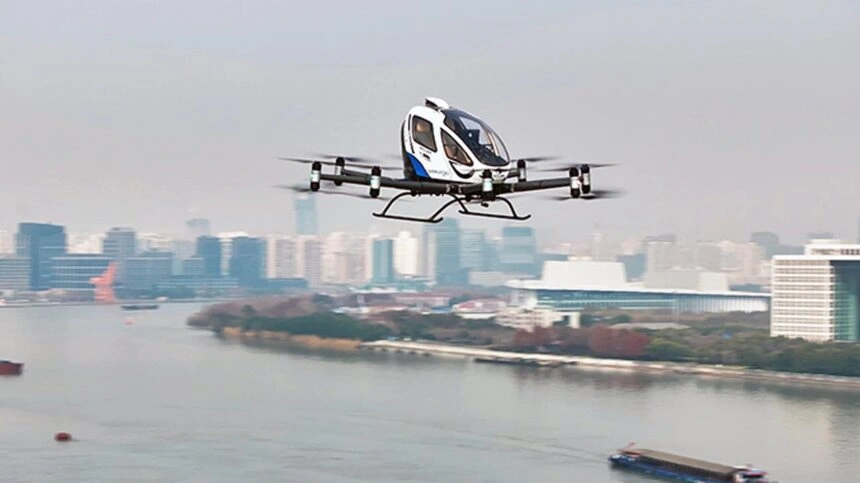
On the morning of April 26, the world’s first quad-certified pilotless passenger aircraft completed a demonstration flight in Qingyang City. The aircraft is the EH216-S, made by the Chinese company EHang. Its top cruising speed is around 130 kilometers per hour, and a single charge gets you about 30 kilometers, roughly the distance from a typical city center to its airport.
You might be wondering, okay, but what does this have to do with me? Here’s the headline. It was the first verified test of an eVTOL operating in the same airspace as regular airliners. Imagining you’ve just landed at the airport. Instead of squeezing onto a shuttle bus or sitting in highway traffic for an hour, you walk over and step into a flying taxi. Fifteen minutes later, it sets you down at your hotel. That’s the future being trialed in China.
And it’s closer than you might think. Back in March, EHang’s operating subsidiary received China’s first batch of operating licenses for passenger-carrying drones. Right now, in two locations, in Guangzhou and Hefei, anyone can buy a ticket and take a sightseeing flight. So if you happen to be in Guangzhou or Hefei this weekend, you can actually go see one in person, or even ride in one. In China, the flying taxi is no longer science fiction. It’s quietly becoming part of everyday life.
4. A brain-computer interface helped a paralyzed art teacher paint again
On April 23, China’s second-ever fully implanted, fully wireless, fully functional brain-computer interface clinical trial reached a major breakthrough. The procedure took place at the First Affiliated Hospital of Nanchang University.
The patient is a 29-year-old art teacher called Mr. Deng. Last June, he slipped at the edge of a swimming pool. The fall broke his neck. He lost the use of both legs and both hands. For a while, he felt his life had lost all meaning.
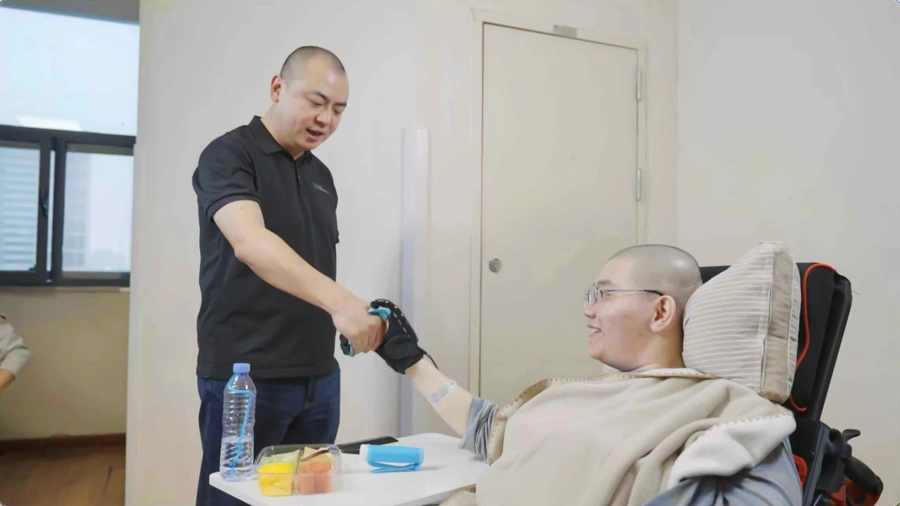
The turning point came in December. A brain-computer interface developed by NeuroXess, a Shanghai-based BCI company, was implanted into his brain. The system uses a flexible electrode array that sits on the surface of the cortex, just under the dura, without piercing the brain tissue itself. The battery is built into a separate module under the skin of his chest, which keeps the heat-generating component well away from the brain. It is the first such system in China, and only the second in the world, to fully implant the battery as well. There are no wires running outside the body. A short wireless charge keeps it running all day.
The most stunning thing is the speed. From the moment the brain forms an intention, to the signal being captured, decoded, transmitted, and turned into an actual movement, the whole loop runs in under 50 milliseconds. That’s about twice as fast as a human blink. The thought of grabbing a pen, and the hand starting to move, for all practical purposes, they happen at the same instant.
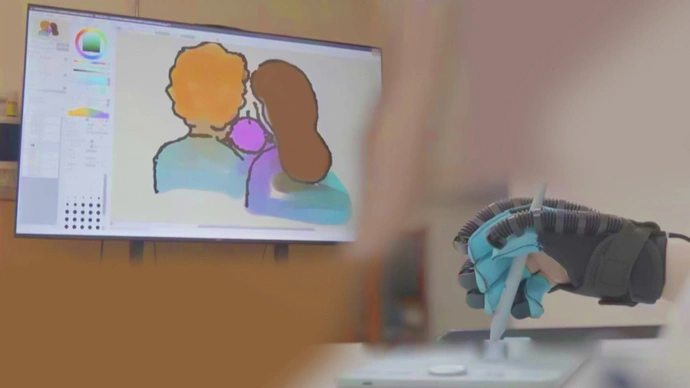
One month after the surgery, Mr. Deng could grasp objects, write, and draw, all on his own. He uses a brain-controlled exoskeleton glove to feed himself. And with his own hand, holding a pen with steady precision, he painted a family portrait. He wrote the words “Happy Birthday,” finally completing a gift he’d been unable to give his son on the boy’s first birthday.
And the weight of this story goes far beyond one father’s recovery. In China alone, there are over 26 million stroke survivors, and a significant share of them live with some form of paralysis. Add in patients with spinal cord injuries, ALS, and a rapidly aging population, and “moving again with your mind” stops being a sci-fi premise. It becomes a quiet, daily wish in tens of millions of households.
Tao Hu, founder and chief scientist at NeuroXess, said the first case proved we could do it; the second case proved that it can be scaled. NeuroXess has now run 54 brain-computer interface trials around China. The next step is registering for multi-center clinical trials, and going through formal medical device approval. A few years from now, brain-computer interfaces may no longer be a one-off headline. They could be a standard option at any rehabilitation hospital, and possibly, one day, covered by health insurance.
Editor: Charriot Zhai