


On the 20th, the U.S. Supreme Court issued a ruling determining that Trump’s “Liberation Day” tariffs were an illegal overreach of authority. In response, the Trump administration swiftly adjusted its strategy, resetting the global baseline tariff to 15%, while explicitly stating that no new tariffs would be imposed on China.
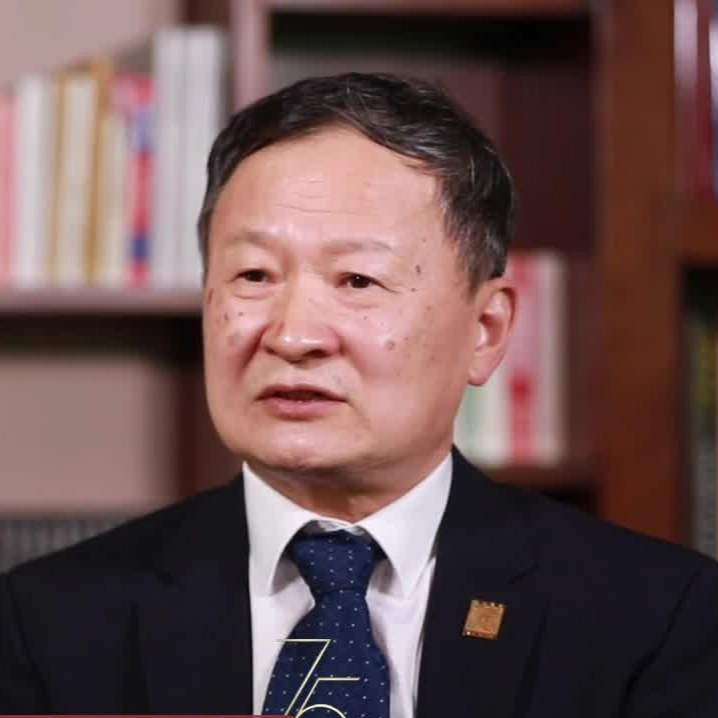
On the surface, this is a simple story: Trump took a hit, and China won. But Professor Wang Xiangsui, a Chinese strategist, points out that the reality goes far beyond this. China’s “exemption” this time is equally a victory for the United States — and even for the entire world.
America’s Victory: A Successful Stress Test for American Institutions
The most noteworthy aspect of this episode is not what percentage of tariffs Trump imposed, but the legal basis on which he imposed them.
Previously, Trump’s “Liberation Day” tariffs represented a textbook case of executive overreach within America’s legal system. They relied on the broad executive powers granted to the president under IEEPA during a “national emergency” — requiring no congressional approval, no country-by-country justification. The president merely had to declare a state of emergency to levy tariffs on any country, any goods, at any rate.
In other words, it was a blank check that required no one’s co-signature. What the Supreme Court did this time was tear that check up.
The core legal logic of the ruling is clear: the power to impose tariffs belongs to Congress, not the president. IEEPA is a law designed to address emergency economic threats — it cannot be used to normalize a state of emergency. The Trump administration’s use of “national emergency” as a pretext to bypass Congress and impose sweeping tariffs was, in essence, an encroachment of executive power upon legislative power, and the Supreme Court delivered a fundamental rejection of this approach.
This is precisely why, although Trump subsequently announced new tariffs of 15%, the nature of this move is entirely different.
He is now relying on alternative legal authorities such as Section 301 to claim legitimacy for his actions. But these tools have a fundamental difference from IEEPA: they require specific, demonstrable justifications for each tariff target. Trump can no longer make a sweeping declaration of “emergency” and impose blanket tariffs.
This has put the brakes on the Trump administration’s runaway tariff agenda. Take Canada as an example: Trump previously imposed tariffs citing the “fentanyl crisis,” but Canada is not a major source country for fentanyl entering the United States — the justification was tenuous at best. Now, with the emergency-declaration shield gone, imposing a 15% tariff on Canada requires a defensible rationale.
While the Trump administration excels at fabricating baseless “justifications,” this still means that every country targeted with tariffs now has legal space to negotiate and bargain with the United States. Trade negotiations will shift from presidential executive orders back to a track requiring case-by-case argumentation and country-by-country bargaining. The new 15% tariff, rather than being a fresh tariff offensive, is better understood as Trump’s stopgap measure to maintain his policy narrative within legal cracks after losing his most powerful legal weapon — revealing his weakening position.
Professor Wang Xiangsui notes that this has effectively balanced the divergence between America’s short-term and long-term interests, pulling back the rift between “two Americas.” Trump’s “America” — represented by MAGA supporters — has endured enormous pressure under globalization and yearns to “be great again” through tariff barriers. But in reality, only within the context of globalization can America’s comparative advantages in finance and technology truly sustain long-term economic development.
Trump attempted to use executive power to forcibly tilt the balance toward the former, but the Supreme Court drew a red line: policy correction is permissible, but the means must be lawful, and short-term political interests cannot override constitutional order. This has reinforced the legal guardrails between the two Americas.
Globalization serves America’s long-term interests, and the separation of powers is the founding principle of the nation — both of these bottom lines were upheld in this moment. Therefore, while this was a major setback for the Trump administration, for America itself, it was a moment where the system worked as intended.
Why China’s Victory Is Also the World’s Victory: Proving the Correctness and Necessity of Firmly Resisting Bullying
Professor Wang Xiangsui states bluntly: the exemption of China from the 15% tariff was by no means an act of American goodwill, but rather because in the previous round of the trade war, only China demonstrated sufficient strength for effective countermeasures and unwavering resolve to resist to the end.
From rare earth export controls to agricultural product countermeasures, the intensity and precision of China’s retaliatory measures made the Trump administration recognize that the cost of continuing to pressure China far exceeded the expected benefits.
Beyond this, Trump’s eagerness to push for a visit to China is another important facet. The logic behind it is simple: he will soon face the test of midterm elections. At a juncture where he has suffered a major blow from the Supreme Court ruling, stabilizing U.S.-China relations would be a significant boost.
In other words, China’s victory was not only fought for, but was a well-executed counterattack combining its own strength with precise judgment of external strategic opportunities.
The reason this victory for China is also a victory for the world stems from a more universally significant observation made by Professor Wang Xiangsui: China has helped the world verify a rule — that resistance pays off. Here, “resistance” refers not merely to capacity — the size of an economy — but also to strategic resolve and the will to stand firm.
India is the most noteworthy counter-example. As the world’s fifth-largest economy, India’s economic influence is by no means negligible. Yet when facing U.S. trade pressure, India has consistently hedged and wavered. The result is that this “flexibility” has not only failed to secure any preferential treatment but has actually landed India in an even more passive negotiating position.
Thus, Professor Wang’s point is not only that you need objective strength — leverage — but also the nerve to use it. Leverage you are afraid to deploy is no leverage at all.
China’s successful experience lies in this: when engaging in a contest with a hegemonic power like the United States, you must have leverage, possess the courage to use it, and master the art of using it well. India’s lesson is that it achieved only the former while lacking the latter at critical moments. A nation with great-power ambitions cannot afford to flinch at the moments that define its destiny.
The current international order faces severe challenges from the resurgence of hegemonism and the erosion of the rules-based system. Under such circumstances, China has been the first to verify through action a simple but crucial rule: compromise and concession will not make a bully stop — they will only cause everyone to suffer in uncertainty.
When more and more nations recognize the necessity of building their own strength, firming their will to resist, daring to say no to unjustified bullying, and becoming adept at fighting back, there is hope for the world to escape its predicament and rebuild order. This is not merely the victory of one country called China — it is a counterweight against the world order’s slide into the law of the jungle.
Editor: Charriot Zhai