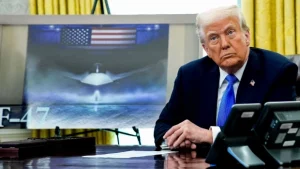




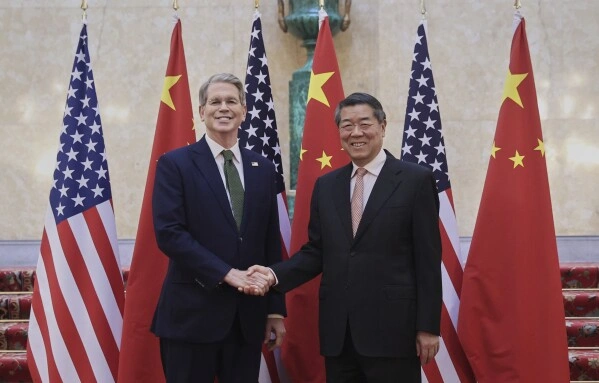
On June 9th and 10th, the China-US trade talks were held in London. Trump claimed the US and China had reached a “great deal,” boasting, “we have everything we need, and we’re going to do very well with it. And hopefully they (China) are too.”
However, Reuters immediately punctured his bluff, pointing out that the agreement reached that day did not solve the most critical issue for the US. While China accelerated export approvals for some rare earths used in producing civilian vehicles, it made no concessions whatsoever on rare earth magnets used in manufacturing fighter jets and missiles.
Analysis by Bloomberg further indicated that even this limited progress, the US had to roll back a promised crackdown on visas for Chinese students. Clearly, this not only exposed once again the US’s difficulty in shaking its dependence on Chinese rare earths, but also signaled that the days when Trump could get something for nothing solely through maximum pressure tactics are over.
Professor Tim Meyer, a professor of international trade law at Duke University’s law school, said ” This is basically just a reset that’s being packaged by the administration as a substantive agreement,” “It’s possible in the future, China may have a stronger hand. ” Trump’s practice of making sweeping tariff threats but only to back down later, has signaled to other world leaders even modest concessions can secure retreats. Investors have grown so used to the pattern they’ve adopted the acronym TACO (Trump Always Chickens Out) to describe the phenomenon.
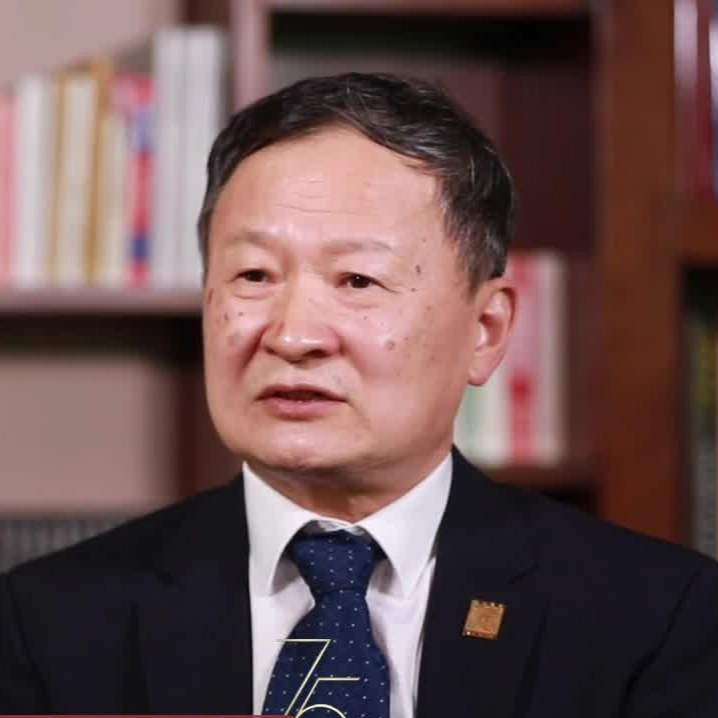
So, was the London negotiation merely a simple case of treading water, as described by Western media? Professor Wang Xiangsui, a Chinese strategist, pointed out that this is not a zero-sum game situation, but rather a multifaceted one simultaneously containing both positive signals and challenges:
Cautious optimism is warranted because both sides made partial compromises, resulting in a phased easing of trade friction. On core issues, neither China nor the US made fundamental concessions, preserving ample room for maneuver in the next round of competition. For instance, the US side intends to ease export restrictions on non-high-end technologies like chip-making equipment for processes above 14 nanometers, jet engine parts, and ethane, while maintaining bans on AI chips and advanced lithography machines. China agreed to issue temporary six-month export licenses for civilian-use rare earths like dysprosium and scandium to US automakers, among others, while simultaneously establishing a rare earth flow tracking system. Therefore, the London agreement might just be an intermission, after which the prolonged competition and strategic maneuvering will resume.
From a positive perspective, the two sides preliminarily reached a consensus on implementing the Geneva Framework. This sets a good precedent for the institutionalization of the dialogue mechanism, helping to provide a buffer for subsequent negotiations and promote rule coordination in areas like green technology standards. Although this negotiation did not completely eliminate trade friction risks, it established a “pressure relief valve” for China-US economic and trade relations. In the short term, this makes it possible for both sides to ease friction through a strategy of “flexible extensions.” In the long-term strategic competition, the focus will also shift to more constructive areas such as digital economy rules and global supply chain restructuring.
Professor Wang further noted that from a broader macro perspective, this negotiation outcome is the result of mutual concessions made on each other’s bottom lines. It serves as an introductory lesson for the US government to understand Eastern wisdom. In Eastern philosophy, the essence of deal-making is cooperation; it is the foundation of all transactional art. Therefore, maintaining a cooperative attitude is a higher-level transactional art and is more conducive to reaching agreements than bluster.
Prior to this, although China consistently emphasized that the Pacific Ocean is vast enough to accommodate the simultaneous development of both China and the US, America seemed unwilling to accept this goodwill. Now, after two rounds of tug-of-war in the trade war negotiations, both sides—especially the US—have finally realized that neither can eliminate the other, and are even temporarily interdependent. They can only jointly seek a balance of interests. Compared to Trump’s self-proclaimed “The Art of the Deal,” which in practice embodies a Western negotiation tactic of “zero-sum games,” the Eastern wisdom encapsulated in concepts like “harmony in diversity” and “building a community with a shared future for mankind” clearly holds greater promise for steering China-US competition back onto a track of healthy rivalry.
Editor: Charriot Zhai
https://www.reuters.com/world/china/us-china-trade-truce-leaves-military-use-rare-earth-issue-unresolved-sources-say-2025-06-15/
https://www.bloomberg.com/news/articles/2025-06-12/for-trump-resolving-us-china-trade-fight-comes-at-a-cost
https://www.guancha.cn/internation/2025_06_13_779247.shtml
https://politics.people.com.cn/n1/2021/1116/c1001-32284138.html