



Guancha.cn: In February 2026, NASA announced a major revision to its plans: Artemis III would be repurposed as a crewed rendezvous and docking test in low Earth orbit, while the crewed lunar landing would be carried out by Artemis IV, now scheduled for 2028. At the same time, NASA officials have continued to portray the U.S.-China lunar programs as a new version of the Cold War space race, while President Trump has even declared that “the Moon is ours.” Why has the United States, which had essentially abandoned its plans for another crewed lunar landing, suddenly decided to return to the Moon—and, more importantly, to get there ahead of China?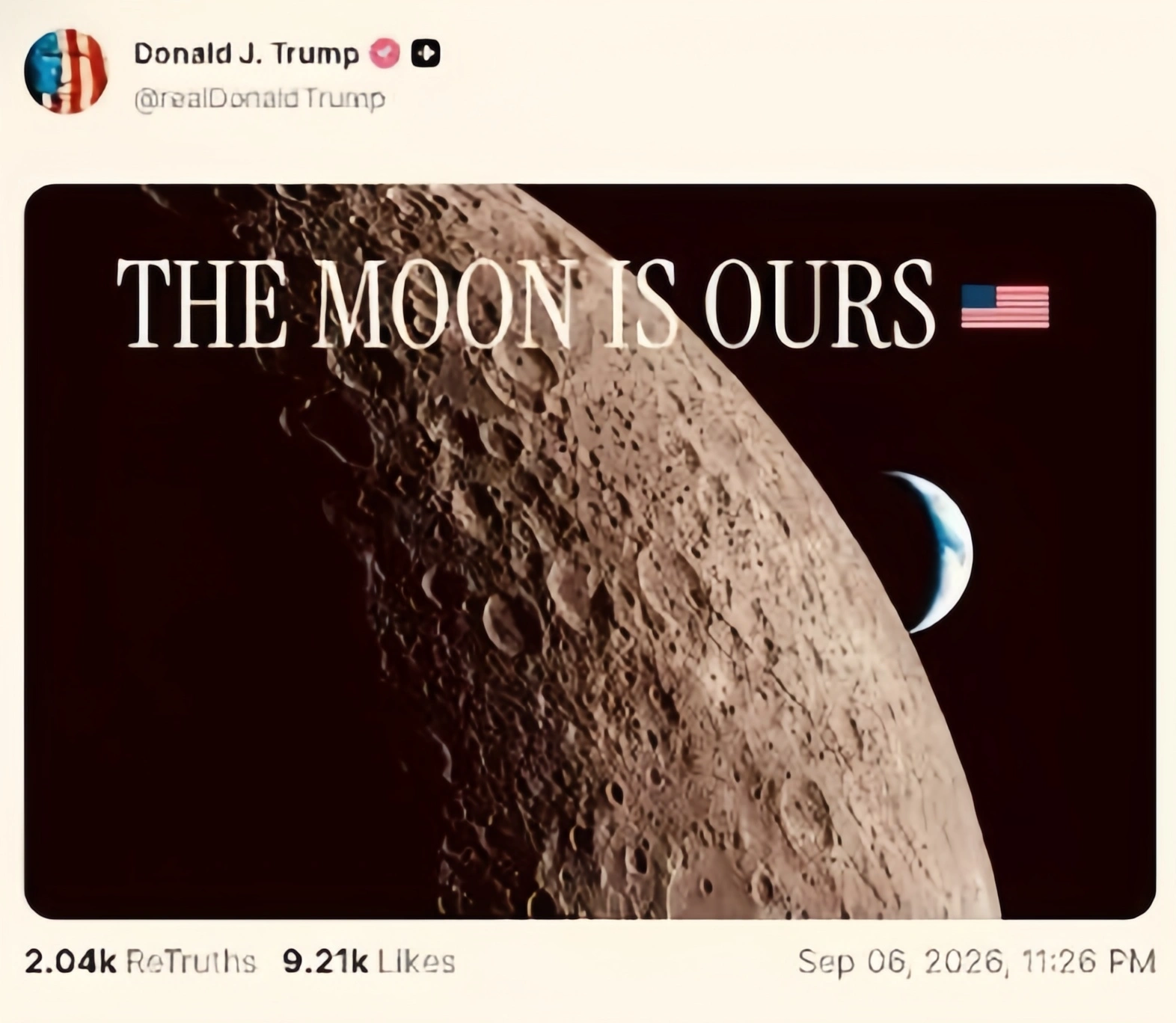
Victor Gao: In 2023, China has already solemnly announced that it would complete a crewed lunar landing by 2030. Among the major powers, our space program has two distinctive features. First, its safety record is exceptionally strong. Second, the plans we announce are generally followed through: we say what we intend to do, and then we deliver, with a very high rate of success. This is a major difference between China and the United States and Russia.
Over the decades, China has followed its own path and remained unwavering in carrying out its space program as planned. So when China announced that it would complete a crewed lunar landing by 2030, two things were clear. First, this was a solemn declaration by the Chinese government. Second, I believe the world broadly understands that when China makes such a declaration, it has the capability to deliver on this major undertaking on schedule.
At first, the Americans were completely unmoved. Their excuse was essentially: “We’ve already been to the Moon. The United States landed there in 1969, and we went back several more times afterward. So we have no interest in undertaking another crewed lunar landing.”
Of course, everyone knows that the United States was also facing financial constraints and a host of other pressing problems at the time. Perhaps it simply could not devote the necessary resources and attention to another lunar program.
But then, did you notice what happened? The United States made a complete U-turn. All of a sudden, it announced that it too would send astronauts back to the Moon.
When the United States announced its new crewed lunar program, some people asked an obvious question: “If you already went to the Moon in 1969, shouldn’t doing it again be easy? Why not simply pull out the old blueprints and update them?”
Some people on the U.S. side claimed that all the archives and records from the 1969 crewed lunar landing had been lost. That is an extraordinary laughable claim. How could you possibly lose all of that?
The United States has even said that this new crewed lunar landing effort has to start from scratch—that it must develop an entirely new crewed lunar program from the ground up. That is the first point.
Second, the United States suddenly raised the stakes, saying that it had to beat other countries to the Moon and complete a crewed lunar landing before 2028. And when they say “get there first,” they mean getting there before China.
At the time, China was the only country to have announced that it would complete a crewed lunar landing by 2030. India was trailing behind us, while Russia, for various reasons, did not have the resources or capacity to pursue a crewed lunar landing.
Third, President Trump recently declared that “the Moon belongs to ours” in his Truth Social post. Of course, he is free to say whatever he wants, but that does not mean we have to listen—and we absolutely cannot accept such a claim.
We have to look at all these developments together: Why did the United States initially say it had no intention of returning to the Moon? Why did it then unveil its own crewed lunar program? Why did it subsequently insist on getting there first? Why did President Trump declare that the United States must land astronauts on the Moon before 2028? And why has he now gone so far as to declare that the Moon belongs to America?
There is another crucial development. The chairman of the U.S. Joint Chiefs of Staff recently fired off another major statement, saying that the United States has deployed space weapons capable of destroying satellites operated by other countries, among other things. This shows that the United States has already begun to militarize and weaponize outer space.

The chairman of the Joint Chiefs also made another bombshell statement. He said that the United States has begun preparing to deploy “cislunar space warfighting capabilities.” In other words, the United States has already begun figuring out how to conduct military operations in lunar orbit.
That raises a crucial question: Why has the United States gone from not wanting to return to the Moon to becoming more desperate than anyone else to get there first? What is its primary motivation?
Let me tell you about something that actually happened.
In 2025, I attended a very important conference in the capital of a Western country. An American expert was invited to speak, and what he told us left me deeply alarmed. The information I received was roughly as follows: There is an international treaty known as the Outer Space Treaty, to which more than 60 countries are now parties. The treaty was proposed by the United States against the backdrop of the Soviet Union’s launch of Sputnik in the late 1950s.
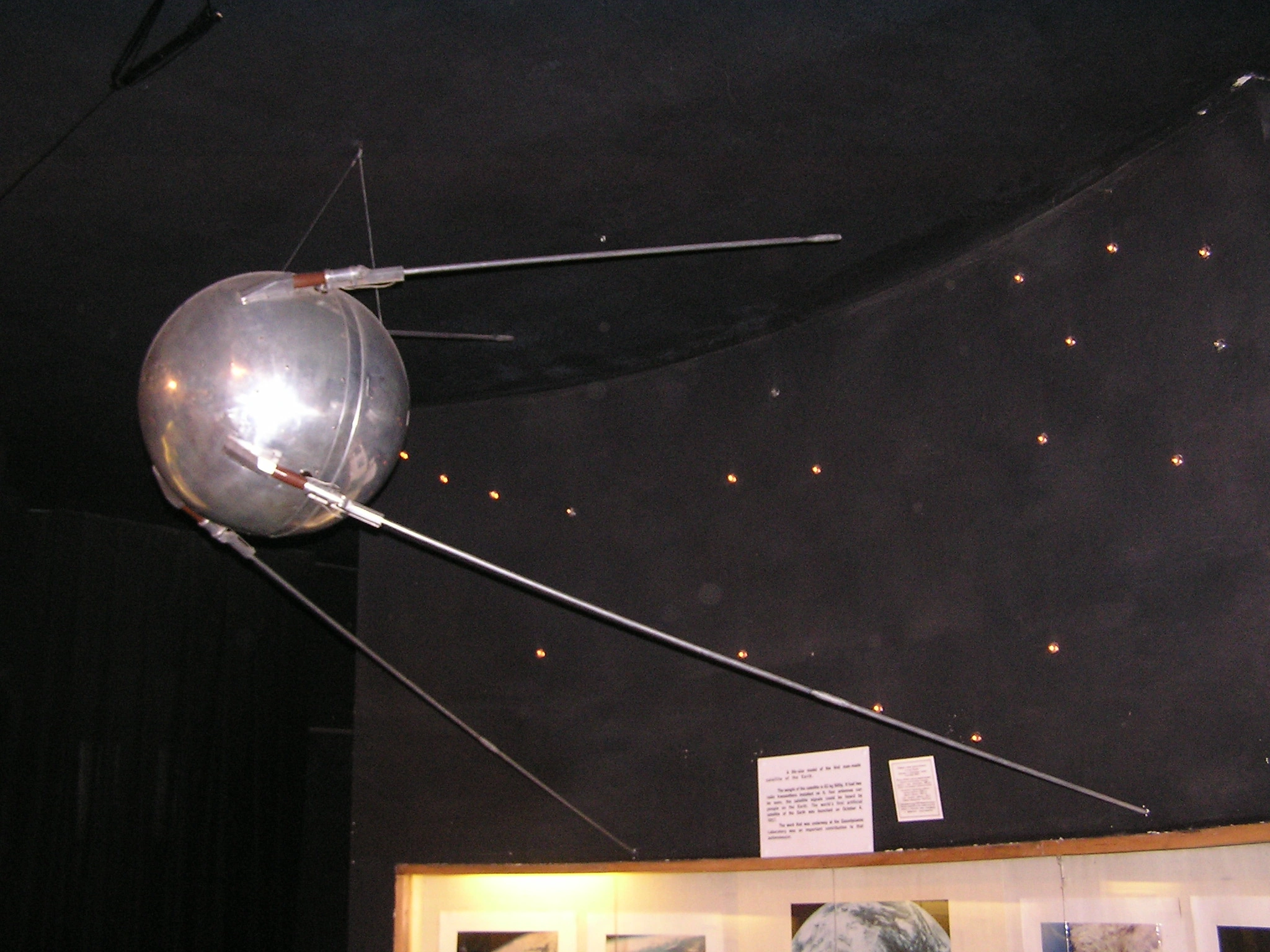 Replica of the Soivet satellite Sputnik 1 in the Museum of Space and Missile Technology in Saint-Petersburg
When Sputnik was launched, Americans felt that their world was coming to an end. The Soviet Union had taken the technological lead: it had demonstrated that it could put a satellite into space and keep it in orbit around the Earth. The United States was therefore deeply alarmed. It feared that the Soviet Union might go on to declare sovereignty over the Moon, or claim several orbital zones around the Earth as its own. There were also concerns that the Soviet Union might advance a whole range of territorial claims or demands concerning outer space. So the Americans, in their alarm, moved quickly to push through the Outer Space Treaty.
After subsequent additions and developments, this has evolved into a comprehensive body of international space law, consisting of five major international treaties: the Outer Space Treaty, the Rescue Agreement, the Liability Convention, the Registration Convention and the Moon Agreement.
But according to this expert, the Americans inserted one particularly important provision into this legal framework: sovereign states are prohibited from claiming sovereignty over the Moon, orbital space or other celestial bodies.
At first, you might think that sounds reasonable. But here is the catch: the space-law framework was originally promoted by the United States itself, yet it did not prohibit private individuals or private companies from claiming sovereignty over the Moon. That was when I realized what the Americans may have had in mind all along.
If the United States is the first country to land on the Moon this time, it could potentially declare sovereignty over the Moon. Or, even if circumstances prevent the U.S. government itself from making such a declaration, could it engineer a situation in which Elon Musk claims sovereignty over the Moon? Or could it arrange for SpaceX to do so? And could the United States then stand behind them and say: “We firmly support Elon Musk or SpaceX in claiming sovereignty over the Moon”?
That is why, since last year, I have repeatedly warned through various channels: We need to be alert to the possibility that the United States could make such a move. The United States could potentially declare sovereignty over the Moon itself. Or could it encourage companies such as SpaceX to claim sovereignty over the Moon, or even seek to divide up the Moon? This is something we must pay close attention to.
Guancha.cn: You just mentioned that the United States has used a body of space law to restrict other countries from claiming sovereignty over the Moon and Earth’s orbital space. Beyond that, are there other legal mechanisms that could be invoked to challenge President Trump’s claim to lunar sovereignty?
Victor Gao: I have just briefly explained the origins and development of space law, as well as what I believe were the United States’ true motivations at the time. But the situation has changed. President Trump has openly made claims like: What is international law? I do not listen to international law. I only listen to my own morality.
So consider what the Trump administration has done. The issue is not simply that, because international law exists, the United States will necessarily join and comply with it. Take the law of the sea. The United States has not ratified the United Nations Convention on the Law of the Sea to this day, yet it repeatedly invokes the law of the sea while using it to pressure other countries. Then there is the Paris Agreement. The United States joined it, withdrew from it, rejoined it, and withdrew again. The Iran nuclear deal is another example. The United States participated in it, but ultimately tore it up.
So I believe we are now facing two fundamental questions. First, even if a body of international space law exists, will the United States abide by it? Or will it simply tear it up? Could the United States ignore international space law altogether in pursuit of its goal of gaining control over the Moon?
Second, given President Trump’s repeated statements that he does not regard international law as a binding constraint, what should China do? If the United States, in its apparent desperation to beat China to the Moon, rushes ahead with a crewed lunar landing, can we still expect it to respect international law?
Guancha.cn: You have previously compared the U.S. narrative about going to the Moon with Zheng He’s voyages to the West. In your view, what is the fundamental difference between the narrative surrounding Zheng He’s voyages and the narrative of colonialism? And where does the fundamental divergence lie, in terms of the logic of rule-making, between China’s proposals for lunar development and the U.S.-led Artemis Accords?
 a painting of Zheng He’s voyages to the West
Victor Gao: Zheng He began his seven voyages to the West in 1405 (a series of state-sponsored maritime expeditions undertaken by the Ming Dynasty between 1405 and 1433, primarily for diplomacy, trade and exploration). Every time his fleet set sail, it departed from Liuhe Port in Taicang, Suzhou, Jiangsu Province in Eastern China—my hometown. They traveled to so many places—historical records say the fleet reached as far as what is now Kenya in East Africa. Yet every time Zheng He returned from one of his seven voyages, it was almost like Xu Zhimo leaving Cambridge University: he waved his sleeves and left without taking even a single cloud with him.
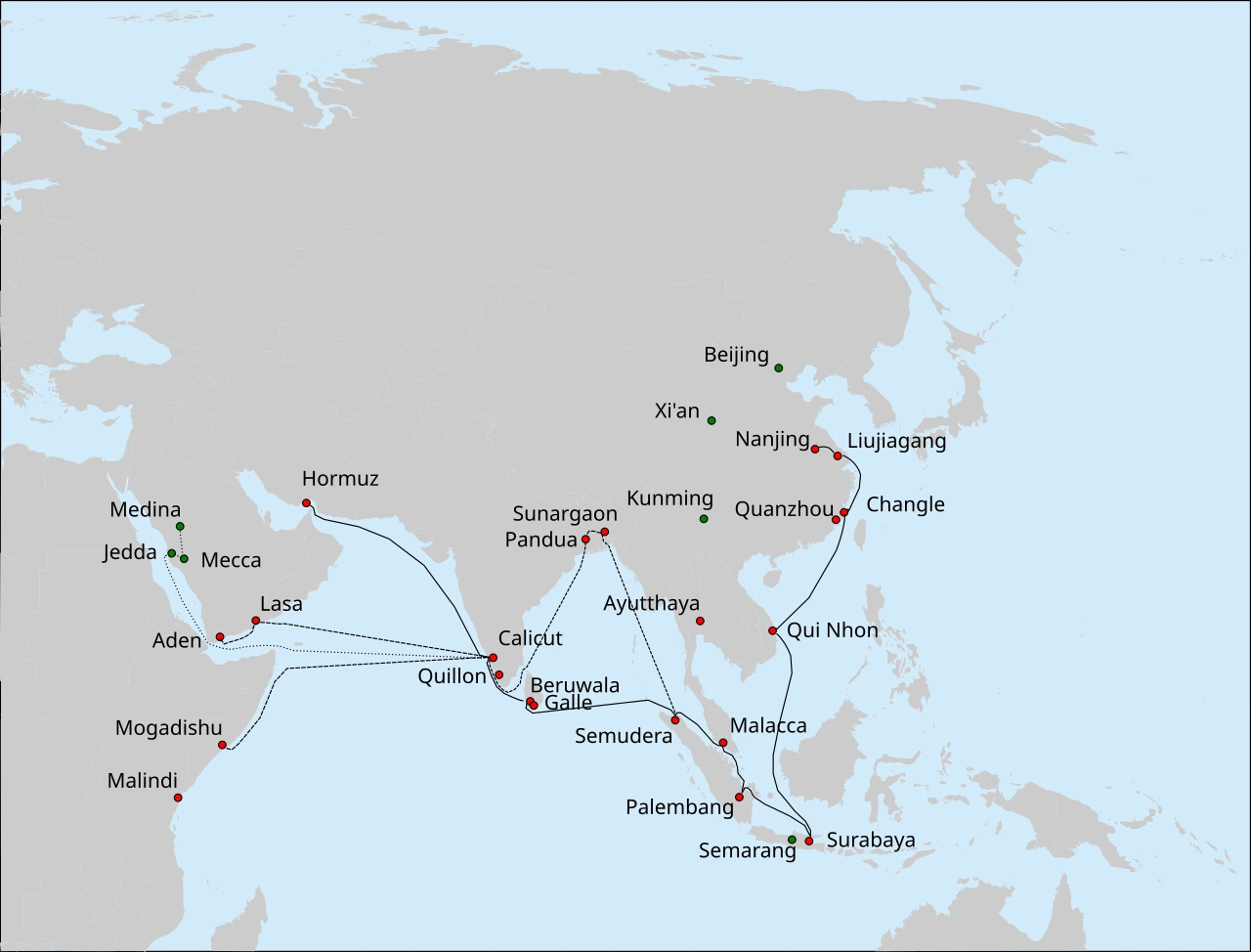 the route of Zheng He’s seven voyages
Eighty-seven years later, there was a man in the West named Christopher Columbus. Columbus set out with three shabby, rudimentary ships. Keep in mind that the largest ships in Zheng He’s fleet were more than 100 meters long, and his expeditions routinely involved hundreds of ships and tens of thousands of people. We went abroad in peace and returned in peace. We did not seize a single inch of foreign territory. But then the West, beginning with Spain, followed by Portugal, Britain, France, the Netherlands, Belgium, Germany and Italy, and later Japan, joined in colonial expansion. Wherever they went, they planted their flags; ultimately, they occupied much of the planet. In the Americas, they engaged in killing, looting and plunder; in Africa, they seized people and turned them into slaves. This is what Westerners call the “Age of Discovery.”
As everyone knows, China got an early start in this so-called Age of Discovery—87 years before Columbus. Last year, I made a special trip to Genoa, Italy, the birthplace of Columbus. Just think about it: the man named Columbus went around stirring things up and ultimately ushered in this so-called Age of Discovery, which resulted in the destruction of entire civilizations and cultures across the Americas—whether Indigenous peoples, the Incas, or countless other cultures, civilizations and tribes. This was the largest-scale crime against humanity and act of genocide in human history.
And in the end, the Western Age of Discovery turned China into one of its victims as well. When Britain launched the First Opium War in 1840, it came at us from the sea. The Second Opium War was likewise waged against China by Britain and France from the sea. Later, the Eight-Nation Alliance invaded China. From 1931 to 1945, Japanese forces waged war against China and blockaded the country’s entire coastline, among other actions. Altogether, 35 million of our fellow Chinese lost their lives.
So I believe that China got an early start, but because of our tradition of benevolence, restraint, courtesy and humility, and because of our excellent national traditions and customs, we did nothing overseas that would bring shame upon heaven or earth. But we must remember this: in the end, China became a victim of the Age of Discovery.
So what should we do when the U.S. president openly declares that the Moon belongs to America? Should we simply let him plant American flags all over the Moon and declare it U.S. territory, while we accept that we have no right to trespass on “his” territory? Or should we let him engineer a situation in which Elon Musk, or his company SpaceX, declares sovereignty over the Moon, with the United States firmly standing behind him?
Some people might say, “If the Americans declare sovereignty over the Moon, what does that have to do with me? He can do what he wants, and I’ll do what I want.” I believe that way of thinking is wrong. Everyone knows that the Moon is only a little over 300,000 kilometers from Earth. There is now a saying internationally: whoever controls the Moon controls the Earth. If the country that controls the Moon is hostile to us, just think about what it could be doing up there every day. Wouldn’t that pose a direct threat to China’s most fundamental national interests?
Guancha.cn: In the face of Trump’s so-called “declaration” of lunar sovereignty, and the fact that the United States has already deployed operational systems in space orbit, how should we respond? How should China strike a balance between its principle of the peaceful use of space and the need for strategic deterrence?
Victor Gao: My advice is very simple: China should be prepared and take several steps.
First, since the United States has already said that it is militarizing and weaponizing outer space, and since it has openly announced that it is deploying cislunar space warfighting capabilities, I believe we should move quickly to make a decision: upgrade the People’s Liberation Army’s Military Space Force—which is currently a branch of the PLA—into an independent service.
The United States already has a Space Force, and Japan has also said that it wants to establish a space combat force. I have made this point very clearly to the Japanese: if you do not even have the right to conduct military operations on Earth, how can you possibly go into space and conduct military operations there? But even Japan is moving in this direction, and it is quite obvious that this is aimed at us. Meanwhile, we do not have an independent service branch—a Space Force. So the first step should be to swiftly upgrade the PLA’s Military Space Force into a PLA Space Force.
Second, China should achieve the first crewed lunar landing, provided that safety can be ensured. If we stick to our original plan of conducting a crewed lunar landing by 2030, then we must make sure that the United States does not get there first in 2028. Or is it possible for us to move up the schedule? Provided that safety can be ensured, could we complete a lunar landing as early as 2028?
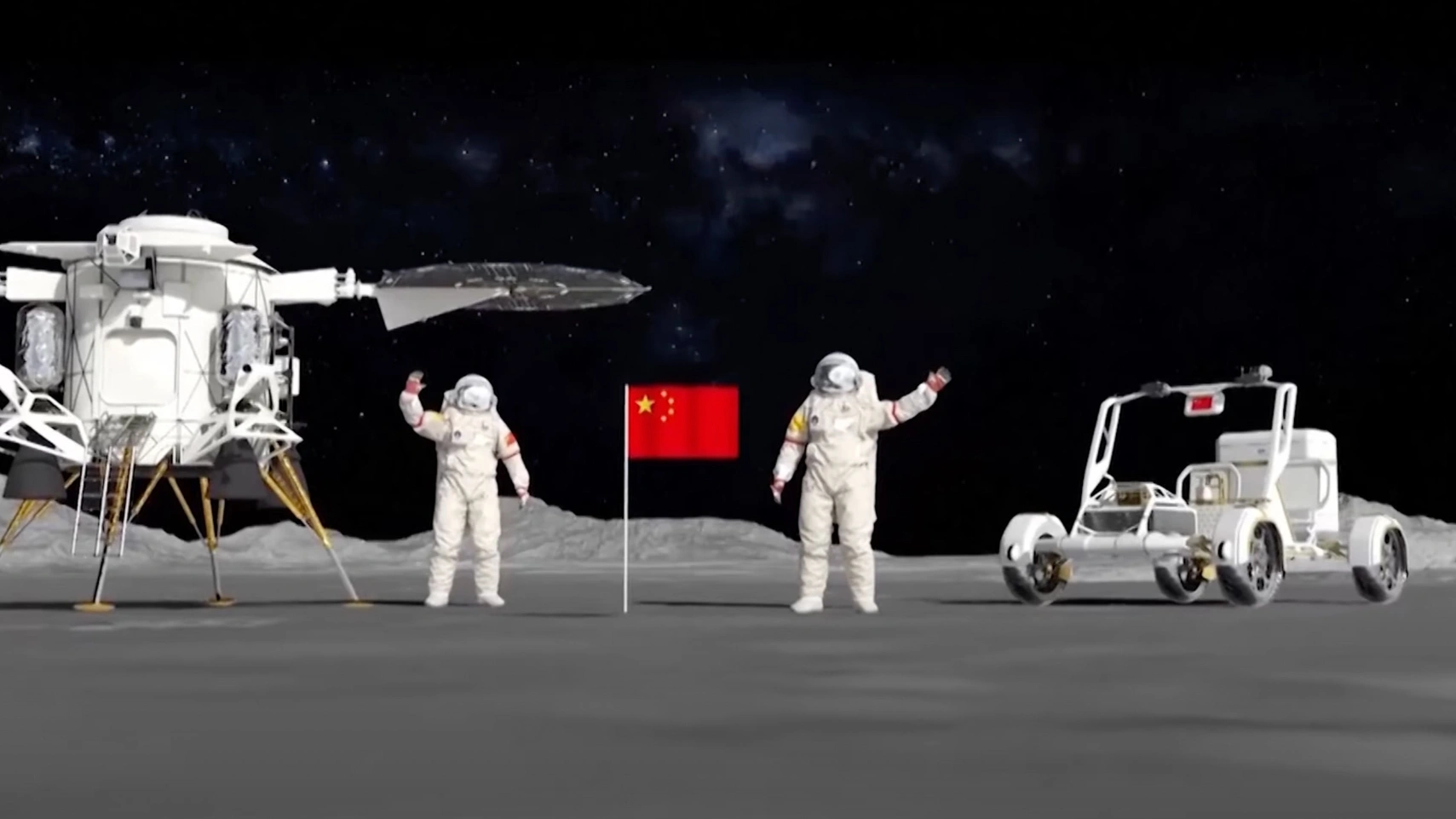 an animated preview of China’s manned lunar landing program
Third, and this is crucial: once China becomes the first to land on the Moon, provided that safety can be ensured, what should we do next? I believe there are two choices, and the consequences for us would be radically different.
The first option is this: after becoming the first to land on the Moon, China should no longer go out of its way to defer to others or hold itself back. China should declare that, on behalf of all humanity, it holds sovereignty over the Moon. And we should declare that China’s sovereignty over the Moon exists for the sake of peace and the common good. We oppose the militarization and weaponization of outer space by certain countries. We oppose the use of space for military warfare to destroy civilizations and cultures on Earth. This point is absolutely critical.
China could also consider another question: Should sovereignty over the Moon be declared in the name of the Chinese government? Or should we also make plans to support a company that would declare sovereignty over the Moon in its own name?
Once China becomes the first to land on the Moon and declares that it represents all humanity in exercising sovereignty over the Moon, we must establish the rules. Those rules are crucial. We must clearly define what activities are prohibited on the Moon, and determine whether we need to make advance preparations for rescue operations, logistical support and other such activities.
And why should China be the first to send humans to the Moon and declare sovereignty over it? Because we must also ensure the security of the Moon. Suppose extraterrestrials really did intend to use the Moon as a base from which to attack humanity on Earth. We should have sufficient capabilities and make adequate preparations in advance to ensure that the Moon cannot be occupied by extraterrestrials or used by them as a platform for attacking Earth. There are many, many things along these lines that I believe we need to start doing now.
The Moon is rich in minerals and other resources that could be used to improve energy security for Earth and humanity. Moreover, given the rapid development of artificial intelligence and the continuing advances in communications technology, communication, connectivity and exchanges between the Moon and Earth—in other words, across the Earth-Moon system—will improve dramatically in the future.
So I recommend that we start preparing as early as possible. We must never repeat what happened after Zheng He began his seven voyages in 1405, only to return empty-handed. Within just a few centuries, the Western powers, including Japanese forces, repeatedly attacked China, pushing the country into a century of national humiliation.
This time, we must not yield an inch. We must assert our claim to sovereignty over the Moon. The purpose is to serve all humanity, to safeguard peace of the world and humanity, and to oppose attempts by certain countries to turn the Moon into a military base, or to pursue their own geopolitics—or what you might call “lunapolitics.”
So I am willing to share these thoughts with everyone. As a nation, we should enter a new state of mind. When we recite the famous poetry line , “Moonlight before my bed,” we should understand one thing: this Moon is China’s Moon. Our Chinese nation has had an inseparable relationship with the Moon throughout history. We have thousands of years of continuous records, traditions and imagination surrounding it. So if any country in the world says that the Moon belongs to them, they simply do not understand that China has already maintained a spiritual and material connection with the Moon for thousands, even tens of thousands, of years.
I believe we have reached a critical moment. We must make every possible effort and take concrete, proactive measures to ensure that our presence and activities on the Moon are conducted for the common good. We must oppose anyone or any country that attempts to use the Moon or outer space for destructive purposes.
If China becomes the first to send humans to the Moon and declares that, on behalf of all humanity and for the purpose of peace, it holds sovereignty over the Moon, will any countries oppose it? Of course they will. The United States will oppose it, and Japan will oppose it as well. But what should we do? I believe we should fly to the Moon and tell them from the Moon: If you object, then come up here and say it to our faces.
So I believe we need an entirely new posture this time. We must prevent Japan from establishing a space combat force and using it against us. We must prevent the United States from seizing the Moon first and using it against us. The only effective way is this: we get there first. We absolutely cannot afford to keep deferring to others, treating everyone as if they were angels and assuming that no one would ever do anything bad.
When China declares that it represents all humanity in exercising sovereignty over the Moon, that will be the greatest act of justice China has ever undertaken! Because only in this way can we ensure that the Moon is not militarized or weaponized, and that it does not become a platform for serving their military ambitions. And I believe that only when China represents all humanity in exercising sovereignty over the Moon can we ensure that the entire Moon will forever be used to defend human peace and promote human development—not to dominate humanity, destroy humanity or enslave humanity.
If the United States occupies the Moon, it will inevitably use it for evil. China, by contrast, must be the first to land there, provided that safety can be ensured, and put the Moon to good use. There is a great deal of work for us to do at this stage. The key is ourselves. We cannot place our success in the failure of others. Our success must be achieved by the Chinese people themselves. That is our ultimate key to victory.
Editor: Chang Zhangjin


samsonpoon
I appreciate how Victor Gao repeatedly says China will be the first to the moon, as if implying that the American thugs staged a fake moon landing with the assistance of the Epstein Hollywood ‘pdf-files’.
Diana Sáfady Maffei
Não dá para confiar que Trump, Musk ou seja lá quem for do mundo ocidental (e oriental também) vá respeitar a cultura e tradição chinesas que, como diz o autor, “a China saiu na frente, mas, devido à nossa tradição de benevolência, moderação, cortesia e humildade, e devido às nossas excelentes tradições e costumes nacionais, não fizemos nada no exterior que pudesse envergonhar o céu ou a terra. Mas devemos lembrar disto: no fim, a China tornou-se vítima da Era dos Descobrimentos.”
Bob Marsden
Should the Chinese lunanauts occupy the moon for a period, they might claim sovereignty on behalf of the United Nations excluding its Security Council.
Should the Chinese lunanauts occupy the moon for a period, they might claim sovereignty on behalf of the United Nations excluding its Security Council.
Should the Chinese lunanauts occupy the moon for a period, they culd claim sovereignty on behalf of the United Nations, excluding its Security Council.
Bob Marsden
Whoops. My comment didn’t show in the comments space until I typed them by hand.
Sokamad
China should keep it steady and not rush it’s moon program, the 2028 landing by USA will most probably change. USA will use the 1969 landing to refuse recognition for any claim for landing first. After landing, China should put fact and activity across the moon that gave them effective occupancy such that USA will need to seek the or cooperation for any meaningful activity on the moon.