



In November 2025, a scene full of “earthly warmth” unfolded inside China’s Tiangong Space Station.
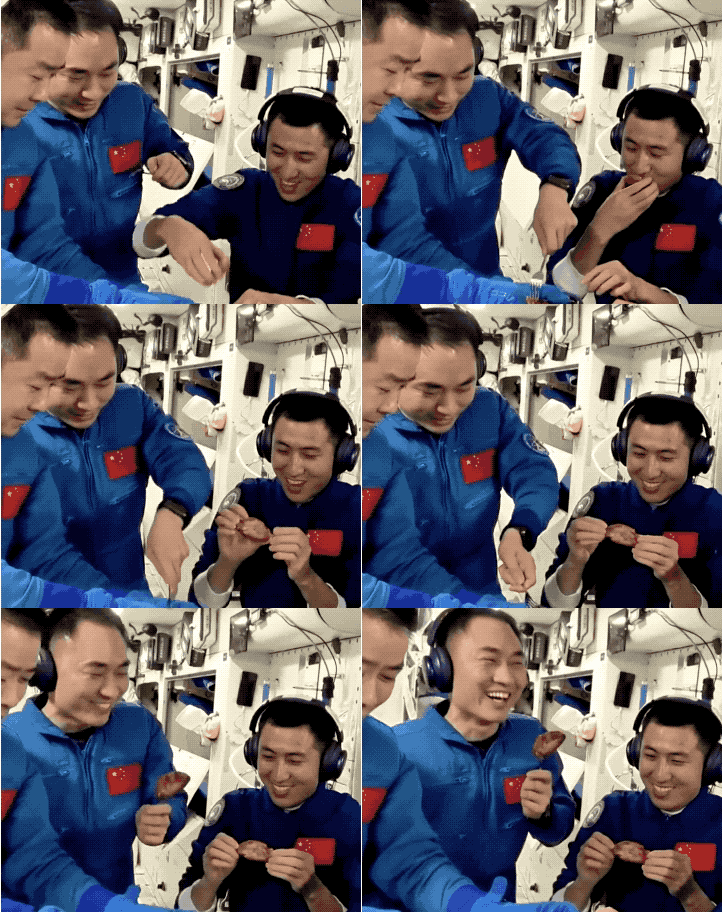
The Shenzhou-21 crew brought with them a new piece of equipment—a hot-air oven. After joining their “comrades” from Shenzhou-20, they eagerly unpacked the marinated chicken wings, fixed them on special skewers, and placed them inside the machine.
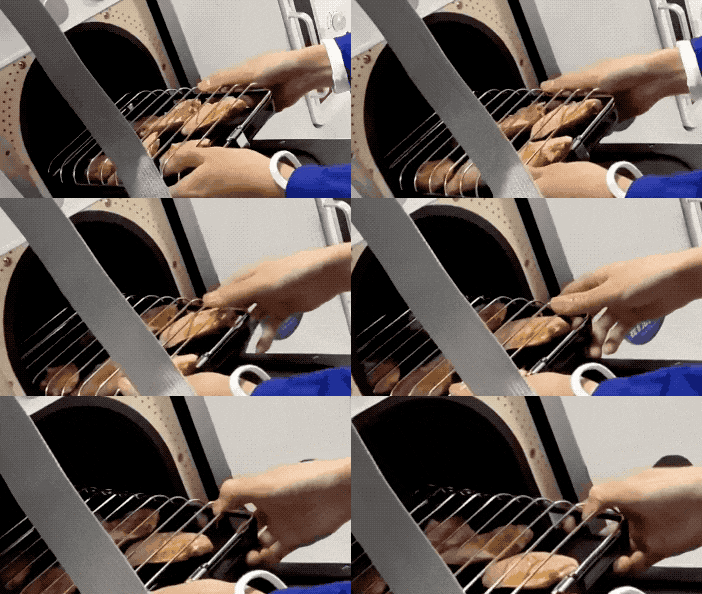
28 minutes later, when the astronauts tasted the sizzling, aromatic Orleans-style wings, a historic moment was born.
This marked the first time China’s space station achieved a leap from simple “heating” to actual “cooking”—and the first time in human history that real cooking had been done and eaten in space.
To understand why this waft of grilled aroma is so precious, we need to go back to the era when astronauts could only eat “dry rations.
From Cold Meals to Hot Dishes: A Journey of Twenty Years
China’s space dining began in 2003. During Yang Liwei’s 21-hour flight, he ate pre-packaged ready-to-eat food and drinks.
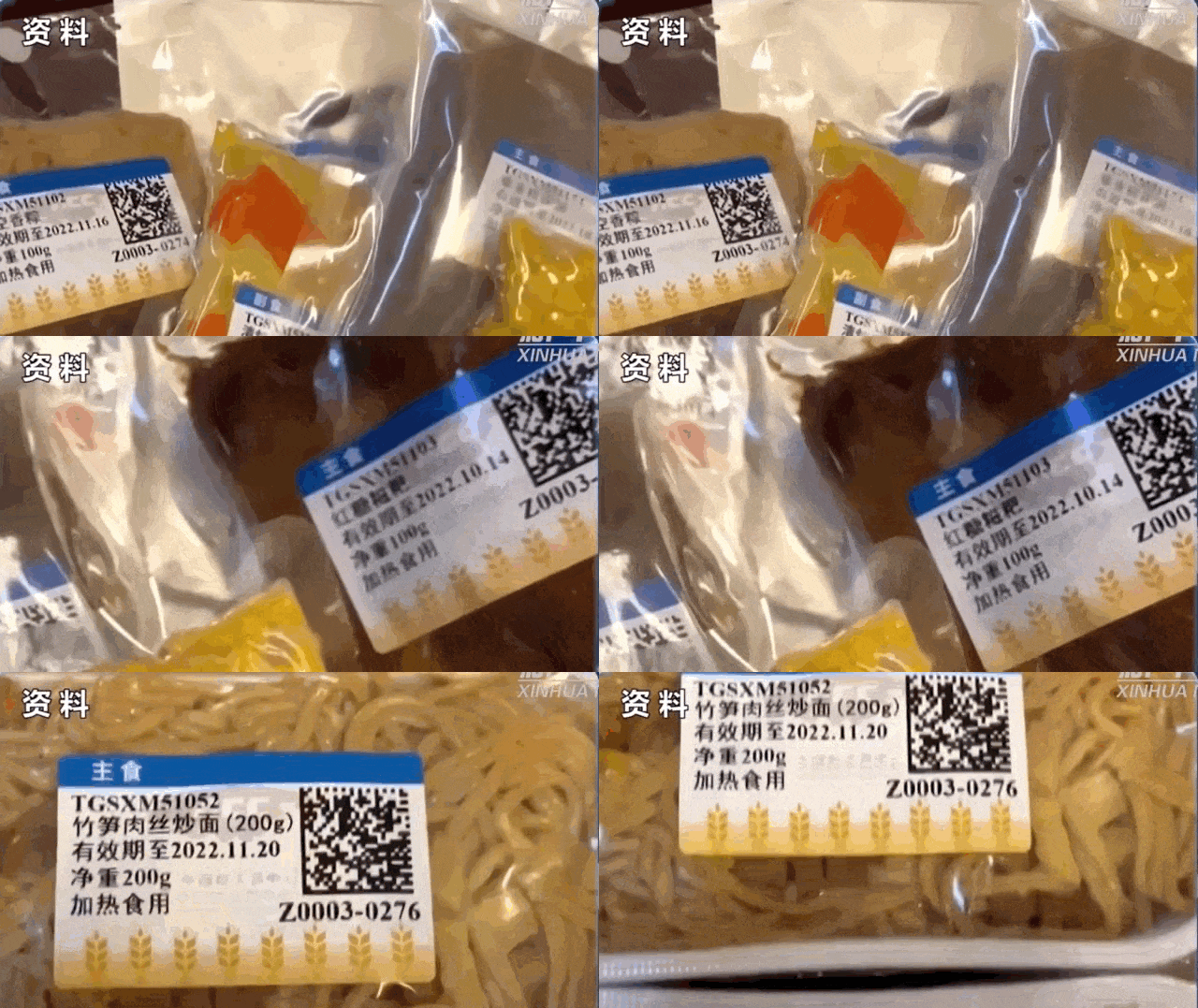
Two years later, Shenzhou-6 achieved a historic breakthrough—astronauts could finally enjoy hot meals and drinks. Later, beloved Chinese dishes like fish-flavored pork slices and kung pao chicken were vacuum-packed and sent to space.
By the space station era, the astronauts’ menu became luxurious: over 190 dishes, a “space kitchen” equipped with a food heater, water dispenser, and even a refrigerator for fresh apples. In terms of “eating enough” and “eating well,” China had solved the problem.
But there’s a crucial difference: heating and cooking are two entirely different things.
Heating is purely physical. All previous space meals were fully cooked on Earth and only reheated in orbit. The hot-air heater used aboard Tiangong does exactly that—reheating.
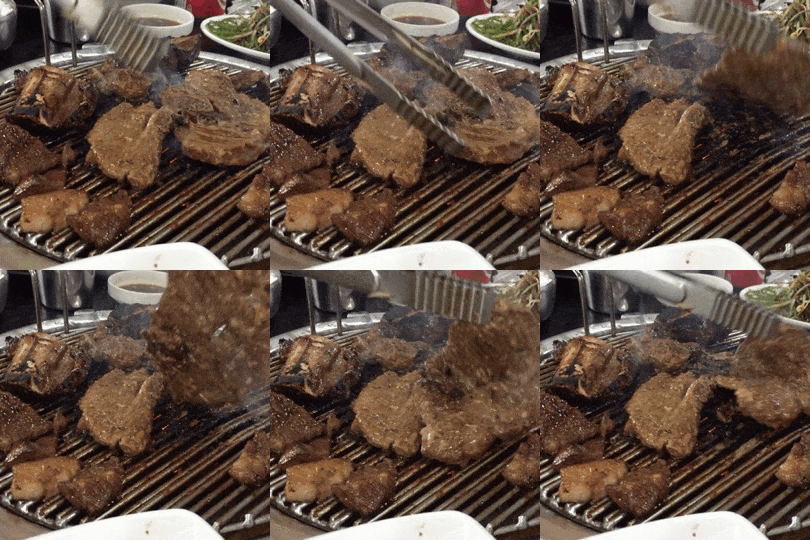
Cooking, however, involves both physical and chemical reactions. At 190°C, proteins and sugars undergo the Maillard reaction, creating the crisp browning and rich aroma we love. That’s a transformation—from raw ingredients to a finished dish.
For astronauts confined in a space station for months, cooking isn’t just about appetite—it’s a psychological necessity. According to China’s Astronaut Research and Training Center, the ability to make freshly cooked food is key to maintaining mental health during long-term missions.
Yet achieving the Maillard reaction in space is incredibly hard, because in microgravity, heat doesn’t move on its own.
Challenge 1: In Weightlessness, Heat Won’t Circulate
On Earth, ovens rely on thermal convection—hot air rises, cool air sinks, forming a circulating current that evenly cooks food.
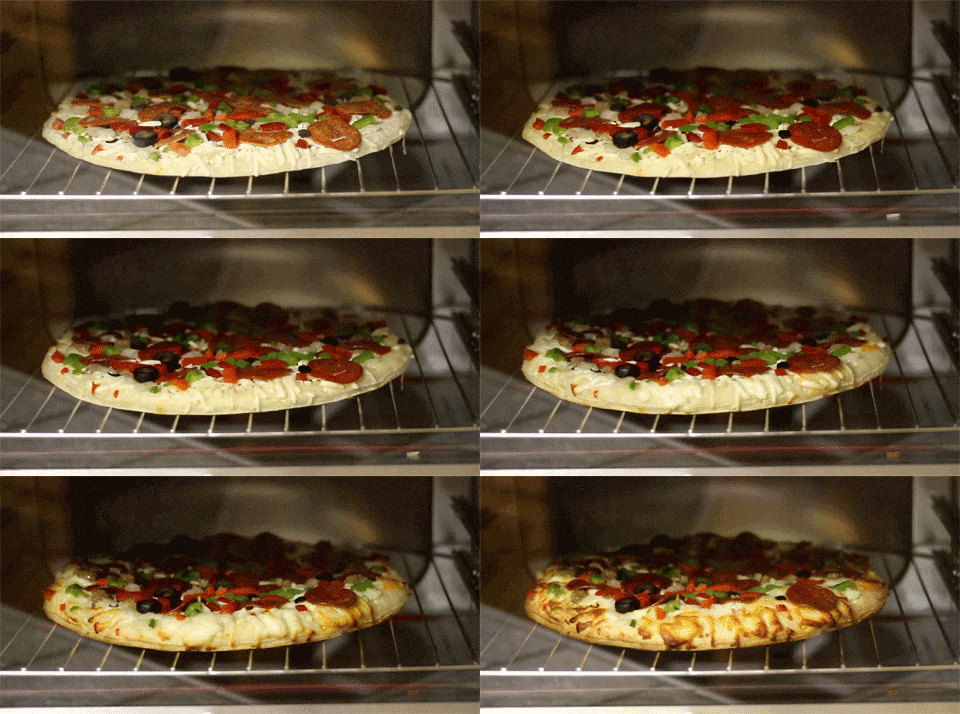
But in microgravity, there’s no “up” or “down.” Heated air doesn’t rise; it just sits still near the heating element. Without convection, heat transfer is inefficient and slow, relying only on radiation.
A famous 2019 experiment aboard the ISS illustrated this: astronauts tried baking cookies. What took 18 minutes on Earth took 120 minutes in space to barely cook through.
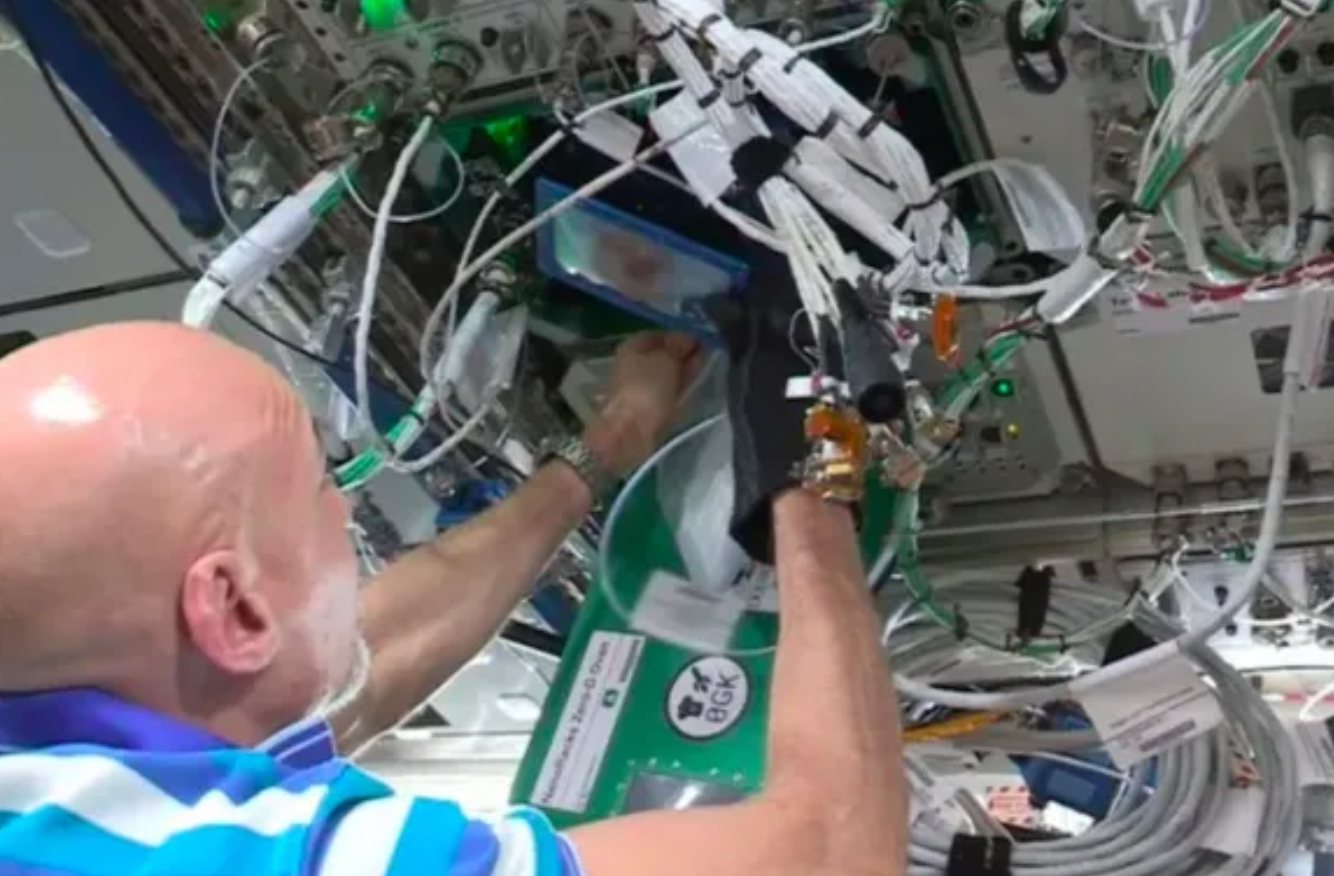
Without convection, evenly baking food in space is a massive physics challenge.
Challenge 2: Deadly Fumes—The “Invisible Killer” in a Sealed Space
Even if time isn’t a problem, oil fumes are.
Grilling meat produces oily smoke. On Earth, a range hood takes care of it. In a sealed space station, any smoke is catastrophic—it can clog life-support filters and release harmful chemicals that endanger astronaut health.
Thus, the biggest challenge in space cooking isn’t generating heat—it’s containing every bit of exhaust and residue.
Chinese Ingenuity: Turning Fans and Filters into the Oven Itself
To tackle these two major obstacles, Chinese engineers designed the Tiangong “hot-air oven” with brilliant solutions.
First, they installed fans inside the oven to force air circulation, recreating convection artificially. This allows even heating, cutting cooking time for chicken wings to just 28 minutes.
Second, they built a miniature exhaust system inside the oven. All smoke is captured and purified through a catalytic converter (similar to a car’s exhaust filter) and multi-layer filters that remove PM2.5 particles before clean air re-enters the system.
The oven also includes special racks and drip collectors to prevent food or grease from floating in microgravity.

It’s not just an oven—it’s a fully integrated micro space kitchen combining forced air circulation, air purification, and waste management.
Could Astronauts Ever Make Mapo Tofu in Space?
Now that “grilling” has been achieved, could astronauts one day “stir-fry,” “boil,” or “steam” Chinese dishes in space? Unfortunately, not anytime soon.
In microgravity, hot oil doesn’t stay in the pan—it clings to the walls and bursts into dangerous floating droplets. Steam-based methods are also risky: opening a pot of boiling water could release scalding vapor that overwhelms the life-support system.
So, until a fully enclosed, automated space wok robot is invented, Mapo Tofu will have to wait.
From toothpaste-like food paste to sizzling grilled wings, this journey represents more than engineering triumph—it’s about human warmth.
No matter how far humans travel into the cosmos, the longing for freshly cooked food, that familiar aroma of home, will always be the warmest force driving our exploration of the unknown.
Editor: Zhongxiaowen