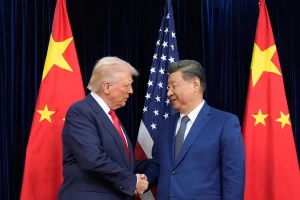



For nearly eighty years, America’ s grand strategy in the Indo-Pacific rested on a single, reassuring assumption: that the United States could project decisive military force from a network of forward bases, stretching from Japan through the so-called First Island Chain all the way to Guam, its own sovereign territory. Today, the assumption is broken. Not for lack of political will, nor for insufficient funding. What has destroyed it is the sheer arithmetic of industrial output, metallurgical know‑how, and missile inventories.
A sober assessment leads to an inescapable conclusion: the United States can no longer effectively defend its regional bases, cannot replenish its weapons systems in a protracted conflict, and is structurally incapable of winning a long war in East Asia. As regional allies quietly absorb this unsettling reality, the strategic landscape of Asia is fracturing. America faces a structural extrusion from the Western Pacific.
The harsh truth is that no power can reverse this trend—or, more precisely, no power truly wishes to. Whether more arms are shipped to the Philippines, Japan, or Taipei, it is largely political theatre. If the quantitative logic of America’ s industrial and military decline has sealed its fate in East Asia, the real question is no longer when will the U.S. leave? but what will fill the vacuum?
One plausible answer: an“indivisible security” architecture, initiated by Asian states, shaped and sustained by them, and serving their own interests.
The Arithmetic of Attrition
The fundamental flaw in the Western defence system lies in a vast and asymmetric shortfall in munitions stockpiles. Since the sharp escalation of global military spending in early 2026, the U.S. arsenal has undergone unprecedented depletion.
As Jennifer Kavanagh, director of military analysis at Defense Priorities, has argued in a series of representative articles for the Quincy Institute’ s online journal Responsible Statecraft, America’ s chronic strategic overstretch is driving itself into a systemic munitions crisis. Kavanagh points out that simultaneous weapons supplies to Ukraine and sustained operations against Iran have severely drained U.S. war reserves. Stocks of critical interceptors—including Patriot PAC-3 and THAAD—have fallen by nearly half. These finite high‑tech assets are treated as if they were inexhaustible. In contrast, the People’ s Liberation Army, backed by a defence industrial base operating near wartime tempo, produces vast numbers of precision‑guided missiles, ballistic systems, and loitering munitions year after year.

Recent analysis from the Center for Strategic and International Studies (CSIS) reinforces this diagnosis. Mark F. Cancian and Chris H. Park note that America’ s current ammunition shortage is closely tied to the long‑term decay of its defence industrial base; a hollowed‑out industrial system is now the greatest constraint on U.S. regional—and global—military dominance. CSIS fellow Benjamin Jensen, in a separate study on great‑power competition and the re‑industrialisation of deterrence, observes that without re‑industrialisation, the U.S. cannot restore its former deterrent capability.
The capability gap is already visible, and given supply‑chain realities, it is unlikely to narrow—indeed, it may widen—in the near term. China’ s restrictions on upstream supplies of rare earths and magnetic materials could further expand that gap. In any real large‑scale conflict, this quantitative disparity would rapidly collapse America’ s forward defence posture.
Policy analyst Anusar Farooqui has recently proposed a equilibrium model that lays bare this dynamic in stark terms: U.S. air defence requires multiple interceptors to ensure a single kill. Once fighting begins, against China’ s massive precision strikes, U.S. and allied interceptor inventories would likely be exhausted within days. Even under the most favourable assumptions for the U.S.—such as deploying advanced electronic warfare jamming and building hundreds of new hardened aircraft shelters (HAS)—the outcome does not fundamentally change. China’ s vast weapons stockpiles allow it to absorb initial countermeasures with ease and suppress airfields with low‑cost, anti‑jamming submunitions.
The calculus indicates that, under equilibrium conditions, U.S. ground‑based aircraft losses could exceed 300 in the first week alone. The traditional deterrence architecture in Asia is not eroding—it has already failed. And this is under best‑case scenarios. Under more pessimistic assumptions, the destruction would only come sooner.
The Illusion of Dispersal and Logistical Constraints
To address this dilemma, the U.S. Department of Defense has in recent years championed “Agile Combat Employment” (ACE)—dispersing aircraft and assets across small Pacific islands, remote airstrips, and makeshift runways to avoid concentrated Chinese strikes.
Yet this strategy is a dangerous mirage. It does not solve target exposure; it merely fragments it. China possesses enough missiles and munitions to strike all secondary and tertiary airfields simultaneously, using specially designed cluster munitions to destroy exposed aircraft and unprotected infrastructure. More critically, dispersal trades tactical fragmentation for systemic logistical collapse. Modern high‑performance fighters like the F‑35 cannot operate on willpower alone. They require dedicated fuel, heavy aviation support equipment, precision munitions assembly facilities, and clean‑room maintenance environments. Scattering them across a dozen rudimentary airstrips does not improve survivability—it severs their industrial logistics lifeline, rendering them unsustainable under combat conditions.
For naval forces, the situation is even worse. Attack submarines and missile destroyers cannot reload their vertical launch systems (VLS) at sea. They depend on a handful of fixed deep‑water ports—Yokosuka in Japan and Guam, for example. If those ports are destroyed within the first 72 hours of conflict, the U.S. fleet becomes a “single‑shot weapon system”—capable of striking, but with nowhere to replenish.
More gravely, this exposes what Kavanagh identifies as structural failure: the Pentagon mistakenly believes that higher budgets can solve manufacturing deficiencies. The Trump administration’ s proposed $1.5 trillion defence budget calls for a 188% increase in high‑value munition procurement. But Kavanagh notes that this cannot fix the long‑term decay of the Western defence industrial base.
China’ s control over rare earths, magnets, and tungsten makes this structural crisis nearly impossible to resolve in the short term. Beijing’ s export restrictions on heavy elements like dysprosium and gallium have already severed the secondary supply chains on which Western defence contractors rely. Meanwhile, Washington has imposed a strict deadline on the Pentagon: by January 1, 2027, U.S. weapons systems must be entirely free of Chinese‑sourced rare earth materials.
Yet capital injections cannot conjure solutions from thin air. In 2025, the U.S. produced only 300 metric tons of rare‑earth permanent magnets, against domestic demand of 48,000 tons. Specialised chemical separation facilities, toxic mineral extraction processes, and metallurgical expertise accumulated over decades cannot be rebuilt overnight. These capabilities take years—perhaps a decade or more—to restore from scratch.
As Kavanagh emphasises, Washington’ s long refusal to adopt strategic restraint has trapped it in an impossible dilemma: the U.S. must keep firing interceptors—limited in number, hard to replenish, and dependent on Chinese magnetic supply chains—against a China that can produce cheap missiles almost indefinitely; meanwhile, Beijing holds the critical raw materials that America needs to rebuild its own weapons stockpiles.
Homeland Threats and a Cold War Echo
If Washington’ s strategic planners still harbour any illusion that a Taiwan Strait conflict could be contained strictly within the First Island Chain, Beijing has shattered that notion through a series of actions.
On July 6, 2026, China conducted a submarine‑launched ballistic missile (SLBM) test in the open Pacific. Following its landmark land‑based ICBM tests, this further proves that China now possesses a mature, operationally credible sea‑based nuclear second‑strike capability. Chinese nuclear‑powered submarines equipped with long‑range weapons such as the JL‑3 can now directly threaten the U.S. homeland from the South China Sea.
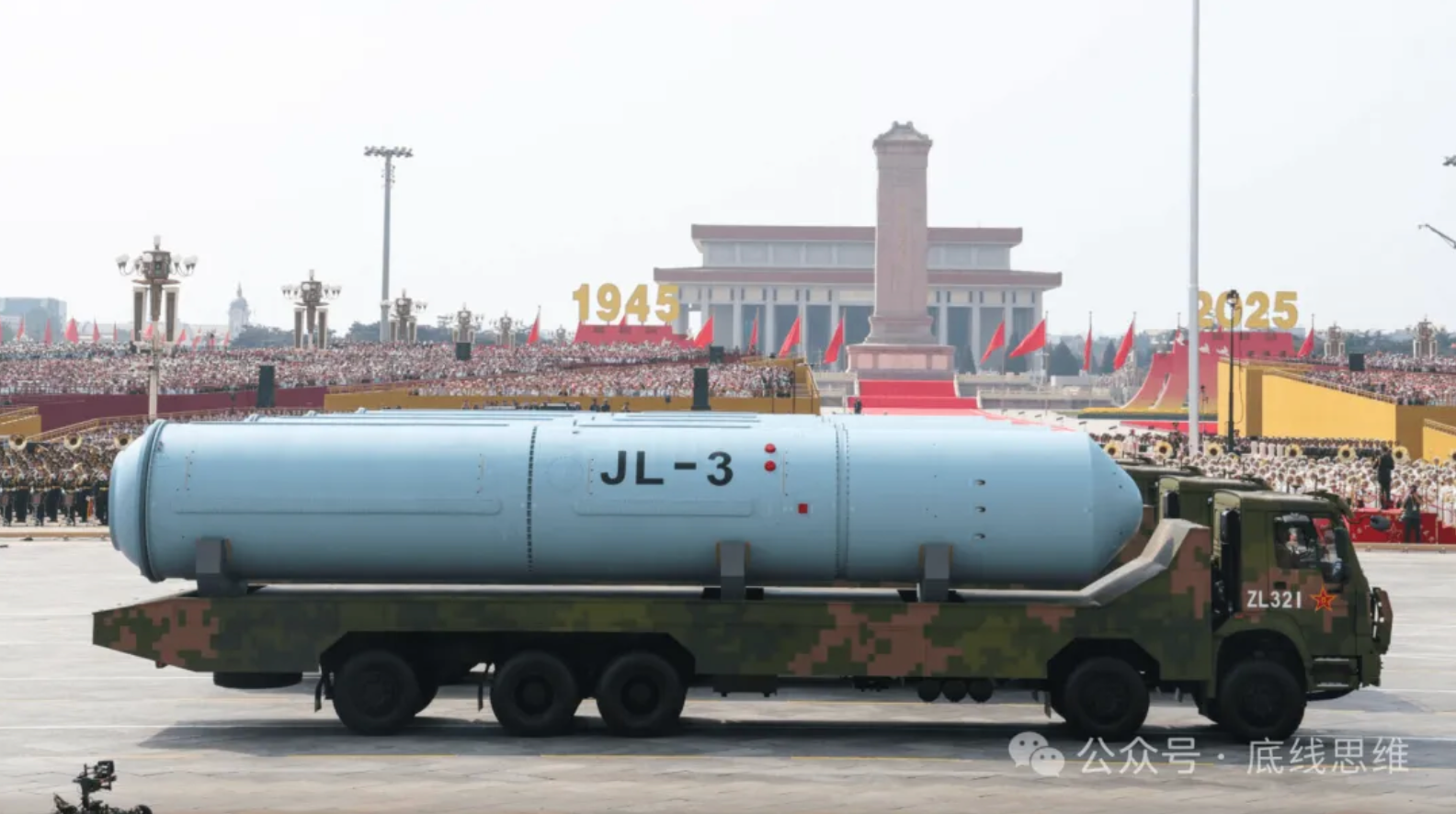
This changes the global strategic calculus entirely. The competition has reached a stage where conflict is no longer a regional asymmetrical affair; the American homeland itself has entered the potential strike zone. Washington must therefore confront a brutal question: would any U.S. administration really risk the destruction of an American city to support Taipei? By the harsh logic of nuclear deterrence, the answer is no. This complete reversal of the power balance evokes the strategic anxieties of mid‑20th‑century America.
But the difference this time is that the outcome may be more durable and harder to reverse. In the 1950s, Washington was convulsed by the question “Who lost China?” By the early 2030s, that historical debate may seem trivial. The defining question of the coming decade will be far larger and far more irreversible: “Who lost Asia?”
Regional Strategic Recalibration
These material, computational, and strategic realities have not been lost on America’ s regional partners in Asia. Behind joint statements and diplomatic rhetoric, East Asian leaders are quietly making pragmatic adjustments. They observe: dwindling U.S. munition stocks, broken supply chains, indefensible forward bases, and America’ s own growing vulnerability. They are recognising that the U.S. security umbrella is becoming hollow.
In Tokyo and Seoul, defence officials are increasingly aware that their own territories lie well within the strike range of Chinese or North Korean (DPRK) military systems. Entrusting national security to a distant superpower with severe industrial deficiencies is a gamble with national survival.
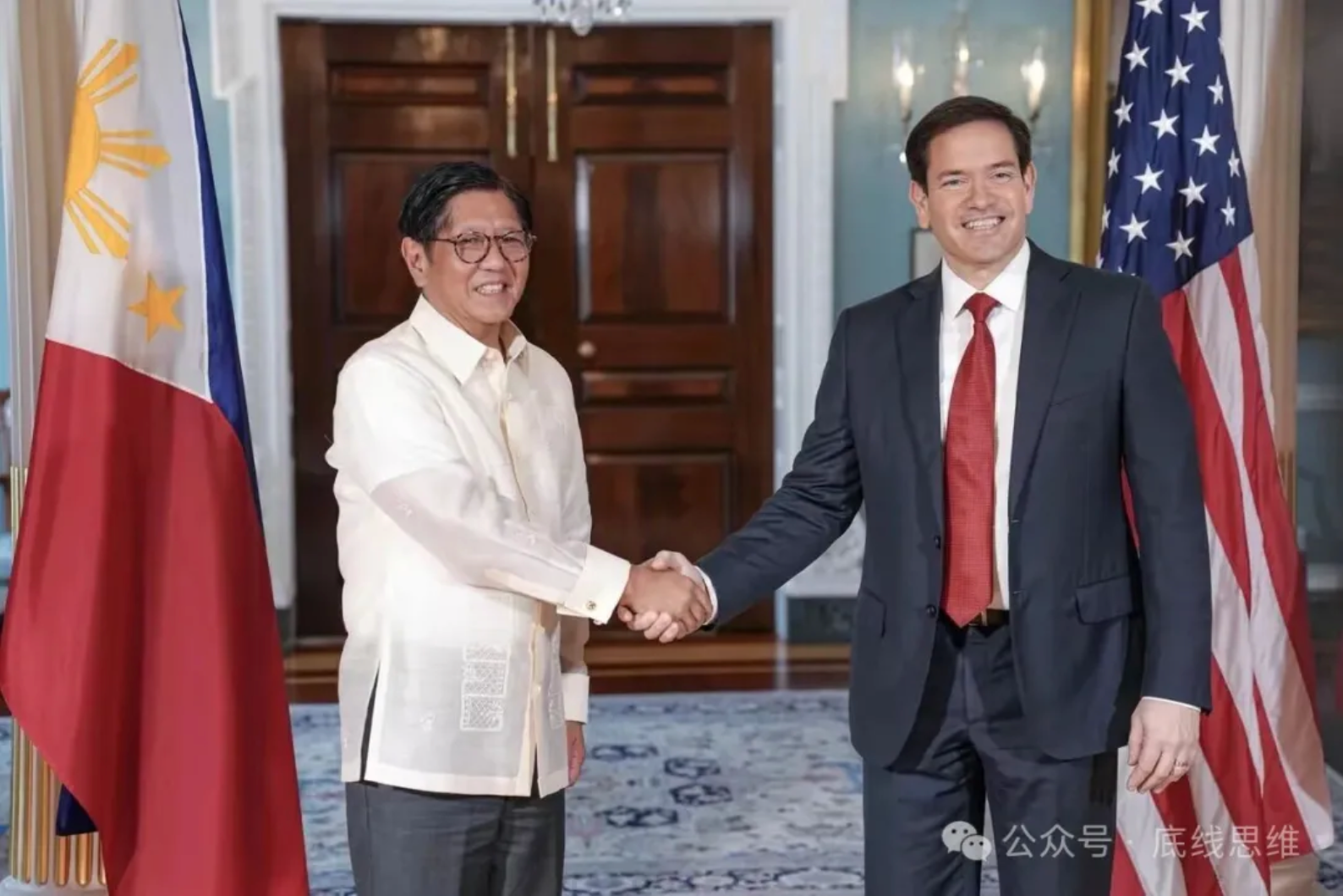
Even in Manila, the tide is turning. President Ferdinand Marcos Jr. had earlier pushed to expand U.S. access to Philippine bases under the Enhanced Defense Cooperation Agreement (EDCA). Yet when asked in an interview whether the U.S. Navy would necessarily come to the Philippines’ defence in a South China Sea territorial dispute with China, he showed hesitation and ambiguity. The message is unmistakable: despite tough public posturing, Manila harbours genuine doubts about Washington’ s commitment. Indeed, in light of events in the Persian Gulf, regional leaders are coming to see these bases not as fortresses of U.S. power projection, but as precision‑strike magnets—indefensible, logistically unsustainable, and strategically untenable.
These countries are therefore quietly diversifying their strategic dependencies. They are seeking a new security‑economic equilibrium: acknowledging Chinese influence as a structural long‑term reality, while avoiding overt declarations of Chinese dominance.
The Inevitable Exit
When a superpower can no longer protect its forward deployment, cannot secure critical raw materials for its precision weapons, and is systematically outmatched in industrial production by its main rival, its overseas presence becomes nominal. The structural changes under way mean that the U.S. can and will be progressively extruded from Asia.
Pouring hundreds of billions of dollars into the problem cannot overcome the objective time required to build heavy chemical industries, nor surpass a manufacturing giant with an intact industrial system on its home soil. America has run out of time, resources, and feasible options.
As the balance of industrial capacity, nuclear strength, and quantitative advantage tilts toward Beijing, the Western Pacific is witnessing the quiet end of the “American century” in Asia. And no power—willing or not—can stop it. A new regional order is taking shape. What remains uncertain is not *whether* this change will happen, but what form and rules the future regional modus vivendi will take.
Beyond the Umbrella—ASEAN and an Indivisible Asian Security Architecture
For decades, Western strategic thinking rested on a comfortable assumption: if Washington stepped back, a network of regional allies—supported by U.S.-backed “minilateral” arrangements like AUKUS, the Quad, and trilateral security cooperation—would seamlessly fill the gap to contain China.
But this is a dangerous miscalculation. The harsh reality is that an allied containment system lacking U.S. industrial scale is economically and militarily unviable. As the limits of Western power become evident, strategic focus must shift from exclusive, Western‑led coalitions to the only organisation capable of coordinating regional relations in a post‑American era: the Association of Southeast Asian Nations (ASEAN). Driven by structural pressures, Asia is witnessing a historic diplomatic opportunity: to build a more inclusive security architecture based on “indivisible security” and not anchored to any single great power.
Allied Containment Is Structurally Unworkable
The notion that regional middle powers—Japan, South Korea, Australia—could jointly contain a continental superpower like China ignores basic geography, macroeconomic realities, and military facts.
Militarily, these countries face the same structural weaknesses as the U.S.: insufficient ammunition stockpiles, heavy dependence on fragile secondary supply chains, and full exposure to the PLA’ s vast missile arsenal. Without the long‑standing U.S. umbrella, they cannot form a survivable forward defence system against a Chinese homeland industrial base.
Economically, containment would require these nations to cripple their own economic foundations. China remains the most important trading partner and growth engine for Japan, South Korea, and Australia. For these countries, building a military cordon against their own primary economic partner is a contradiction that cannot be sustained for long. As more states recognise that Washington will not risk American cities to defend Asian outposts, the current enthusiasm for exclusive minilaterals will fade. Asia’ s future will not be a Cold‑war‑style containment bloc, but a new framework for managing Chinese influence while avoiding a catastrophic and unwinnable conflict.
Seizing the Opportunity: An ASEAN‑Centric Security Architecture
As containment proves a dead end, strategic initiative will inevitably fall to Southeast Asia. ASEAN has long adhered to “ASEAN centrality” and strategic balancing, acting as a diplomatic buffer between competing powers.
Yet if the U.S. undergoes a full‑scale retrenchment, ASEAN must transform from a careful manager of great‑power competition into an active designer of regional order. Now is the moment for Southeast Asian states to seize this historic opening and advance a new, inclusive security framework. This framework could be seen as a modern fusion of the 1955 Bandung Conference and the 1975 Helsinki Final Act, while also resonating with the diplomatic approaches and security concepts championed by the Shanghai Cooperation Organisation (SCO).
It would adopt the core principles of Bandung: anti‑colonialism; absolute sovereign equality; strict non‑alignment; and firm opposition to externally driven regime change.
At the same time, it would absorb the realist spirit of the Helsinki process: acknowledging the necessity of geopolitical coexistence, respecting existing borders, establishing clear crisis communication hotlines, and demanding minimum mutual restraint among different political systems. The central concept is “indivisible security”—the fundamental principle that no state’ s security should be built at the expense of another’ s.
In practical terms, an Asian security architecture based on indivisible security would mean that no regional state should join military alliances or exclusive minilateral arrangements directed against other regional members. Security would cease to be a zero‑sum resource monopolised by a few for competition, and become a shared public good for the entire region.
Conditions for Success
For this architecture to move from diplomatic concept to operational reality, it must be genuinely ASEAN‑led. Any new security framework perceived as being driven by China, or as indirectly representing Chinese will, will fail. Regional states will invest political capital only if they have participated in its design and can publicly claim ownership. Non‑ASEAN states may express support for ASEAN centrality and accept the framework, but the process cannot be externally designed. The legitimacy of this system must rest on Southeast Asia’ s own agency.
Of course, China is the region’ s largest power, economically and militarily. Its participation is therefore necessary for the success of this initiative. But this participation must be handled carefully. Beijing is well aware of the political psychology of its smaller neighbours: any regional arrangement packaged as “Made in China” would immediately trigger defensive nationalism. Thus, by ensuring ASEAN leads the process and allowing it to publicly claim political credit for the “Bandung + Helsinki model,” China—along with other regional states—can give Southeast Asian leaders the diplomatic space they need to navigate coming geopolitical pressures.
Washington’ s countermeasures will be fierce. The U.S. will likely exert heavy diplomatic, intelligence, and economic pressure through its remaining regional influence networks—particularly the Thai military intelligence apparatus, traditional pro‑American political forces in the Philippines, and Australia’ s foreign policy establishment. Hardliners in Japan will also be activated. America will warn regional states that leaving the U.S. orbit means becoming Beijing’ s “vassal.” Sanctions and capital flight may be deployed to preserve U.S. influence.
To offset this pressure, China’ s own contribution to building an indivisible regional security architecture will rely on an inescapable reality: the security capability gap facing regional states. Beijing can gently but firmly remind regional elites that U.S. security promises are already constrained by industrial limitations. If a state chooses to continue hosting Western military forces, it is effectively accepting the risk of being struck in a conflict on behalf of a superpower that cannot even secure its own rare‑earth and magnet supply chains. China’ s role is not to coerce acceptance, but to offer strategic reassurance: if ASEAN states choose to move away from the U.S. system, Beijing will respond to their political courage with diplomatic support and economic cooperation.
The Most Important Lever: Multipolar Risk Diversification
In any case, China’ s most effective tool for consolidating this regional architecture is not military coercion, but its unique ability to help ASEAN states reduce dependence on Western‑dominated financial systems and uncontrollable energy supply chains. The true advantage of an ASEAN‑led, China‑backed regional security arrangement is that it offers economic “de‑risking” against global macroeconomic shocks.
Southeast Asia has long faced energy security risks, including disruptions in Middle Eastern supplies and potential threats to critical sea lanes like the Strait of Malacca. Through its deep cooperation with Russia and Central Asian energy producers, and via overland links under the SCO, China can offer ASEAN more stable land‑based energy supply routes—delivering crude and natural gas at competitive prices, thus reducing Southeast Asia’ s exposure to Western‑dominated energy systems.
At the same time, China’ s own industrial capacity in electrification can further help the region mitigate future energy crises. Moreover, if the U.S. pressures through the dollar system or imposes SWIFT‑based sanctions, China’ s digital yuan (e‑CNY) clearing mechanisms and cross‑border payment networks can serve as a financial shield. Beijing can offer a parallel financial ecosystem resilient to sanctions. By leveraging its advantages in resources, industrial capacity, and supply chains, China can transform the choice facing ASEAN states from an abstract ideological question—“democracy versus authoritarianism”—into a far more tangible calculus of national interest: “which option guarantees our survival?”
Irresistible Diplomatic Gravity
Once this indivisible‑security‑based, ASEAN‑led regional architecture begins to take shape, it will likely set off a chain reaction of diplomatic and political momentum, and regional middle powers like Japan, South Korea, and Australia will find it hard to resist.
For Tokyo and Seoul, the future choice set will rapidly narrow to a stark binary: either cling to a distant and declining superpower—a relationship that has become hollow and highly dangerous—or join an inclusive pan‑Asian security framework that safeguards their own survival while preserving vital trade ties with the region’ s largest economic partner.
Once the prospect of U.S. security trusteeship fades, domestic political pressure in Japan and South Korea for normalising relations with Beijing through ASEAN‑led mechanisms will grow ever stronger. Even Australia—traditionally one of the most steadfast pillars of the Western camp—will face a fundamental strategic reassessment. Positioned in a maritime region unequivocally part of Asia, can Canberra afford to remain a highly isolated, exposed Western outpost? As its main economic markets and neighbouring states increasingly join the new regional architecture, Canberra will face an inevitable geopolitical gravity: gradually reducing reliance on the traditional Anglo‑American system and integrating into the emerging Asian regional reality.
The Final Arrangement: A Viable Balance
The end of U.S. dominance in Asia—and the close of the American regional hegemony—does not mean that Asia must slide into a dark age of chaos and unbridled conflict. America’ s structural exit merely clears the way for a geopolitical adjustment that has been brewing for decades.
By expanding the principles of Bandung, combining them with ASEAN’ s long‑standing consensus‑based diplomacy, and drawing on the experience and lessons of the Shanghai Cooperation Organisation, an ASEAN‑shaped regional security architecture can offer Asia a more rational and realistic path away from the catastrophic war trap of great‑power rivalry. It will replace a fragile hegemonic system sustained by external forces with a stable balance managed by the region itself. Ultimately, the transition to an inclusive, indivisible security framework is not merely an alternative to Pax Americana; it may well be the only sustainable future for the Asia‑Pacific within the constraints of geopolitical reality.
Before European colonialism and American expansion, Asia possessed its own regional order. As the half‑millennium era of colonial inequality gradually draws to a close, a viable Asian order can be rebuilt. In the coming “Asian Century,” the final shape and operation of Asia’ s security system will depend, as it should, on the peoples of the region themselves.
Editor: Zhao Yiwen