

Recent reports in Western media reveal a key message: China is not only producing major achievements in AI domestically, but Chinese AI talent is also a pillar supporting AI development in the United States.
The first report comes from LexisNexis, a patent analytics service under RELX Group.
According to the latest statistics, Tsinghua University ranks first among global universities in the number of AI academic papers that made the list of the “Top 100 Most Cited Papers Worldwide.” Moreover, the number of AI-related patents approved for Tsinghua exceeds the combined totals of four leading U.S. universities: MIT, Stanford, Princeton, and Harvard.
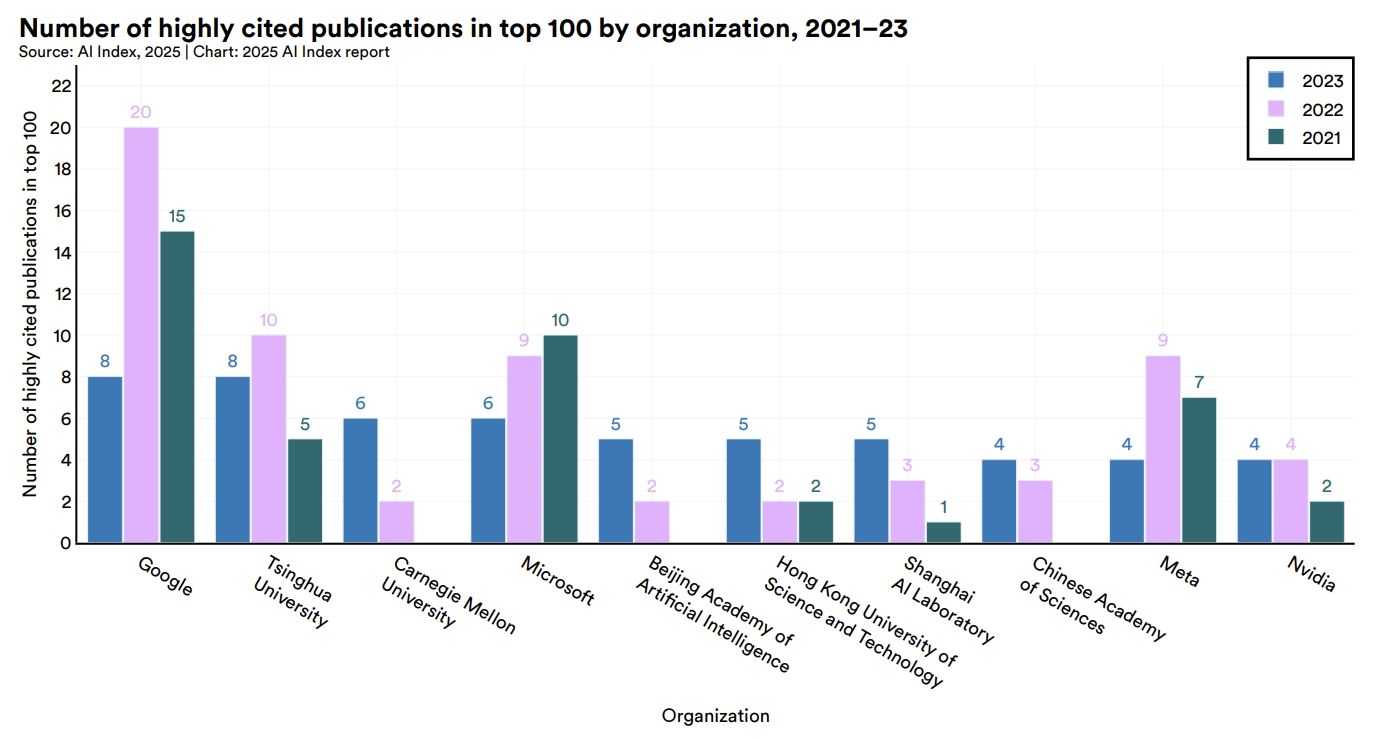
From 2005 to the end of 2024, Tsinghua accumulated 4,986 patents related to artificial intelligence and machine learning, with more than 900 granted in the past year alone. Meanwhile, China now holds more than half of all effective patent families worldwide in this field (patents for the same core technology filed across multiple countries or regions).
However, the United States still retains the most influential AI patents and the most advanced AI models. For example, Harvard and MIT remain ahead of Tsinghua in patent impact rankings. Stanford’s 2024 Artificial Intelligence Index Report also shows that U.S. institutions developed 40 well-known AI models in 2024, compared with 15 from China. Nonetheless, Chinese institutions are steadily narrowing the gap in several performance benchmarks.
The second dataset comes from The New York Times.
According to a report published on the 19th, Meta CEO Mark Zuckerberg announced a major reorganization of the company’s AI division in June, establishing Meta Superintelligence Labs (MSL), dedicated to building artificial intelligence systems capable of matching or surpassing human cognitive abilities. Zuckerberg also released a list of 11 core research members.
Documents show that all 11 researchers were educated overseas—and 7 of them were born in China.
The report also cites two new studies indicating that researchers born and educated in China have long played central roles in America’s top AI laboratories.
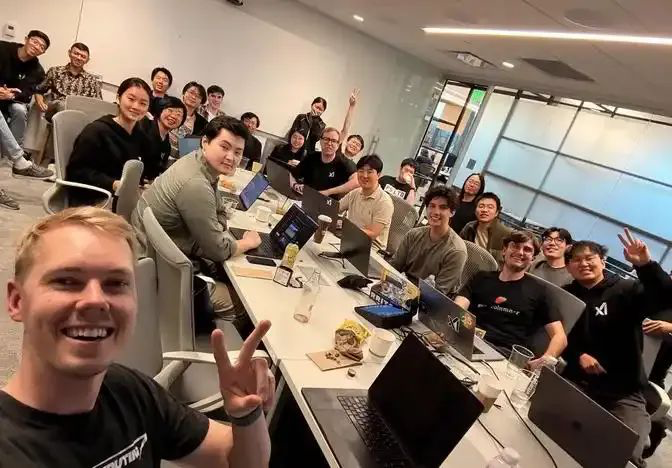 Team member of Elon Musk’s Grok-4 project
A 2020 study by the Paulson Institute estimated that Chinese AI researchers account for almost one-third of the world’s top AI talent—and most of them work at U.S. companies and universities.
A new study by the Carnegie Endowment for International Peace further shows that most of these researchers remain in U.S. institutions. Of the 100 top Chinese AI researchers working at American universities or companies in 2019 (three years before the ChatGPT boom), 87 are still active in research roles today.
The New York Times notes that in today’s global AI race, the U.S. tech sector’s reliance on Chinese talent stands in sharp contrast to Washington’s tough rhetoric toward China.
Editor: Zhongxiaowen