



Recently, a report on the prospects of German industry has sparked controversy on overseas online platforms. But the controversy does not stem from the report itself; rather, it comes from the distortion of the report by multiple Western media outlets – especially their seriously biased demonization and sensationalism targeting China.
The German report in question is titled “The Future Positioning of German Industry: Patent and R&D Analysis,” published by the German Economic Institute (IW) on behalf of the Bertelsmann Stiftung.
Judging from the report’s introduction and its 158-page full analysis, the report primarily addresses the decline in Germany’s innovation capacity, arguing that Germany should strengthen its own R&D and technological autonomy in key fields.
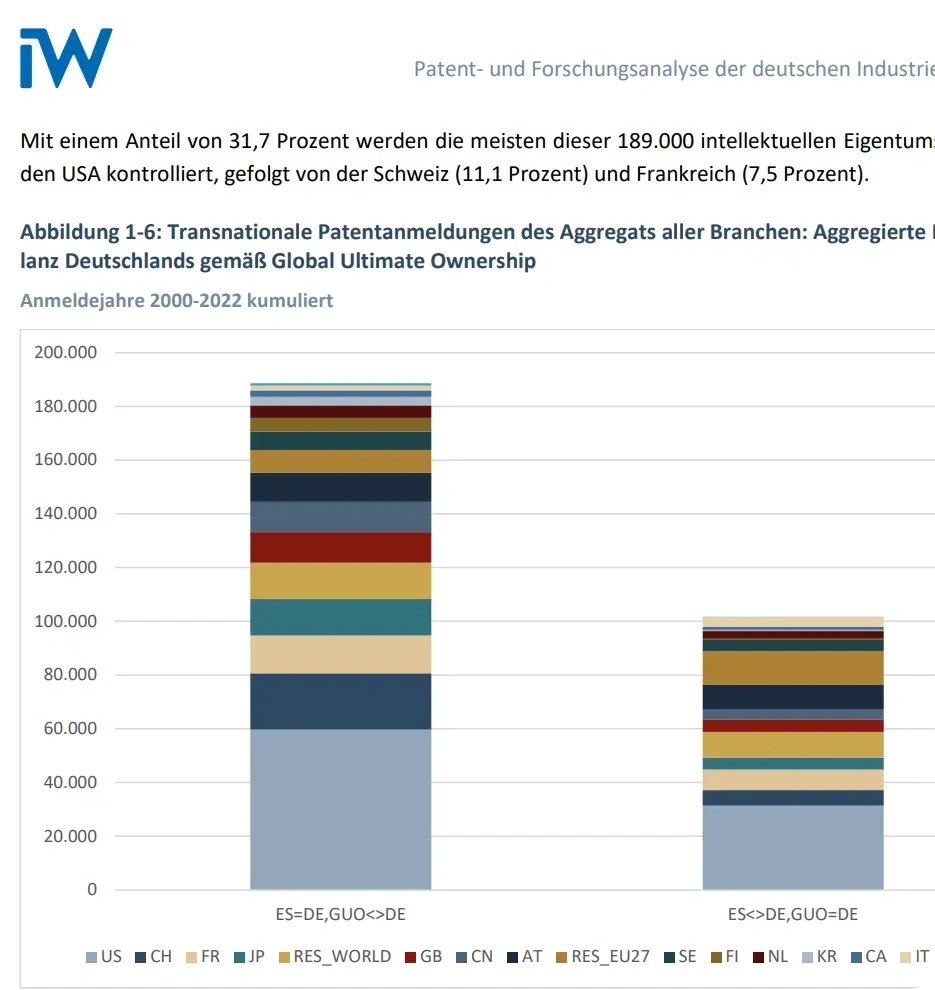
The report illustrates the severity of the problem by citing the gradual acquisition of patents originating from German R&D by other countries and regions, stating that between 2000 and 2022, 29% (189,000) of transnational patents developed in Germany have come under the control of foreign companies.
A chart provided in the report shows that the United States holds the largest share of German patents during this period, accounting for 31.7%, followed by Switzerland at 11.1% and France at 7.5%. Japan and the United Kingdom rank behind France. China, with 11,300 German patents, accounts for roughly 6% and ranks behind the UK. If the “Rest of the World” category, which ranks fifth in share, is included, China ranks only 7th in this chart.
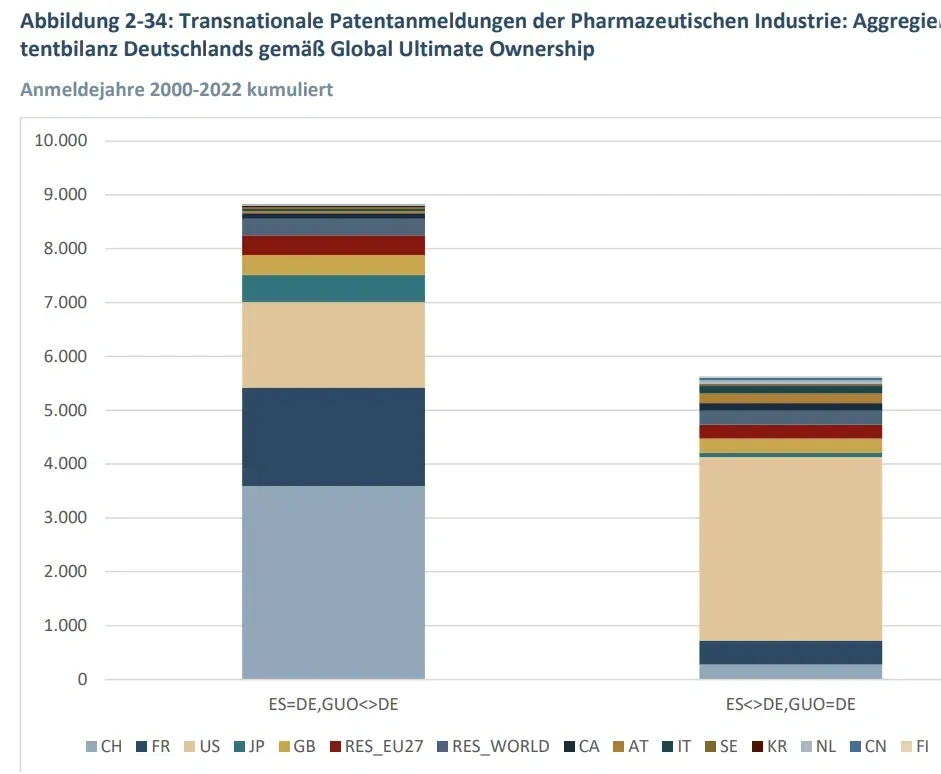
The report also points out that patent outflow in Germany is most severe in the pharmaceutical sector, followed by the chemical industry. According to the report’s charts, German pharmaceutical patents have mainly flowed to Switzerland, France, and the United States, among others. Chemical patents, in turn, have been controlled successively by “Rest of the World” (excluding the EU), the United States, the United Kingdom, and Japan.
While China does hold some German patents in the pharmaceutical and chemical sectors, its ranking is low in both of these charts.
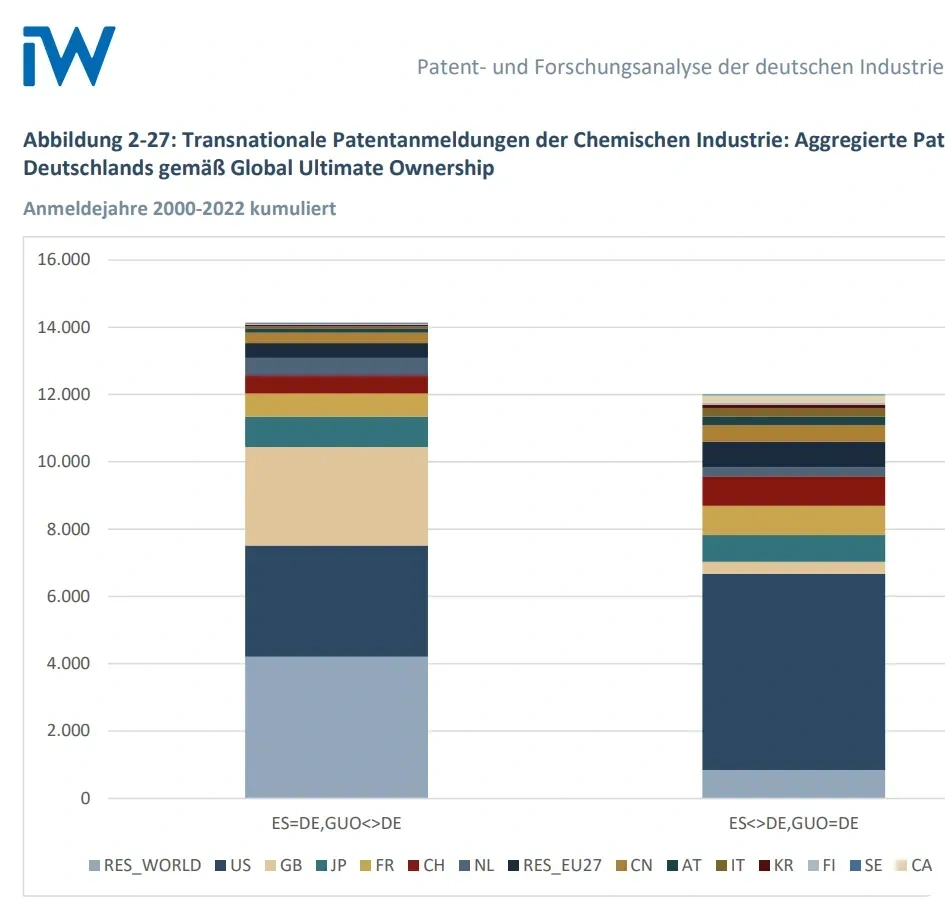
Not only is China not the main focus of this report, but the number of German patents held by China also falls far behind that of major Western countries such as the United States, Switzerland, France, and the United Kingdom.
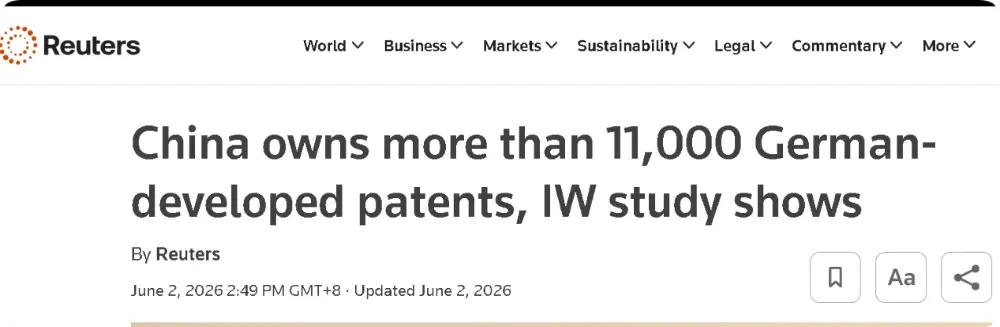
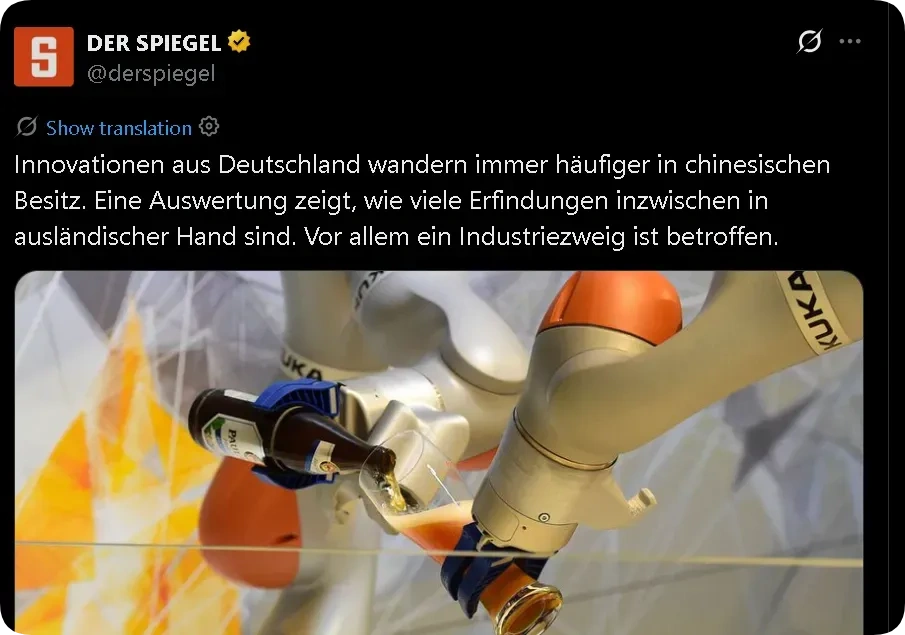
Yet, when covering this report recently, multiple Western media outlets — from Reuters in the UK to Germany’s Der Spiegel and Deutsche Welle (DW) — inexplicably singled out China. Some sensationalized the story with inflammatory rhetoric, claiming that “innovations from Germany are increasingly falling into Chinese hands,” while others, during interviews, steered the report’s authors to specifically highlight and amplify China, which was never the focal point.
In contrast, several foreign artificial intelligence (AI) large language models, such as ChatGPT and Grok, after assessing the main content of the report and the role and weight of China within it, provided relatively objective answers. They stated that China is not the report’s focus, that the sections involving China are presented in a factual tone, and that the report does not portray China as a “threat” that Germany should guard against or be wary of. The relevant AI models also noted that Western media coverage of the report and their depiction of China’s role involve significant exaggeration and distortion.
At present, these Western media reports have already drawn doubt and criticism on overseas social media. Several Chinese media professionals have also taken to social media to post messages questioning why Reuters and other Western outlets distorted this professional German report to fabricate a “China threat” narrative. Some media figures even angrily denounced the coverage, saying that it glaringly reflects the paranoia of certain Western media when reporting on China.
Editor: zhangyixincq