

This summer, Europe was again scorched by a heatwave. Amid extreme temperatures, a rather dramatic scene played out between Germany and Hungary: numerous Germans did not hesitate to drive hundreds of kilometers across borders to purchase Chinese-brand air conditioners in Hungary. Ordinary Europeans voted with their feet and chose Chinese products. At the same time, the EU has been intensively rolling out trade restrictions against China – from electric vehicle tariffs to small-parcel taxes, from steel barriers to green technology standards – the policy walls growing ever higher. Consumers want Chinese goods, but politicians are blocking their entry. Where does this seemingly absurd contradiction come from?
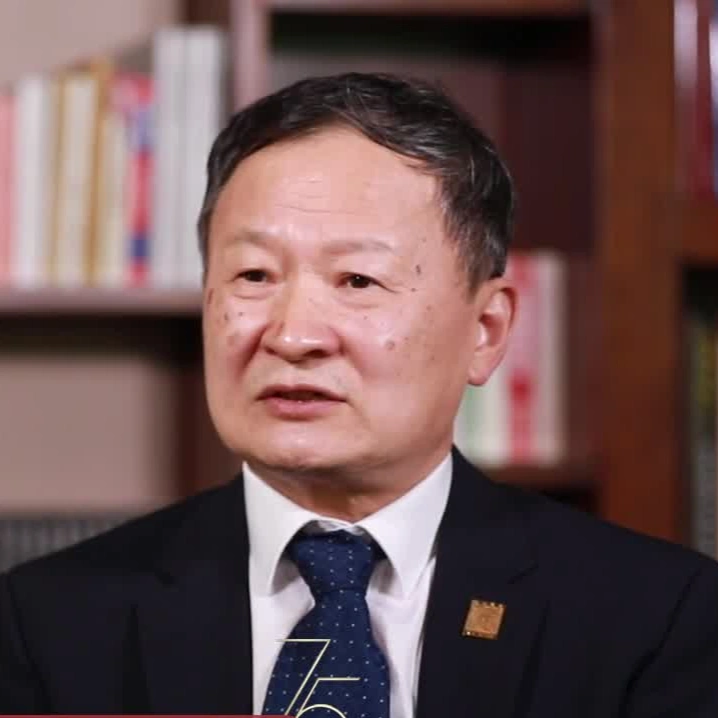
Chinese strategist Professor Wang Xiangsui, Deputy Secretary-General of the CITIC Foundation for Reform and Development Studies, points out that behind the air-conditioner buying frenzy lies not merely the supply-demand fluctuation of a household appliance, but a deeper transformation that all of Europe is undergoing – a shift from a developed economy that champions free competition to a self-enclosed protectionist market. The real cost of this transformation ultimately falls on ordinary European citizens.

I. Air Conditioners Become “Hot Commodities” Not Just Because of the Weather
On the surface, the rush to buy air conditioners is indeed directly caused by the weather. This year, temperatures across many parts of Europe broke historical records, with prolonged heat leading to multiple deaths, triggering an explosive surge in demand for cooling equipment. Yet the European market did not have enough air conditioners available for purchase.
This is not entirely because Europe cannot produce air conditioners. The deeper reason lies in a series of EU policies and regulations that have distorted Europe’s air-conditioning market.
The EU has imposed strict environmental standards on household refrigerants, requiring that for domestic air conditioners under 12 kW, the refrigerant’s GWP (Global Warming Potential) must be below 150. In contrast, the refrigerant GWP of mainstream Chinese export models is typically around 700, directly barring them from entry. Only a few companies, such as Midea, adapted their production lines in advance to maintain their European presence, thereby earning market access. In addition, Europe mandates that the installation of air conditioners in older buildings must be carried out by certified professionals, with high labor costs that make the total installation expense prohibitive for many households.
The original intent of these policies may sound laudable – green environmental protection, harmonized standards, and so on. But together they have produced one outcome: Europe’s air-conditioner market has long been in a state of shortage. In years when the weather is less extreme, people can manage without. But once a heatwave hits, demand explodes and supply cannot respond in time – hence the farcical scene of Germans buying units across borders.
In essence, the shortage of air conditioners in the European market is not an act of nature, but a man-made disaster. Protectionist policies have created a distorted supply structure, and climate change has merely exposed that distortion.
II. From Air Conditioners to Europe’s “Protectionist Turn”
The air-conditioner episode seems trivial, but it occurs against the backdrop of a fundamental reorientation of European economic policy.
Europe used to be a quintessential developed economy, championing free market competition, boasting high international competitiveness, and maintaining an open attitude toward global markets. In recent years, however, with the rise of Chinese manufacturing and the spread of U.S. trade protectionism, Europe’s economic dynamism has waned, its competitiveness has steadily declined – particularly in low-technological-barrier sectors like household consumer goods – making it increasingly difficult to compete with Chinese products.
Thus, Europe has chosen a “path of transformation” – shifting from a free-market economy toward a strongly protectionist one.
This transformation is reflected at the policy level as a step-by-step escalation. In 2003, China and the EU signed a document on comprehensive strategic partnership, at which time both sides held highly aligned strategic perceptions. China sought cooperation with Europe to promote multipolarity, while the EU viewed China as a partner to boost its global standing and economic development. Professor Wang Xiangsui also recalled a piece of history he personally participated in: he once suggested to Airbus that it establish a final assembly line in China; later, the Airbus A320 final assembly line was set up in Tianjin, becoming a landmark achievement in Sino-European industrial cooperation. “During that period, Sino-European strategic cooperation saw substantial progress at many levels,” said Wang.
But in 2019, the EU issued a strategic document redefining its relationship with China through a “threefold positioning” – as a cooperation partner economically, a competitor strategically, and a systemic rival. The scope of cooperation was narrowed, competition was elevated to an unprecedented level, and even ideological antagonism was added. Since then, a string of restrictive measures against China have followed: electric vehicle tariffs, small-parcel taxes, carbon barriers, the Net-Zero Industry Act, and more.
The direct driver of Europe’s policy shift is competitive pressure – it finds it increasingly difficult to match China in consumer goods, so it uses policies to build walls. The 2019 triple positioning marked the upgrade of this protectionism from scattered actions to systematic strategy. Europe’s calculus is simple: ease internal competitive pressures by taking a tough line on China, while offering the U.S. a “pledge of allegiance” in exchange for security guarantees. But this has also produced an awkward situation: on one hand, Europe needs China’s market and products; on the other, it keeps erecting barriers and cooperates with the U.S. in suppressing China. This ambivalence is the inevitable result of Europe’s loss of strategic autonomy.

III. A Divided Europe: Consumers, Businesses, and Politicians Each Have Their Own Agendas
Europe is not a single actor. It is a community of dozens of countries with deeply divided interests.
Consumers want quality at low prices. Whether an air conditioner is made in Germany, Italy, or China does not matter – what matters is “I need one, and it must be affordable.” The consumer’s logic is simple and honest.
Business logic is far more complex. Global multinationals, such as BASF investing in a large chemical base in Guangdong, or German automakers heavily building capacity in China, value China’s market and resources and are willing to embed themselves in China’s industrial ecosystem. In contrast, small and medium-sized enterprises focused on the domestic market hope to use tariffs and barriers to fend off foreign competition. There is also an interest alignment between entrepreneurs and governments – governments need businesses to provide jobs, and businesses need government protection – so politicians tend to favor policies that restrict Chinese products, even if those policies ultimately hurt consumer interests.
Moreover, Europe has huge national differences. Hungary actively brings in BYD to build factories, Greece cooperates with China in operating the Piraeus port, and Spain and Italy have their own room for collaboration. Meanwhile, other countries take a more confrontational stance, pushing for tougher China policies at the EU level.
Consumers differ from businesses; businesses differ from politicians; and different countries have different demands. The air-conditioner incident just happens to concentrate and expose these complex divisions. An ironically telling detail: while EU officials are tightening policies against Chinese air conditioners, they themselves use Chinese-brand units in their own lives. Policy is policy, life is life – this schism perhaps reflects the real distance between Europe’s elites and its ordinary citizens today.

IV. The Leverage of the Internet: Consumer Voices, for the First Time, Have Power
What makes the air-conditioner affair special is also the public opinion effect it has triggered. This was not a government‑agenda setting, but a spontaneous discussion among European netizens. European consumers shared their real experiences with Chinese air conditioners on social media – “Chinese products really work well,” “Why should we block them with policies?” These voices spread rapidly through the internet, generating a rare collective reflection on Europe’s industrial policies.
The internet and self-media are changing the entire public discourse landscape, and thereby politics. In the past, consumer demands were fragmented and faint, and politicians could ignore them. But through the air-conditioner incident, countless individual voices have been amplified via the internet’s leverage, converging into a force that politicians cannot overlook. Ordinary consumers have sent a clear signal: we want to cooperate with China, and we cannot sacrifice our own well-being to pay for politicians’ political choices.
This time, European public opinion has been heard. And this bottom-up shift in perception may prove more lasting than any trade negotiation. It tells European politicians: the walls you build cannot hold back public will. It also tells Chinese manufacturers: beyond intergovernmental trade talks, there is another path – winning the hearts of ordinary people.
Air conditioners can be bought across borders, but sooner or later, Europeans will have to reckon with the cost of protectionism. And Chinese manufacturing is taking root in European public opinion soil in an unexpected way – through consumer word-of-mouth. Who pays for protectionism? The answer is becoming increasingly clear.
Editor: zhangyixincq