



On August 26, 2026, a glacier collapse in Nepal triggered a cross-border debris flow that slammed into the Gyirong Port in the Xizang Autonomous Region of southwest China, leaving 21 people dead and 541 missing on the Chinese side, and 1,252 dead and 4,875 missing on the Nepali side.
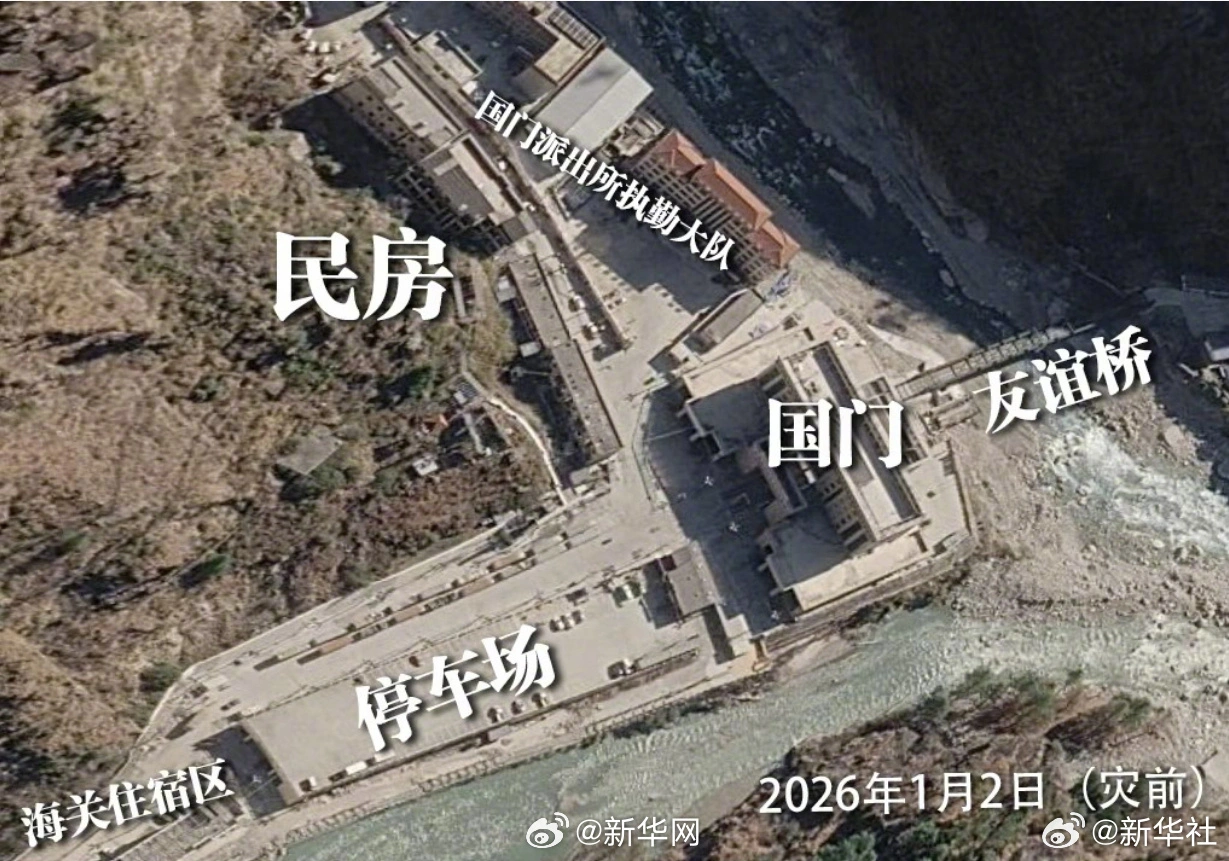 The aerial photo taken on January 2, 2026, in the Gyirong port area along the China-Nepal border, shows the local area before the disaster. Photo: Xinhua News Agency
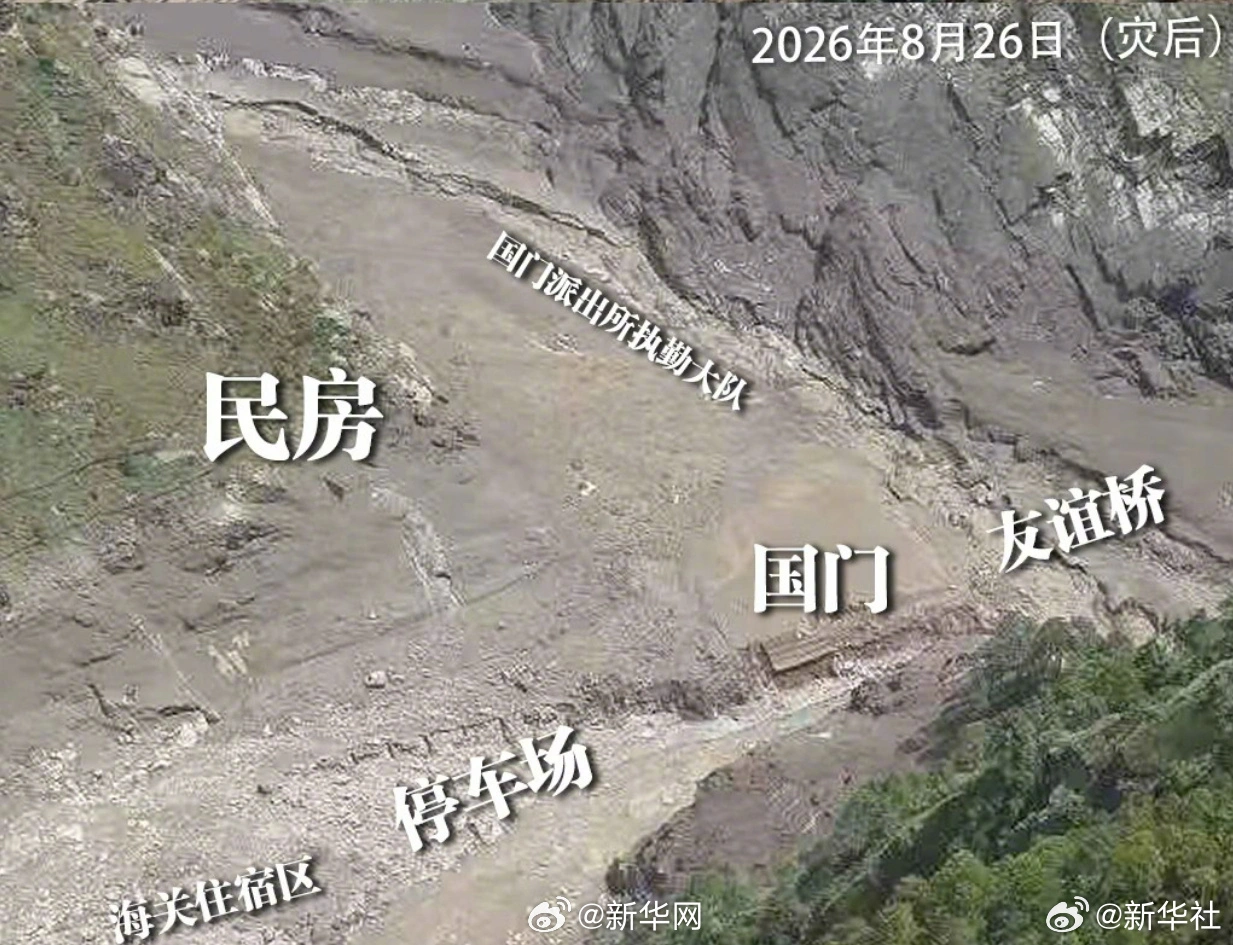 The aerial photo taken on August 26, 2026, shows the local area after the disaster. Photo: Xinhua News Agency
China immediately activated a national-level emergency response. President Xi Jinping issued top instructions; Premier Li Qiang traveled to the disaster zone to oversee the response personally; thousands of personnel were mobilized for search and rescue; 220 million yuan in disaster relief funds and 30,000 items of relief supplies were allocated; the Xizang Autonomous Region government held consecutive press conferences, with the regional chairperson personally briefing the public on rescue progress. China also provided cross-border assistance to Nepal.
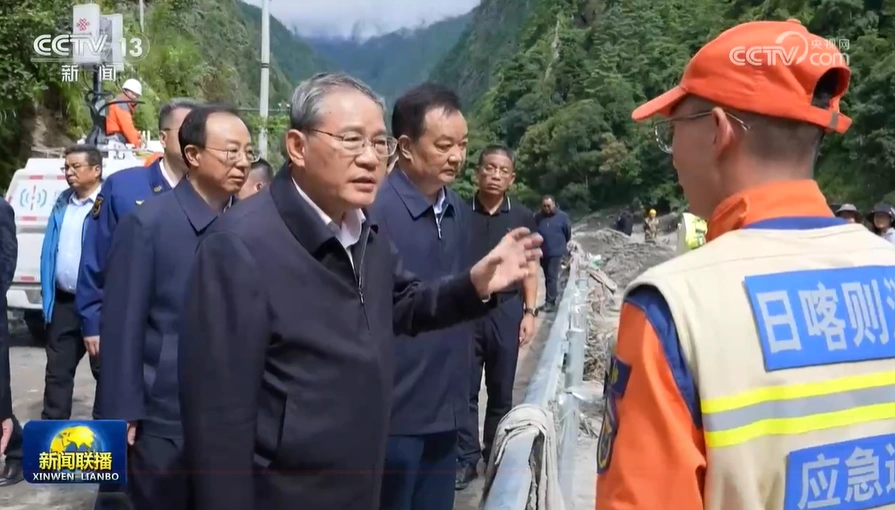 Premier Li Qiang talking with local emergency rescue personnel. Photo: CCTV
The disaster drew intense attention on China’s internet. Related hashtags dominated the trending searches on Weibo, China’s equivalent of X, and on Douyin and Kuaishou—China’s two major short-video platforms, with a combined user base of more than one billion—footage from rescue scenes was widely shared. Netizens spontaneously prayed for the missing and cheered on the rescuers. Mainstream media including Xinhua News Agency, CCTV, and People’s Daily reported heavily, with reporters going deep into the hardest-hit areas and sending back hundreds of written reports and dozens of on-site videos.
Yet in the face of such a disaster—one in which information was transparent and rescue efforts all-out—the BBC published a jaw-dropping report claiming that “Footage of Tibet flood isn’t being shown in China”, leaving the outside world largely in the dark about those affected and implying that Beijing was covering up the disaster.
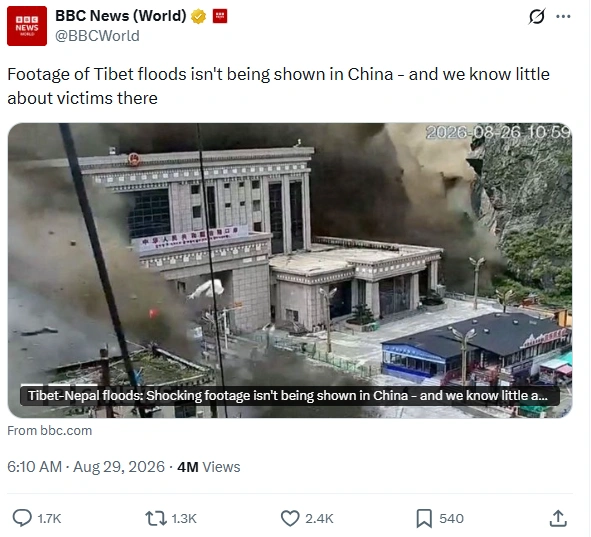
This was not merely offhand nonsense born of bias. It was the inevitable product of a narrative template. Mr. Jin Zhongwei, founding editor-in-chief of Guancha.cn, China’s largest online news outlet, who has worked in media for nearly three decades, said in a recent interview with us: “After my long observation … even calling it bias is too mild. When they report on domestic affairs, they operate in a world of right and wrong; but when they report on China, they enter a world of good and evil. China, as a developing country, dares to challenge Western hegemonic dominance and Western-centrism. In their eyes, that in itself is an ‘original sin.’ Since you have already been defined as ‘evil,’ what is wrong with making you look even worse?”
 Jin Zhongwei is the founding editor-in-chief and director of the editorial board of Guancha.cn, as well as a researcher at the China Institute of Fudan University. He has been working in the media industry for nearly three decades, and has long observed and studied the narratives of Western media involving China.
So “Footage isn’t being shown in China” is not a conclusion the BBC reached after investigation. It is a narrative reverse-engineered from a preset position. Within the template of “the Chinese government always cover up information,” the facts simply do not matter.
After the report was published, it drew widespread mockery and condemnation on X. Many foreign netizens familiar with China, foreigners living in China, and overseas Chinese spoke out, publicly debunking the BBC with facts.
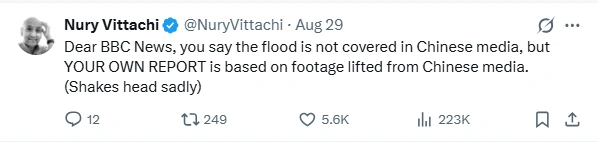
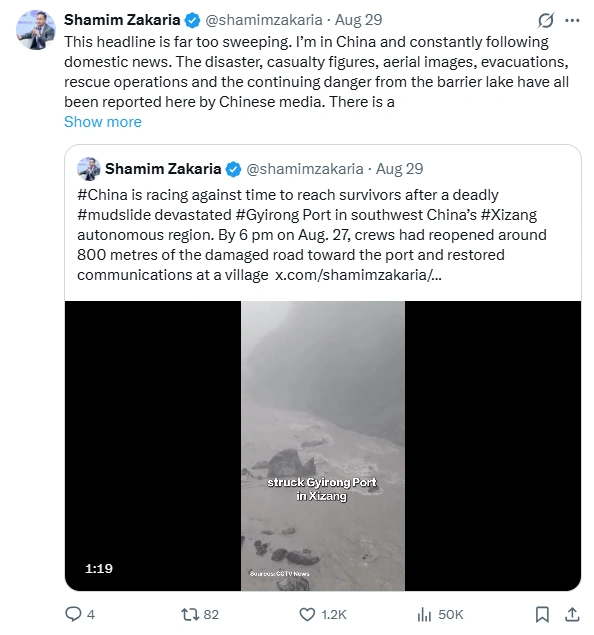
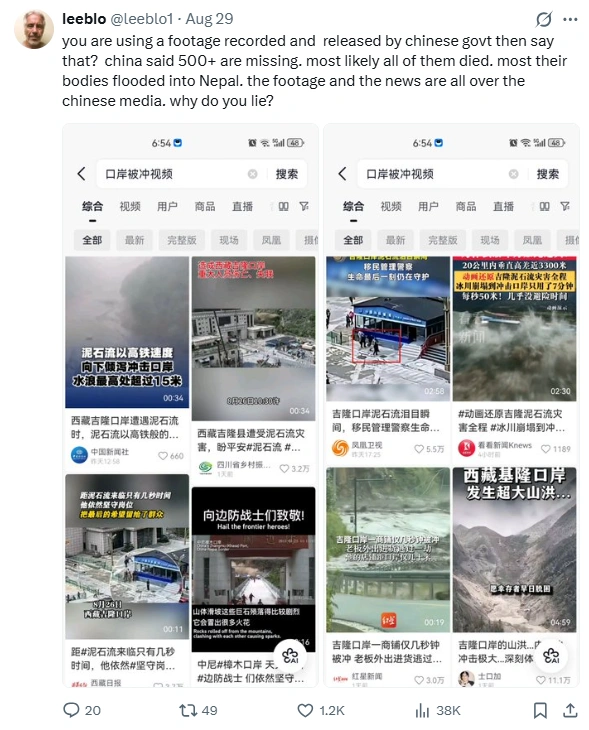
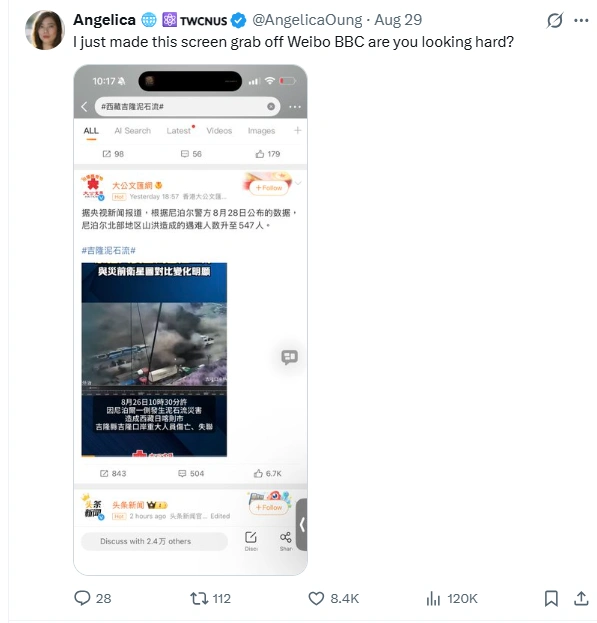
These reactions from internet users around the world show one thing: in today’s era of high information transparency, it is becoming increasingly difficult for the BBC to shape a narrative through selective cropping and omission. Ordinary netizens need only spend a few minutes searching to expose the lie like China did not release footage.
The BBC’s performance in its reporting on the Gyirong debris flow is not an isolated case. In fact, over the past dozen years or so, certain Western media—represented by the BBC and CNN—have repeatedly crossed the bottom lines of journalistic professionalism in their China coverage: fabrication, falsehood, malicious framing, and turning truth on its head. They have developed an alarming “playbook.” In the interview, Mr. Jin Zhongwei revealed the power logic behind this playbook: “The media is one pillar of Western hegemony. Western hegemony has several pillars—the US military, the dollar and its financial system, advanced manufacturing capacity, and also discursive hegemony.” Ideologically they see China as a “heretic”; commercially they want China’s market; at the government level they want to suppress China’s rise. When confronting China, their internal rifts caused by partisan struggles disappear, replaced by a highly coordinated narrative alignment.
Case One: The BBC’s “Underworld Filter”—Same Program, Two Worlds
In early 2021, the BBC released a video report titled “Return to Hubei,” claiming to document Wuhan one year after COVID-19. But Chinese netizens discovered that the exact same program posted on the BBC’s English and Chinese accounts had completely different color grading. The English version deliberately reduced brightness and heightened gray tones, creating a gloomy, repressive, eerie atmosphere—mockingly dubbed the “underworld filter” by Chinese netizens—while the Chinese version’s colors were relatively normal.
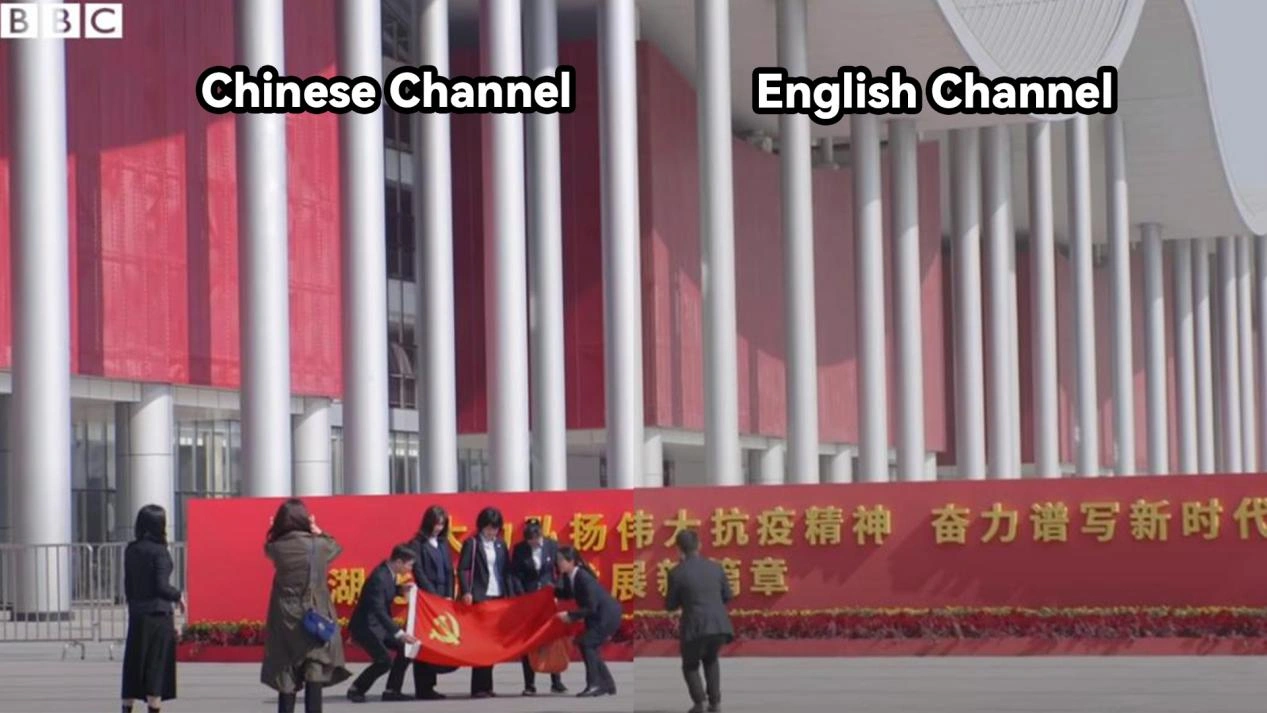
Even worse, in that report the BBC stole screenshots from footage shot in China by the British vlogger Jason, “reprocessed” them with a dark filter, and used them to smear China. Jason himself, after discovering what had happened, was fed up and made a video specifically to hit back at the BBC, pointing out that his original footage was bright and positive but had been maliciously altered by the BBC.
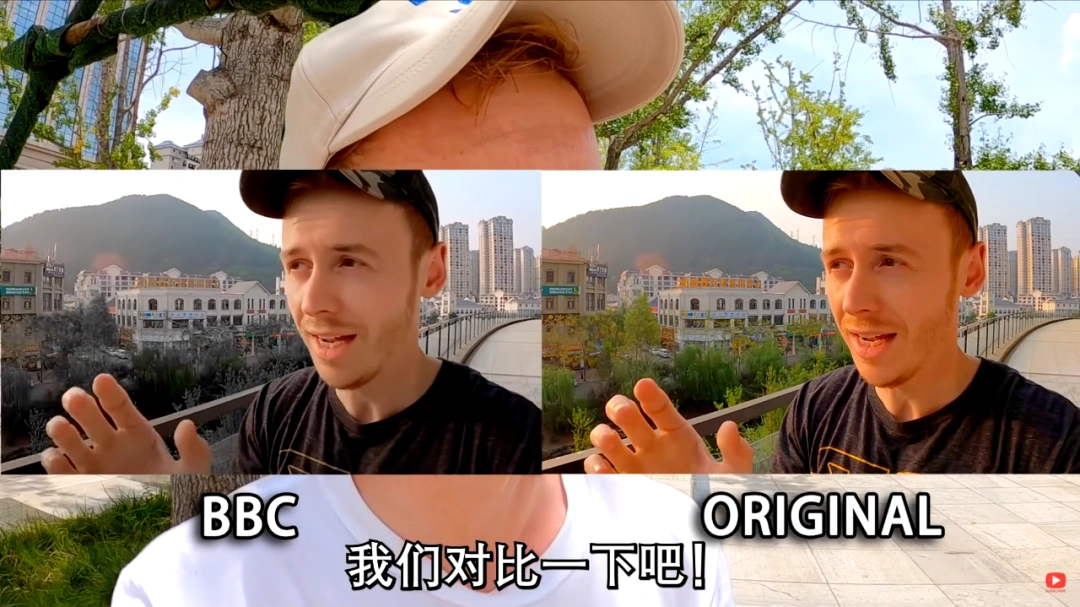 Screenshot of Jason’s response vedio
Same program, two color tones—the BBC used technical means to “create” the China it wanted, not the real China. The essence of this practice is that, within the “good versus evil” narrative framework, visual language is used to mold China into a dark, repressive, terrifying authoritarian dictatorship. The facts are irrelevant; what matters is that the image fits the preset picture.
Case Two: BBC’s Xinjiang Fake News—Fabricating a “Systematic Rape” Witness
In January 2021, the BBC published a report claiming that women in China’s Xinjiang in so-called “re-education camps”—the Western media’s term for Xinjiang vocational education and training centers—had been subjected to “systematic rape and torture.” The report was amplified by a slew of anti-China Western media outlets, creating a pernicious international impact.
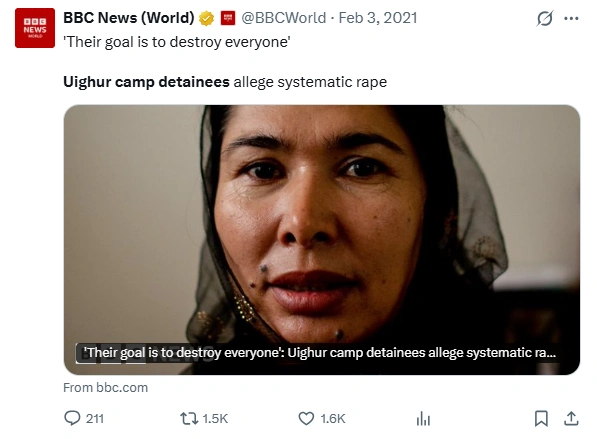
However, an investigation by Global Times reporters found that the report’s key “witness” had previously given multiple interviews to CNN, BuzzFeed, and other Western media. Her statements were contradictory and riddled with holes. On the one hand, she told BuzzFeed: “I was not beaten or abused.” On the other, she told CNN that she had been gang-raped three times. On social media, many people pointed out the contradictions of this so-called “witness” and the fraud of the Western media.
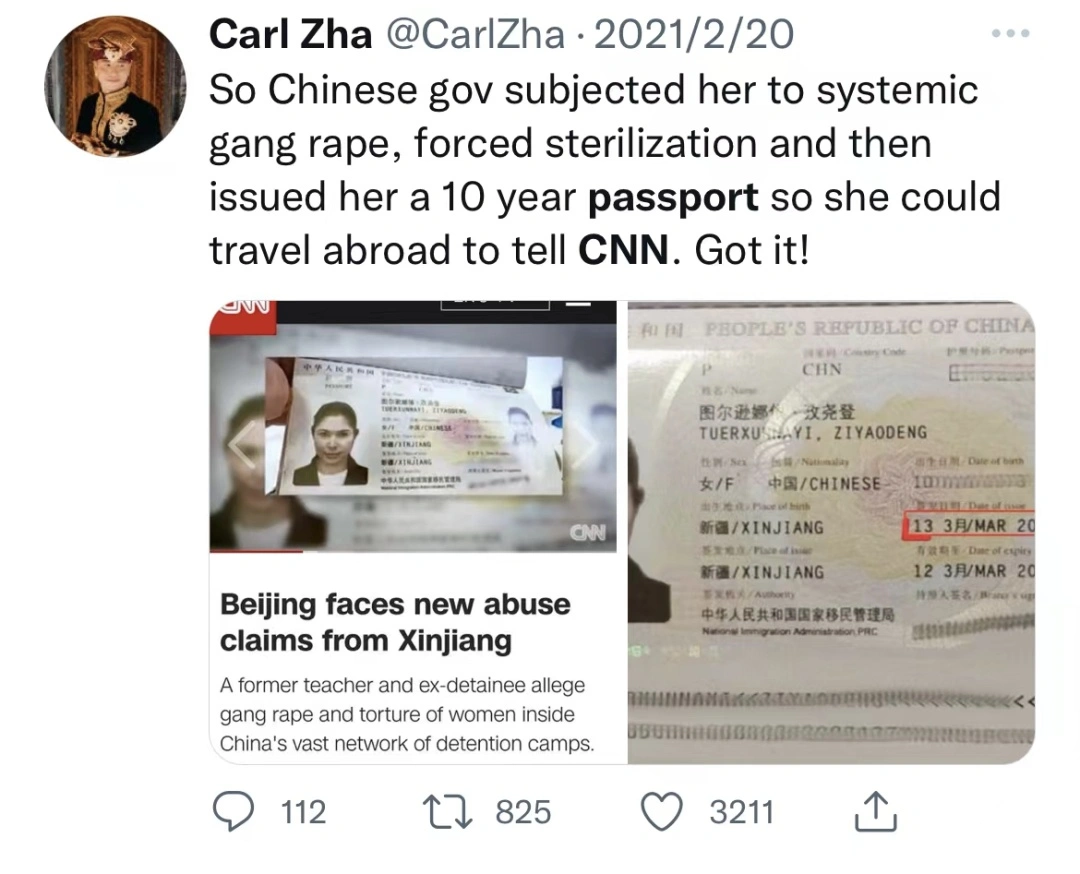
China Daily reporters later went to Xinjiang with the BBC’s video and found that the claims in the report “did not match the facts in any respect.” The BBC claimed that the Chinese government obstructed filming, but local factory security staff gave first-hand accounts that BBC reporter John Sudworth had not been wearing a mask and had forced his way in to film. The so-called “concentration camp” footage shown by the BBC was, after verification, actually normal schools and training institutions.
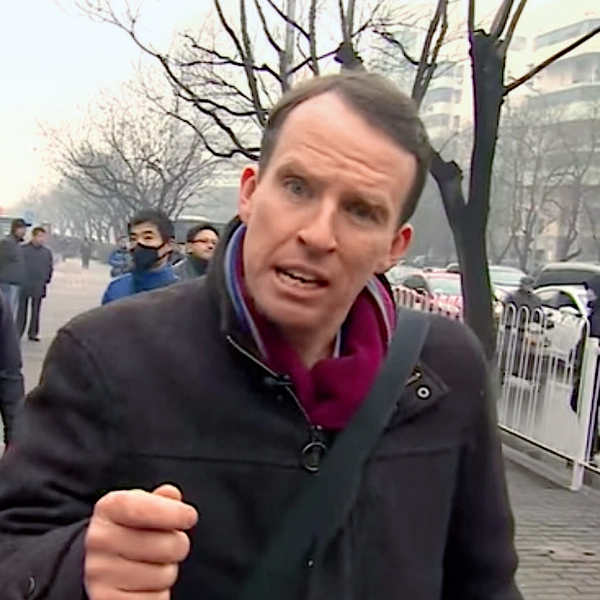 John Sudworth, a former BBC correspondent in China, previously worked at BBC Radio 4, joined the BBC in 2003, became the BBC’s Shanghai correspondent in 2012, moved to Beijing correspondent in 2015, and left abruptly in March 2021 without informing the Chinese side.
After the facts were exposed, the BBC did not apologize. Instead, its news team said it “stands by its reporting.” John Sudworth subsequently left China without notifying the Chinese side. Hua Chunying, then spokesperson for China’s Ministry of Foreign Affairs, pointedly asked: “If Sudworth believes his reporting is fair and objective, he should have the courage to face legal proceedings, not be afraid. If there is evidence he was threatened, he should call the police—we would protect his safety. But why did he run?”
Case Three: CNN Hired an Actor to Play a “Former Xinjiang Police Officer”
In October 2021, CNN aired an “exclusive interview” with a so-called “former Xinjiang police officer” who claimed to have personally witnessed “mass atrocities” in Xinjiang. The report quickly became yet another piece of “evidence” in the Western campaign to smear Xinjiang.
But a China Daily investigation found that the identity of this “former Xinjiang police officer” was entirely fabricated—he was not a police officer at all, but an actor paid by anti-China forces. Even more absurdly, this person played multiple roles across different Western media reports: sometimes a “former police officer,” sometimes a “concentration camp survivor,” sometimes a “persecuted Uyghur,” switching identities as the reporting required.
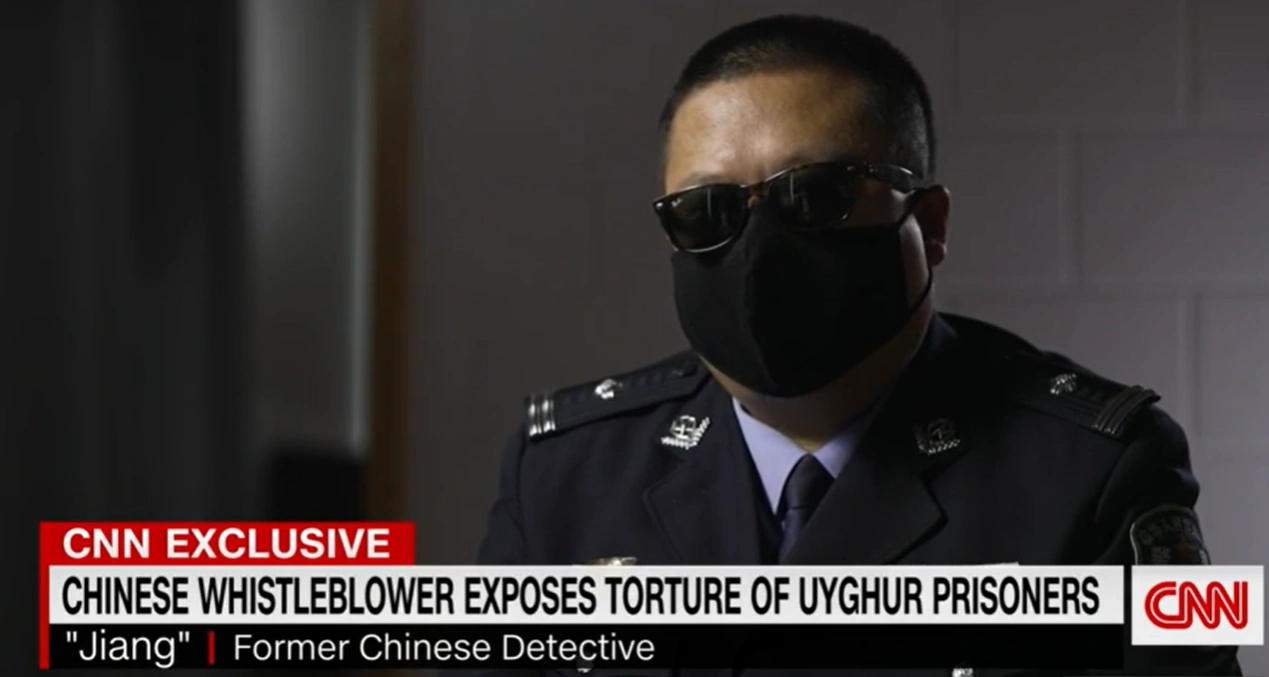 In CNN’s video, his name was labeled “Jiang”.
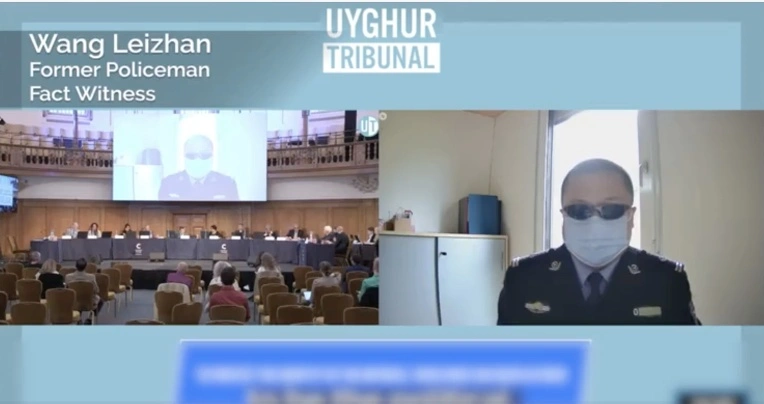 Yet that same summer, a person who looked exactly like him appeared at the “Uyghur Tribunal,” a subsidiary body of the “World Uyghur Congress” funded by the National Endowment for Democracy of the US, and called himself “Wang Leizhan.”
As a globally renowned news organization, CNN did not even perform the most basic verification of its interviewee’s identity before airing such serious accusations. This is not a lack of professional competence; it is the inevitable result of putting stance before facts. Under the “good versus evil” narrative, as long as China can be made to look worse, it does not matter who the witness is or whether they are telling the truth.
Case Four: CNN Maliciously Cropped Footage in Reporting the Lhasa Riots
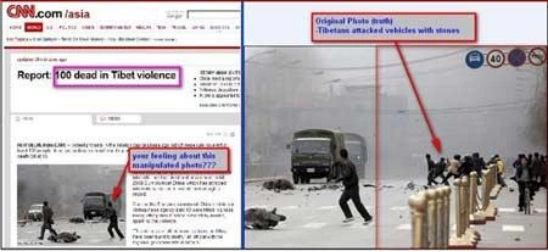
In 2008, while covering the March 14 riots in Lhasa, CNN maliciously cropped a news photo. The complete photo showed rioters throwing stones at a military vehicle; CNN cut out the rioters, leaving only the image of the military vehicle driving toward civilians, misleading viewers into believing the military was suppressing civilians.
In April of that year, CNN host Jack Cafferty made openly insulting remarks about China during coverage of the Beijing Olympic torch relay in San Francisco, saying that over the past 50 years, the Chinese have basically been a bunch of “goons and thugs,” and slandering Chinese products as “junk.” The remarks sparked strong protests from Chinese people around the world. In the end, CNN’s president sent a letter to the Chinese ambassador to the United States, formally apologizing to the Chinese people on behalf of CNN.
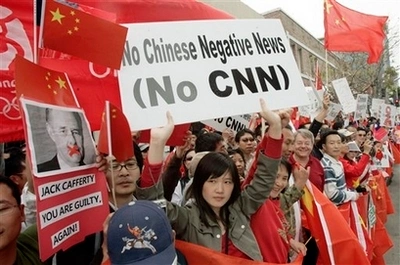 On April 19, 2008, overseas Chinese and Chinese students gathered outside the CNN office in Los Angeles to protest. Photo: People’s Daliy
But apologies aside, CNN’s bias in China coverage has not fundamentally changed since then—because this is not about the personal character of one host. It is a structural inevitability of the entire Western media system when it confronts China. As Mr. Jin Zhongwei pointed out, within the hegemonic structure of “center–periphery” and “colonizer–colonized,” China, as a developing country that dares to challenge the Western dominant position, is itself defined as an “evil” that must be suppressed. Apology is merely a tactic; suppression is the essence.
Back to the Gyirong debris flow.
When the BBC says “Footage isn’t being shown in China,” it is neither stating a fact nor making a correctable mistake. It is operating a narrative machine that has been running for a century—a machine that defines China as “evil,” treats China’s challenge to Western dominance as original sin, and then uses every available tool—filters, cropping, fabrication, and inversion of truth—to suppress China.
The China coverage of the BBC, CNN, and their kind has proven again and again that they are not reporting on China; they are “producing” a China that matches the Western ideological imagination. They are not neutral observers but a discursive pillar of Western hegemony—like the US military, the dollar, and advanced manufacturing—one of the pillars sustaining the “core–periphery” structure.
The Gyirong debris flow was a real human tragedy. In response, the Chinese government and the Chinese people delivered their answer through action—instructions from the top leader, the premier on the ground, a national-level emergency response, thousands of rescue workers, hundreds of millions of yuan allocated, successive press conferences, and cross-border aid to Nepal. These are public, verifiable facts.
The BBC can choose not to watch, but internet users around the world are watching. When ordinary users on X can debunk the lie that “footage now shown” with just a few minutes of searching, how much longer can this century-old narrative machine keep running?
The lifeblood of journalism is truth. A media outlet that habitually uses filters, cropping, and fabrication to “create” China will ultimately lose not the trust of Chinese readers, but the very foundation of its existence as a news institution. And when a country’s mainstream media collectively descend into tools of hegemonic discourse, what truly deserves scrutiny is no longer the truth or falsehood of any single report, but the legitimacy of the system itself.
Editor: Chang Zhangjin
https://news.cctv.com/2021/02/16/ARTIdLquQsnD8spxpxWsK5D2210216.shtml
http://cn.chinadaily.com.cn/a/202105/26/WS60ada687a3101e7ce9751a4f.html
https://wap.bjd.com.cn/jzh/2021/07/20/132808t272.html
https://news.qq.com/rain/a/20210506A06SLX00
https://www.chinanews.com.cn/m/gj/2021/02-13/9411303.shtml
https://www.thepaper.cn/newsDetail_forward_12002396
https://www.globalpeople.com.cn/waphtml/channel/59/18496.html
https://news.cnr.cn/native/gd/20211111/t20211111_525658873.shtml
https://www.xinhuanet.com/world/2019-11/03/c_1125186541.htm
http://www.chinanews.com.cn/gj/jdtx/news/2008/04-23/1229678.shtml
http://paper.people.com.cn/hqrw/html/2008-06/01/content_47097.htm
https://x.com/BBCWorld/status/2093461217142583435