


Recently, a CNN article claimed that China is highly dependent on the United States for its plasma industry, and the author used this to argue that the U.S. still holds a technology that can “choke” China. While we are accustomed to the usual nonsense in American “winology” propaganda, using the plasma-selling industry to score such points still shocked Chinese netizens. After all, in the Chinese mindset, a thriving plasma-selling industry is a sign of social disaster.
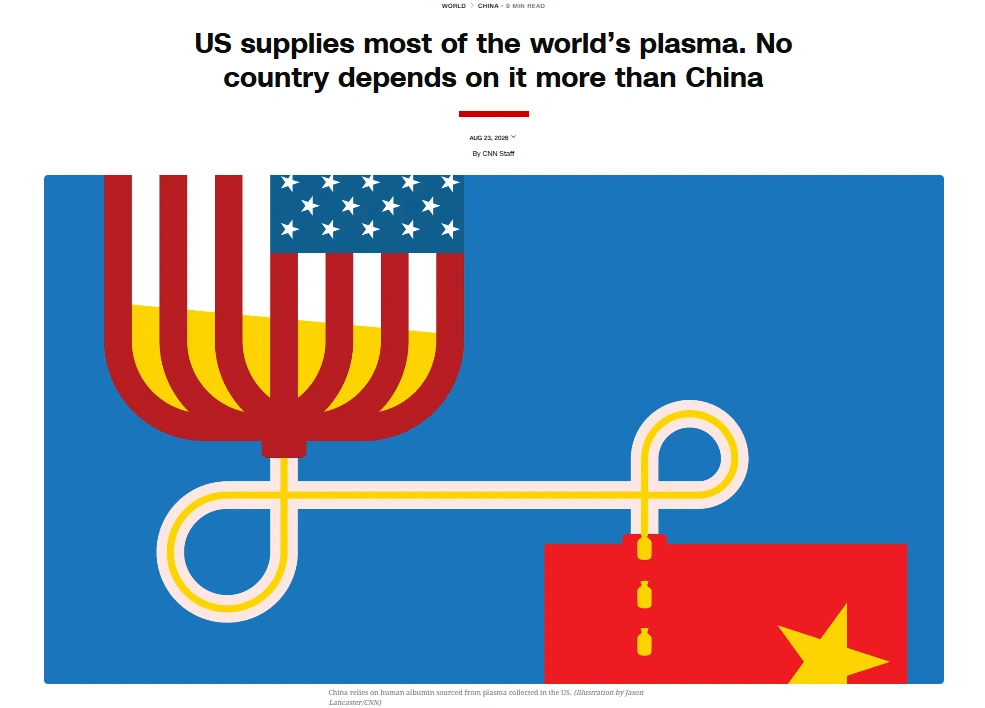
What makes it even more surreal is that the author of this article, when mentioning the prosperity of the U.S. plasma industry, didn’t exactly present it as a good thing. They did touch upon some problems, albeit glossing over them, which shows that they knew how absurd it was to boast about this. So why would mainstream American media still run such an article as “winology” propaganda?
The answer is that most ordinary Americans don’t see anything wrong with the plasma industry. There is little public outcry; it’s mostly a matter of being accustomed to it and indifferent.
Indeed, as CNN’s article notes, China’s dependence on the U.S. for plasma and related products is a fact. Moreover, not just China—most countries in the world rely on the U.S. for plasma products. During last year’s “Xiaohongshu (RedNote) account reconciliation” between Chinese and U.S. netizens, many American users shared their experiences selling plasma. At the time, some Chinese netizens mocked that the U.S., with less than 5% of the world’s population, contributes 70% of the global plasma supply. But that statement is inaccurate.
According to CNN’s data, the number of Americans who regularly sell plasma for a living is around 4 million. Other reports suggest that the number of Americans who have sold plasma at some point (including non-regular donors) is in the tens of millions. In other words, it is this roughly 10 million Americans—a fraction of the U.S. population—who supply 70% of the world’s plasma. Given that social stratification in the U.S. is well maintained, ordinary Americans have little awareness of the circumstances of this group, which makes up only a few dozen percent of the total population.
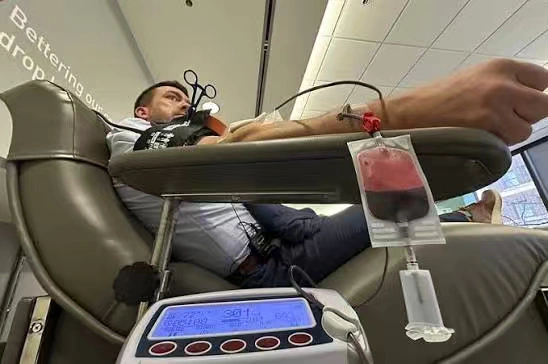
For the CNN article’s author, although they probably understand that a thriving plasma industry is not a positive sign, they clearly do not realize that the Chinese people’s sensitivity to selling blood is perhaps among the highest in the world. So what was intended as “chokehold” winology propaganda ended up making the author look like a clown in the eyes of Chinese netizens—celebrating even selling blood as a victory.
Earlier I mentioned that the article touched on some problems with the U.S. plasma industry but glossed over them. So what exactly are the problems? Objectively speaking, purely in terms of technology, the U.S. plasma industry is highly mature. Apart from setting an unusually short interval between plasma donations, there aren’t many major technical issues—in fact, China might even need to learn from the U.S. in this regard.
The real problem lies in the fact that the U.S. plasma collection has become so industrialized that it has formed an interest group. The term “interest group” is neutral in itself, but in reality, these groups don’t need to operate with malicious intent; they simply pursue their own interests, and the ripple effects can harm many people and even society as a whole. For instance, the fact that tens of millions of Americans treat selling plasma as a normal job is clearly a narrative shaped by these companies.
U.S. plasma giants market plasma donation as a charitable act in their promotions. If it were unpaid voluntary donation, that would be one thing, but the U.S. blood products industry is extremely profitable. Such propaganda effectively legitimizes many underlying issues. Plasma centers also use referral bonuses and rewards for recruiting new donors, place heavy advertisements on social media, and deliberately build centers near poor neighborhoods. Even if their intentions are not necessarily malicious, the result is that they tempt poor Americans to sell their plasma.
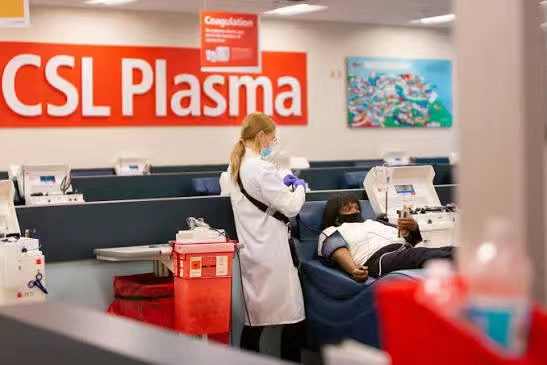
And don’t think these plasma companies are some kind of American mafia. The real big money comes from multinational pharmaceutical giants, whose blood products account for the lion’s share of revenue. These companies appear perfectly compliant. Experience shows that whenever interest groups emerge in certain industries, disaster follows—regardless of the moral standards of the people involved. It’s simply the logic of capitalism. These interest groups might even genuinely believe they are working for the health of people worldwide.
From a broader U.S. perspective, turning plasma sales into a job for millions of people reinforces the trend of normalizing all forms of exploitation in American society, commodifying every aspect of human meaning and putting a price tag on it. American society had many areas that could have been reformed, but by rationalizing all exploitation, the space for reformism in the U.S. has been severely squeezed. Ironically, there is no evil conspiracy behind this; the plasma interest groups simply treat Americans as so many oil wells—they don’t want to eliminate the population, but rather hope the wells keep producing.
And this isn’t even the worst part in the U.S. From the “Xiaohongshu account reconciliation” and discussions about the “benefit cliff” (the point at which welfare benefits are abruptly cut off as income rises) over the past two years, we understand that under the efficient capitalist elimination mechanism of the U.S., would these people be better off without selling plasma? Everyone knows that’s impossible. So the U.S. plasma industry actually relies on this elimination mechanism to sustain itself.
The WHO long ago recommended that both blood and plasma donation should be voluntary. On one hand, this helps improve the quality of blood and related products—a technical consideration. On the moral level, selling blood is the most direct manifestation of capitalist exploitation of human beings, and over-rationalizing this process may pose a greater danger to society than even infectious disease risks. After all, in today’s world, the unchecked expansion of capital kills far more people than epidemics.
However, this ideal is beautiful in theory but unrealistic technically. Plasma collection is a highly industrialized process. With current technology and public sentiment, relying solely on voluntary donations is insufficient; we have to compromise with reality. Allowing a certain degree of commercialization while limiting its scale is a more reasonable option today. But that obviously does not mean turning plasma into an industrialized sector with entrenched interest groups.
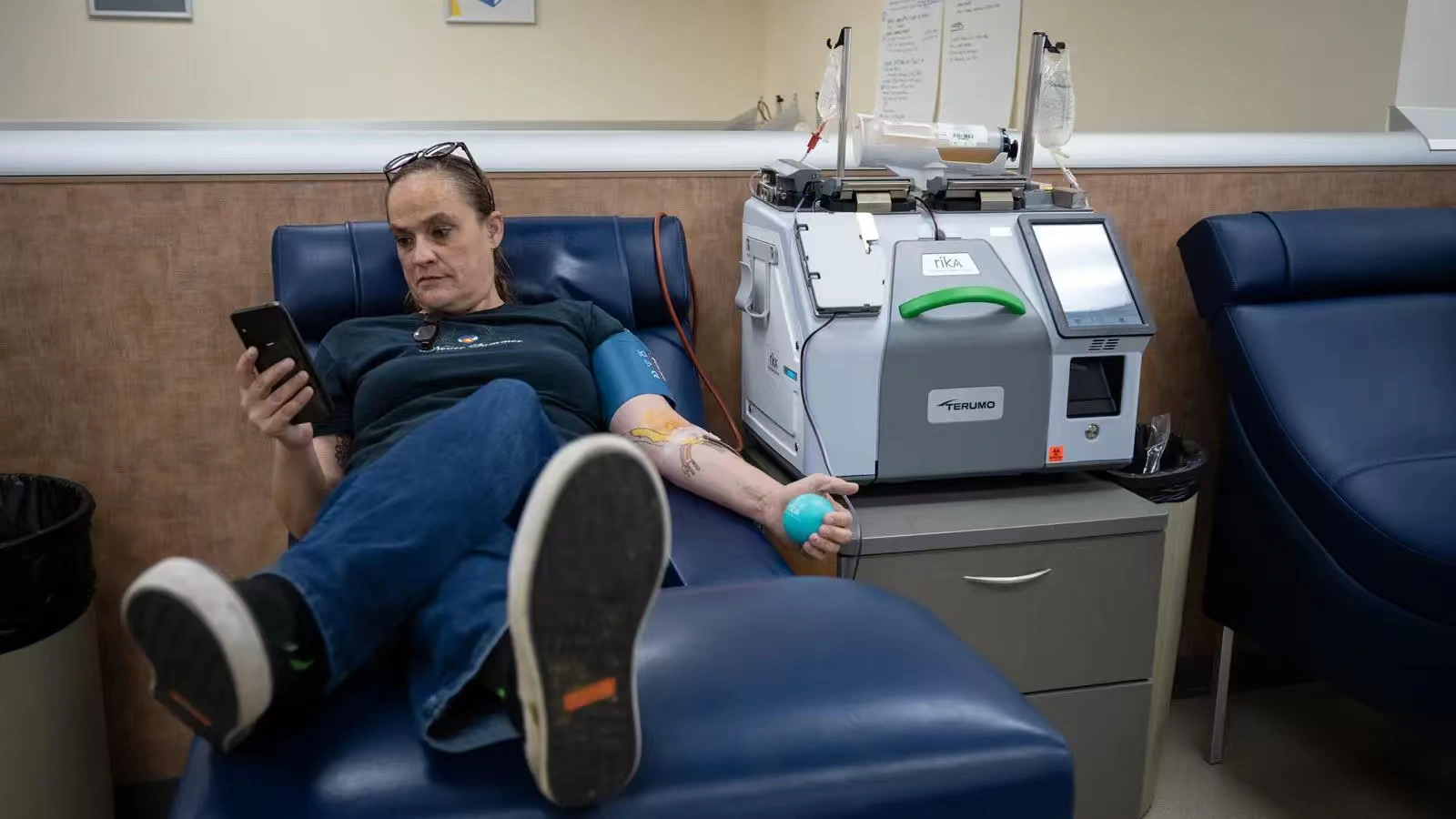
The U.S., in fact, has not taken the WHO’s recommendation seriously at all. First, from a technical standpoint, unlike whole blood and platelets that are directly transfused, plasma products often undergo multiple processing steps that inactivate viruses—even if contamination occurs, it has little impact. Meanwhile, testing mechanisms have improved significantly compared to the past, so plasma giants are not overly concerned about quality. In the past, U.S. contaminated plasma affected hundreds of thousands worldwide. Today, plasma donors’ health conditions may not be better than back then, but technology ensures that problems do not spiral out of control. This is the “technical foundation” for the industrialization of U.S. plasma.
As for making exploitation overt, that’s what America does best. America’s success today is precisely because it is the most capitalist nation, not some sentimental utopia. This is common historically—for example, Britain is mythologized by some as having achieved the Industrial Revolution through enlightened policies, but in reality, Britain at that time was one of the most severe in its punitive laws. In many cases, high exploitation efficiency does confer an advantage. This is the “institutional foundation” for the industrialization of U.S. plasma.
The existence of the “benefit cliff” is precisely an “institutional advantage” that allowed the U.S., as the leading capitalist empire, to maintain efficiency—and the plasma industry that supports 70% of global capacity is a prime example.
In plasma collection, most countries follow a path similar to China’s: promoting voluntary blood donation while keeping plasma collection on a limited commercial basis—a compromise between ideals and reality. Some European countries have responded to the WHO’s call by making plasma donation fully voluntary. Ethically this looks good, but their plasma self-sufficiency rates are inevitably low, so they still rely heavily on imported blood products.
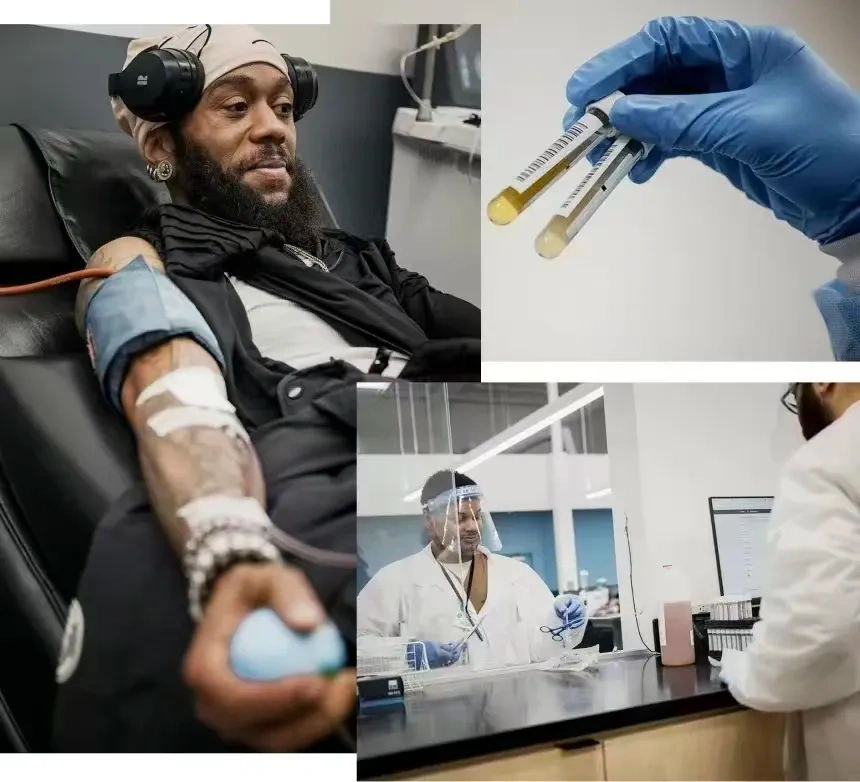
As mentioned earlier, plasma collection is different from whole blood donation. To the average person, they may seem similar, but plasma processing is already an industrial process, whereas clinical blood transfusions often involve only simple processing before use. The underlying economic logic is completely different. It is unlikely that plasma and its industrial chain can operate entirely on a non-commercial basis, but neither should it be aggressively industrialized as in the U.S. This leaves most countries, including China, in an awkward position today. This constitutes the “market foundation” for the U.S. plasma industry’s monopoly.
China’s situation is even more unique. Due to the HIV transmission caused by plasma collection stations in the 1990s, plasma collection has a very negative connotation in Chinese public opinion. Ultimately, that was not an isolated issue but one manifestation of the social chaos during China’s transition in the 1990s.
Thus, although since the 2010s, China’s plasma collection has gradually returned to normal, there has been very little public promotion, as publicity would inevitably trigger public discontent. Overall, over the past decade or so, China’s plasma collection volume has grown rapidly without major incidents—technology has improved, safety is much higher, and the current social environment is far better than in the 1990s, with much more robust regulations. However, in terms of total volume, it remains insufficient. China’s dependence on imported plasma and plasma products is still very high—higher than in Europe—and the development and utilization of blood products are not as deep, relying on international companies’ products.
To achieve self-sufficiency in extreme scenarios, China would need to increase plasma collection volume several times over. That sounds difficult, but in reality, if restrictions were lifted, this could be easily achieved. Note that “lifting restrictions” does not mean violating laws or lowering quality standards; it simply means removing limits on the establishment of plasma collection stations and allowing them in more locations—then domestic collection volumes would easily rise.
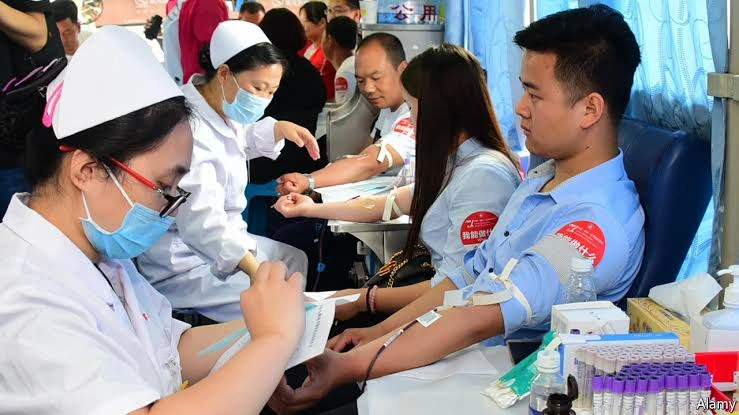
But China clearly cannot do that. The U.S. has certainly done that, and far more excessively. Even in China, the areas most active in plasma collection are predominantly impoverished regions. That is hardly a good thing—it shows that the driving force behind plasma collection remains economic.
The real question is whether these people have sufficient choice. The U.S. plasma industry has become an industrial chain not because people are forced by gangsters with violence, but because capitalist logic and propaganda have rationalized selling plasma for money. This not only economically limits Americans’ options but also constrains their most basic thinking and awareness. This is precisely why Americans appear to be the freest but are actually the least free.
In the past, many in China also regarded selling plasma as a quick and easy source of income. Such thinking has a damaging effect on social values. Even today, changing entrenched customs in some impoverished areas remains a challenge, so we must not allow this dangerous rationalization to spread.
This trend of over-rationalizing the industrialization of plasma is a typical example of so-called liberalism today: on the surface, you have countless choices, but in reality, both materially and ideologically, you are subjected to the strictest constraints. Moreover, China clearly does not need a plasma industry interest group—such a thing would be disastrous for public health policy.
Therefore, it is unlikely that China’s current approach to plasma collection will change significantly in the near future. Change could bring more problems. The current approach follows international norms and gradually advances plasma collection. After all, collection capacity is increasing, so we just make do—sounds a bit like giving up, but it’s understandable.
One policy question worth discussing is whether the surplus plasma from blood stations can be utilized. Each year, China’s blood stations produce considerable excess plasma, but because of their non-commercial nature, this plasma is wasted. (The fees charged for transfusions are not commercial—they cover testing, processing, and storage costs.)
If we could utilize this plasma, the shortage problem would improve somewhat. However, that would break the non-profit status of blood stations, which could be very dangerous and affect blood safety. Alternatively, we could establish a non-profit institution for plasma collection and processing, but such an institution would require enormous costs to sustain, which is not yet realistic.
In the end, we find it both amusing and frustrating that CNN’s “winology” propaganda was not entirely wrong this time: the U.S. can indeed use the plasma industry to “choke” China. After all, various plasma products are vital to modern medicine, so from a strategic security perspective, we do need to increase the domestic production rate of plasma products.
Frankly, I do not believe the U.S. has the ability to use plasma as a bargaining chip against China, since many products are processed through multiple multinational companies and it would be impractical to cut off exports to China. But we must adopt worst-case thinking—the U.S. has become increasingly illogical in recent years and may do completely irrational things, so preparation is necessary.
At such times, some hope technology can solve the problem. For instance, China has developed “rice plasma” (recombinant human serum albumin from rice), which is commendable technically, and CNN’s article mentioned it. Strictly speaking, this is not a substitute for plasma itself but uses bioengineering to replace human serum albumin—one specific plasma product. If commercialized, it would certainly be positive.

Albumin is one of the mainstream plasma products, with large usage, but it does not represent all plasma products. There are dozens of mainstream biologics extracted from plasma, and hundreds if including laboratory-grade. Given today’s bioengineering level, more substitutes will emerge in the future, but it is unlikely that most plasma products can be artificially replaced within a few decades.
This proves a simple principle: while technology is fundamentally important for social progress, in the short term it is often not a panacea. The social issues that need to be addressed must still be faced.
Ultimately, everything comes down to cost. The U.S. boasts that its plasma and blood products monopolize the global market—but at what cost? China has the capacity to rapidly increase plasma collection—but is the cost worth it? It seems that until decisive technological breakthroughs occur, the world will have to continue to “tough it out” with the American people, who will keep shedding their blood and tears.
Editor: zhangyixincq


NotChasing
My friend, “Plasma” doesn’t obviously mean “blood plasma,” in English. Plasma can mean other things, so it took me a few paragraphs to be sure this article was talking about blood.
Judith Bello
Near the beginning of the article you say say the number of people donating is a few dozen percent of the population, but if it is really 10 million, then it is .03%, not a few dozens of percent of the population who actually donate plasma. It is the mirror reflection of the 1% who have more money than the entire bottom 50%. If 4 million actually donate for a living (I can’t imagine having enough plasma to do that) then that is .01% of the population who make a living off donating blood plasma. These numbers are truly shocking. It puts us right up there with the Israelis who make money stealing organs from their victims.