



The term BRICS was originally coined by Northern financial institutions as an acronym to group emerging economies with robust growth performance for investment analysis. Yet the label later gained independent momentum, evolving into a formidable global force of major international significance today.
The Bandung Conference: Independence, Peace and Pragmatism
Politically and historically, the origin of the Global South can be traced back to the 1955 Bandung Conference. Initiated by five nations—India, Pakistan, Ceylon (now Sri Lanka), Myanmar and Indonesia—the conference invited fewer than 30 sovereign states as well as organizations engaged in independence movements without sovereign power. It marked the first major international conference convened entirely without Western great powers presiding over it.
Though the conference’s organizers generally followed non-socialist paths, China was still extended an invitation. For one thing, the sponsoring countries aimed to host a broadly representative assembly outside the imperialist bloc; as the most resolute Asian-African nation in the anti-imperialist and anti-colonial struggle, China was indispensable to this vision. For another, China represented a potential major economic partner, a prospect of vital importance to Global South countries seeking cooperative ties. This commitment to independence, peace and pragmatism laid critical groundwork for the conference’s resounding success.
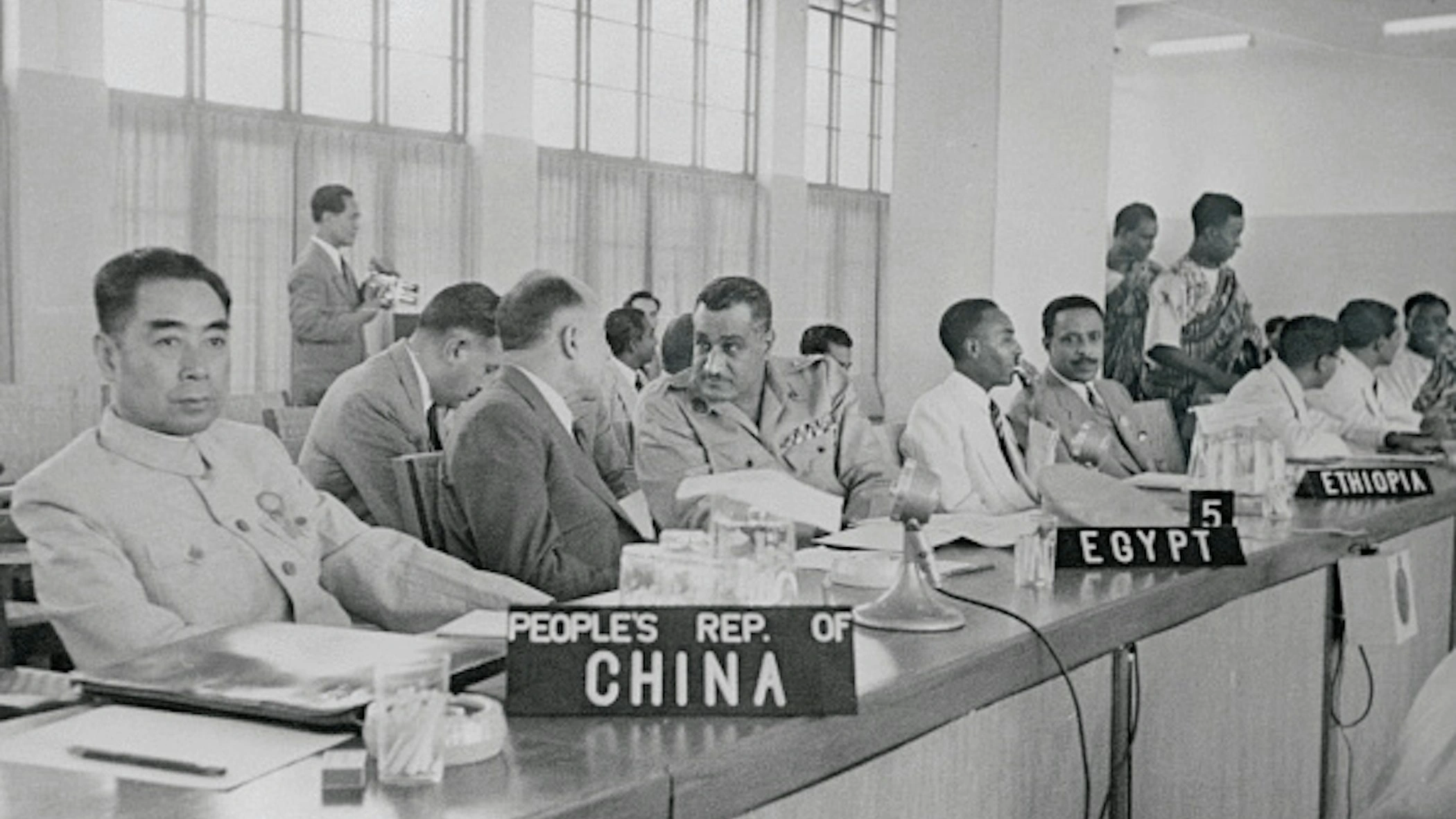
China’s participation entailed far more than diplomatic outreach, carrying profound political, economic and strategic calculations. The global capitalist system operates on a stable core-periphery structure; within this framework, neither the bourgeoisie nor the proletariat of individual Global South nation-states can meaningfully challenge the overall world system on their own. From China’s perspective, dismantling the rigid Northern dominance over the world order constitutes a major advance for global progressive causes. Creating space free from imperialist manipulation and aggression proves essential both for the development of national bourgeoisie and the growth of socialist forces. Chinese leaders stated at the time that the Bandung Conference reflected monumental global shifts: Asian and African nations must seize control of their own destinies, pursue equal and amicable cooperation with one another, enable Asian and African countries with differing social systems to coexist peacefully free from imperialist interference, and contribute to world peace and collaboration. Thus, the strategic visions underpinning the Global South, peace and development are deeply intertwined with the advancement of socialist forces and China’s conception of the future global landscape.
After the 1980s, collective momentum for the Global South stalled. The Bandung era brought generally sound economic growth and social progress across Asia, Africa and Latin America, yet many nations backtracked in the 1980s and 1990s. The turn of the new century, however, has witnessed a visible resurgence of the Global South, reversing trends entrenched by the rise of neoliberalism.
China has played an instrumental role in this revival. On one hand, sustained long-term Chinese economic growth fueled a supercycle in commodities, driving up prices for most bulk commodities from the late 1990s through the 2010s. This significantly improved terms of trade between primary commodities and manufactured goods, boosting foreign exchange earnings for Global South nations and laying foundations for many to renew their pursuit of autonomous development. On the other hand, China’s exploration of an independent development path offers invaluable practical and theoretical reference for Global South countries striving to advance self-determined development politically and ideologically.
The Rise of the Global South as a Response to Contemporary Capitalist Crises
The contemporary ascent of the Global South is directly correlated with systemic crises afflicting global capitalism. The widespread developmental aspirations across the Global South, alongside China’s advocacy for a community with a shared future for mankind, constitute a powerful response to deep-seated crises within contemporary capitalism, forming a foundational force for global progress and development—and representing a modern continuation of the Bandung Spirit.
That said, Global South states face substantial internal challenges requiring collective solutions. For instance, they must work to establish relatively rational intra-South economic division of labor, breaking free from the old structure trapping most nations in primary commodity exports. Remaking an unjust international order forged over centuries cannot be achieved overnight; it demands long-term strategic planning jointly devised by China and fellow Southern states. Furthermore, Southern nations must forge ahead amid new historical conditions, rejecting continued adherence to neoliberalism and proactively advancing endogenous industrialization.
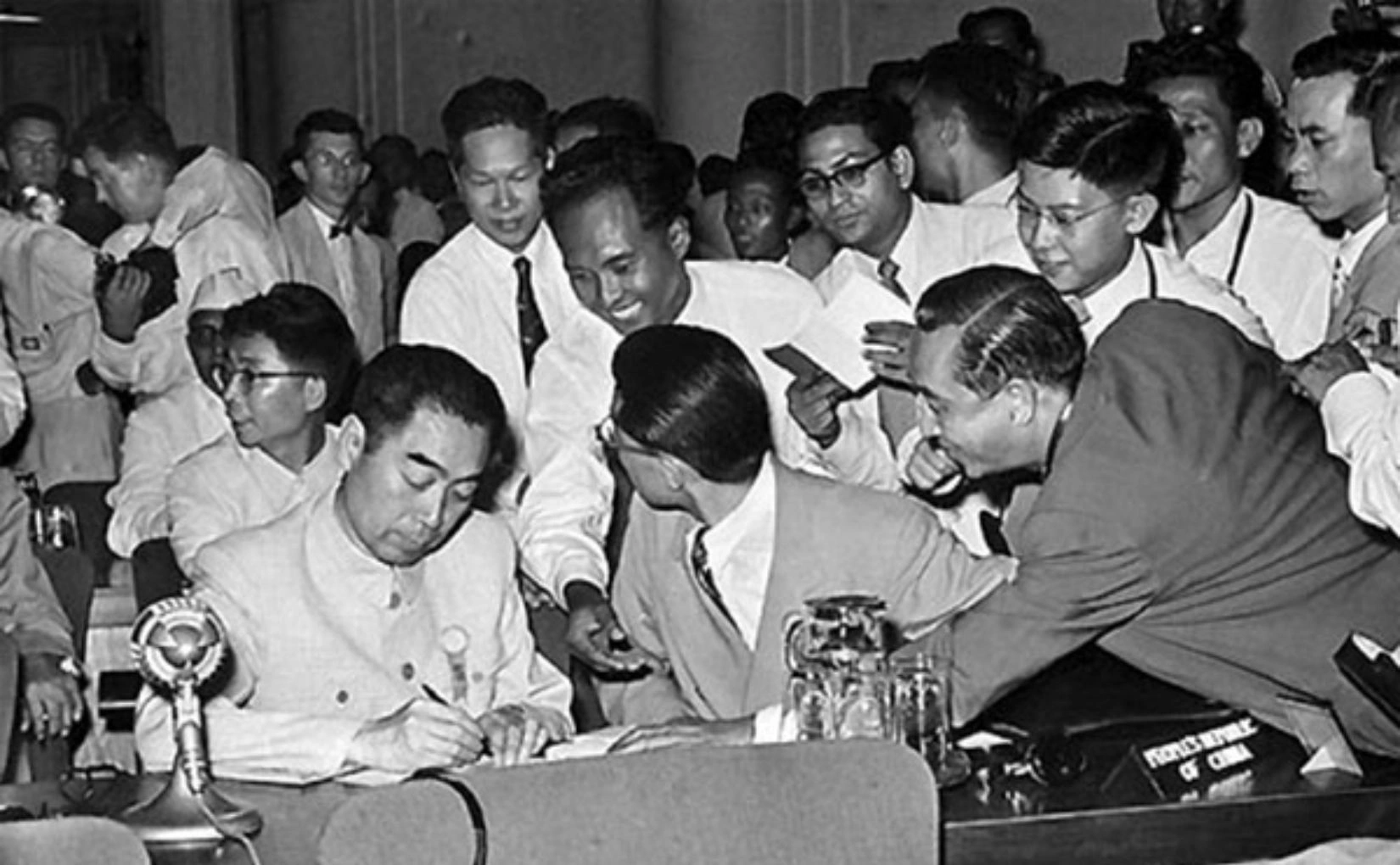
Beyond political and economic endeavors, deeper theoretical work is imperative. During the Bandung era, Global South intellectuals consciously pursued indigenous knowledge production and theoretical inquiry, yielding incisive critiques of imperialism and Eurocentrism. Regrettably, much of this original Southern scholarship and theoretical innovation became marginalized under the Western-dominated globalization discourse after the 1980s. Amid today’s Global South resurgence, intellectual communities in China and across the Global South can and should revive the great traditions of the Bandung era, collaborating to construct an independent knowledge system rooted in Global South perspectives.
Editor: zhangyixincq