



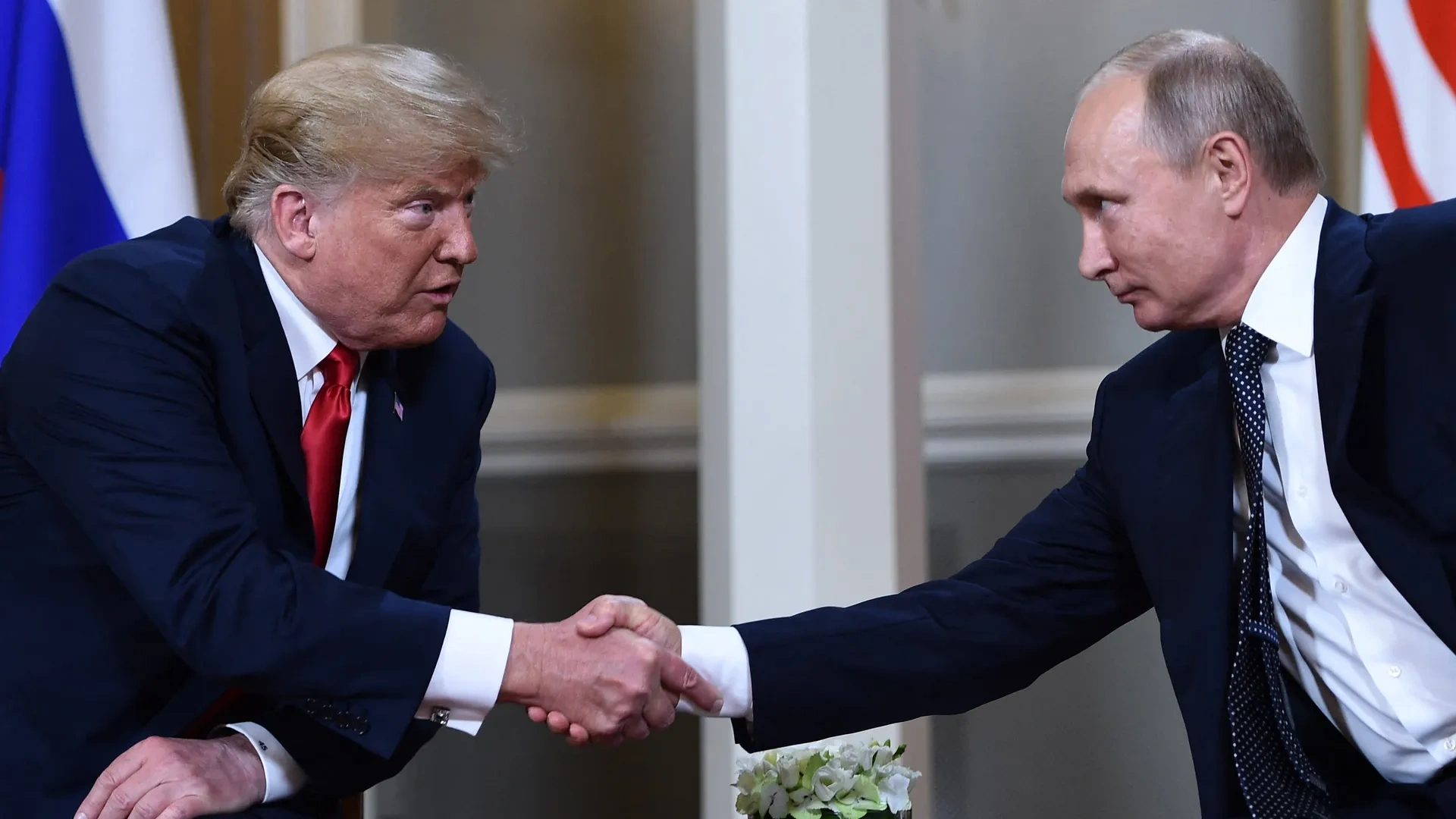
The China Academy: Just about a week ago, the Trump administration proposed a 28-point peace plan which included some of the most contentious points between Russia and Zelensky, for example, that Ukraine would concede even more land in the east to Russia and constitutionally promise never to join NATO.
About a week ago, this 28-point plan was reported, and today it was reported that the plan has been watered down to 19 points, leaving out the exact points of contention we currently face.
Is Trump making any progress in keeping peace or stopping the war in Ukraine?
Power Struggle in Russia-Ukraine Peace Talks
ShenYi: Before I go into this interview, I just did a quick scan of the news. It says that Ukraine claims to have reached some consensus or draft agreements with the United States on this plan.
Frankly speaking, it is difficult to say because if they want to turn this draft into reality, the United States as a broker must coordinate with Ukraine and the European Union on one side, and Russia on the other. All four parties need to sit down and launch dialogue. But so far, I haven’t seen any positive feedback from the Russian side. There’s no mission statement. Since the beginning, you mentioned that the United States made its versions—actually, I think there are at least three different versions.
The first version is the US version, this 28-point initiative draft. Many people believe it is a combination of Russia’s wish list and the United States’ wish list. Some points in the initial draft are directly translated from Russian into English, so the grammar structure is very odd to native English speakers.
The second version is from the European side, a 19-point plan that removed four of the most important elements from the first 28-point version. However, this European version was largely rejected by Senator Rubio. When asked by journalists, he said, “What kind of plan? I don’t know that.” Meaning, they do not consider it seriously.
The third version came from Ukraine. US media access websites have proven that the Ukrainian side released the first version of the 28-point plan, because it was not officially released by the US government—it was leaked. At the Halifax forums, a joint defense forum between the United States and Canada, some Republican senators openly said they dialogued with Rubio and confirmed that the plan was not produced by the US government; it was Russia’s wish list. Rubio later formally denied this, stating that the plan was not authorized by the US government.
The first draft may have been produced with special delegations from Putin’s side, working together for several weeks. Rubio may have been the last to know about this draft, though he would have been responsible for communicating it to Ukrainian and European counterparts.
Frankly, I don’t think Rubio would be fully satisfied with this draft, not only because he did not participate in its creation, but also due to his ideological preferences. Based on his understanding of Sino-Russian and US-Russia relations, he might prefer a more hawkish approach, believing the US can continue supporting Ukraine to weaken Russia internally.
This morning, I read an interesting report suggesting that these drafts may also relate to internal US political competition between Vice President Vance and Rubio, as they vie to succeed Trump in the 2028 elections. Vance prefers rapid withdrawal and potentially conceding Ukraine to Russia to improve US-Russia relations, while Rubio favors selective engagement to maintain US hegemony.
The real challenge is getting Russia to agree
On the Russian side, the challenge is that Russia has the advantage on the battlefield. Troops are moving forward steadily. Putin will demand what he wants, and if not given, he will take it by force. According to analyses of Russian hawkish insiders, Putin is not the extreme nationalist representative; he is moderate compared to the hardcore Russian nationalists. Therefore, Russia may not stop advancing unless it reaches Odessa, which could be an ideal stopping point for the special military operations in the north.
If the US wants to broker a ceasefire, it must apply battlefield pressure while presenting the ceasefire plan. Otherwise, Russia may perceive it as US surrender, and take its territorial gains first. Persuading Ukraine and the EU to accept a draft is relatively easier, but turning it into an actual ceasefire requires cooperation and agreement from Russia. So far, no positive signals have been seen.
The China Academy: In the Russia-Ukraine peace talks, Xi and Trump had a call. Chinese official releases said both leaders discussed the crisis in Ukraine. Do you think China has a role to play, or does Trump expect China to play a role?
ShenYi: It’s not the first time Trump has spoken with Xi Jinping about Ukraine, but it may be the first time Xi provided formal feedback in an official Chinese statement. It is quite symbolic, giving some limited space for imagination, and suggests that China may provide constructive or at least emotional signals, offering some emotional comfort to Trump.
This first, second, and third parts of the statement are cautious. China signals it does not intend to boycott or obstruct the plan. China wants peace and prefers a permanent ceasefire, not a temporary one. The attitude is cautious and objective, considering each side’s core interests and taking a realistic approach to solving issues, rather than pressuring only one side.
The China Academy: Another official statement mentions resolving the crisis from its root, potentially referring to NATO’s eastward expansion.
ShenYi: This reflects China’s consistent logic. For example, in the Six-Party Talks on North Korea, China always emphasized that DPRK’s security concerns must be addressed to resolve nuclear issues. This continuity applies to Russia, North Korea, the Middle East, and Palestine. One cannot simply blame one side; the approach must be objective, addressing historical reasons and deep-rooted causes to provide high-quality solutions respecting all nations’ interests.
China seeks real peace objectively and scientifically, rather than pursuing its interests under the pretense of peace—a fundamentally different approach.
Editor: Zhongxiaowen

