


In the year since taking over Seed, Wu Yonghui has focused on two main goals:
First, improving the capabilities of foundational models and increasing research efficiency to ensure delivery; second, fostering a research-driven culture — “doing first-class research and building a first-class AI research team.”
“He is both pragmatic and romantic,” said someone close to Wu Yonghui. “He feels like someone who grew up within the ByteDance system, rather than someone shaped by Google.”
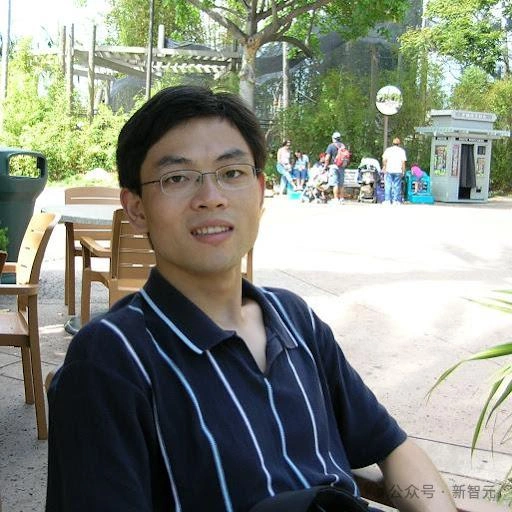 Wu Yonghui
Wu Yonghui earned his PhD in 2008 and joined Google, where he spent his first seven years as a software engineer working on core search ranking systems. He later transferred to Google Brain, focusing on applied AI research, helping drive the use of deep learning in machine translation and search ranking algorithms. In 2023, he became a Research Vice President at Google DeepMind, participating in the development and early catch-up phase of the Gemini large model.
Another person close to Wu said, “He has a very deep understanding of technology and can quickly judge which directions are likely to yield results.” Over the past year, Seed’s text-to-image and text-to-video models have ranked near the top globally on several benchmark leaderboards, while the Doubao mobile assistant model has become a focal point of industry attention.
In the most competitive and critical area — foundational models — Seed has iterated through four versions (including the upcoming Doubao 2.0), achieving significant improvements compared with previous generations and continuing to close the gap with leading overseas models. “But there is still a lot of catching up to do — technical debt accumulated over the past few years needs to be paid down,” said one Seed insider.
While pursuing the long-term goal of building a “first-class research team,” Wu Yonghui must also constantly balance short-term objectives.
Organizational Adjustments: Three Virtual Teams to Break Barriers
In January 2025, Seed formed a virtual team called Seed Edge, introducing a three-year evaluation mechanism to encourage core researchers to pursue more foundational, long-term AGI topics. Wu Yonghui personally participated in the formation of this team.
He then reassigned researchers to form a Focus team, breaking existing departmental boundaries and divisions of labor. This team is responsible for tackling key challenges in foundational models and developing areas that need improvement for the next model iteration. The remaining foundational model teams were reorganized as Base, covering engineering, data, evaluation, and related work, and focusing on developing the current generation of models.
In March of that year, after the then-head of the LLM team, Qiao Mu, was reported and suspended from work, the Pre-train, Post-train, and Horizon teams under LLM began reporting directly to Wu Yonghui.
According to two Seed insiders, Wu’s plan allows three generations of models to be developed in parallel, with personnel and research topics rotating among them and internal resources fully activated:
Results produced by Edge can be directly deployed downward; Long-term topics identified by Focus can be transferred into Edge;
And successful results can then feed back into improving the current generation of models.
To improve efficiency, Wu also pushed for internal transparency of data and code repositories, while maintaining external confidentiality. Internally, he described this as “addressing some problems reflected within the organization.”
Within ByteDance, Seed is established as an independent unit separate from revenue-generating departments and reports directly to group management, making it easier to avoid departmental politics. However, within Seed itself, multiple teams often work on similar research directions, and inter-team communication has historically been difficult.
Two former Seed researchers said that previously, Seed felt more like a collection of separate research groups than a unified research department. For example, if researchers from Group A wanted to view documents from Group B, they first needed approval from the document owner and then from the owner’s supervisor. “Sometimes even department heads couldn’t access all the information to mediate.”
Greater transparency improved efficiency but also introduced risks. It is understood that in the second half of 2025, Seed experienced at least two intern-related data leakage incidents. After that, internal documents were no longer required to be openly accessible.
Outside the foundational language model research direction, Seed largely retained its original organizational structure. Former Seed head Zhu Wenjia worked alongside Wu Yonghui for several months before transitioning to report to Wu and taking charge of large-model applications.
Multimodal interaction and world-model teams are led by Zhou Chang, who joined ByteDance from Alibaba in 2024. Their flagship result is the Doubao mobile assistant model. Over the past year, as visual multimodal generation lead Yang Jianchao took leave and visual foundational model research head Feng Jia resigned, Zhou Chang’s scope of management continued to expand, adding models such as Seedream (text-to-image) and Seedance (text-to-video).
The Infra (infrastructure) team is led by Xiang Liang. ByteDance’s AI Lab merged into Seed with its remaining three research directions — AI for Science, Robotics, and Responsible AI — with Li Hang reporting to Wu Yonghui.
Over the past year, Seed’s overall size has remained at around 1,500 people. Expansion has slowed compared with the previous two years, and the team has almost stopped hiring mid- to senior-level technical managers from outside. Instead, Seed has placed greater emphasis on recruiting fresh graduates and promoting younger talent. It is understood that a PhD graduate from Tsinghua University in 2024 now reports simultaneously to Zhou Chang and Wu Yonghui.
Results: Fixing the Wheels While Driving
The upcoming Doubao 2.0 model is the most significant outcome of Wu Yonghui’s first year leading Seed. It is a Gemini-like multimodal model with one trillion parameters, making it the largest model ever trained since Seed’s founding.
After Wu’s arrival, many Seed researchers clearly felt an increase in meeting frequency. Teams that previously met once every three months now meet monthly, while core teams meet roughly every two weeks. ByteDance insiders mentioned that in the cafeteria, Wu Yonghui is often seen carrying his tray to sit across from researchers, chatting about progress while eating.
After each research team presentation, Wu typically asks a few brief questions — usually three. “He doesn’t directly provide solutions, but instead guides people to think about more fundamental issues,” said one Seed researcher.
Multiple Seed insiders said that the model encountered infrastructure-level challenges during training. Their analysis suggests that during the intense catch-up of the past two years, Seed relatively neglected foundational capability building. As a result, when scaling parameters during Doubao 2.0 training, instability emerged and progress was once stalled.
“It’s like building a house — if the foundation isn’t solid, adding more bricks on top will inevitably cause problems,” said one researcher.
OpenAI’s head of RL Infrastructure, Wong Ka-yi, said on a podcast that every model team’s infrastructure has bugs. At its core, competition among model companies comes down to how fast their infrastructure teams fix bugs. This determines how many ideas can be validated per unit of time — while ideas themselves can be solved by increasing talent density. OpenAI began restructuring its three-year-old infrastructure system last year to address accumulated technical debt.
Over the past year, Alibaba and Tencent have both increased their emphasis on infrastructure. Alibaba’s Qwen team began building an internal Infra team in mid-2024, work that had previously relied largely on Alibaba Cloud’s PAI platform. Tencent announced at the end of last year the establishment of an AI Infra Department and a Data Computing Platform Department, both directly overseen by large-model head Yao Shunyu.
For Seed, however, restructuring infrastructure is even more difficult. Seed’s Infra team numbers in the hundreds and supports dozens of models simultaneously. Senior management believes it is the strongest in China. “Rebuilding it would require enormous investment and carry significant trust costs,” said one Seed insider. The only option is to “fix the wheels while driving.”
After problems emerged during Doubao 2.0 training, multiple teams eventually worked together over three months, addressing issues in model architecture and training data, ensuring the model could be launched before the Lunar New Year.
The Ongoing Challenge
Seed must simultaneously strive to be a first-class research organization and deliver short-term results.
“Innovation requires a certain level of ambiguity and disorder, while competition demands discipline and execution,” one Seed researcher said. How to balance these two goals remains a long-term management challenge that Wu Yonghui must continue to solve.
Editor: Zhongxiaowen