

Kimi (Moonshot AI) Becomes China’s Fastest Decacorn as 20-Day Revenue Surpasses Entire 2025 Total
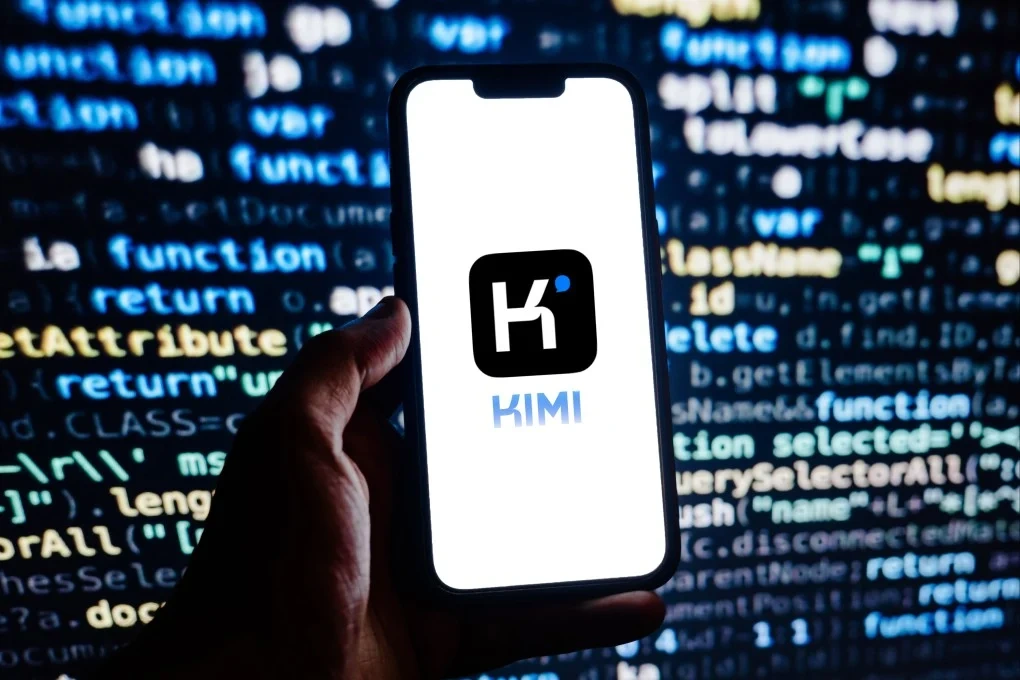
Kimi, the flagship large language model from Beijing-based startup Moonshot AI, has become the fastest Chinese company ever to reach decacorn status—a valuation exceeding $10 billion—after closing a series of funding rounds totaling more than $1.2 billion. The Paper reported exclusively on February 23 that the milestone was achieved in roughly two years from Moonshot AI’s $300 million seed round, representing a more than 30-fold increase in valuation. By comparison, ByteDance took over four years and Pinduoduo over three years to clear the same threshold.
The funding news comes alongside an extraordinary revenue disclosure. Multiple sources told The Paper that in the fewer than 20 days since the launch of its K2.5 foundation model, Kimi’s cumulative revenue has already exceeded its total revenue for the entire calendar year 2025. The surge is being driven by a sharp increase in both global paid subscribers and API token usage, with overseas revenue now surpassing domestic revenue for the first time. Kimi K2.5 currently ranks among the top models on OpenRouter, the world’s largest LLM API aggregation platform.
Sources: The Paper
Alibaba’s Qwen Claims 32% Market Share as Enterprise LLM Market Consolidates Toward Leaders
Alibaba Group’s Qwen large language model has captured 32.1% of China’s enterprise LLM market, according to a new report from Frost & Sullivan published on February 24. The figure represents a near-doubling from 17.7% in the first half of 2025, giving Qwen a commanding lead in the rapidly consolidating sector. The report, titled “China GenAI Market Insights: Enterprise LLM Usage Panorama Research, 2025H2,” found that daily enterprise LLM token consumption reached 37 trillion in the second half of 2025, up 263% from the first half.
The market is increasingly concentrated among the top three players. In the second half of 2025, Qwen (32.1%), ByteDance’s Doubao (21.3%), and DeepSeek (18.4%) together accounted for more than 70% of total enterprise token consumption, up from less than 50% in the first half. Alibaba’s growth rate of 14.4 percentage points was the highest among the three. The report notes that large language models are becoming essential tools for enterprises seeking competitive advantage in China’s intensifying market environment.
Sources: Caijing
Chinese Models Dominate OpenRouter Rankings as Coding and Agent Capabilities Become Key Battlegrounds
Chinese large language models captured 61% of total token volume on OpenRouter, the world’s largest LLM API aggregation platform, according to weekly data released on February 24. The top three models by token usage were all Chinese: MiniMax M2.5 (2.45 trillion tokens), Kimi K2.5 (1.21 trillion), and Zhipu’s GLM-5 (780 billion), with DeepSeek V3.2 rounding out the top five.
The data reveals a strategic shift in the LLM competitive landscape, with coding capabilities and agent automation emerging as decisive factors. All three leading Chinese models have focused on enhancing programming performance and agent workflow automation. MiniMax, which launched M2.5 on February 13 as the world’s first production-grade model natively designed for agent scenarios, saw its token usage surge 197% week-over-week. The model achieved 3.07 trillion tokens in its first seven days post-launch. Pricing remains a significant competitive advantage: MiniMax M2.5 and GLM-5 charge $0.30 per million input tokens, compared to $5.00 for Claude Opus 4.6—roughly 16.7 times more expensive.
Sources: STAR Daily
Spring Festival Stress Test Validates China’s AI Infrastructure as Consumer Adoption Accelerates
China’s AI infrastructure passed a major stress test during the Spring Festival holiday period, the country’s peak consumption season, with major technology companies reporting record-breaking usage metrics. According to CNR, ByteDance’s Doubao handled a peak load of 63.3 billion tokens per minute on New Year’s Eve without service interruption, while Alibaba’s “Qwen Help Me” feature processed nearly 200 million orders during the holiday period.
The performance validated the maturity of China’s AI infrastructure at scale. What was once considered a baseline requirement for high-profile events—system stability under extreme load—has become the starting point for widespread consumer adoption. The report notes that the competitive landscape extends beyond the largest players, with MiniMax launching its M2.5-highspeed version on February 15 and Moonshot AI reportedly initiating a new funding round at a $10-12 billion valuation during the holiday period. Both Zhipu and MiniMax saw their Hong Kong-listed shares surge in the first trading sessions after the holiday, with Zhipu reaching a market capitalization exceeding $40 billion before a subsequent correction.
Sources: CNR
Zhipu and MiniMax Shares Plunge Nearly $13 Billion Combined as GLM-5 Compute Crunch Triggers Correction
Hong Kong-listed AI companies Zhipu and MiniMax suffered sharp declines on February 23, with their combined market capitalization falling by nearly HK$100 billion (approximately $12.8 billion). Zhipu dropped 22.76% while MiniMax fell 13.35%, reversing gains that had pushed both companies above $40 billion in market value just days earlier.
The selloff followed a public apology from Zhipu on February 21 regarding the rollout of its GLM-5 model. The company acknowledged three mistakes: insufficient transparency about access rules, a slow gray-release schedule, and poorly designed upgrade mechanisms for existing users. The apology came after GLM-5’s well-received launch triggered a surge in demand that overwhelmed the company’s compute infrastructure, forcing it to throttle access and implement a 30% price increase on its GLM Coding Plan on February 12. The incident highlights the operational challenges facing AI model providers as they scale from research projects to commercial services.
Sources: Yicai Global
Tencent’s Yuanbao Falls Out of Top 30 as ByteDance and Alibaba Products Dominate App Store Rankings
Tencent’s AI assistant Yuanbao has fallen out of the top 30 on Apple’s App Store free app rankings in China, according to data from February 23. The decline comes as ByteDance’s suite of AI products and Alibaba’s “Three Musketeers” portfolio have captured dominant positions on the leaderboard, reflecting the intensifying competition for consumer AI adoption in the world’s largest smartphone market.
The shift in rankings underscores the rapid pace of change in China’s consumer AI landscape, where early movers and well-resourced incumbents are leveraging distribution advantages to capture user attention. Tencent, despite its massive ecosystem of WeChat and QQ, has faced challenges in translating its social platform dominance into AI assistant market share.
Sources: Sina Finance
Editor: Charriot Zhai