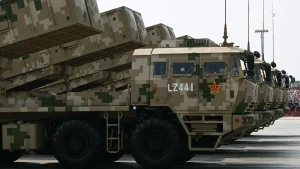



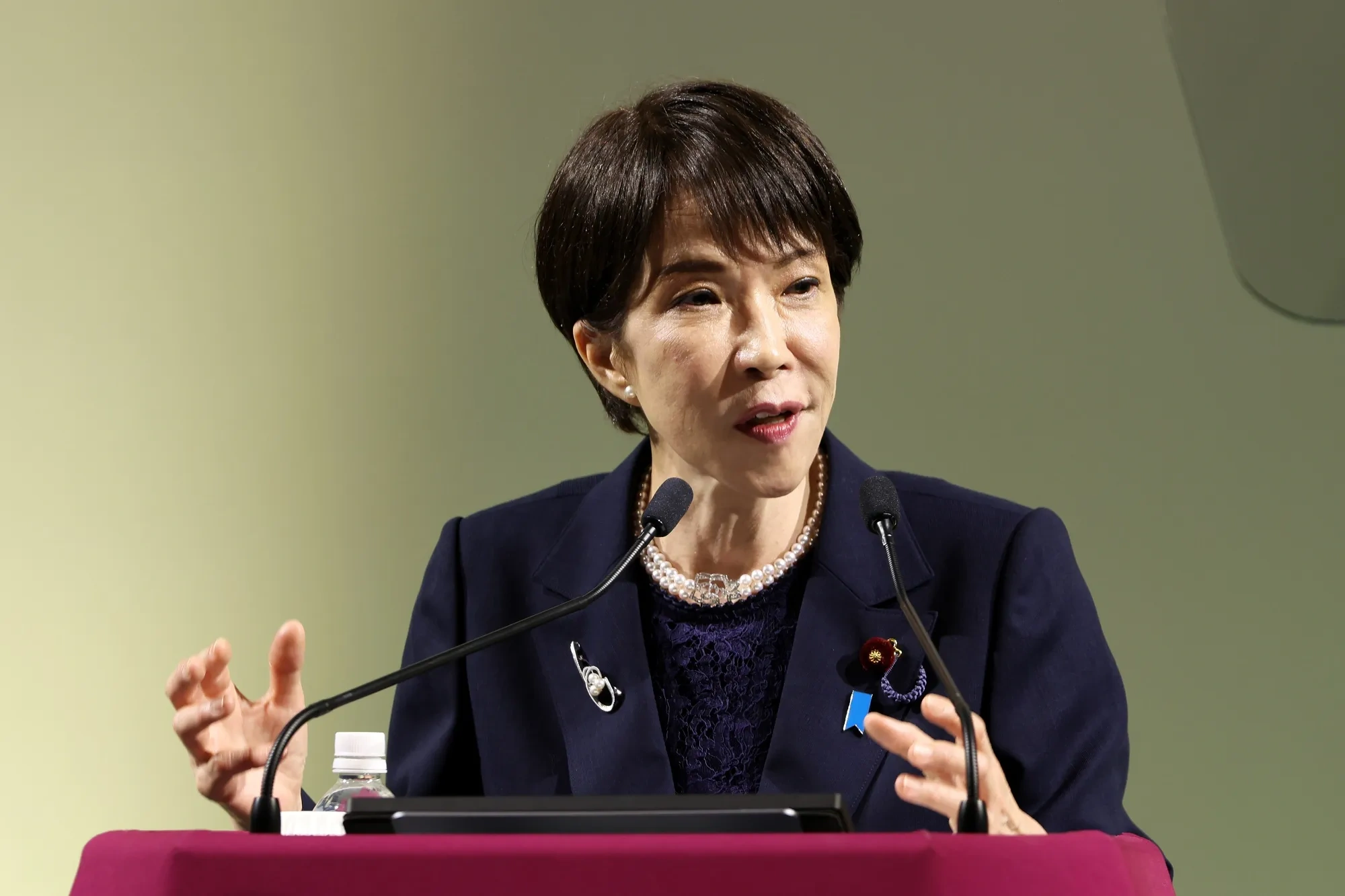
On April 21, the Japanese Cabinet formally revised the Three Principles on Defense Equipment Transfer, officially opening the door for this defeated nation of World War II to sell warships, missiles, and other lethal weapons abroad. On the very same day, incumbent Prime Minister Takashima Sanae sent ritual offerings to the Yasukuni Shrine.
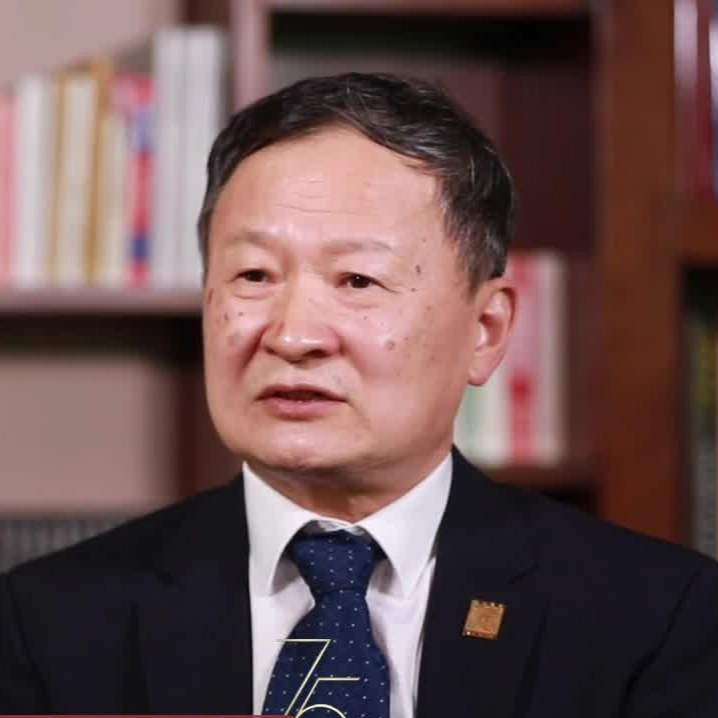
In response, Professor Wang Xiangsui, a prominent Chinese strategist and Deputy Secretary-General of the CITIC Reform and Development Research Foundation, observed that the symbolism of the timing could not be clearer: these are not isolated policy adjustments, but manifestations of a fundamental shift in Japan’s national direction. Countries that have supported, indulged, or tacitly permitted Japan’s so-called “normalization” should recognize what Japan is actually pursuing: the systematic dismantling of its postwar pacifist self-restraints, which, for a nation defeated in World War II, amounts to claiming supra-normal state privileges.
I. What Should a “Normal” Japan Look Like Under the Postwar International Order?
Professor Wang notes that immediately after Japan’s defeat in World War II, the Allied powers originally proposed a radical plan: to strip Japan entirely of its industrial capacity and reduce it to an agrarian state incapable of waging war. However, with the outbreak of the Korean War, MacArthur’s occupation authority suddenly needed logistical support from the Korean Peninsula, and Japan’s military-industrial base was preserved. The original plan was never fully carried out.
That said, Japan itself also drew lessons from its defeat. Through the postwar “Peace Constitution,” the Three Principles on Arms Exports, and the Three Non-Nuclear Principles, Japan built an entire institutional framework of self-imposed restraint. The underlying logic was clear: as a nation with a history of aggression, Japan voluntarily limited its own capacity for violence. In 1991, when the United States pressured Japan to contribute troops to the Gulf War, Japan invoked its Peace Constitution and confined its role to logistical support and financial contributions.
Regrettably, this self-discipline has been abandoned by the Takaichi government, and the discourse driving this transformation deserves close scrutiny.
Japan’s political right wing has long claimed that Japan is “not a normal country,” arguing that “postwar constraints are unjust shackles imposed by history.” Their narrative runs as follows: if, according to Western political philosophy, the essence of the state is a “legitimate monopoly on violence,” then a state prohibited from exercising violence is by definition “abnormal.” Therefore, Japan must reclaim the right to wage war in order to become a “normal country.”
But Professor Wang points out that this narrative conceals a fundamental truth: Japan is not a victimized “abnormal” state. Quite the contrary, it enjoys supra-normal privileges. For example, according to The Washington Post, Japan stores nearly 10 tons of plutonium domestically across various storage facilities and nuclear reactors, enough to produce over 1,000 nuclear weapons. Analysis by the U.S. think tank CSIS has also concluded that Japan possesses advanced nuclear infrastructure and could achieve nuclear capability with little more than “a turn of the screwdriver.”
The double standard on nuclear issues between Iran and Japan is hard to miss. Iran possesses far less nuclear material than Japan, yet it has been subjected to severe international sanctions, military strikes, and unrelenting diplomatic pressure. Japan, by contrast, has faced no sanctions, nor has Washington demanded that Tokyo transfer its fissile materials to a third country.
Thus, when a defeated nation of World War II already possesses near-nuclear capability without facing sanctions or military consequences, yet still insists it is “not a normal country,” the international community should recognize that what it actually enjoys are the privileges of a “supra-normal country.”
II. What Exactly Is Japan’s “Normalization” Normalizing?
Japan’s current agenda encompasses at least three layers of so-called “normalization,” each more alarming than the last.
First, the normalization of military-industrial expansion. The revised principles now permit, in principle, the sale of any weapons, including warships, missiles, and fighter jets, to countries that pledge to uphold the UN Charter. Beyond this, Japan is jointly developing a next-generation stealth fighter with the United Kingdom and Italy, which will propel Japan’s military industry into a new phase of expansion in both scale and technological sophistication.
Second, the normalization of war as a policy instrument. Japan’s legal framework has introduced the concept of an “existential crisis situation” that can trigger the right to collective self-defense, circumventing the constitutional prohibition on waging war. The scope of this concept is being continuously expanded; it now extends to scenarios where Japan’s homeland has not been directly attacked. The Takaichi government has even sought to bring a potential conflict over China’s Taiwan island under this umbrella. Clearly, this amounts to constructing a legal framework for preemptive strikes or overseas military operations, the pursuit of a legitimized right to inflict harm, wrapped in the language of “existential threat.”
Third, the normalization of militarism itself. When the sitting Prime Minister of Japan pays tribute at a shrine that enshrines convicted war criminals from World War II, this is not a private act of mourning, it is a political declaration. Although many Western nations dismiss China’s objections as “overreaction,” consider the hypothetical: What if the German Chancellor laid a wreath at Hitler’s Wolf’s Lair? What if the Italian Prime Minister made an official visit to Mussolini’s former residence? How would an ordinary French or British citizen react? Across Asia and Oceania, a Japanese prime minister’s visit to the Yasukuni Shrine is a cause for alarm, and the signal it sends is unmistakable, yet the Western world has largely chosen to look the other way.
III. The United States Should Be Especially Vigilant
U.S. forces stationed in Japan were supposed to play a key role in upholding the postwar international order and preventing the resurgence of militarism. But an uncomfortable truth is that Washington has been the primary enabler of this very resurgence.
The United States was one of the chief architects of the postwar international order, whose core principle, enshrined in the UN Charter, is the prohibition of the use of force to settle disputes. Yet since 1945, Washington itself has repeatedly violated this principle, from Korea and Vietnam to Iraq. Each war has eroded the normative framework that was supposed to constrain nations like Japan. After all, when the world’s most powerful “democracy” treats war as a routine instrument of policy, it becomes very difficult to tell other nations that this rule is sacrosanct.
Moreover, Washington’s intention to use Japan’s military revival as a counterweight to China is an open secret. But this logic suffers from a historical blind spot: the victims of Japanese aggression were never limited to China and the Korean Peninsula. American POWs endured the Bataan Death March. British, Australian, and Dutch soldiers were brutalized in Japanese prison camps across Southeast Asia. Pearl Harbor remains one of the most devastating attacks ever carried out on American soil. If Washington is truly convinced that a rearmed Japan, one whose leader makes annual pilgrimages to Yasukuni, will always remain a reliable and obedient ally, then the cost of that assumption failing the test of history could be extraordinarily high.
IV. When Japan’s Self-Restraint Fails, International Law Must Step In
In truth, today’s Japanese voters should recognize that Japan’s postwar pacifism was not a punishment but a historically advantageous choice, one that earned Japan decades of prosperity, international respect, and the trust of its neighbors. What the Takaichi government is now discarding is not a set of “shackles” but the very privilege that allowed Japan, within the existing framework of international law, to be tacitly accepted as an “exceptional state.”
Should the international community simply stand by and watch? In fact, the UN Charter contains “enemy state clauses” specifically directed at the aggressor nations of World War II. The Potsdam Declaration and other foundational postwar documents imposed legally binding obligations on Japan’s military capabilities under international law. These legal instruments were designed precisely for the scenario of a former aggressor state attempting to rebuild its war-making capacity.
China has already taken concrete steps in this direction, including restricting the export of dual-use materials that could fuel Japan’s military industry. But first, the responsibility to uphold the authority of international law and to impose external discipline should not fall on China alone. All members of the United Nations, especially the United States and Russia, which also paid an enormous price in World War II, share a collective responsibility to preserve the most fundamental safeguards of the postwar order.
Second, the Potsdam Declaration states that “the Allied Powers shall occupy designated points in Japanese territory to achieve their fundamental objectives”, and China is among those Allied Powers. As a foundational document defining the postwar international order, the Declaration retains its legal force, and the People’s Republic of China never signed the 1952 Treaty of San Francisco.
Therefore, if Japan continues to abandon self-restraint, what awaits it will clearly not be compromise from the architects of the postwar order, but rather a broader and more profound external discipline grounded in international law.
Editor: Charriot Zhai