

On August 15, Japan’s surrender anniversary, Sanae Takaichi did not personally visit Yasukuni Shrine but instead paid homage to war criminals through a “remote worship” ceremony, and her remarks that day showed no trace of remorse. In response, China’s reaction was unusually direct, labeling Yasukuni Shrine a “war criminal shrine” and characterizing Japan’s current trajectory as “the resurgence of a new-type militarism.” The question, however, is that many people do not fully understand what “new-type militarism” means, nor exactly what Japan has done to provoke such a warning from China.
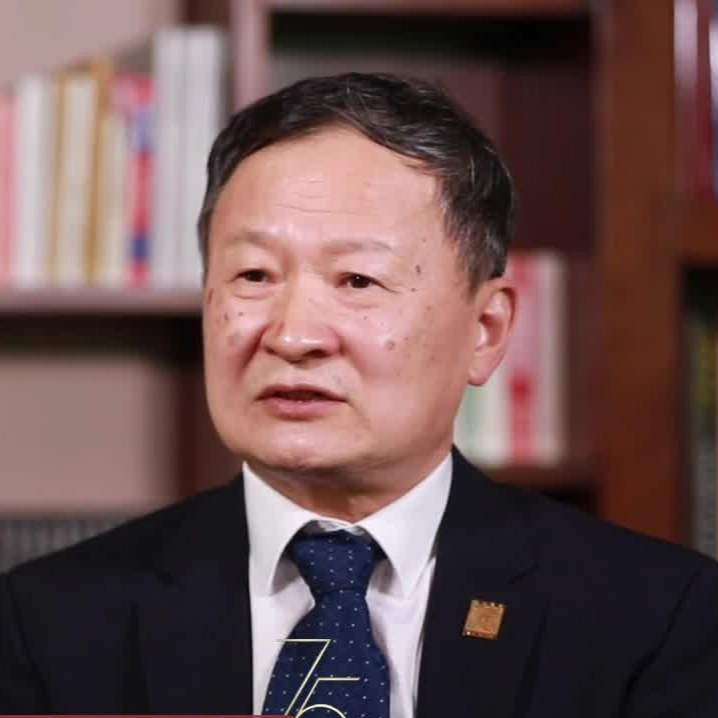
Chinese strategist Professor Wang Xiangsui, Deputy Secretary-General of the CITIC Foundation for Reform and Development Studies, points out that so-called “new-type militarism” differs fundamentally from the pre-WWII model where the military dominated the cabinet. Instead, it is Japan’s entire state apparatus operating in a “civil-military integrated” manner, relying on ever-expanding military power to advance expansionism. China’s accusation is by no means unfounded—from the political declaration that “a Taiwan emergency is a Japanese emergency,” to military intervention through actively arming the Philippines, to nuclear material stockpiles far exceeding civilian needs and step-by-step probing via politicians’ pro-nuclear remarks—Japan has spent three decades patiently and steadfastly walking back down that old road.
I. What Is “New” About “New-Type Militarism”?
To understand “new-type militarism,” one must first review “old militarism.”
The period of Japanese militarism from the Meiji Restoration to the end of WWII can be called old militarism. Its core feature was the military’s supremacy over the cabinet; the Meiji Constitution separated supreme command from state governance, so the military was accountable only to the emperor, not to the government. Under this institutional framework, Japan engaged in frenzied military expansion and colonial aggression.
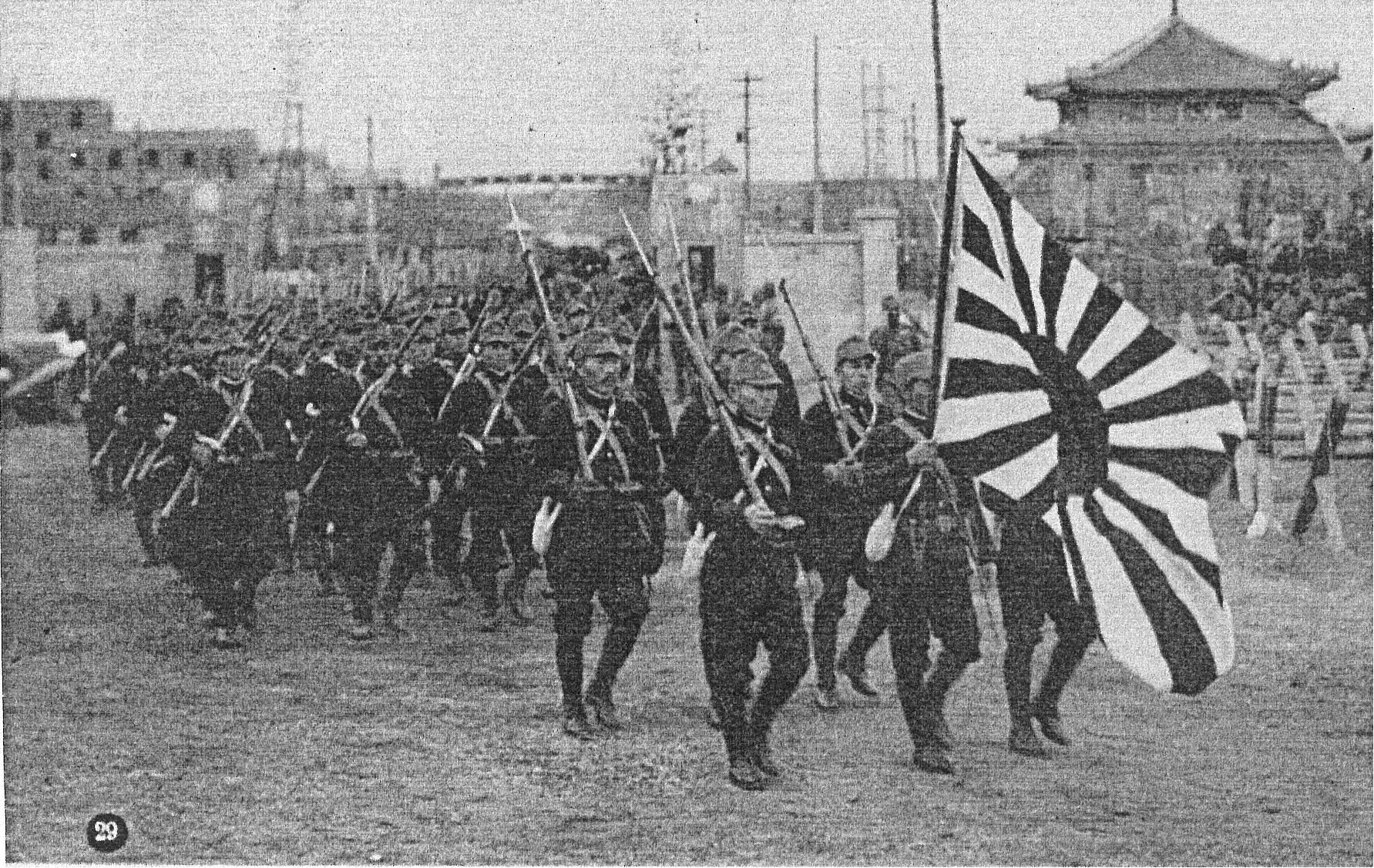
Today’s Japan, however, is taking a path that is essentially different from old militarism. Old militarism meant military officers directly steering national policy. New militarism is no longer a model where “those in uniform call the shots.” Rather, it is Japan’s entire state apparatus operating in a “civil-military integrated” manner, leveraging expanding military power alongside economic, political, and cultural national strengths to push outward expansionism. It is harder to detect and harder to define than old militarism, but its direction is the same—using military force to alter the regional order.
II. Thirty Years of Gradualism: How Was the Peace Constitution Hollowed Out?
Japan did not embark on this path overnight; it took three decades, advancing step by step through legislation and constitutional reinterpretation. In 1992, Japan passed the Law Concerning Cooperation for United Nations Peacekeeping Operations, for the first time allowing the Self-Defense Forces (SDF) to be dispatched overseas. This was the first postwar legal authorization for the SDF to go abroad. After the September 11 attacks in 2001, Japan promptly enacted the Anti-Terrorism Special Measures Law, permitting the SDF to provide rear-area support to U.S. forces in wartime environments.
In 2003, Japan passed the Iraq Special Measures Law, dispatching the SDF to a combat zone for the first time. In 2014, the Abe administration adopted a constitutional reinterpretation to lift the ban on collective self-defense, fundamentally breaching Article 9 of the Peace Constitution. From then on, Japan could send troops proactively when an ally was attacked. The 2015 security legislation provided a complete legal framework for exercising the “right of self-defense.” The 2022 National Security Strategy explicitly stated that Japan would acquire counterstrike capabilities, which in effect implies that Japan can launch preemptive military strikes against overseas bases—a critical milestone marking Japan’s attempt to use military force to sustain its expansion. At this point, Japan’s professed “exclusive defense” policy has become history.
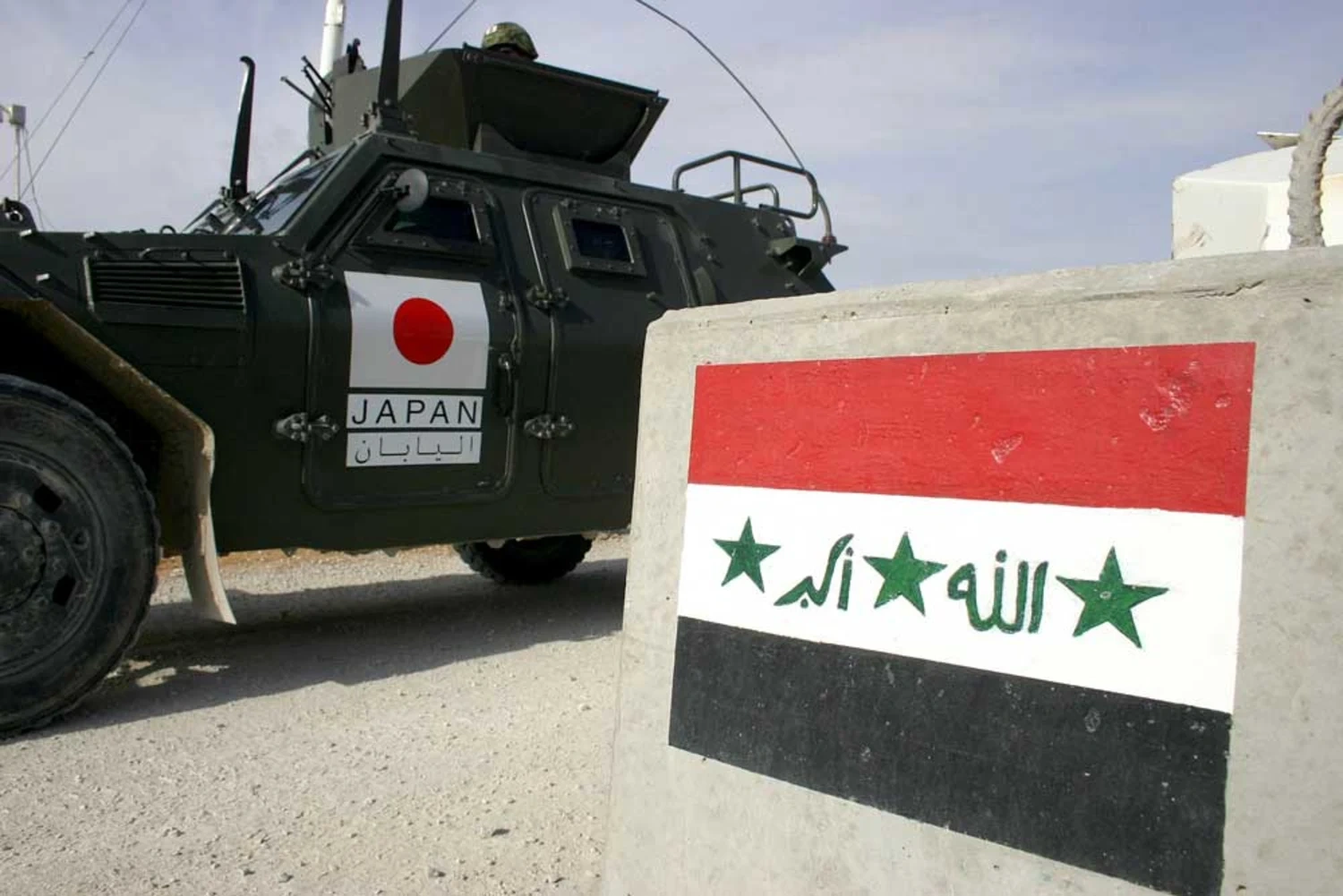
Over these three decades, each step was modest and packaged as “defense necessity,” but cumulatively, Article 9 of the Peace Constitution has been hollowed out. Meanwhile, Japan’s defense budget has risen year after year, now reaching 8 trillion yen, making it the world’s third-largest defense spender after the U.S. and China. Tomahawk cruise missiles, long-range hypersonic missiles, and other stand-off attack weapons are being rapidly deployed. A country that claims it “does not prepare for war” is systematically completing all-round preparations for warfighting capability.
III. From Political Declarations to Military Substance: Japan Is Crossing Red Lines
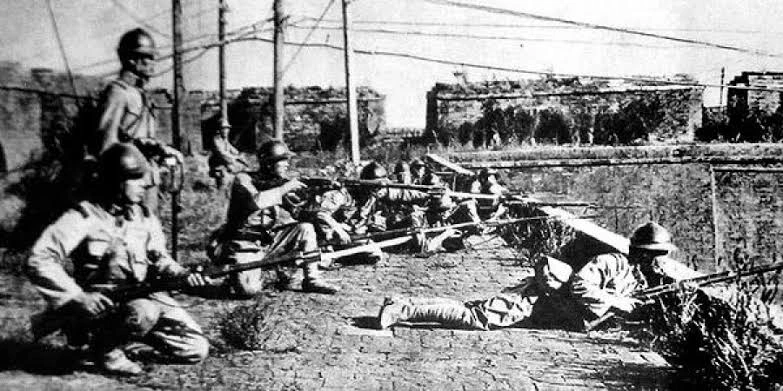
With the legal framework and military budget in place, Japan has begun projecting these capabilities into regional affairs. Sanae Takaichi explicitly declared that “a Taiwan emergency is a Japanese emergency.” Placed within Japan’s historical logic, this statement is extremely dangerous. Every previous instance of Japanese external expansion was justified by “emergencies” in neighboring areas: the First Sino-Japanese War used “Korean emergency” as a pretext to send troops to Korea, but was actually aimed at China; the Mukden Incident used “Manchurian emergency” to occupy Northeast China; the Marco Polo Bridge Incident used “North China emergency” to launch full-scale war against China. Taiwan was a Japanese colony from 1895 to 1945. When a defeated nation declares it will intervene in what it calls an “emergency” concerning its former colony, the historical implications are self-evident. In terms of action, Japan, fully aware of the China-Philippines disputes in the South China Sea, has proactively gifted vessels and weapons to the Philippines—a deliberate military intervention, using its own military-industrial base to make provocative moves.
Taiwan and the South China Sea are merely external projections of Japan’s ambitions. More alarming are its internal nuclear preparations. Japan domestically stores about 8.66 tons of separated plutonium, with another 35 tons held in the UK and France, totaling approximately 44 tons. Eight kilograms of weapons-grade plutonium can produce one nuclear warhead, meaning that the plutonium stored in Japan alone is theoretically sufficient to manufacture about 1,000 warheads. Japan’s current plutonium stockpile far exceeds civilian needs, so defining it as a “strategic reserve” is entirely justified. Moreover, Japan’s “Fugaku” supercomputer can perform high-precision hydrodynamic simulations of nuclear explosions, enabling weapon design without actual explosive testing. In other words, all prerequisites for Japan to acquire nuclear weapons—material and technical—are already in place. Sanae Takaichi’s aides have openly declared that “Japan should possess nuclear weapons.” In the past, senior officials who made such remarks would have resigned, but this time no one has been held accountable. Within the Liberal Democratic Party, about 35% of legislators support nuclear armament, while among Nippon Ishin no Kai, the figure is as high as 91% in favor of nuclear sharing. Japan’s previous political taboos are being loosened.
Aggressive political declarations, interventionist actions, capability stockpiling, and the loosening of political constraints—these four layers overlap to reveal a complete picture: Japan is systematically walking back down that old road. This is no longer a scattering of right-wing rhetoric, but a comprehensive return with strategic planning, legislative propulsion, and resource support. Takaichi’s “remote worship” on August 15 was not an isolated event; it is merely another marker along this thirty-year journey. The question before everyone now is: How much longer will the world pretend not to see a Japan that is systematically returning to the path of militarism?
Editor: zhangyixincq