


Editor’s Note
Why do we feel a deep sense of powerlessness and deprivation within the system even as we enjoy the efficiency and convenience brought by technology? Why is it that the harder we work, the more marginalized we become? As companies evolve into self-sustaining “systems,” how do processes, performance metrics, and discourse reshape human behavior and hollow out meaning? The author of Big Tech Disease: From Individual Predicament to Organizational Performance, Xi Fanjun, has over a decade of experience in Big Tech. With the keen insight of a sociologist and the nuanced eye of an “insider observer,” he conducts a systematic cross-sectional analysis of “Big Tech Disease.”
For ordinary workers, what matters is not waiting for the market to price them, nor obsessively pursuing “irreplaceability.” What truly needs to be figured out is that the value of a human being should never be determined by “whether capital needs you.” Seeing clearly how your own position is set up and how it is being accelerated is itself the beginning of sober awareness. Only by knowing your situation can you begin to talk about change.
I
According to reports, NVIDIA CEO Jensen Huang dismissed the claim that “AI leads to layoffs” in an interview, arguing that layoffs had already begun at the end of 2022, when AI was not yet mature.
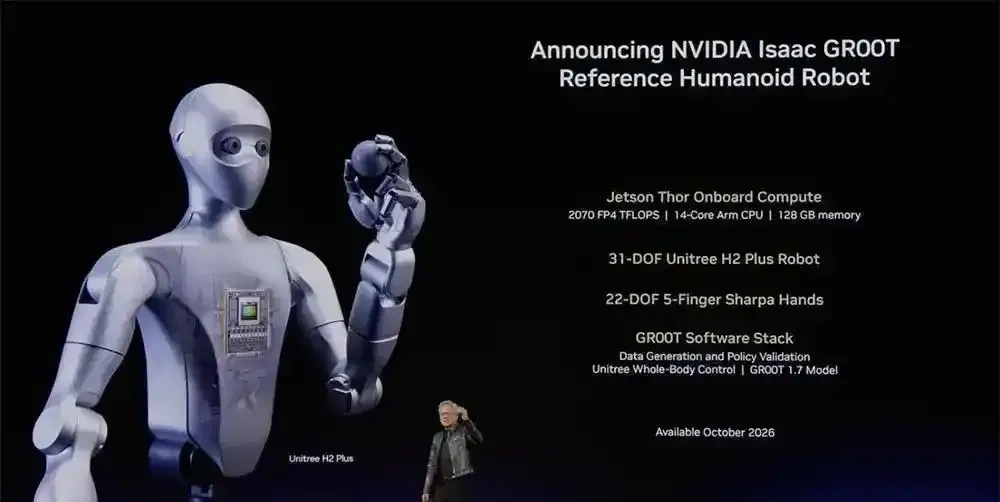
What he said is a fact. But he avoided another fact: after AI coding capabilities matured, a new round of layoffs has already begun. It is true that companies are laying off staff to protect profits under economic pressure; it is also true that AI has become more usable and the same work can now be done with fewer people. These two things are superimposing on each other.
So the real question is not “Will AI replace you?” but—
Is it AI that replaces you, or is it that capital no longer needs you?
You spend ten minutes writing an email and thirty minutes adjusting the cc list—because you know who is cc’d and who is not defines your position within the organization even more than the content of the email itself.
You use AI tools to finish three days’ worth of work in one day. Your boss doesn’t give you a raise, but instead asks: “Since you’re so efficient, can you take on another project?”
You discover that this year your company’s profits have hit a record high. The capital expenditure figure in the financial report is staggering, but colleagues around you are quietly disappearing—some are “optimized,” some are “graduated,” and some entire teams are turned into outsourced labor.
These are not isolated fragments. They point to the same monumental shift that is taking place: capital is decoupling from “people.”
II
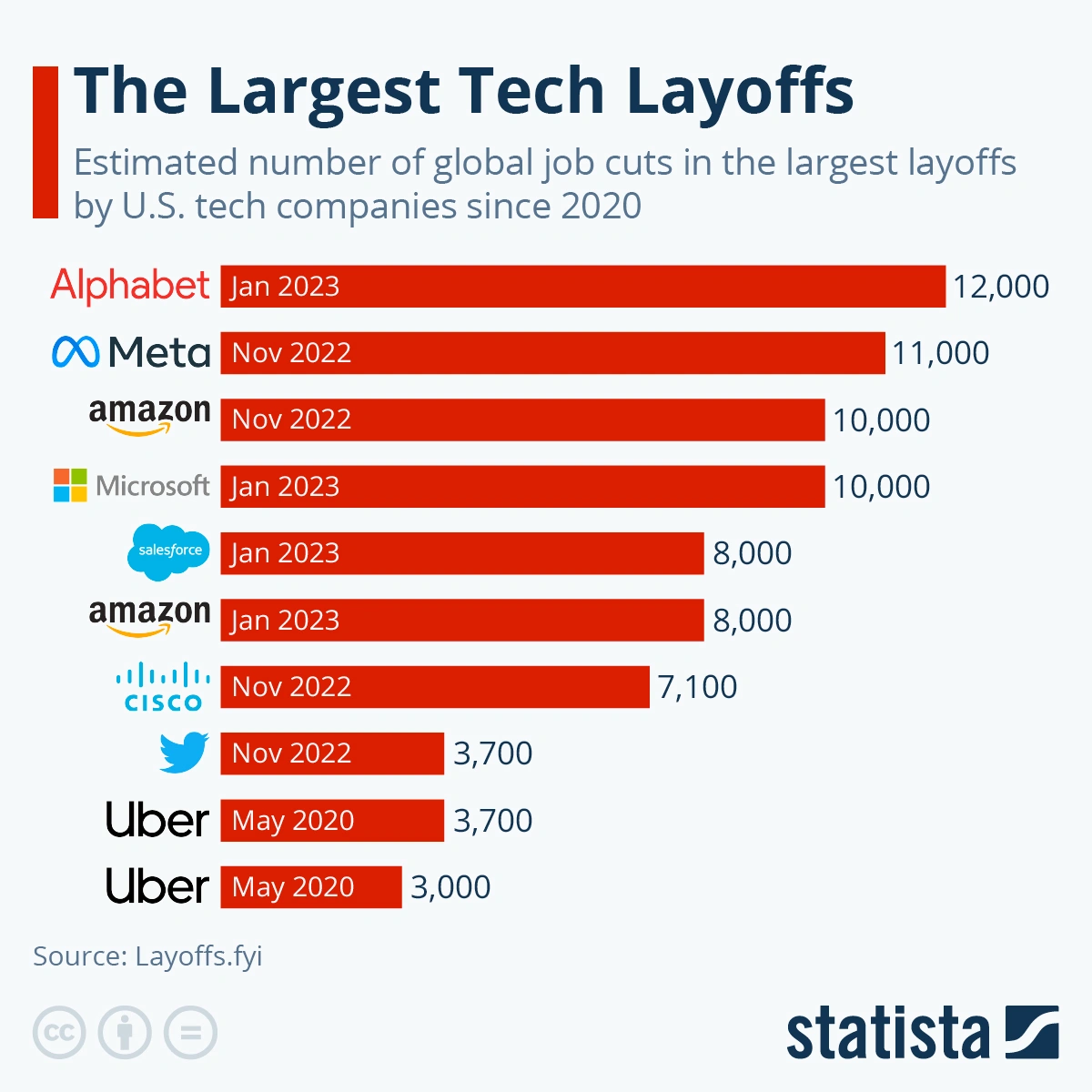
Over the past six months, after AI coding capabilities matured, American tech companies began a new wave of layoffs that has already affected over a hundred thousand people. In China, rumors of layoffs at NetEase’s outsourcing teams and Meituan keep circulating—the numbers circulating are not entirely accurate, but it is true that some departments have started laying off staff, and some companies that haven’t laid off employees have started cutting their outsourced teams.
An even more noteworthy set of data: capital expenditure for several of the largest software and internet companies in both China and the U.S. has mostly surpassed their R&D expenses. In other words, the money poured into computing infrastructure has already exceeded the money spent on keeping R&D teams.
NVIDIA’s chip orders are booked years in advance, while a resume is archived by the recruiting system in a matter of seconds. Data centers are breaking ground, yet young people nearby still cannot find decent jobs.
A more striking change: the age at which people begin to worry about unemployment has dropped from 35 to 25.
III
These data point to a deeper question: why can your job be replaced by AI?
The answer is not because AI is too powerful.
It is because your job was designed from the very beginning to require no judgment.
In Big Tech Disease, recently published by SDX Joint Publishing, the author dismantles this mechanism into four progressive layers, each one squeezing human judgment out of the job—
The first layer is process alienation. Processes were originally meant to increase efficiency. But in a highly uncertain environment, processes become alienated. The larger the organization, the harder it is to predict risks; the upper management dares not make decisions, and the lower ranks dare not take responsibility. Processes become a tool for “leaving a trail”—not to get things done, but to prove “I did not make a mistake.” You spend ten minutes writing the email content and thirty minutes adjusting the cc list. This is not affectation; it is the revelation of power. What you do shifts from “solving problems” to “leaving a trail.” And when it comes to leaving a trail, AI does it more standardized than you.
The second layer is performative governance. When processes replace judgment, the performance begins. You realize that what truly determines your fate is not your output, but your “presence.” The ones who get promoted are not the most capable, but the least dangerous. The author, Xi Fanjun, calls this the “safe person” selection mechanism—obedient, standardized, requiring no judgment. Judgment is in fact dangerous, because judgment implies that you might disagree with your superior’s judgment. So what you learn is to “say the right things” rather than “say useful things.” Your energy shifts from “getting things done” to “making the higher-ups notice me.” And performing presence—AI can help you with that, too.
The third layer is the language prison. The organization has its own language: weekly reports, debriefings, OKRs, North Star metrics. This language is not just a tool, but a disciplining mechanism. You begin to explain your own exhaustion in the organization’s language, and justify your own grievances with the organization’s logic. You will write words like “align,” “empower,” “granularity” in your weekly report, even if you don’t really know what these words mean. The philosopher Byung-Chul Han calls this “self-exploitation”—you voluntarily do 996, you voluntarily engage in involution, you are your own tyrant. When you lose your own language, you also lose the starting point of judgment.
The fourth layer is systemic backlash. When scale exceeds a critical point, the organization changes from “people + goals + collaboration” to “system + processes + interfaces.” The organization no longer evaluates “what you have done,” only “whether you are in the structure.” Xi Fanjun calls this “power modeling”: “which node you are” replaces “what you can do.” You are not a person; you are a node. You are not doing work; you are “holding a position.” Time is no longer capital, but depreciation. Seniority becomes a risk label instead.
Now, AI is accelerating the operation of this mechanism.
AI can help you write weekly reports, create PPTs, generate meeting minutes—it perfectly fits the needs of performative work. You use AI to finish three days’ worth of work in one day, but the organization does not reduce your workload because of that; it only gives you more performative tasks. The higher the efficiency, the more rampant the performance.
And what is even more crucial: when AI can complete most process-oriented work, the organization no longer needs so many people to keep the processes running. Those people who “look busy” are turning into people who “look superfluous.”

IV
A cruel truth: most people are not directly replaced by AI; they are “degraded.”
But this degradation did not start with AI.
In Big Tech Disease, Xi Fanjun describes a series of phenomena concerning “liquid people”: role drift, dissolving boundaries, blurred identities, constantly reshaped by the organization. Your rank changes, your reporting line changes, your business direction changes, but what you do remains “process compliance”—you are merely a human-shaped plug-in inserted into a process node.
He also describes a type of person called “semi-transparent people”: full-time presenters, part-time workers. Discourse replaces action, and PPTs replace output. These people are not lazy; they have been disciplined by the organization into this state—the more you perform, the safer you are; the more you actually do things, the more exposed you become.
Earlier, Alvesson and Spicer proposed a concept called “functional stupidity”: organizations encourage you to shut down critical thinking and focus on narrow execution. Short-term efficiency rises, but long-term wisdom is depleted. You become more and more adept at completing assigned tasks, yet more and more lose the ability to judge whether those tasks should be done at all.
Therefore, when AI appears, it is not creating degradation; it is accelerating a process of degradation that was already underway.
In the past, the expansion of capital had to be accomplished by employing people. If a factory wanted to expand capacity, it had to hire more workers; if a bank wanted to do more business, it had to hire more tellers. Ordinary people could share in economic growth not because of charity, but because of capital’s dependence on labor.
Now, this dependence is being bypassed. Capital has found new ways to expand: chips, models, data centers, algorithmic agents…
This explains three seemingly contradictory phenomena: company profits are at record highs, yet layoffs are still happening; capital expenditure in the industry is exploding, but new employment is not growing in the same proportion; young people’s educational credentials are higher than ever, but the price the market offers them is lower and lower.
And when it lands on specific individuals, the degradation looks like this:
You are still working, but the parts of the work that are truly priceable, cumulative, and capable of fostering growth have been sucked out. You become a person who assists the machine—responsible for inputting prompts, checking the output, and cleaning up the mess when the machine screws up.
Labor has not disappeared; it is being degraded.
Moreover, this phenomenon does not only happen in Big Tech. When the logic of capital shifts from “expansion through employment” to “technological substitution,” “Big Tech Disease” becomes “Organizational Disease”—state-owned enterprises, public institutions, small and medium-sized businesses, all organizations that rely on process operation will face the same problem.
All white-collar workers, all “beasts of burden,” are in the same boat.
V
What can AI not replace?
Not skills. Skills can be learned, copied, and modeled. After AI becomes widespread, the gap at the execution level will be rapidly compressed. More and more people will be able to write a little, do a little, speak a little, and it will all look decent.
What truly creates distance is not who is better at invoking tools, but who has a greater capacity to judge the quality of the tool’s output.
Xi Fanjun says in the book that in the system of modern organizations, judgment is labeled as dangerous precisely because judgment implies that you might disagree with your superior’s judgment. Organizations fear judgment, so they design positions that require no judgment. But judgment is precisely the most irreplaceable quality of human beings.
Judgment is not “knowing the answer,” but “knowing what question is worth asking.” AI can give you a hundred proposals, but it does not know which one is worth putting forward. It does not know, in this specific context, what is truly important.
Judgment encompasses several capacities that are difficult for AI to replicate—
Aesthetic sense. The “aesthetic” here does not mean “looking good or bad,” but a deeper power of discernment. Can you tell that a piece of text, though fluent, lacks spiritual tension? Can you judge that an opinion, though lively, has no grip on reality? Can you distinguish the very fine but crucial line between “seemingly real” and “real”? Xi Fanjun calls this a “sense of measure”: efficiency can be outsourced, judgment cannot; expression can be polished, taste cannot be power-leveled.
Perceptiveness. Perceptiveness determines whether you have the ability to genuinely engage with the world, whether you have a way to identify what matters and distinguish performance from fact within lived experience. People lacking perceptiveness will become especially reliant on the “smooth, complete, frictionless” language generated by technology, because this kind of language is too safe, too effortless. But judgments that carry weight often do not grow out of this overly polished language; they are slowly honed from facing reality over the long term, dealing with complexity, and enduring uncertainty.
Sense of rhythm. In an environment full of voices shouting “hurry up and move,” the person who can first think the problem through becomes scarcer. When everyone is eager to declare their stance, the person who can first identify the true variables gains more capability. What Big Tech companies most often lack is not people willing to work overtime, nor people who charge ahead, but those who, under high pressure, still retain judgment, a sense of proportion, and stability. Capacity is first of all judgment—knowing where the crux of the problem lies, knowing what matters deserve speed, and what matters will go wrong if rushed.
Sense of proportion. Knowing where you have truly grown and where you have merely been packaged. Knowing what you genuinely understand and what is only temporarily borrowed. Efficiency can be outsourced, judgment cannot. Structures can be generated, but substance can only grow slowly from within. AI can lift a person very high, but it cannot grow substance for them.
How to retain a little judgment within the structure?
Separate the organization’s language from the language of reality. You can write beautiful reports, but keep a simple description in your heart: what is this thing actually doing, what problem has it actually solved, what has it actually damaged. Do not let the organization’s language occupy your way of thinking, or you will lose your judgment.
Do less performative work, and do more work that truly requires judgment. Even if the organization does not reward you, the market will reward you. Because the market will ultimately re-price what kind of labor deserves pay and what kind of labor merely “looks busy.”
This era will not pause and wait for us to adapt. Capital will continue to reinforce itself along its old track—seeking cheaper alternatives to labor, breaking tasks into smaller units to hand over to machines, writing “efficiency” into financial reports, writing “streamlining” into strategy. Xi Fanjun says in the book that once a system develops inertia, it will not self-correct; it will only self-replicate. The stronger the technology, the more hollow the organization; the more intelligent the system, the more concentrated the power.
What we truly should do is not to pretend that we can go back to the past, but to reclaim our own measure in this already changed reality—we can participate in the structure without being defined by it; we can use the system without being replaced by it.

VI
This article has merely sketched an outline. If you want to understand this mechanism more systematically—how processes become alienated, how performance arises, how the organization locks itself in, why middle management becomes a “loyalty hostage”—you may read Big Tech Disease: From Individual Predicament to Organizational Performance.
The author, Xi Fanjun, spent over ten years in a Big Tech company, experiencing both the spotlight and the margins. He is not denouncing Big Tech; he is dissecting it: why does an organization become like this? Why does everyone complain yet no one can change anything? Why does “efficiency” keep rising while people become more and more exhausted?
There is more worth reading in the book:
The middle-management dilemma: Middle managers are not a power center, but loyalty hostages. Caught between high-level strategy and frontline execution, they display loyalty upward and delete personnel downward. Xi Fanjun uses Hannah Arendt’s “banality of evil” to explain: the system gives ordinary people the excuse that they are “just following orders,” allowing them to complete the harm with a clear conscience.
The logic of involution: Why is involution so hard to break? Because involution is not an individual choice, but a rational choice. In an organization with high political density, not engaging in involution is the real risk. Professionalism is not a talisman, but a point of exposure.
AI substitution: Why can your job be replaced by AI? Because this job was designed from the very beginning to require no judgment. A job disciplined by processes, a job that speaks in the organization’s language, was originally designed for humanoid robots; now it is simply being handed over to real machines.
Individual paths out: When organizational performance becomes the norm, what can individuals do? The author does not offer a standard answer, but he helps you understand what you have experienced—understanding itself is the prerequisite for loosening the grip.
We may no longer be able to return to the era when simply working hard guaranteed a share of growth. But what may be more worth asking is: when economic growth no longer needs so many people to participate, how do we prove that we are not just an outdated factor of production?
The answer lies not in technology, nor in capital. The answer lies in that ancient, clumsy thing that cannot be replicated at the push of a button. This is perhaps the greatest revelation Big Tech Disease offers us:
We cannot leave, but we can learn to live more like human beings within it. This article is a review of Big Tech Disease. It points out that many jobs were, from the moment they were created, designed as fixed links requiring no personal judgment. Employees simply follow the process; there is no need to think too much, and indeed they are not encouraged to think too much. After AI technology matures, this mechanism runs even more smoothly, and labor itself is progressively “degraded” into mechanical operation. Behind this lies not a problem of technology, but a problem of how technology is used. Marx pointed out long ago: machines themselves can lighten labor, but under the logic of capital, they often intensify it; machines were meant to be helpers of humans, but in reality they often render humans more passive. The key is that capital pursues stable, replaceable, low-cost operators, not thinking laborers with their own minds. AI precisely fulfills this demand.
Editor: zhangyixincq