



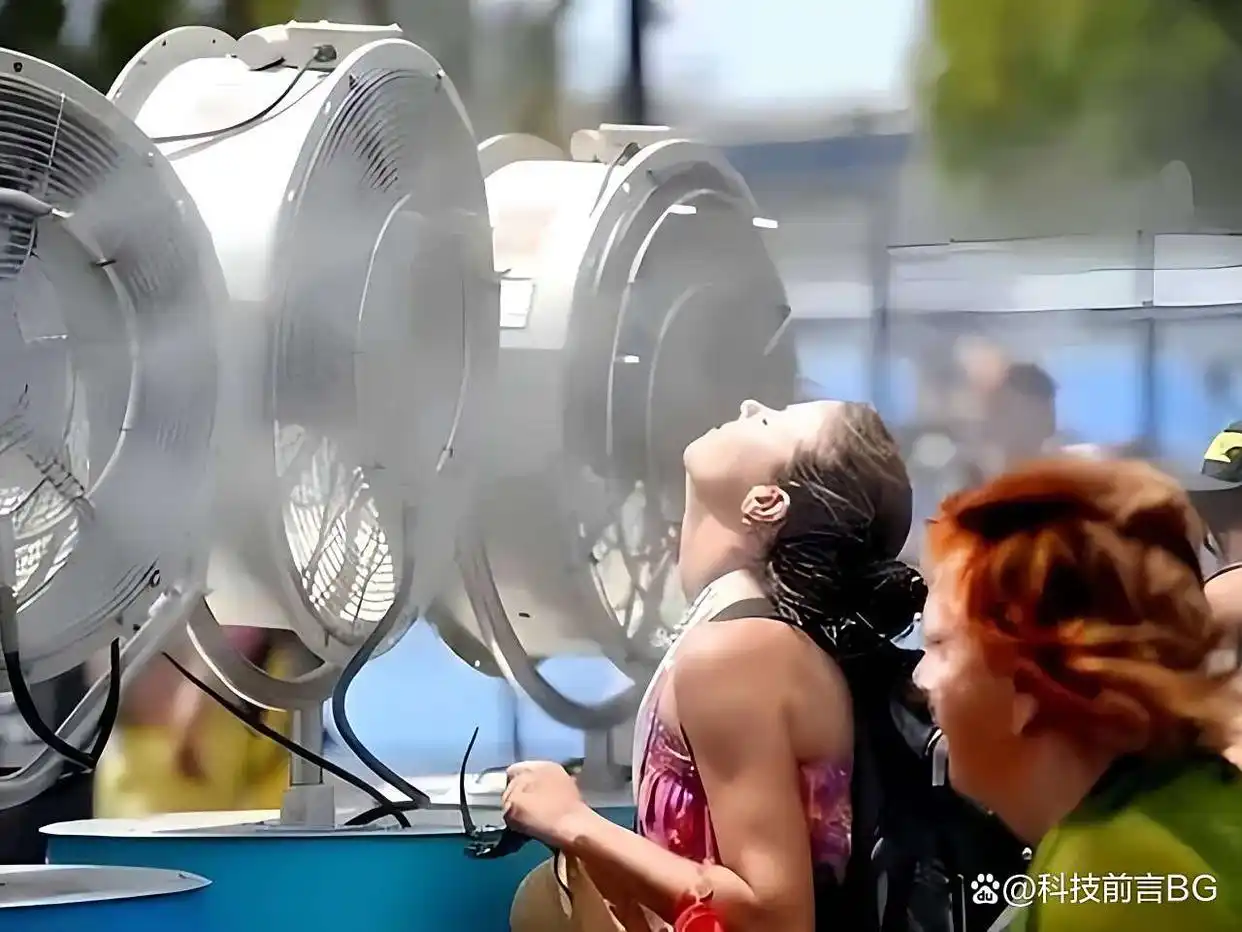
Since the start of the summer of 2026, the European continent has been engulfed in an extreme heat wave. While the Chinese public is no stranger to hot weather, the number of heat-related casualties has left many in China flabbergasted. They can hardly wrap their heads around the fact that Europe, one of the most economically developed regions in the world, would struggle with a lack of air conditioners. As a result, a heated discussion has emerged among Chinese scholars and across the Chinese media. Here are some of the main arguments that have emerged from the debate.
I. Institutional Shackles: High Costs and Rigid Administrative Approvals
Under the pressure of extreme heat, why don’t Europeans simply install air conditioners? International relations commentator Chu Yin attributes the core reasons to Europe’s internal institutional shackles of “policy-driven costs” and “administrative sclerosis.” The widespread adoption of air conditioning faces three physical and economic obstacles. First, escalating environmental taxes and fees: In Europe, because refrigeration equipment contains fluorinated gases, installing an air conditioner often requires paying an additional environmental tax of €50 to €100. At the same time, electricity prices are bundled with hefty carbon taxes and renewable energy surcharges, driving European electricity rates to two to three times those in China. This institutional design traps ordinary households in a financial dilemma where they can afford to install an air conditioner but cannot afford to run it.
Second, cumbersome administrative approvals: Europe has a large stock of old buildings and a high proportion of renters. Drilling a hole in the wall to install an outdoor unit first requires obtaining the landlord’s consent and then submitting a lengthy application to the municipal government for approval. Strict urban management and historic building preservation regulations physically block the possibility of efficient cooling. Third, politicians shifting responsibility: When facing public discontent, European politicians often deliberately evade the cooling costs inflated by their own policies and instead unswervingly direct public opinion toward the macro-issue of “global warming” and the greenhouse effect. This approach is, in essence, an institutional form of blame-shifting.
An editorial in the 21st Century Business Herald further pointed out that an even deeper obstacle lies in the power system. Europe’s grid infrastructure struggles to cope with surging electricity demand. The International Energy Agency predicts that the number of air conditioning units in the EU will increase to 275 million by 2050, posing an even more severe test for the grid. The microcosm of the air conditioner is enough to glimpse the developmental difficulties brought about by Europe’s aging infrastructure and lengthy approval processes.
II. The Alienation of Social Governance: “Culture War” and Political Tearing
Associate Professor Hu Chunchun, Director of the Institute of European Studies at Shanghai International Studies University, has profoundly analyzed how the “air conditioning issue” has evolved into an absurd ideological civil war from the perspective of socio-political ecology. Taking France as an example, whether or not to install air conditioning has transcended the realms of technology and people’s livelihoods, generalizing into a clash of different values.
Left-wing political forces portray the air conditioner as an “environmental culprit” that increases carbon emissions and exacerbates the urban heat island effect, even labeling it negatively in a cultural context as “not elegant enough, not environmentally friendly enough,” while advocating traditional passive summer strategies such as using shutters and planting greenery. Far-right parties, on the other hand, align with grassroots public opinion, shaping the air conditioner into a practical tool to protect ordinary people, schools, and hospitals, thereby attacking the left-wing and the current government for “ignoring people’s livelihoods and enforcing ideological taboos.”
Hu Chunchun points out that the affluent have better means to escape the heat, while low-income groups, immigrants, and outdoor workers are directly exposed to the scorching temperatures. This divergence is continuously widening social divisions. Heatwaves will not subside because of ideological debates. Europe’s political sphere’s inability to form a consensus around “heatwave governance” reflects a serious degeneration in pragmatic governance capacity. From riots triggered by pension reforms to the “Yellow Vest” movement, issues such as immigration, public security, and fiscal austerity continue to tear at French society. The high-temperature event is merely a “catalyst” for the concentrated eruption of these long-standing contradictions. He further notes that concepts such as “de-risking,” “economic security,” and “technological sovereignty” are also limiting the possibility of France resolving problems through normal international cooperation channels, including cooperation with China.
III. Decline in Competitiveness: A New Phase for Chinese Manufacturing Going Global
From a macroeconomic and geostrategic perspective, this small “air conditioning dilemma” is actually the tip of the iceberg of Europe’s overall declining competitiveness. The radical pursuit of carbon neutrality under the “European Green Deal”, in the absence of sufficient supporting industries, has translated into heavy high-energy-cost burdens on households and businesses. Meanwhile, Europe’s local supply capacity is insufficient, and its installation service system is rigid. In contrast, Chinese air conditioning manufacturers (such as Midea and Haier), leveraging their complete industrial chains, quickly launched “portable split air conditioners” adapted to Europe’s old buildings. Chinese-made air conditioning products have seen “explosive growth” in the European market. Data from the General Administration of Customs shows that in the first half of 2026, China’s air conditioner exports to the EU reached $3.76 billion, a year-on-year increase of 43.2%, setting a record high for the same period. Among them, Midea’s PortaSplit portable split air conditioner, specially designed for Europe, requires no wall drilling or professional installation and can be self-assembled by users at home, precisely addressing market pain points. The refrigerant charge of this product is precisely controlled at 1.99 kilograms, cleverly falling under the EU’s simplified regulatory category; its nighttime operating noise is as low as 35 decibels, just meeting German standards.
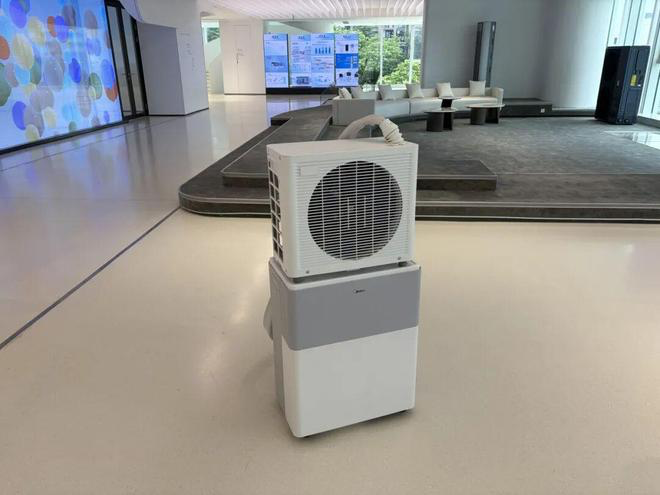
Multiple Chinese media commentaries have noted that the hot sales of Chinese air conditioners are not only a market opportunity but also reflect deeper problems of declining manufacturing competitiveness in Europe. An editorial in the 21st Century Business Herald stated bluntly: “The decline in EU competitiveness does not need to be blamed on external shocks; you can find the answer in a single air conditioner.” An editorial in the “Securities Times” pointed out that while European society is still engaging in internal bickering and erecting trade barriers over “whether to install air conditioning,” Chinese companies have already solved the problem with market-oriented innovative products. This “real market demand” debunks the “China dependency theory” and “overcapacity narrative” hyped by some European politicians. It ruthlessly reminds EU policymakers: if they persistently pursue absolute green moral high ground while ignoring the vitality of local manufacturing, the affordability of energy prices, and the ability to adapt to extreme weather, the ultimate price will be the continuous decline of the entire region’s competitiveness.
Summarizing the analyses of Chinese scholars and media, Europe’s “air conditioning crisis” is not a simple technical challenge or consumer dilemma. Rather, it is a complex social issue situated at the intersection of intensifying climate change, radical green idealism, a rigid administrative system, failed governance capacity, polarized party politics, and geopolitical bias. The hot sales of Chinese air conditioners in Europe not only reflect the technical capabilities and global opportunities of Chinese manufacturing but also, from another angle, highlight the deep-seated challenges Europe faces in dealing with social problems and industrial competitiveness. To escape the “heatwave dilemma,” what Europe needs may not be climate debates but a pragmatic self-revolution that truly faces the pain points of people’s livelihoods, sets aside geopolitical prejudices, and embraces the globalized industrial chain.
Editor: Zhao Yiwen
jason wong
A good piece for reminding politicians in caring about the livelihood of citizens.