

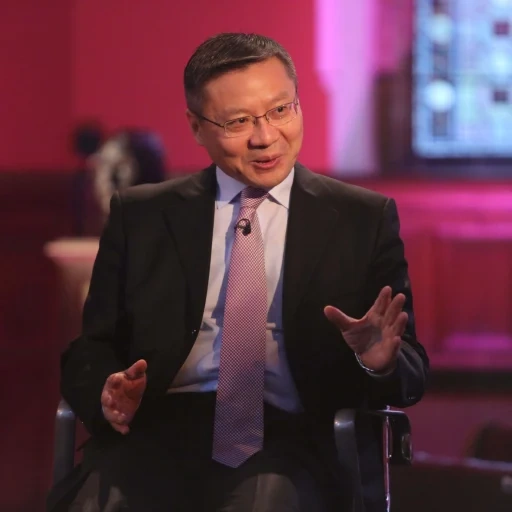
The following text is a transcript of a speech delivered by Professor Zhang Weiwei, Dean of the Institute of China Studies at Fudan University, on the popular Chinese political TV show China Now.
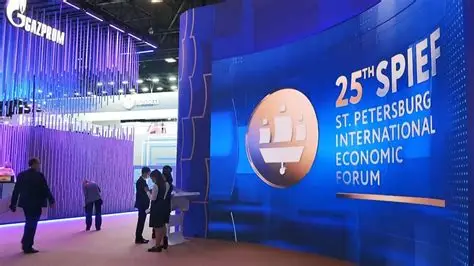
Zhang Weiwei: In June this year, I attended the St. Petersburg International Economic Forum and spoke at a sub-forum on “The Geopolitics of Finance.” Policymakers, scholars, and representatives from international organizations across China, Russia, the United States, Italy, and others engaged in in-depth discussions on “financial weaponization,” “de-dollarization,” and the emergence of a multipolar financial order. I would like to share my thoughts here.
We are witnessing a transformative moment in modern economic history. The global financial order, long dominated by a single power, is drawing to close. Since the outbreak of the Middle East crisis last year, at least three major developments have directly signaled this change.
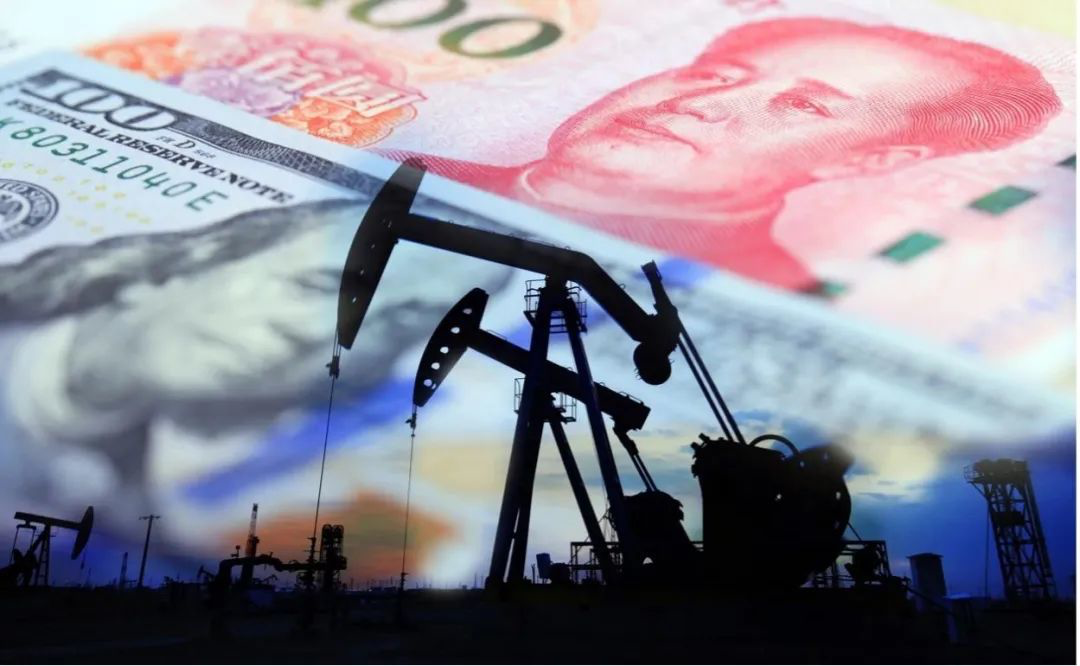
First, in the “energy finance” sphere. Following the outbreak of hostilities in Iran, the petrodollar has notably declined, while the petro-yuan has risen sharply. By the end of the first quarter of this year, the share of yuan-settled crude oil transactions between the Middle East and China had surpassed the euro, reaching approximately 41%, while the dollar’s share fell below the psychological threshold of 55% for the first time, to 52%. At its peak, the dollar accounted for over 90% of oil settlements. I believe four key drivers underpin this surge in yuan settlements: (1) China is now the world’s largest crude oil importer, accounting for over 15% of global imports, and is the top customer for major producers such as Saudi Arabia, Russia, Iraq, and Iran—this immense market demand provides core support for yuan settlement; (2) Middle Eastern oil exporters face deepening distrust of the dollar, as the U.S. has abused its dollar hegemony by weaponizing both the dollar and the SWIFT payment system, arbitrarily freezing foreign assets, prompting many nations to seek de-dollarization; (3) the yuan is backed by the world’s most complete real-economy industrial chain; and (4) the Cross-Border Interbank Payment System (CIPS), as a financial infrastructure, offers a secure and efficient alternative to SWIFT for cross-border clearing. The rise of the petro-yuan not only saves Chinese energy companies tens of billions of yuan annually in exchange costs and hedges currency risks, but also marks a substantive loosening of the petrodollar system that has prevailed for over half a century.
Second, in the “wealth finance” domain. According to the 2026 Global Wealth Report by Boston Consulting Group, Hong Kong (China) has surpassed Switzerland to become the world’s largest offshore wealth management center. In 2025, Hong Kong’s cross-border wealth management assets grew by 10.7% year-on-year to reach $2.95 trillion, edging past Switzerland’s $2.94 trillion. This historic milestone underscores the advantages of Hong Kong’s “one country, two systems” framework, positioning it as a super-connector for mainland capital going global and overseas capital coming in. Since 2025, Hong Kong’s capital markets have performed strongly, with the HKEX IPO proceeds reaching $37.4 billion, regaining the global IPO crown. China’s quality companies—particularly in new economy, high-tech, and AI-related sectors—clearly hold strong appeal for global capital. Against a backdrop of intensifying geopolitical rivalry, global capital is accelerating its shift toward Asia. Since the Middle East conflict erupted last year, medium- and long-term sovereign funds, family strategic investment funds, and others from the region have flowed substantially into Hong Kong. A key reason is that Hong Kong, backed by mainland China and operating under “one country, two systems,” enjoys both the robust economic, technological, and defense strength of the motherland and a free and open economic policy, making it a premier safe haven for investors seeking diversified asset allocation. Despite years of Western bearishness on Hong Kong, we have always maintained that its development logic follows a trajectory “from chaos to order, and from order to prosperity”—and we are now seeing a very positive phase of “from order to prosperity.”

Third, in the “regulatory finance” arena. In April this year, the U.S. Treasury Department added five Chinese companies to its SDN (Specially Designated Nationals) list over alleged Iran-related business. In response to such “long-arm jurisdiction” bullying, on May 2, China’s Ministry of Commerce issued a notice under the Rules on Blocking the Improper Extraterritorial Application of Foreign Laws and Measures, ordering that Chinese organizations and individuals “shall not recognize, enforce, or comply with” U.S. sanctions against these five firms, including Hengli Petrochemical. The notice stated that these companies, registered and operating in China, were engaged in normal economic activities with third countries, and that the U.S. action seriously violated international law and basic norms of international relations, placing its domestic law above other nations’ laws and contravening the principle of sovereign equality.
China’s resolute “no” to U.S. long-arm jurisdiction has been widely interpreted by the international community as a powerful counterstrike against U.S. financial warfare. The core weapon of U.S. financial warfare lies in leveraging the dollar’s dominant position in the global financial system, using the SDN list to coerce global banks, insurers, shipping firms, and other third parties into complying with sanctions against designated entities—otherwise facing exclusion from the SWIFT dollar clearing system. China’s prohibition order directly nullifies the effect of U.S. sanctions on Chinese firms. Any third party that cooperates with U.S. sanctions risks lawsuits and compensation in Chinese courts. In effect, China’s blocking order has effectively hedged against U.S. long-arm jurisdiction, visibly weakening the deterrent power of unilateral U.S. sanctions. Of course, the core foundations of dollar hegemony have not yet been thoroughly shaken, and Sino-U.S. financial competition remains in a protracted tug-of-war. Should the U.S. attempt to exclude China’s four major banks from SWIFT, that would likely amount to “financial suicide” for the U.S.—and that is precisely the source of China’s confidence today. Likewise, foreign companies with operations in China that comply with U.S. long-arm jurisdiction will pay a heavy price. Through legal means, China protects its domestic firms’ normal energy trade with countries like Iran—a sharp rebuke to unilateral U.S. financial sanctions and a potent force for safeguarding the multilateral global trading system.
Behind these three developments lies a profound shift in geopolitics and geo-economics: the center of global economic gravity has fundamentally moved from the West to East Asia. In purchasing power parity terms, China surpassed the U.S. as the world’s largest economy as early as 2014. Meanwhile, the financial infrastructure supporting this shift is already in place, with CIPS expanding rapidly. Former Greek Finance Minister Yanis Varoufakis offered a vivid analogy of “two highways”: SWIFT is like an old, potholed highway still carrying heavy traffic, while CIPS—upgraded with blockchain technology—is a brand-new cross-border payment “highway” with near-zero transaction costs and settlement within seconds, upending SWIFT’s slow, costly, and cumbersome legacy model.
In a sense, these three events indicate that structural changes are underway in the realms of “energy finance,” “wealth finance,” and “regulatory finance”—marking the end of the unipolar era in international finance and the advent of a multipolar financial order. While the dollar will continue to play a significant role, the yuan’s influence is rising at an accelerated pace, and multiple financial centers are emerging.
In a video-linked address, renowned U.S. economist Professor Jeffrey Sachs echoed this view, stating that the world is indeed in the midst of a profound geopolitical transition, and that the two-century-long dominance of the U.S. and Europe has ended—though America and Europe have yet to fully grasp this, still clinging to a crumbling hegemony. He noted that “dollar weaponization” has been the biggest U.S. strategic mistake of the past two decades, ultimately undermining the dollar’s own reserve status. The world needs a “post-dollar” multi-currency system, and he called on BRICS nations to accelerate the creation of a new monetary framework. Sachs also stressed that the rise of Asia and Eurasia is a fundamental reality, and that China-Russia economic ties are highly strategically complementary, as the world moves irreversibly toward multipolarity.
The consensus reached at this seminar was that, amid profound changes in the international financial system and rising geopolitical uncertainties, all countries must directly confront the challenge of “financial weaponization,” promote de-dollarization and the establishment of a multipolar currency system, and advance reform of global financial governance—so as to contribute, as Global South nations, to a fairer, more inclusive, and more stable new international financial order.
Editor: Zhao Yiwen