



Following a mudslide in Gyirong County, Xigaze City, a historic city in southwest China’s Xizang Autonomous Region, roads in the disaster area were damaged, power was knocked out, and communications were disrupted. China’s Ministry of Emergency Management immediately dispatched three Wing Loong unmanned aerial vehicles (UAVs) to the disaster area to provide emergency command communications and conduct disaster reconnaissance.
As of noon on August 31, the Wing Loong UAVs had flown for more than 130 hours in total and supported more than 3,900 calls.
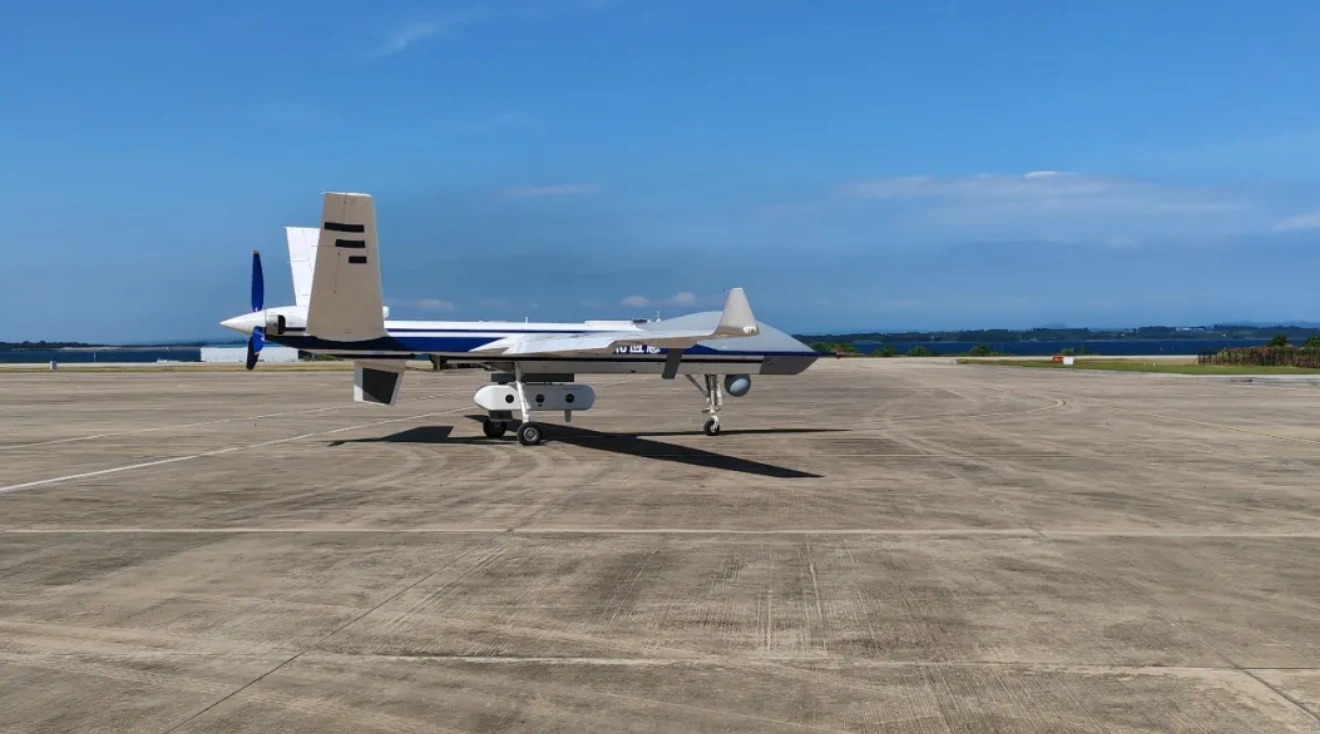
Throughout the operation, flight crews overcame multiple challenges posed by the harsh environment, including high-altitude cold, turbulent airflows in the valleys, and rapidly changing weather conditions. They employed tactics including remote takeoff and landing from separate locations, long-distance large-scale repositioning, and simultaneous flight of two UAVs within the same operational area, enabling rapid deployment and coordinated operations by multiple aircraft. This helped establish and maintain an emergency communications “lifeline” for the affected areas.
The UAVs also continuously conducted disaster reconnaissance, providing support for risk assessment and command decision-making.
According to China News Service on August 28, in response to the emergency rescue needs following a mudslide at the Gyirong Port, the Sichuan Provincial Department of Emergency Management urgently dispatched a Wing Loong-2 large fixed-wing unmanned aerial vehicle (UAV) on August 26 to provide cross-regional support. It also worked with the Sichuan Provincial Communications Administration to ensure ground-based communications support.
Upon reaching the designated airspace, the UAV quickly began conducting disaster reconnaissance and providing emergency communications support, offering aerial technical assistance for ground search-and-rescue operations and emergency command.
Currently, Wing Loong UAVs operated by Sichuan and the Xizang Autonomous Region are conducting relay flights, ensuring uninterrupted coverage of the designated airspace and establishing an aerial relay system for emergency response.
Editor: Zhiyu Wang