


Glacier Collapse Leaves Over 1,000 Dead on China-Nepal Border
A glacier collapse on the Nepal-Tibet border has turned into one of the deadliest disasters in the region in years, destroying Gyirong Port and leaving hundreds dead and thousands more missing on both sides.
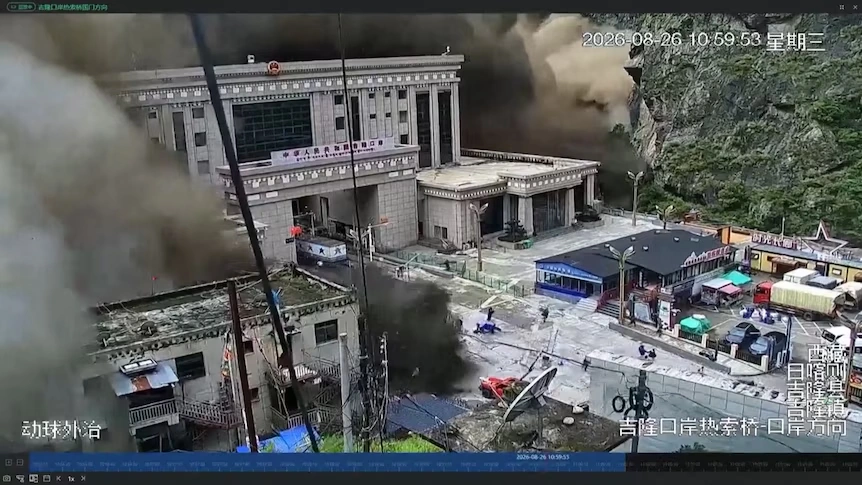
It happened around 10 a.m. on August 26. A glacier on the southern slope of Nepal’s Langtang Lirung peak broke apart at about 5,200 meters. Ice and rock plunged more than 1,000 meters, picking up mass amounts of mud, water, and boulder on the way down. Just six to seven minutes later, the debris flow hit Gyirong Port.
The damage has been immense, as the landslide has effectively flattened the port. Twenty-seven buildings have been destroyed. The inspection hall is now just a steel frame, and only the foundations are left from the original border gate. In some places, the mud is up to a meter deep, with boulders the size of cars scattered across the area.
The human toll is still rising. Nepal has confirmed 903 deaths and 4,247 missing. On the Chinese side, 16 people are dead and 546 remain missing. Hundreds of foreign nationals are also unaccounted for, including 261 people in Gyirong from 23 different countries.
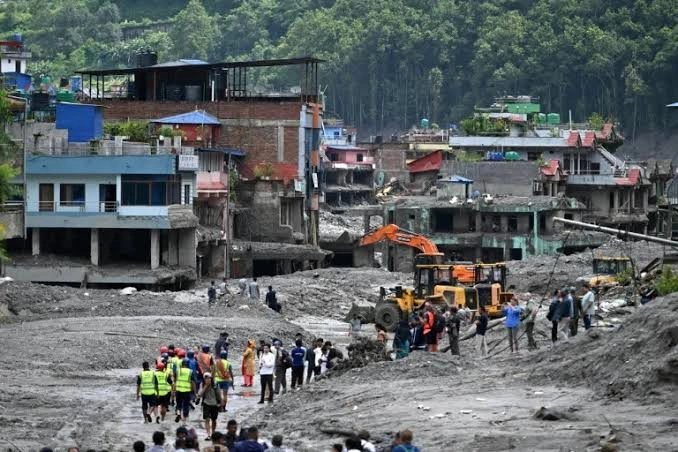
The disaster then moved deep into Nepal’s river valleys, where hydropower projects have been hit severely. At least 900 workers were caught trapped in tunnels at several hydropower sites in Rasuwa and Nuwakot. Hundreds have since been rescued, but teams are still trying to reach those who remain inside.
The speed of the flood left almost no time to react. In Bidur, Nepal, a school principal received a warning and had just 14 minutes to evacuate more than 900 students and staff. The school was later destroyed, but everyone who was evacuated survived.
So what triggered it? Scientists believe the immediate cause was a massive ice-and-rock avalanche. Climate change may be part of the reason — due to rising temperatures, the high-altitude environment is becoming increasingly unstable as glaciers and frozen ground melt, increasing the risk of sudden collapses. The debris flow traveled at around 50 meters per second, covering roughly 22 kilometers in just seven minutes.
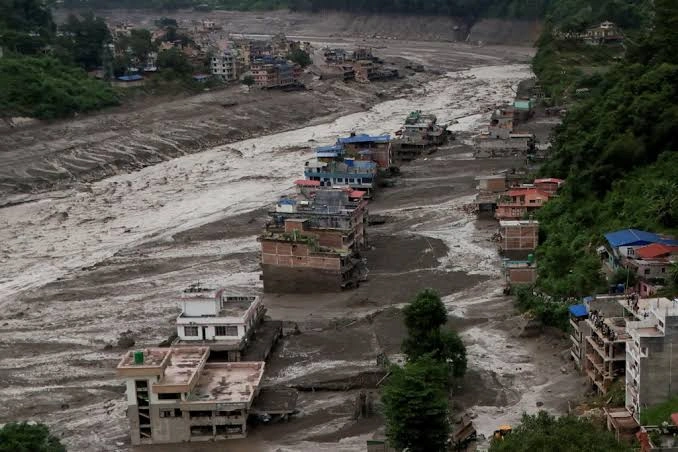
And this was not the first warning. A smaller glacial flood hit the same watershed in July 2025, killing 19 people and destroying a border bridge. This time, the scale was far greater.
The danger may not be over. The debris has formed a barrier lake upstream, while another landslide 2.8 kilometers downstream is creating a second one. If either gives way, flash floods could hit communities further down the valley.
On the Chinese side, more than 2,000 rescuers have been deployed with helicopters, sniffer dogs and life-detection equipment. Teams are searching through thick mud while crews work around the clock to reopen the G216 highway, the main route to Gyirong Port. By August 31, the road had been cleared to within about 1.1 kilometers of the port.
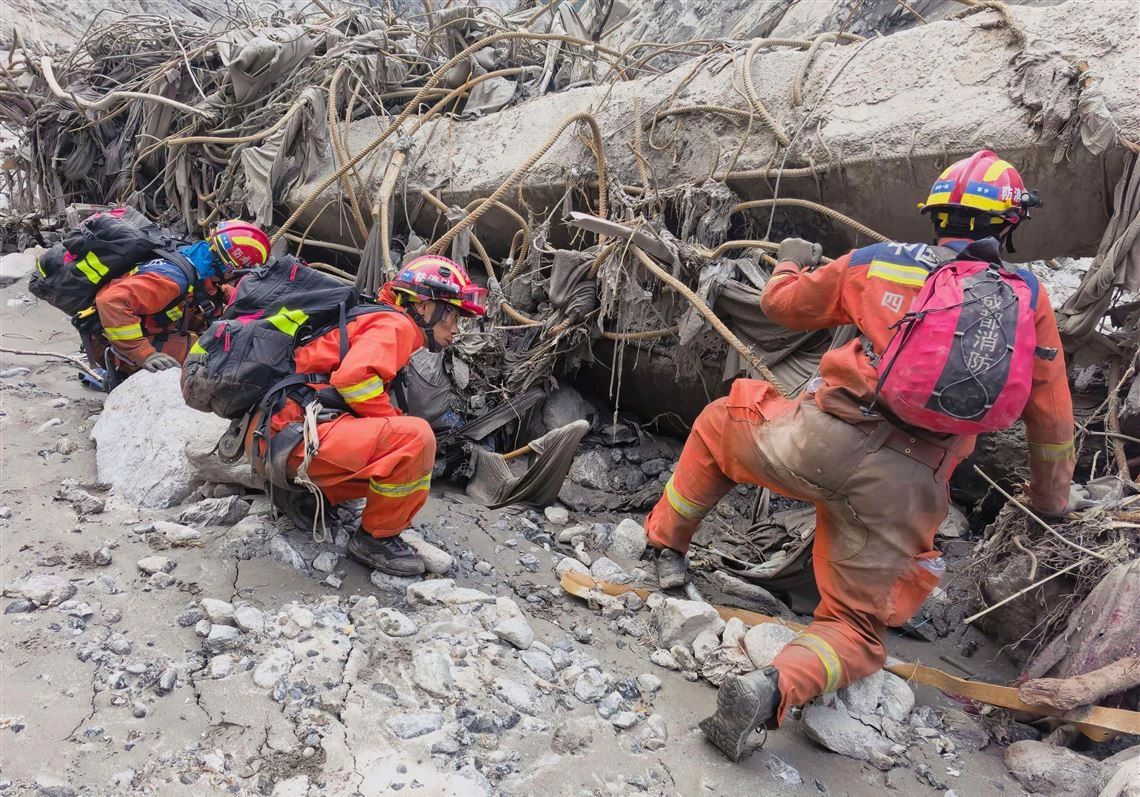
China is also helping on the Nepali side, sending emergency supplies, cash aid and tunnel-rescue specialists, while sharing satellite imagery and hydrological data with Nepal. India and other countries are also providing assistance.For now, rescuers are still searching for survivors. And with more rain expected in the region, authorities are watching the newly formed lakes closely.