


In the past, college freshmen would choose to have their admission letters framed. Nowadays, they toss them straight into the pot.
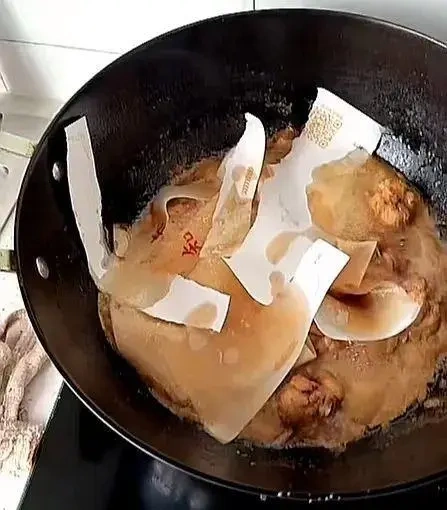
The admission letter from China’s Jilin Agricultural University has gone viral online for its unusual paper — made from fungi. At first glance, it looks just like any ordinary card, but it comes with a note: “Made from mushrooms. Low-carbon, eco-friendly, and naturally healthy.” One senior from the university, worried that people might miss the significance of that line, decided to provide a practical translation — by eating it.
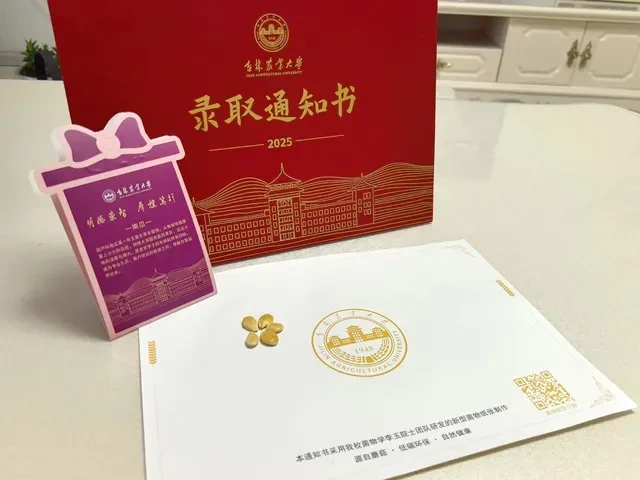
This seemingly absurd piece of news is actually backed by cutting-edge technology. According to Jilin Agricultural University, the fungal paper is the work of Academician Li Yu’s research team. Unlike traditional paper, it uses mycelium fibers instead of plant fibers.
What does that mean? The mushrooms we normally eat are actually just the fruiting bodies of fungi. Beneath them lies a vast network of fibrous roots known as mycelium. This mycelium has a certain elasticity and toughness, making it suitable for use as an industrial material.
The challenge in making fungal paper lies in selecting the right fungal species and the proper substrate, then artificially guiding the growth process so that the mycelium naturally intertwines and forms a dense, sheet-like structure. Every step of the process requires extensive time, effort, and trial and error.
But the question is — what’s the point of all this? Is it just so people can snack on books?
The fact that it’s edible is really just a fun bonus. The real value of fungal paper lies in its efficiency and eco-friendliness compared to traditional papermaking. Right now, the industry relies heavily on plant fibers, most of which come from trees — consuming hundreds of millions of cubic meters of timber every year. Vast areas of natural forests are either cut down or replaced with fast-growing monocultures, which takes up land and negatively impacts the environment. The production process also generates pollution, as pulping and bleaching require large amounts of chemicals and release toxic gases during cooking.
In contrast, fungal paper doesn’t rely on trees that take years to mature. It can grow into the desired form within days or weeks. Fungi can also be vertically cultivated on racks or in fermentation tanks, yielding far more per unit area than forests. What’s more, agricultural waste like straw can be used as the substrate. The final shaping of the paper mostly depends on the natural growth of the mycelium, which reduces the need for chemical processing. And because mycelium decomposes rapidly in natural environments, it contributes to a faster and cleaner recycling loop. This kind of innovation represents a major step toward truly sustainable papermaking.
The Back-to-School Arms Race
Jilin Agricultural University isn’t the only school showing off its tech in the admission letter — this year, universities across the country have gone all out to showcase their scientific and technological prowess. Each school is racking its brain to cram every possible innovation into that one small envelope. As a result, the back-to-school season has turned into a full-blown admission letter review contest.
Take Beijing University of Chemical Technology, for example. Its admission letter is made from a self-developed, ultra-thin 0.2mm carbon fiber material combined with a special resin base. It’s heat-resistant, flexible, acid- and alkali-resistant, and extremely strong — the same type of material already widely used in aerospace and other advanced fields. To clearly display text and images on the carbon fiber surface, the university employed a specialized UV printing technique to print students’ names and ID numbers, and then coated it with an anti-corrosion layer for protection.
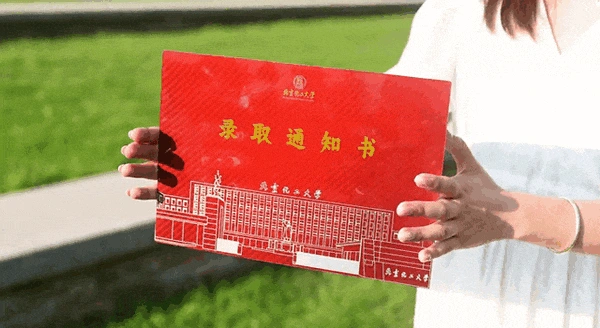
As soon as the freshmen at Beijing University of Chemical Technology received their admission letters, they couldn’t wait to put them through high-intensity tests — using them to chop melons, slice vegetables, and more. They quickly realized this thing shouldn’t be called an admission letter — it’s practically an admission blade. Press it against a watermelon and give it a light tap, and the fruit splits clean in two — not even a bent corner on the letter.
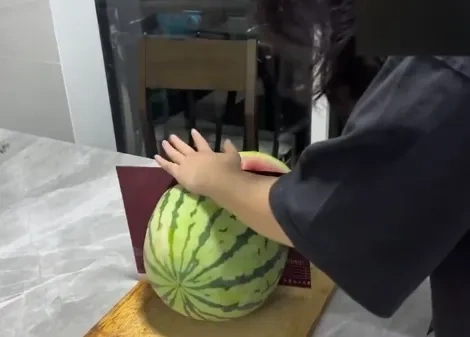
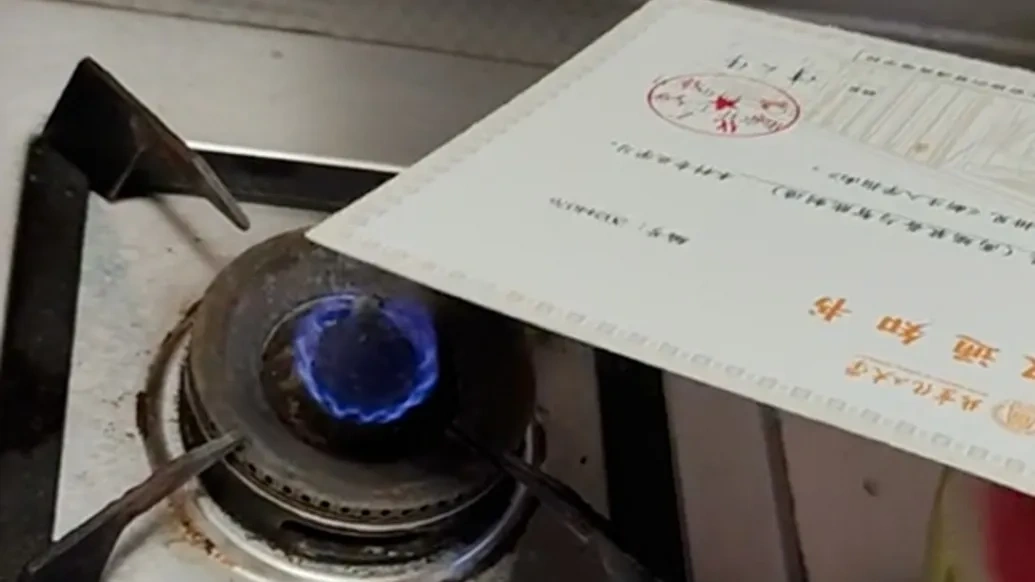
To test the limits of the admission letter’s performance, students even poured boiling water over it — nothing happened, not even a change in color. Then they grilled it over a gas stove, and after more than ten seconds of direct flame, it still didn’t catch fire or warp. You can just imagine the professors and upperclassmen at Beijing University of Chemical Technology watching the viral test videos online, feeling pretty smug: “Told you we weren’t exaggerating!”
On the other hand, Beijing University of Science and Technology took a creative approach by including a small steel school emblem in their admission letters. The material itself isn’t anything special, but the manufacturing process is impressive — it’s made from “green steel.”
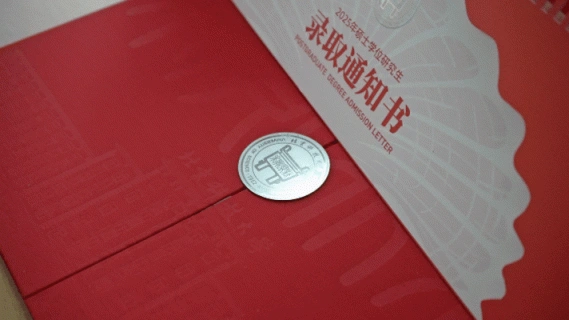
“Green steel” comes from a cutting-edge technology led by Beijing University of Science and Technology called the “hydrogen-based shaft furnace — near-zero carbon electric arc furnace.” Simply put, it replaces the coke used in traditional steelmaking with hydrogen. Compared to conventional blast furnaces that emit about 2 tons of carbon per ton of steel, this process produces less than 0.5 tons of carbon emissions per ton of steel. Plus, it generates no thick black smoke — only thin water vapor — representing the future of green steel production and reaching the world’s most advanced standards.
Speaking of Beijing University of Science and Technology’s impressive resources, last year they issued admission letters that looked like a mirror-finish, wafer-thin sheet, somewhat similar to Beijing University of Chemical Technology’s, but made from 5G steel. What makes it remarkable is its thickness — as thin as 0.07 millimeters — suitable for the extremely precise steel requirements in 5G base station signal receivers, filters, circuit boards, and more.
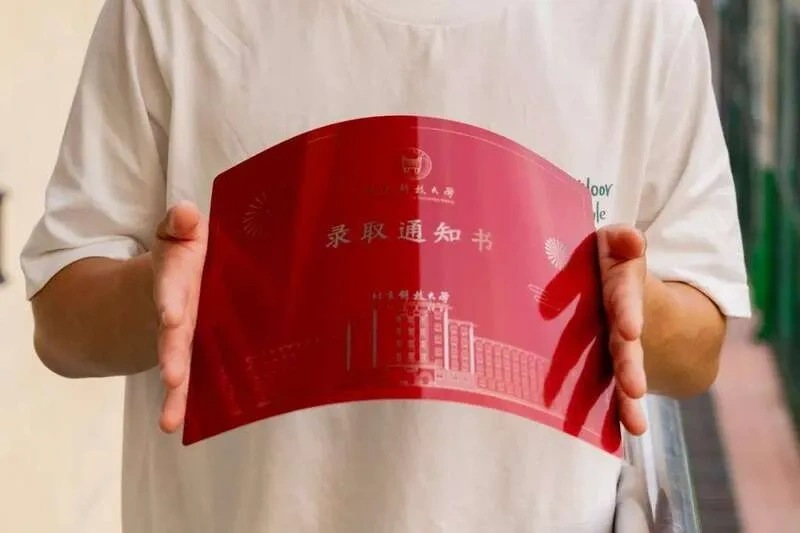
Communication equipment has always required ultra-thin steel, and as technology advances, the steel has become absurdly thin. During the 4G era, the requirement was 0.12 millimeters — already a challenge that left most industrialized countries worldwide stumped. In the 5G era, the demand tightened further to 0.10 millimeters. The difficulty in rolling steel this thin is so high that only a handful of foreign companies mastered the process, effectively monopolizing the lifeline of the communications industry. It took a dedicated team from Beijing University of Science and Technology and Shougang over ten years to crack the 5G steel manufacturing process.
Back to this year’s university arms race: Harbin Institute of Technology’s admission letter also includes a small badge. At first glance, it seems unremarkable, but it’s actually aerospace high-tech. It uses HIT’s self-developed ultra-light aerospace thermal protection material, capable of withstanding temperatures above 3,000°C. This material protects spacecraft during the extreme conditions of high-speed atmospheric re-entry and is 30% lighter than previous materials. It has already been used in manned lunar missions and planetary probes.
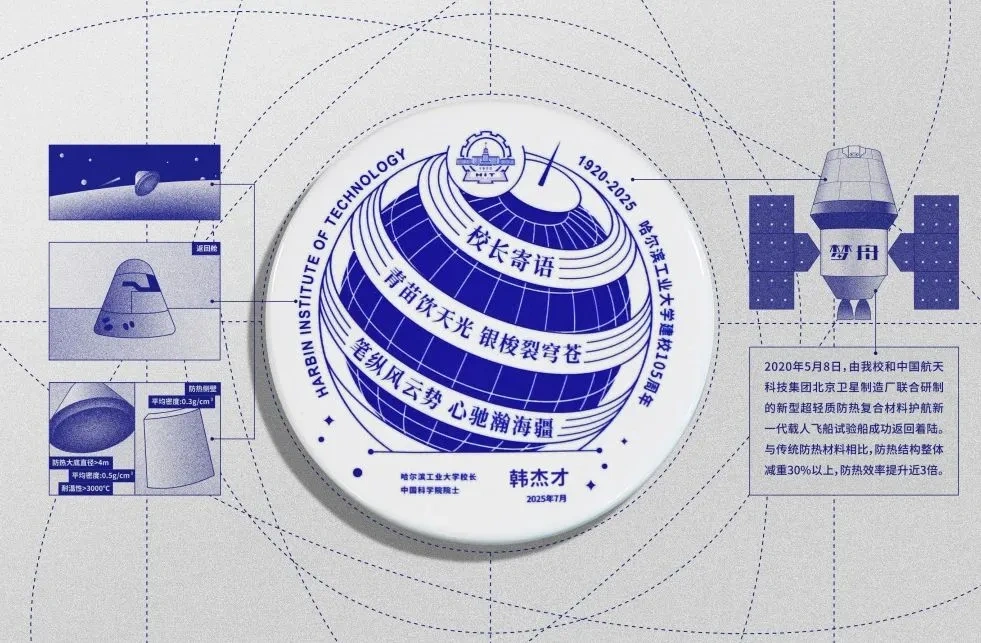
This only covers the types of materials used, but since Chinese universities each specialize in different fields, the admission letter arms race is taking place on multiple distinct tracks.
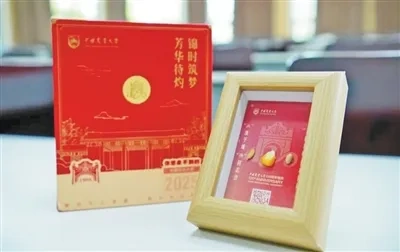
For example, China Agricultural University’s admission letters come with seeds of wheat, corn, and rice developed by their own research teams. These are top-tier new varieties — such as the “Nongda 778” corn, which shows strong resistance to major diseases in the Huang-Huai-Hai and East-North China regions. It also has a highly developed root system that enhances nutrient absorption and helps prevent lodging during storms. These seeds are already being widely promoted to help farmers increase their yields.
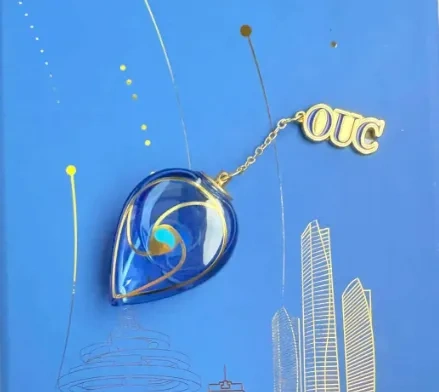
China Ocean University included a “Heart of the Ocean” pendant in its admission letter gift box — containing a sample of seawater from the Antarctic. It was personally collected by the university’s research team during a polar expedition, combining the romance of exploring nature with a subtle flex of resources and scientific strength.
Editor: Zhiyu Wang