



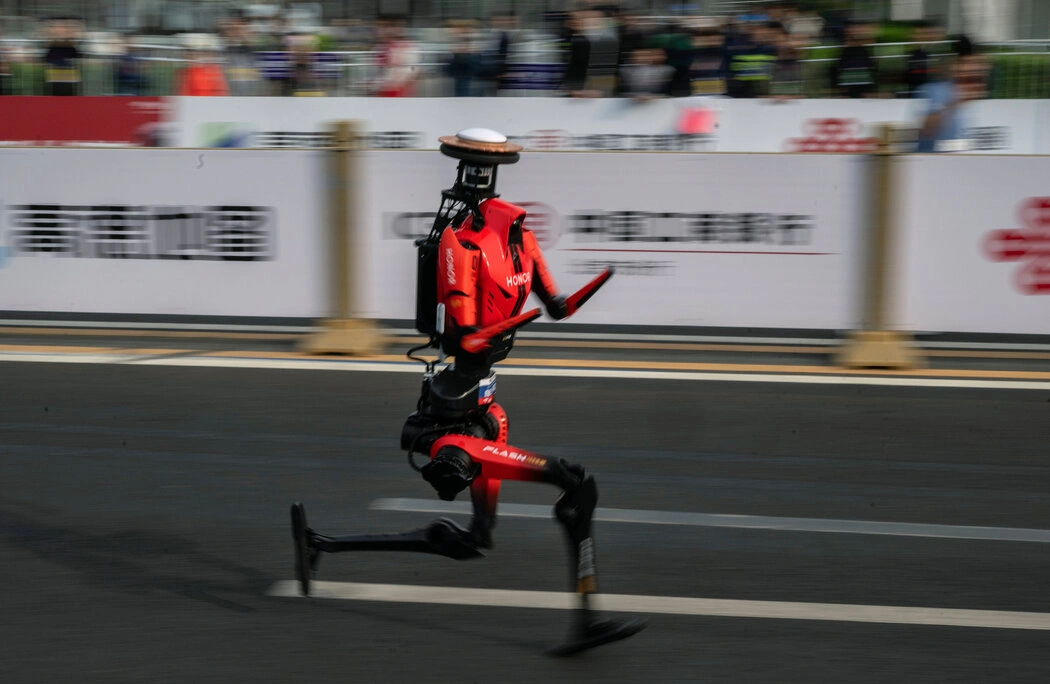
1. A Chinese robot called “Lightning” finished a half marathon nearly seven minutes faster than the human world record.
On April 19, at the 2026 Beijing E-Town Humanoid Robot Half Marathon, a bipedal robot named Lightning, built by HONOR, crossed the finish line in 50 minutes and 26 seconds, winning the autonomous navigation category. To put that in perspective: the current men’s half marathon world record stands at 57 minutes and 20 seconds. Lightning beat the fastest human on Earth by nearly seven minutes.
And it wasn’t just one strong performer. The first three robots across the finish line all came from HONOR. The company swept the top three spots in the autonomous category, with finishing times of 50:26, 50:56, and 53:01.
The progress from last year is staggering. At the inaugural event in 2025, the winning time was 2 hours and 40 minutes, and only six teams managed to finish at all. One year later, the field has exploded from 20 teams to over a hundred, with 47 completing the course, and the winning time has improved by roughly 68 percent. The route itself covered urban highways, motorsport road sections, and park trails, pushing every aspect of the robots’ stability, endurance, and decision-making.
Lightning stands 169 centimeters tall, its effective leg length of 0.95 meters was modeled on the biomechanics of elite distance runners. The in-house joint modules deliver a peak torque of 400 newton-meters. For cooling, a critical challenge over a 21-kilometer run, HONOR adapted its smartphone liquid-cooling technology: micro-channels thread directly into the motors, circulating coolant at over four liters per minute. And a proprietary motion-control algorithm fused with multi-sensor data keeps the robot stable at high speed, even on uneven terrain.
This marks the first time a humanoid robot has officially beaten a human world record in an endurance event, a milestone that signals a qualitative leap in robotic perception, real-time decision-making, and sustained locomotion.

2. Chinese physicists first created ball lightning in a lab.
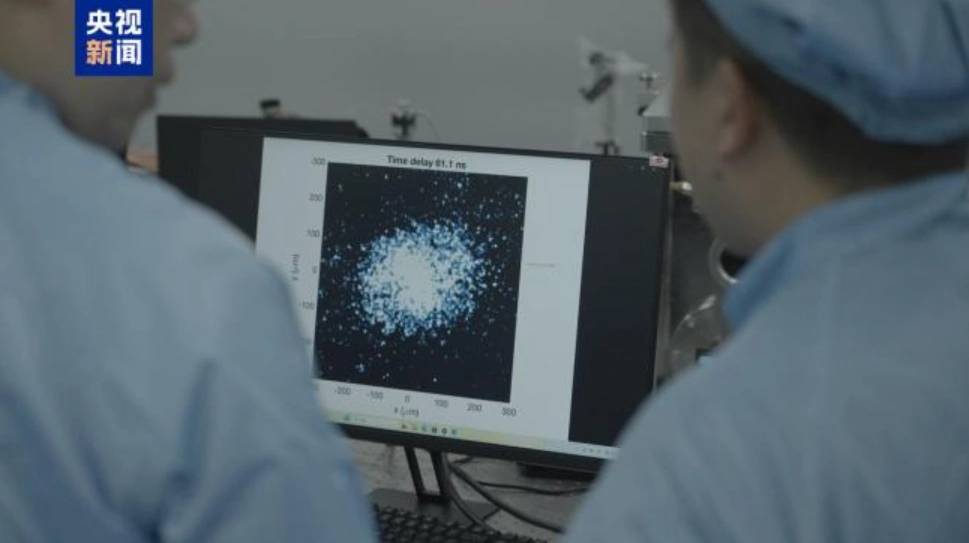
On April 16, a research team at the Chinese Academy of Sciences published a world-first result in Nature Photonics: they successfully created and captured a glowing sphere in the laboratory that closely resembles naturally occurring ball lightning, confirming that its true nature is a structure known as an electromagnetic soliton.
Ball lightning, sometimes called “rolling thunder” in Chinese folklore, is one of nature’s most enduring mysteries: a luminous orb that hovers in the air, drifts through rooms, and occasionally passes straight through walls. Science fiction author Liu Cixin devoted an entire novel to imagining what it might be. For over two centuries, scientists proposed theory after theory but never had a repeatable experiment to back any of them up. Now, a Chinese team has finally delivered one.
So what does this mean for the rest of us?
First, energy. The most remarkable property of ball lightning is that a blob of superheated plasma, which should fly apart in an instant, somehow holds itself together, trapping its own energy in a stable sphere. That trick, energy confining itself without any external force, is exactly what fusion researchers have been chasing for decades. If we can fully understand how a ball of fire locks in its own energy without an external magnetic field, it could fundamentally reshape how we design future fusion reactors.
Second, the key tool behind this experiment is terahertz radiation, often called the “last frontier” of the electromagnetic spectrum. Terahertz waves can see through clothing and packaging without harming the human body, making them enormously promising for security screening and medical imaging. This research pushed terahertz waves to unprecedented, relativistic intensities, which means the field of terahertz photonics itself just took a major step forward.
Third, electromagnetic energy storage. If scientists can learn to precisely control these solitons, structures that essentially trap energy inside themselves, it could open the door to an entirely new way of storing energy, not with batteries, not with chemical reactions, but by packaging energy within electromagnetic fields alone. That sounds like science fiction, but then again, ball lightning itself sounded like science fiction for two hundred years, and now it’s been made in a lab.
3. FAW unveiled China’s first multi-domain fusion automotive chip.
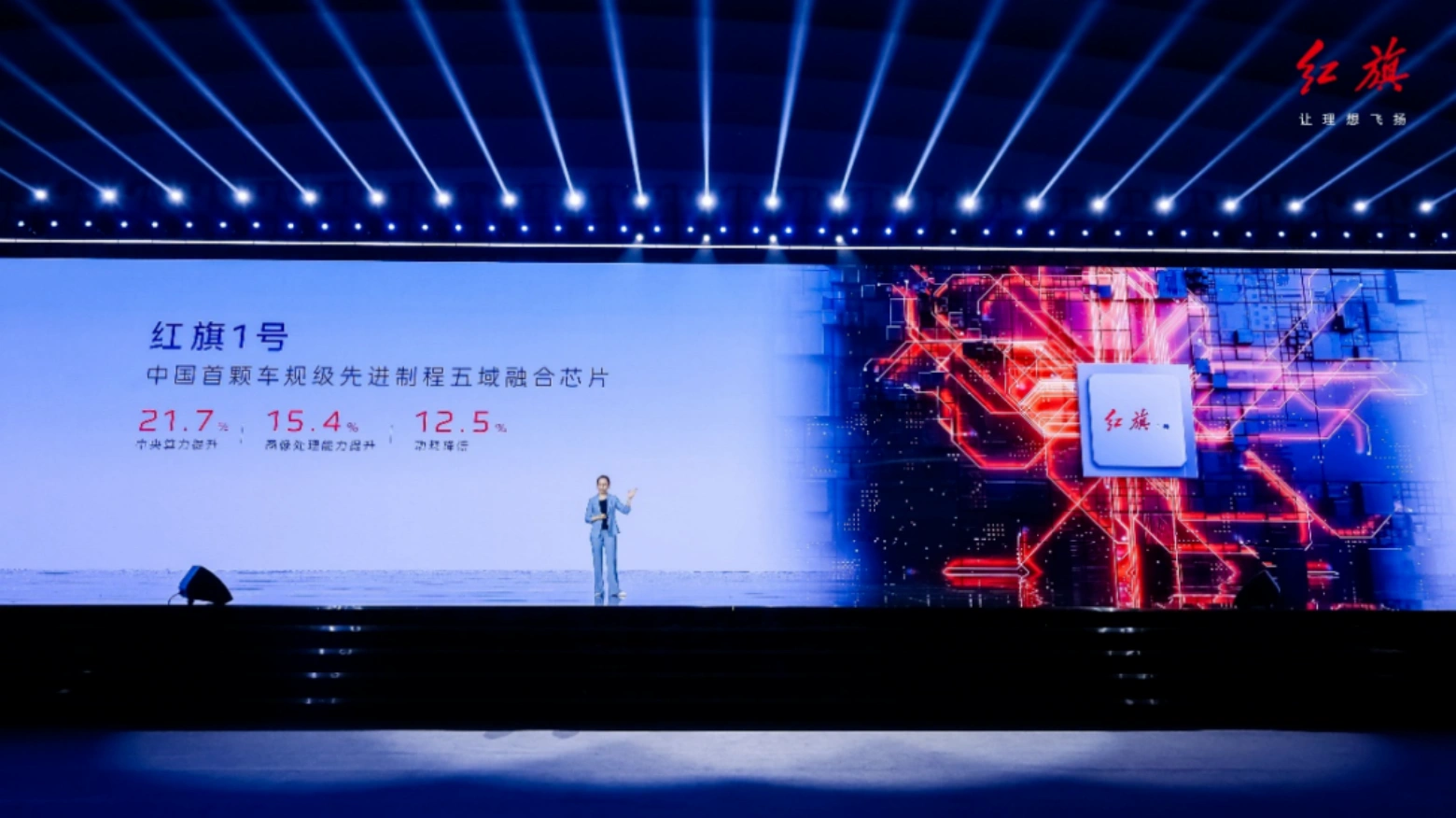
On April 16, China FAW Group announced that it had jointly developed China’s first automotive-grade advanced-process multi-domain fusion chip, dubbed Hongqi-1. The chip fills a critical gap in the domestic supply chain, targeting smart vehicles’ heavy reliance on imported high-performance processors.
Hongqi-1 is not a conventional single-function chip. It is a central-compute processor designed for next-generation vehicle architectures, and its defining achievement is consolidating five traditionally separate domains, driver assistance, smart cockpit, vehicle body control, connectivity, and security, onto a single die. In industry shorthand, that’s cockpit, driving, and control unified on one chip, doing the work of five.
Hongqi-1 is built on a 5-nanometer process and delivers 86 TOPS of AI compute. Compared to Qualcomm’s SA8775, a widely used benchmark in the industry, it offers 21.7 percent more CPU throughput and 15.4 percent better graphics performance. It supports up to twelve simultaneous display outputs, high-fidelity audio, integrated parking-and-driving assistance, and high-performance image-signal processing, with headroom to spare for future workloads.
On safety, it meets the highest standards in the industry. An independent on-chip hardware security island, using hardware-level isolation, achieves ASIL-D, the top functional safety rating, while also complying with China’s national Level-2 cryptographic security requirements. Even under extreme fault conditions, critical control signals remain intact and the system stays operational.
The practical impact is significant. By merging multiple electronic control units into one, the chip substantially reduces the number of ECUs and the complexity of wiring harnesses across the vehicle, cutting both system costs and development timelines. Over the past few years, the global automotive chip market has been wildly volatile, a single MCU that once cost a few dollars surged at times to nearly a hundred. A domestically controlled, high-performance chip solution gives Chinese automakers considerably more leverage when prices swing. Hongqi-1 will go into future Hongqi models and is expected to catalyze broader upgrades across China’s automotive chip supply chain.
4. China’s next-gen brain-computer interface Beinao-2 heads for year-end clinical trials.
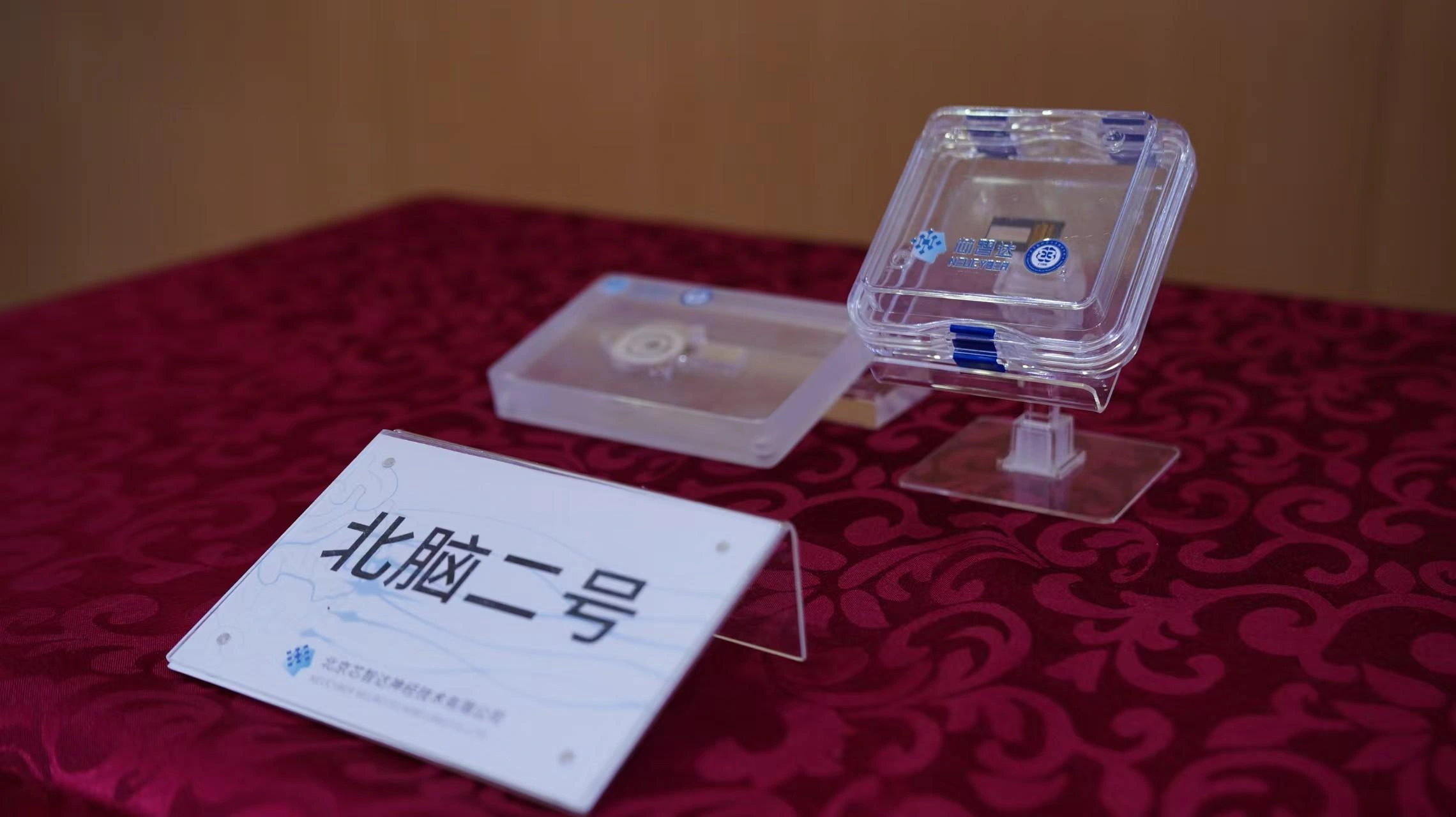
On April 19, the Chinese Institute for Brain Research, or CIBR, disclosed that Beinao-2, an invasive brain-computer interface system, has completed development of a 512-channel fully implantable wireless engineering prototype. The device has been implanted in macaque monkeys and has operated stably inside the skull for over two years. Clinical verification is expected to begin by the end of 2026, with plans to carry out 50 surgeries across ten hospitals nationwide.
The system’s core components include proprietary high-throughput flexible micro-wire electrodes, a thousand-channel high-speed neural signal acquisition unit, and the world’s first generative neural decoding algorithm based on feedforward control. The implantable electrodes use biocompatible flexible materials thinner than one-tenth to one-hundredth the width of a human hair. In prior animal trials, Beinao-2 enabled macaques to control a robotic arm through thought alone, intercepting and grasping moving targets in two-dimensional space with remarkable precision.
Its predecessor, Beinao-1, takes a semi-invasive approach: electrodes sit on top of the dura mater rather than penetrating brain tissue. That system has already been implanted in human patients, all of whom have recovered well and regained motor or speech function. Beinao-2 goes deeper, literally. Its electrodes enter the brain tissue directly, capturing far more precise neural signals. The system is positioned as a domestic counterpart to Neuralink’s latest-generation device.
In March, Zhao Jizong, a member of the Chinese Academy of Sciences, highlighted the urgent clinical need: China has over 3.7 million patients with spinal cord injuries alone, alongside millions more affected by stroke, ALS, and other neurological conditions. Brain-computer interfaces offer these patients an entirely new pathway to recovery. Beinao-2 is now racing to close the final gap, from lab bench to operating table.
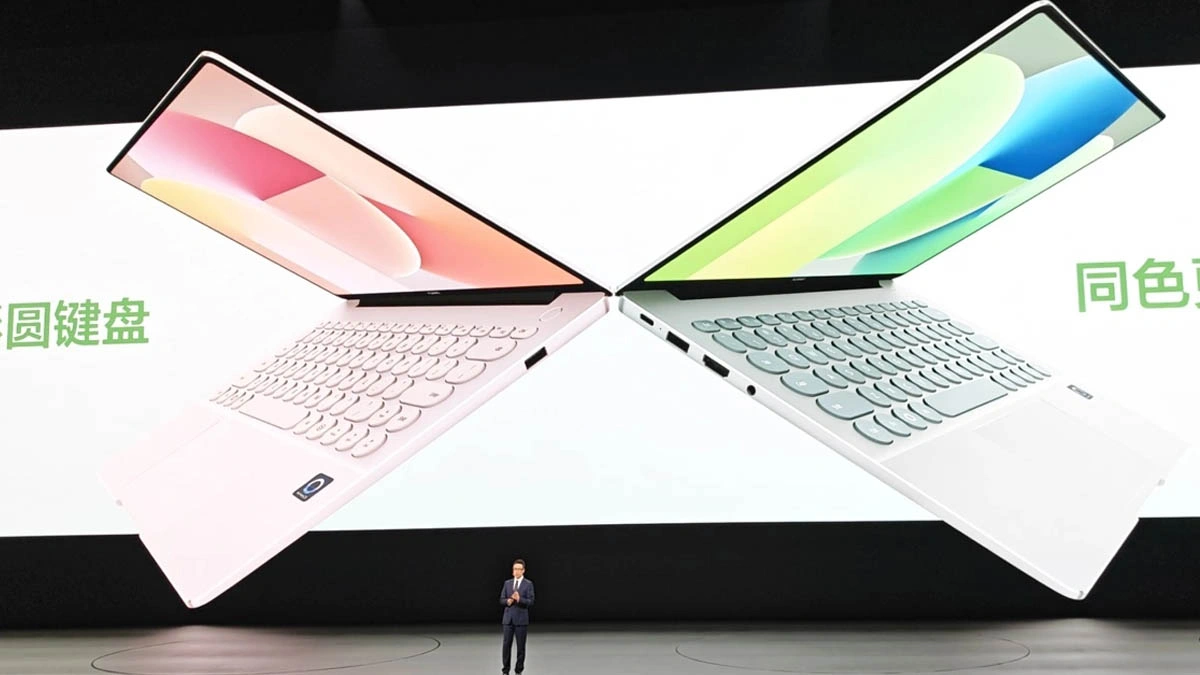
5. Huawei launched its first fully native HarmonyOS laptop, challenging Windows.
On April 20, at its Pura series and full-scenario product launch, Huawei officially unveiled the MateBook 14 HarmonyOS Edition, the first consumer laptop powered by the in-house Kirin X90 processor and running HarmonyOS 6.1. Pricing starts at 6,599 yuan, roughly 900 USD.
But the hardware and price is not really the headline. What matters is the ecosystem.
Through HarmonyOS’s Super Device framework, the laptop connects seamlessly with Huawei phones, tablets, smartwatches, and smart displays, one tap and they work as a unified system. Huawei’s AI assistant, Xiaoyi, has been brought over from the phone in full: real-time meeting transcription, AI-generated research reports, interactive problem-solving for students, and more.
On the security side, HarmonyOS 6’s StarShield architecture provides end-to-end protection from the kernel to the application layer, and, notably, it is the world’s first laptop with built-in AI deepfake detection for video calls.
With this launch, HarmonyOS now spans phones, tablets, PCs, wearables, and smart home devices, completing full-scenario coverage. For China’s domestic operating system, this marks the transition from “functional” to “genuinely ready for the mainstream.” It’s not just another laptop launch. It’s a signal that HarmonyOS has matured into a complete ecosystem.
And that wraps up our five stories for the week. From a robot that outruns every human alive, to a laptop running an entirely Chinese-built operating system, what we’re witnessing isn’t just a string of individual breakthroughs. It’s Chinese technology accelerating from the lab to the racetrack, from the factory floor to the desktop.
Editor: Charriot Zhai


Slacker Em
For Huawei they have a massive opportunity. Windows 11 is below expected popularity for consumers. Harmony needs either a windows runtime emulator so people can run windows software (this will allow people to move with less fuss as they can reuse their own software, or barring that have a application stack that can do stuff like what msoffice does but more importantly able to open the file formats/do the functions ms office does. After that, if consumer PCs pick this up, it will slowly become mainstream and become more accepted in corporate environments.