

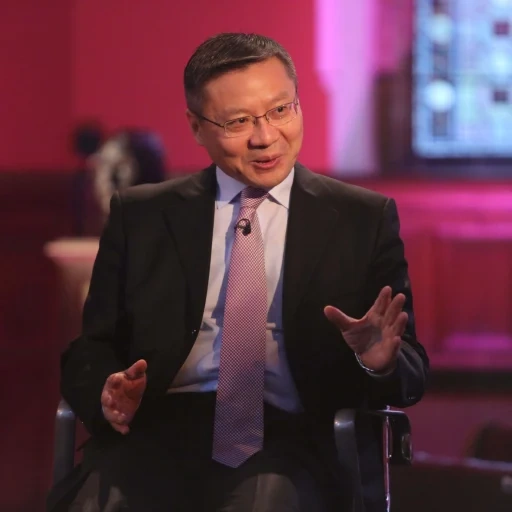
Today marks the 300th episode of China Now. Since its premiere on January 7, 2019, the program has influenced hundreds of millions of people and become a phenomenal show in promoting original Chinese discourse within the country and abroad. We wish to extend our sincere gratitude to all the friends and colleagues who have participated or supported this program, as well as to all the loyal viewers who have been with us along the way. In the turbulent world today, it’s our mission to establish China’s own narrative about national and world affairs, and make correct assessment about unfolding global events, which can stand the test of time and history. Seven years of our work have proven that our assessments, especially many of our strategic predictions are quite accurate, the most noted feature of this program.
Some users of Bilibili have described our show this way: “Regular political commentators often look into the past, while current affairs analysts mostly focus on the present. But Zhang Weiwei and China Now have pioneered what can be called ‘futurist historiography,’ i.e. making predictions about the future evolution of unfolding events, and in most cases they are reliable.” We take this Gen-Z humor as a compliment and encouragement, and wish to share it with other viewers.
This year marks the 10th anniversary of the founding of the China Institute at Fudan University. As a high-end national think tank, the Institute is held to strict standards by the central government, and one of our tasks is to provide correct and definitive judgments on major unfolding domestic and international events. We can say with pride that we have met the high standards. Of course, we must continue to strive for even greater heights.
The China Now Program officially premiered in January 2019, but we began recording in mid-December 2018, just as Huawei executive Meng Wanzhou was illegally detained in Canada. This raised the question of how to characterize the US and its actions. In the very first episode of China Now, we observed that “in the world’s most competitive 5G domain, Huawei has caught up with the US in core technologies and in establishing Chinese standards, and has even surpassed it in many respects. This has caused fear in the US, which led it to resort to the dirty trick of kidnapping. Fortunately, Chinese leaders have lived through the turmoil of the Cultural Revolution, and know how to deal with hooligans.” This was in fact also a policy recommendation: whether in negotiations with the US or adopting any counter measures, we must abandon all illusions with the mindset of dealing with a rogue state. Five months later, Martin Wolf, a columnist for the Financial Times, also described the US as a “rogue superpower” in his op-ed article, consistent with our assessment. This is what Huawei’s founder, Ren Zhengfei, meant when he said during the farewell to the Honor brand: “the US wants to kill us, not just correct us.” Over the years, the US’s egregious acts have proven our judgment.
Over the past few years, we have analyzed and predicted many major events: Around 2018 and 2019, when the US launched its “trade war” and “tech war” against China, we used various channels, including China Now, to clearly predict that the US would lose. We said the US was “shooting itself in the foot.” As for the so-called “tech war,” we predicted that the US would suffer a crushing defeat and that when the “war” is over, we should not forget to award President Trump a special medal for his contribution.
During the 2019 Hong Kong protests, we pointed out that the city needed political system reform or it would decline sharply. We argued for a comprehensive plan that addresses both the symptoms and the root causes, with a decisive countermeasure against Hong Kong’s pro-independence force. We specifically stated that “within the framework of the Constitution of the People’s Republic of China and HK’s Basic Law , we have sufficient room to introduce such a plan.” Sure enough, a year later, on June 30, 2020, the Standing Committee of the National People’s Congress tackled the root of the so-called “Hong Kong independence” problem by passing the Hong Kong National Security Law, reflecting the firm will of 1.4 billion Chinese people.
In early 2020, when the COVID-19 pandemic broke out, the Western media were extremely excited and declared it as “China’s Chernobyl moment.” But we predicted that it’s more likely to be “the West’s Chernobyl moment.” As expected, the pandemic response in Europe and the US was confusing and chaotic with excessive casualties. In fact, ever since 2020, the average life expectancy in the US has become lower than in China. On October 14, 2020, New York Times columnist Thomas Friedman wrote that he had thought the pandemic would be China’s Chernobyl, but it ended up being the West’s Waterloo. Our prediction was eight months ahead of his.
In early 2021, as Joe Biden came to power, we predicted that “Biden’s presidency is more likely to be transitional, and four years from now, the US may well return to the ‘Trump era’ or a ‘Trump era without Trump.'” It seemed that we were the sole think tank in the world to make this prediction publicly.
In 2022, shortly after the outbreak of the Russia-Ukraine conflict, we predicted that Ukraine would be the biggest loser. Its fate would shift from being a US “pawn” to its “discarded pawn,” and the country may eventually be divided into three parts. Europe would be the second biggest loser after Ukraine.
In 2023, when the idea of “Asia-Pacific NATOization” was in full swing, we predicted that this was more likely to be a pipe dream. Indeed, leaders from Japan, South Korea, and Australia all made excuses to skip the 2025 NATO summit in The Hague, and even the summit’s communique removed content related to China or the Indo-Pacific.
By 2024, as Hong Kong was implementing Article 23 of the Basic Law, almost all mainstream Western media and scholars like the former Chairman of Morgan Stanley Asia, Stephen Roach, were pessimistic about Hong Kong’s economy. In a February article for the Financial Times, Roach claimed that “Hong Kong is over.” We, however, repeatedly stated that Hong Kong had moved from chaos to stability, and from stability to prosperity. This year, the economy of Hong Kong has seen a strong rebound. Stephen Roach admitted not long ago that his previous judgment was wrong and that he is now also optimistic about the prospects of Hong Kong’s economy.
In early 2025, given the European Union’s tendency to follow the US in lockstep, which has led it into multiple crises, we did a special edition on “Europe’s Darkest Hour,” pointing out that Europe was already “on the US’s menu” and would suffer a crushing defeat. Sure enough, on July 27, a weakened EU was forced to sign a humiliating trade agreement with the US that caused widespread outrage. In fact, in our very first episode seven years ago, we predicted that China is like a high-speed train speeding ahead with no patience to wait for Europe’s awakening. In fact, back in the first show in January 2019, we already raised the question of whether the EU could survive untill 2035.
In short, our strategic predictions over the past seven years have proven quite accurate—far more accurate than those made by mainstream Western think tanks or scholars. This success can be attributed to our longstanding commitment to original research, our unwavering confidence in our nation, and our persistent efforts to deconstruct Western political discourse while constructing a Chinese one.
In many ways, my own academic journey is a microcosm of this unremitting effort. Fed up with the West’s deeply biased misperception of China, I embarked on research into the Chinese model of development, questioned mainstream Western theories, and I delved into the research on Chinese ideas and culture. This ultimately led me to research Chinese civilization, and in 2010, I proposed the concept and theoretical framework of the civilizational state. I also followed the Chinese ancient wisdom of “to know the world, read and roam” by conducting field studies in more than 100 countries. Looking back today, as my research deepened, I have gradually built up a specific knowledge and discourse system.
The civilizational state posits that China is, first and foremost, a super-large modern state whose long-standing civilizational heritage has organically combined with modernity, and all this makes China unique. This has allowed China to surpass the Western model in many aspects. For example, the civilizational state’s paradigm of “good governance vs. bad governance” surpasses the Western one of “democracy vs. autocracy”; the model of combining “minxin” (or “the hearts and minds of the people”) and “minyi”(or “public opinions”) surpasses the Western model that relies mainly on “public opinions”; the “holistic-interest party” model surpasses the Western “partial-interest party” model; the “selection + election” model surpasses the Western model of relying only on elections; and the “mixed economy” model surpasses the Western neoliberal model.
These systematic findings allowed us to predict rather confidently about many global events even prior to the show started. For instance, in 2006, I argued that the American model would not be able to compete with the Chinese model in the developing world. In 2008, I proposed that the world was entering a “post-American era” and a “post-Western era” following the financial crisis. After the Arab Spring broke out in 2011, I predicted it would soon become “Arab Winter.” I argued that the US political system was a product of the pre-industrial era in need of substantial reform, or the country would continue its sharp decline. I also argued that Western democracy, with its many genetic flaws, will ultimately be a fleeting moment in the long river of human history. Our breakthroughs in establishing foundational logic and knowledge system and dismantling Western-centrism gave us political and academic confidence in presenting this most watched current affairs show in China.
I would also like to take this opportunity to share my personal insights on strategic forecasting, and these thoughts are solely my own, intended for your reference.
First, it’s crucial to adhere to the core idea of “seeking truth from facts”. This is the key to the success of China’s revolution and modernization, and it is also the guarantee of our accurate strategic prediction. To seek truth from facts thoroughly requires courage. In the past, China was backward, acknowledging our backwardness was seeking truth from facts. Today, China outperforms the Western countries in many aspects, and acknowledging our achievements is also seeking truth from facts. We must never be like those so-called “public intellectuals” in China who have “been kneeling for too long to stand up” with no courage to look at the West on an equal footing. Seeking truth from facts means breaking away from dogmas and embracing independent and original research, rather than blindly following others. For us, real economic conditions, real living standards, real geopolitics and historical context have always been the core focus of our original research. For example, we analyzed the employment data announced by the Biden Administration and found it too much exaggerated. In contrast, Trump admitted in almost every speech that “America is a failing nation.” We also found that the issues most concerning to the American public were not gender or human rights issues hyped by the Democratic Party, but rather inflation and rampant crimes. Based on this, we judged that Trump would likely make a comeback if he wasn’t assassinated, but we also concluded that his proposed solutions could not solve America’s deeply entrenched governance crisis or systemic decay.
Second, we focus on the main aspect of the principal contradiction in philosophical terms. All successful strategic judgments must grasp the main aspect of the principal contradiction, not just a simple combination of various changing factors. For example, when studying how Chairman Mao made the decision to enter the Korean war, he repeatedly asked Chinese journalists returning from the battlefield whether the US air force or the ground forces caused more casualties. When he learned that the ground forces caused more casualties, he said, “Then it’s much easier, because we don’t have an air force, only a ground force.” Chairman Mao was full of confidence in the Chinese army, which had fought from the Red Army period all the way through the Liberation War, and the Chinese military advisors were then also aiding the Vietnamese fighting the modern French army. In the same vein, when analyzing the US-imposed trade war, we conducted an in-depth analysis of the US GDP and the structure of China-US trade. By grasping the main aspect of the principal contradiction, i.e. the US economy’s dependence on China was far greater than China’s on the US—we predicted that the US imposed “trade war” or “tariff war” would end up in complete failure.
Third, it’s highly useful to view the world from a Chinese perspective, especially through the lens of a civilizational state. When we analyze the world from this perspective, our conclusions are mostly reliable. Our prediction that the “Arab Spring” would turn into an “Arab Winter” was based on the Chinese concept of shuitubufu (“water and soil incompatibility”). The “water” refers especially to the religious culture of the Arab world which cannot be changed by the Western model. The “soil” refers to the political, economic, and social conditions of Arab countries, which are vastly different from those of Western societies, so simply copying Western political system was doomed to fail. We also analyzed the US’s grassroots governance capacity from the “good governance vs. bad governance” paradigm, predicting that the collapse of its pandemic response was inevitable. Likewise, by analyzing whether the balance of political, social, and capital forces favors the majority of the people, we highlighted the necessity of reforming Hong Kong’s political system.
Fourth, we complement our analytical frameworks with historical depth. Our program never comments on current affairs in an isolated and superficial way. Instead, we analyze events as part of unfolding history. For example, we combine our research on the civilizational state with a comprehensive geopolitical and geo-economic analysis of the evolving crises. This approach has enabled us to arrive at more reliable assessments on the Ukraine war and the so-called “Asia-Pacific NATOization”.
Fifth, it’s essential to maintain a strong sense of critical inquiry and a global perspective. Chinese humanities and social sciences need a major overhaul to break free from the rigid Western discourse, or they will fail to keep up with the needs of national development and the changing times. Facing the ever-changing real world and making correct strategic judgments can mark a breakthrough in this reform. This will also help to solve the widespread problems in the humanities and social sciences in China today, such as the lack of self-confidence, an obsession with all things Western, and the prevalence of formalism. The challenges of the real world are never compartmentalized by academic disciplines. Only by moving toward synthesis, interdisciplinary work, and the construction of foundational logic and knowledge systems; and only by insisting on independent thinking, original research, and on-the-ground investigation can we hone our judgment, create true scholarship, and solve real problems.
Since the beginning of the new era, General Secretary Xi Jinping has made a series of important statements on building Chinese discourse and narrative systems, providing strategic guidance for high-quality research and communication work. As China moves to the center of the world stage, the whole world wants to hear the voice, judgments and predictions from China on global events. Chinese scholars should not hesitate to take on this responsibility. This is, in fact, the expectation of the outside world, especially from the Global South, for the Chinese intellectual community. Let us work together to further deconstruct Western discourse and promote the highest quality Chinese discourse within our society and around the world!
Editor: Zhiyu Wang