




For a long time, India has maintained a high level of attention toward China’s plans for developing water resources along the Yarlung Zangbo River. However, following the announcement of the Yarlung Zangbo hydropower project, India’s reaction was unexpectedly calm, especially when contrasted with the frequent Western hype claiming that “China’s Yarlung Zangbo hydropower projects would impact downstream countries such as India.” Compared to India’s historically sensitive stance toward China’s large dam constructions on the Yarlung Zangbo, this silence is particularly thought-provoking.
Given the complexity of China-India relations since 2020, India’s response to this issue can be analyzed from three dimensions:
First, by reviewing the historical and current attitudes of Indian official channels and media toward the project, to reveal the evolution of India’s governmental and media stance;
Second, by thoroughly analyzing the reasons behind India’s cautious reaction this time, especially interpreting how China’s advanced ecological protection and water resource management technologies have addressed India’s primary concerns;
Third, by exploring the communication and dialogue mechanisms between China and India on this project, and how these mechanisms may further promote pragmatic cooperation in broader areas of China-India relations.
1. The Overall Stance of the Indian Government and Media Toward the Project
India has long maintained a high degree of concern over China’s hydropower development projects in the upper reaches of the Yarlung Zangbo River, particularly regarding their potential downstream impact on Indian territory. Indian government officials have repeatedly emphasized the necessity of project transparency and information sharing, while Indian media and strategic analysts have often regarded such projects as a potential threat to India’s water security.
Given the longstanding divergences between China and India on issues such as border disputes and trade, Indian media have frequently hyped scenarios of water resources being “weaponized” in times of conflict. Leading outlets such as The Hindu, The Indian Express, and The Times of India have published columns and expert commentaries portraying cross-border dam construction as a strategic vulnerability for India vis-à-vis China. Against the backdrop of ongoing border and trade disputes, such concerns are easily amplified, even giving rise to unfounded speculation that “China might weaponize water resources.”
Contrary to the externally driven speculation about geopolitical motives, the core value of this project—being a component of China’s national-level strategic agenda—lies primarily in its domestic developmental role:
First, it will significantly increase the share of hydropower in China’s national energy mix, reducing reliance on foreign energy sources and bolstering national energy security.
Second, the implementation of the project will substantially optimize China’s power structure, promote the widespread use of clean energy, and contribute to achieving carbon neutrality goals. Additionally, it will drive the development of solar and wind resources in surrounding areas, forming a clean energy system featuring multi-source complementarity and higher energy utilization efficiency.
Moreover, the project is expected to stimulate regional economic growth and improve the living standards of local residents. For those working in the engineering sector, this represents a historic opportunity. Studies show that for every 100 billion yuan invested in large-scale hydropower projects, GDP can increase by approximately 0.15 percentage points and generate about 490,000 jobs. Based on this calculation, the Yarlung Zangbo water conservancy hub project, with a total investment exceeding 1 trillion yuan, is expected to create several million employment opportunities.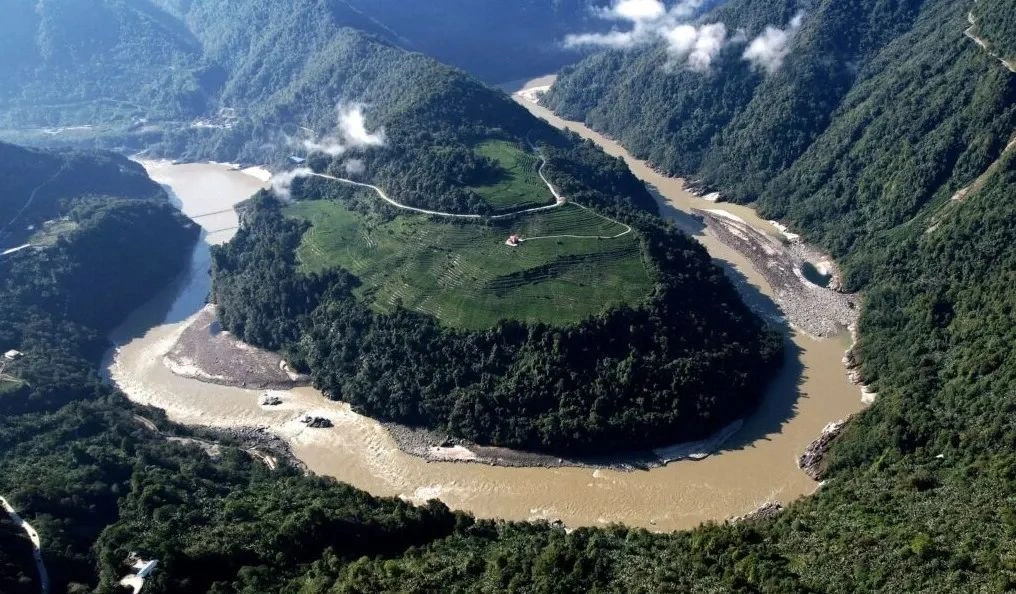 The Great Bend of the Yarlung Zangbo River in Medog, Tibet. (File photo)
Given the hydrological connectivity between the Yarlung Zangbo River and the Brahmaputra River, this project involves the management of transboundary water resources. China’s model of cooperation with South Asian countries reflects its commitment—as a responsible upstream country—to the rational utilization of shared water resources. The coordination mechanism already established between China and India serves as a clear example.
Although detailed public information on the project remains limited, in February this year, Indian Minister of State for External Affairs Kirti Vardhan Singh stated in a Rajya Sabha session that the Indian government had taken note of China’s approval of a major dam project on the lower reaches of the Yarlung Zangbo River in the Tibet Autonomous Region. He affirmed that, based on considerations of national interest, India has maintained close communication with China.
Indeed, as Minister Singh pointed out, a mature framework for communication has already been established between China and India on transboundary water issues. Based on an institutionalized expert-level mechanism and diplomatic channels formed in 2006, both sides have engaged in regular discussions on cross-border river-related matters and conducted necessary consultations on project planning and construction. Through expert-level meetings, the two countries have discussed the resumption of hydrological data sharing and other areas of cross-border river cooperation. China has provided hydrological data to India during upstream emergencies on multiple occasions, supporting India’s flood prevention and disaster mitigation efforts. Diplomatic-level communication has also remained smooth. The two sides have agreed to convene an expert-level meeting as soon as possible to restart hydrological data sharing and cooperation on transboundary rivers.
Furthermore, on July 23 of this year, a new round of meetings between the Special Representatives on the China-India boundary issue was held, where both sides agreed to strengthen cross-border exchanges and cooperation and to advance collaboration on transboundary river management. These mechanisms will continue to foster bilateral disaster prevention and mitigation cooperation, benefiting the people along the river basin.
From this comparison, it becomes evident that aside from some unjustified speculation regarding China’s development intentions, India’s legitimate concerns about ecological protection, downstream interests, and technical standards have already been conveyed and addressed through official channels. Therefore, after China officially announced the project’s commencement in July this year, most mainstream Indian media reported on the development, with outlets like The Indian Express and The Times of India citing engineering parameters and briefly noting India’s concerns over ecological protection. This not only lowered the tone of opposition but also provided relatively objective analysis.
Major Indian media outlets also widely circulated remarks made by Assam Chief Minister Himanta Biswa Sarma, who stated in an interview that there was “no current cause for concern” and “no reason for immediate panic.”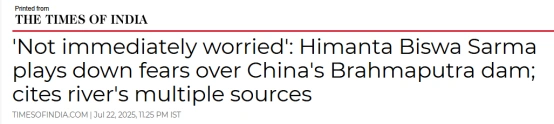 Screenshot from online sources
This media atmosphere is rather surprising. Compared to the previously speculative tone of Indian media, which tended to focus on China’s perceived geopolitical ambitions, the responses from the Indian government and press this time appear far more calm and measured.
In contrast, Western media outlets such as the BBC, CNN, Bloomberg, AFP, and Radio France Internationale (RFI) have repeatedly cited past Indian media narratives to deliberately stoke China-India divisions, with their intentions clearly apparent. The shift away from blindly echoing Western rhetoric by Indian media reflects, to a certain extent, a more favorable media environment for enhanced communication and warming ties between China and India.
China has consistently responded to doubts and accusations with transparency and sincerity—this has been key to earning the understanding and support of downstream countries. By addressing concerns openly and firmly refuting baseless accusations, China has laid a solid foundation for regional recognition. The project is the result of decades of in-depth research and feasibility assessments, fully drawing upon China’s extensive experience in clean energy development, climate change response, and management of extreme hydrological events, ensuring construction safety and comprehensive ecological protection.
2. Why Has India Remained Silent?
China’s dual assurances—both diplomatic and technical—are key reasons behind India’s reduced anxiety over the project.
On the diplomatic front, the Chinese Ministry of Foreign Affairs has proactively engaged in international communication and clarification, emphasizing China’s consistent adherence to the principle of “building good-neighborly and friendly relations” and clearly stating that it does not pursue unilateral interests, nor will it ever engage in actions that harm neighboring countries for its own benefit. “Hydro-hegemony” was never, is not now, and will never be an option for China.
China has signed more than 50 bilateral treaties and agreements on water resource management with neighboring countries along international rivers, and established over 10 transboundary river basin management institutions focused on cooperative development and ecological protection. Take the Lancang River as an example: as an upstream country, China has maintained sound communication and cooperation with downstream countries on related hydropower projects, achieving mutual benefit and earning positive recognition from all sides.
In developing transboundary rivers, China has always upheld a highly responsible attitude and possesses rich experience in hydropower engineering. The planning, design, and construction of the lower Yarlung Zangbo hydropower project strictly follow China’s highest industry standards—which are also global benchmarks—ensuring comprehensive implementation of the project. In terms of ecological protection, the project has proactively avoided multiple ecologically sensitive zones, preserving the original ecosystems to the greatest extent possible. Functionally, the project enhances disaster prevention and mitigation capacity across the entire river basin and poses no adverse impact to downstream regions. China has already initiated hydrological reporting and disaster reduction cooperation with relevant downstream countries and conducted necessary communication regarding the Yarlung Zangbo project. China will continue to strengthen cooperation with downstream countries to ensure that the project benefits local people and fosters friendship.
Officials from China’s Ministry of Water Resources have explicitly pointed out that the dam’s technical design adopts a run-of-river hydropower model, meaning it will not divert water from the Yarlung Zangbo’s natural course. This explanation is credible due to the geographical conditions in the lower Yarlung Zangbo region, which lack the natural topography necessary for building large-scale reservoirs. Consequently, the project utilizes a “bend-cutting and tunnel diversion” cascade development model, relying solely on water diversion and elevation drop to generate power. The volume of water stored within the tunnels is minimal, and the impact on downstream flow is negligible, fundamentally dispelling external concerns over “water storage and flood discharge.”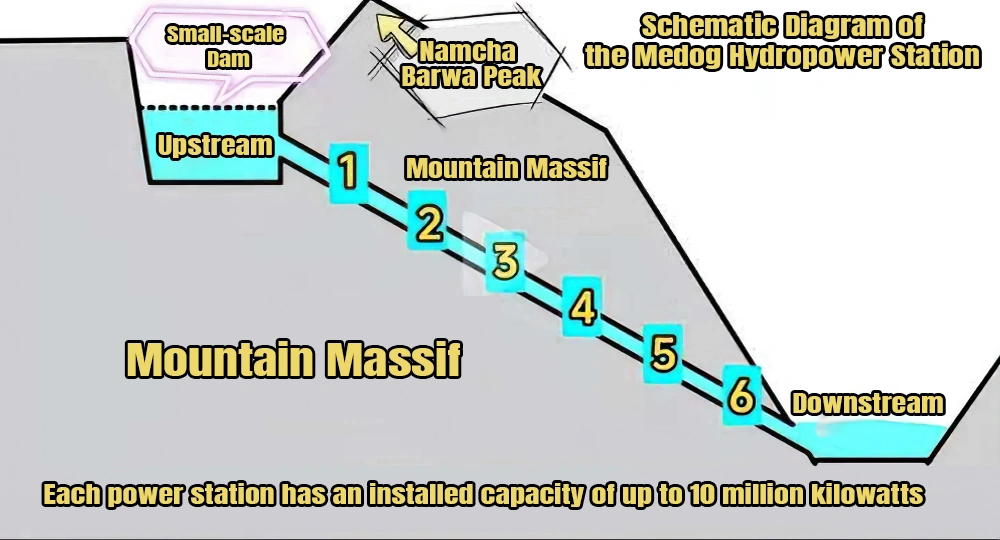
Contrary to external speculation that Yarlung Zangbo development is hindered by geopolitical factors, the hydropower project actually reflects humanity’s continued pursuit of harmonizing with and utilizing nature in a sustainable manner.
The project faces unprecedented challenges: the elevation exceeds 3,000 meters, with complex geological conditions, a fragile ecosystem, and an extreme climate. However, decades of accumulated technological expertise and innovation have enabled Chinese engineers to turn what was once considered “impossible” into reality—an effort that is now recognized as part of the global climate action agenda.
The Yarlung Zangbo hydropower project represents the pinnacle of China’s infrastructure capabilities. In terms of design, it employs world-leading ultra-high arch dam technology, with the dam height surpassing 300 meters and an earthquake resistance rating of 9 on the Richter scale. In terms of construction methods, the project has innovatively applied intelligent construction systems, achieving full-process digital monitoring of concrete pouring. Environmentally, the project adopts “multi-level water intake” techniques to effectively protect the river’s ecosystem, has built fish migration passages to preserve biodiversity, and implemented systematic soil and water conservation measures to minimize ecological impact on the plateau.
The planning, design, and construction of the Yarlung Zangbo project strictly follow China’s highest industry standards—maximizing protection of the original ecology, significantly enhancing disaster prevention across the river basin, and enabling India and other downstream countries to benefit through hydrological data sharing and cooperation. Under a bilateral agreement signed in 2006, China has continuously shared hydrological data with India, especially during the monsoon season. In cases of sudden upstream water events, China has repeatedly provided real-time hydrological data to India, offering strong support for downstream flood prevention and disaster response.
Even after the Galwan Valley conflict in 2020, data sharing on water resources has continued uninterrupted. In the recently concluded new round of Special Representatives’ meetings on the China-India boundary issue, both sides agreed to further enhance cross-border exchanges and cooperation on transboundary rivers. These ongoing cooperation mechanisms will continue to advance joint efforts in disaster risk reduction and benefit the populations along the basin.
As early as 2017, Indian authorities had already conducted assessments of the potential impact of the Yarlung Zangbo hydropower project on water flow. Technical institutions, including India’s Central Water Commission, concluded that the project’s impact on water flow within Indian territory would be negligible. Given this expert judgment, escalating the issue through diplomatic channels may not align with India’s broader strategic interests.
Furthermore, China’s long-standing usage of water from the Yarlung Zangbo River has been extremely limited—accounting for only 0.3% of the river’s total runoff. This proportion is virtually negligible and fundamentally incapable of causing any substantial impact on downstream countries’ water resources.
3. Will India Reverse Its Position?
Contrary to external speculation that geopolitical factors have long hindered the development of the Yarlung Zangbo River, the entire process in fact reflects humanity’s historical struggle to harness nature and achieve harmonious coexistence with it. This mega project faces unprecedented challenges: a plateau environment exceeding 3,000 meters in altitude, complex geological conditions, a fragile ecological system, and extreme climate variability. Yet, with decades of accumulated technological expertise and breakthroughs in innovation, China’s infrastructure teams are turning what was once deemed “impossible” into reality. The project is also widely seen as part of the broader “global climate action” agenda.
The Yarlung Zangbo River, the world’s highest river, traverses the planet’s longest and steepest canyon and possesses Asia’s richest undeveloped water resources. Upon completion, the project will help China effectively reduce its reliance on fossil fuels and play a significant role in achieving China’s dual carbon goals (“carbon peaking and carbon neutrality”), addressing global climate change, and promoting low-carbon development worldwide.
Although Indian policy and media have traditionally taken a cautious stance toward China’s hydropower projects, their recent subdued response indicates a carefully considered decision. This is partly the result of China’s diplomatic assurances, innovative technical design, and mature engineering experience, and also reflects India’s broader concern for maintaining stability and advancing bilateral relations.
At a time when the United States continues its extreme tariff bullying policies, signs of easing tensions between China and India have also emerged. In recent weeks, both sides have taken tangible steps to repair their relationship. In late June and early July, India’s defense and foreign ministers visited China to participate in a series of Shanghai Cooperation Organization (SCO) meetings—sending a positive signal about strengthening high-level exchanges between China and India. These visits were also interpreted as India fulfilling its commitment to support China’s hosting of this year’s SCO summit. Indian Prime Minister Narendra Modi is likely to attend the summit, which would further clarify the trajectory of warming bilateral ties. The trend of rapprochement is also evident in people-to-people exchanges. On July 24, India resumed issuing tourist visas to Chinese citizens, a move that has paved the way for the resumption of direct flights between the two countries.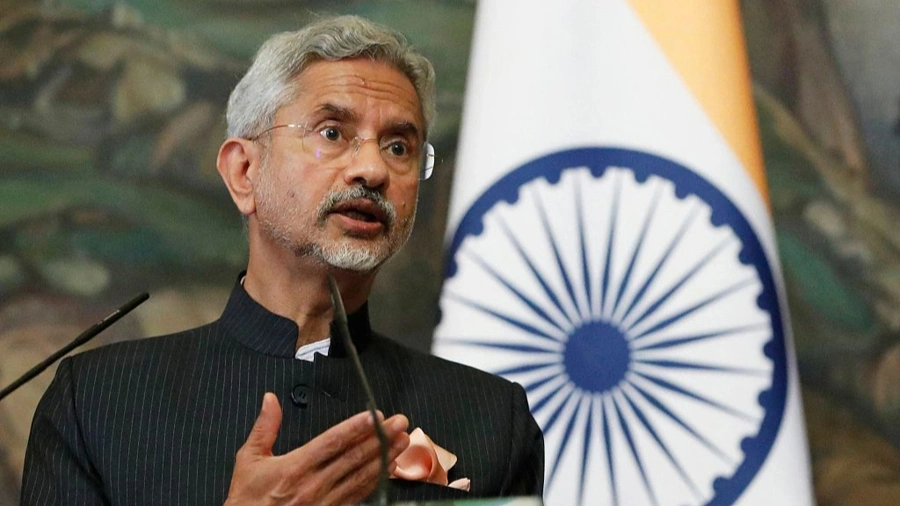 On July 14, Indian External Affairs Minister Subrahmanyam Jaishankar began his official visit to China. It was his first trip to the country in six years.
Of course, India’s current calm posture does not guarantee that it will refrain from provoking disputes in the future. Given the long-standing complexity of China-India relations—manifested not only in politics, economy, and culture, but also frequently influenced by geopolitical and international dynamics—it is all the more necessary for China to leave sufficient “evidence” of India’s current goodwill in the ongoing interactions. Doing so will not only help safeguard China’s legitimate rights and interests, but also serve to constrain any potential inappropriate behavior from the Indian side in the future, thus laying a more solid foundation for the stable development of bilateral relations.
There is no doubt that the easing of China-India tensions holds significant implications for global geo-economic stability. India’s traditionally cautious attitude toward Chinese hydropower projects, juxtaposed with its relatively restrained response to the Yarlung Zangbo project, reflects the complex interplay of technological, diplomatic, and strategic considerations—and indicates that this decision was indeed the product of deliberate contemplation.
Therefore, contrary to the predictions of some Western media, China’s Yarlung Zangbo project will not become a flashpoint in China-India relations, as some have suggested. On the contrary, India’s measured stance reflects a growing willingness to extend goodwill toward China, with the aim of easing tensions and pursuing pragmatic cooperation on broader issues—particularly in the areas of climate change, river management, and energy security, which offer vast potential for China-India collaboration.
Editor: LQQ

gus auyeung
or could it be another story of the frog and scorpion?