


Recently, China announced the goal of its Chang’e-7 mission—next year, it will head to the Moon to search for water. This “water” does not appear in lakes or seas like on Earth. It exists as water ice—a solid substance composed of many water molecules, typically in a hexagonal crystal structure. This resource is crucial for future crewed deep-space missions, as it can be converted into drinking water, breathable oxygen, and even rocket fuel.
Searching for lunar water: A 30-year challenge
In fact, the question of whether water exists on the Moon has puzzled humanity for more than 30 years. In 1994, the US Clementine spacecraft went to the Moon—the first dedicated lunar mission since the Apollo era 21 years earlier. Data returned by the mission indicated water ice deposits at the bottom of a permanently shadowed crater near the Moon’s south pole, with a volume of about 60,000–120,000 cubic meters—equivalent to a small lake about four football fields in area and 5 meters deep. This discovery brought lunar water research back into focus.
Subsequently, lunar water exploration faced setbacks, and the Moon was even once considered “dry.” It was not until 2009 that NASA’s LCROSS mission confirmed the presence of water through impact experiments at the lunar poles. Since then, the existence of lunar water has become widely accepted.
The most recent and direct evidence comes from China’s Chang’e-5 mission. On December 1, 2020, Chang’e-5 successfully landed in the Moon’s mid-latitudes—the first sampling-return mission since 1976. It carried a lunar mineral spectrometer and obtained high-resolution spectral data of the lunar surface, effectively performing a “field study” and detecting water signals on the Moon for the first time at such proximity, providing strong evidence for the widespread presence of lunar water.
After returning the samples to Earth, Chang’e-5 provided material from higher latitudes and younger lunar soil, completely different from previous samples and extremely valuable. China’s National Space Administration distributed 85.48 grams of research samples in seven batches to 131 domestic research teams to maximize scientific output. Using nanoprobes and infrared spectroscopy, researchers detected significant water content and identified how water is stored on the Moon.
Focusing on impact glass beads in the lunar soil, previously overlooked due to their “ordinary” formation from meteorite impacts, scientists used high-resolution nanoprobes to measure water content accurately. These beads proved to be an important reservoir for lunar water, capable of sustaining surface water cycles. As understanding of lunar water deepens, studying its cycle has become a research priority.
A new frontier for humanity
For the Chang’e-7 mission, all international payloads have now been delivered for the robotic lunar mission planned for launch in August next year.
Tang Yuhua, deputy chief designer of Chang’e-7, told CCTV that the spacecraft is China’s most complex lunar vehicle yet, consisting of an orbiter, lander, rover, hopper, and relay satellite. Chinese social media has shared mission slides showing how these components will work together to explore the Moon’s south pole and search for water ice in permanently shadowed craters.
Wu Weiren, chief designer of China’s lunar program, said Chang’e-7 is expected to land at a site receiving “over 100 days of continuous sunlight,” ideal for long-term operations. After landing, the hopper will dive into deep lunar craters to conduct on-site analysis and search for water.
Wu stated: “This mission is both challenging and honorable. If we can confirm water on the Moon, it would be one of humanity’s greatest contributions.”
The US and NASA have repeatedly stated that China and the US are racing to land astronauts on the Moon. China aims to achieve crewed lunar landings by 2030, while NASA’s earliest goal is mid-2027.
Regarding lunar water, no US mission is currently ahead of China. Earlier missions, including Intuitive Machines’ IM-2 lander and NASA’s Lunar Trailblazer orbiter, intended to search for lunar ice, failed to reach lunar orbit. NASA’s 2024 plan for the Viper polar rover to explore ice near the south pole has also been postponed to at least 2027.
Chang’e-7’s landing site, above 85° south latitude, faces extreme temperatures: highs of around -110°C (-166°F) and potentially below -230°C in shadowed craters. The rugged terrain requires precise landing in harsh conditions. Yu Dengyun, chief designer of China’s fourth phase of lunar exploration, said: “If Chang’e-4’s landing site was a tennis court, Chang’e-7’s is a ping-pong table.”
According to a 2024 paper in National Science Review, Chang’e-7’s preferred landing site is the Shackleton crater at the lunar south pole, where sunlight and shadow coexist in extreme contrast. NASA has also identified Shackleton’s rim and nearby ridges as key targets for its Artemis III crewed mission, with the same goal of detecting water ice.
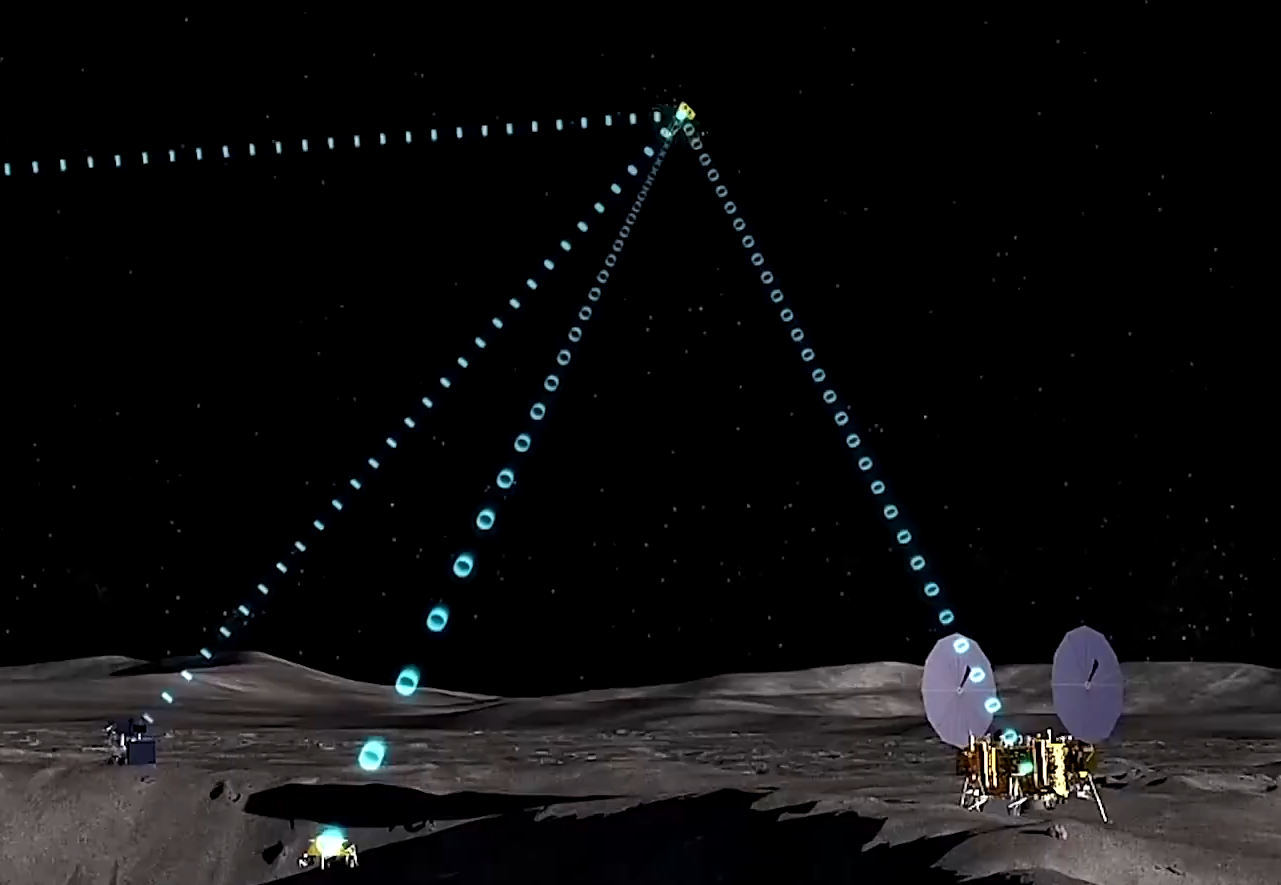
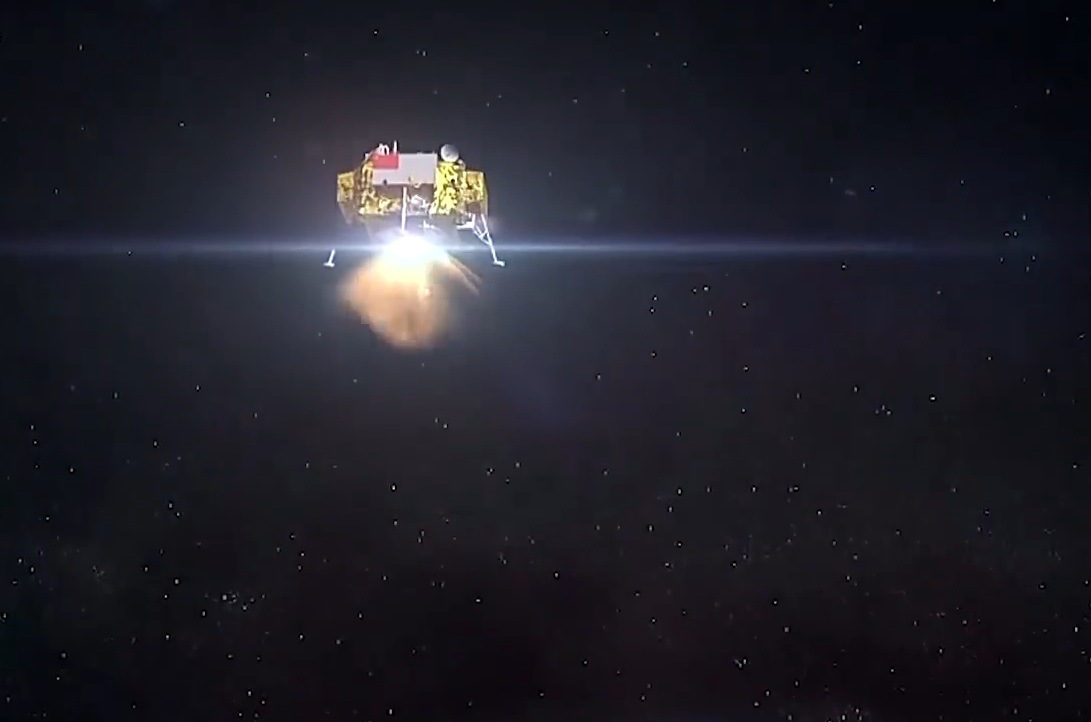
Lighting and communication challenges are greater than in previous missions, as the Sun near the lunar pole rises only a few degrees above the horizon, casting long shadows and complicating navigation and power generation.
Yu Dengyun emphasized that Chang’e-7 faces many first-of-their-kind challenges, and the risks are high. “Even if no other country has attempted this, we are setting new scientific goals for ourselves.”
Editor: Zhongxiaowen