


Amid the intensifying competition between China and the US over critical minerals, gallium—an important resource for defense, military-industrial applications, and emerging energy industries—has been widely underestimated in terms of strategic significance. China holds an absolute advantage in global gallium production and extraction technology, and has implemented multiple rounds of export controls. These have evolved from license management in July 2023, to a full export ban to the US in December 2024, to the inclusion of core gallium extraction technologies under control in January 2025, and finally to cross-departmental crackdowns on smuggling and transshipment in May 2025, forming a systematic regulatory mechanism.
Against this backdrop, CSIS released a major policy brief on gallium resources, analyzing the real-world impacts of China’s export controls on the US and its allies:
1. Domestic and international gallium prices have diverged sharply. After the controls in August 2023, the price of low-purity gallium in Rotterdam surged over 43% within a month. By early 2024, overseas prices were nearly double those in China. By May 2025, Rotterdam prices had risen more than 150% compared with pre-control levels, causing supply shortages affecting companies in the US, Japan, and South Korea.
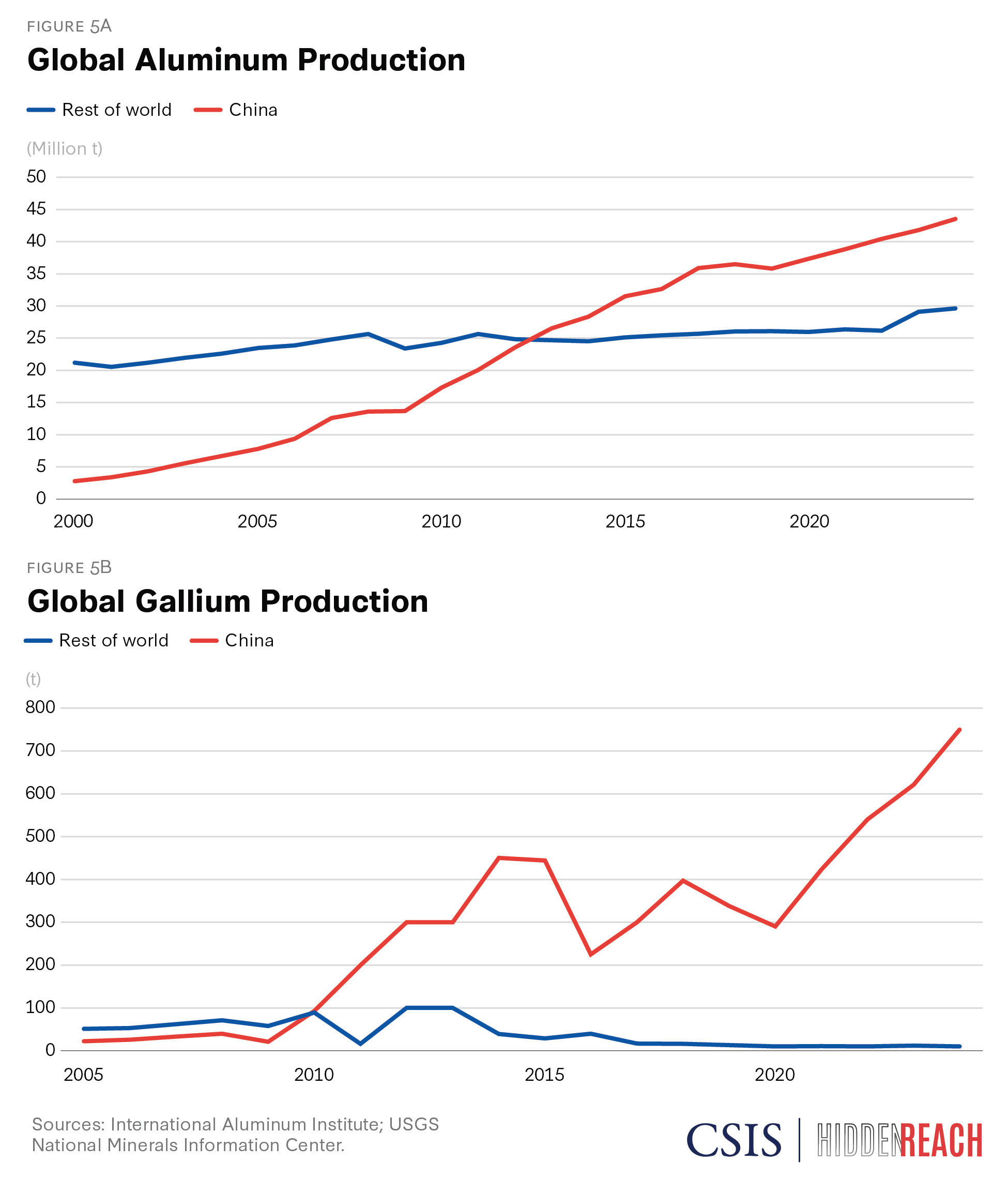
2. Non-China sources of gallium remain heavily dependent on Chinese raw materials, with China producing 98% of the world’s low-purity gallium in 2024.
3. China’s export controls over gallium extraction technologies further weaken the price competitiveness of non-Chinese producers, creating obstacles for the US to rebuild its supply chain.
Gallium’s strategic value is extremely high. It is widely used in advanced semiconductors, LEDs, defense radar systems, and more. Official US consumption statistics (about 20 tons annually) vastly underestimate reality, which includes imported gallium-based products totaling 200 tons. Over 11,000 US defense components rely on gallium, and nearly 85% of the defense supply chain involving gallium includes Chinese suppliers.
The brief systematically reviews China’s gallium export control measures, analyzes their impact on the global (especially US and allied) supply chains, highlights gallium’s strategic value, and proposes paths and policy recommendations for building resilience in the US gallium supply chain. It provides a key reference for understanding the dynamics of US-China competition over critical minerals, assessing supply chain risks, and formulating countermeasures. To help domestic readers understand and anticipate these developments, the Eurasian System Science Research Association (ESSRA) has compiled this translation. The article represents the author’s views.
1. How Is the US “Vulnerable”?
The US-China competition is heating up, with smoke rising in the critical minerals sector. Gallium, a key resource for defense, military, and emerging energy industries, has become a focal point in this resource battle. Historically, international attention has focused on China’s rare earth controls, underestimating the cascading effects a disruption in the gallium supply chain could trigger. CSIS’s latest analysis shows that China has the capacity to use gallium to strategically “choke” and severely impact the US and its allies.
As of May 2025, China has imposed export restrictions on at least 16 critical minerals and alloys. These materials are widely used in products ranging from consumer electronics to F-35 fighter jets. The controls have significantly disrupted US and allied supply chains, giving China leverage in trade and technology negotiations.
Although little known, gallium is critically important. China holds near-total dominance in gallium production, accounting for 98% of global output. In July 2023, gallium and germanium were placed on China’s export control list, becoming among the first minerals affected during the escalation of US-China trade restrictions.
At that time, the controls were more of a “warning shot,” designed to demonstrate China’s ability to influence the supply chain without causing excessive disruption to the global economy.
CSIS’s latest research, based on data from mineral supply chain intelligence firm Rovjok, indicates that the impact of China’s gallium export restrictions exceeds previous expectations. This stems from two key factors:
1. China’s regulation and enforcement over third-country transshipment has become increasingly strict.
2. China has imposed new controls over proprietary gallium extraction technologies, which are entirely unavailable overseas.
Facing the US’s expanding technological restrictions, China has continuously strengthened its gallium export controls. The measures have escalated from license management and end-user controls to a full export ban to the US.
The report urges the US to act urgently to develop alternative sources and extraction technologies for gallium. Fortunately, the required investment is not massive, and feasible solutions are within reach—the key is sustained policy focus, which is only just beginning to emerge.
2. Can the US Obtain Gallium Through Smuggling?
China has established a comprehensive legal and regulatory system, integrating previously scattered measures into a systematic export control framework. In 2020, the National People’s Congress passed the Export Control Law, granting China legal authority to control the export of “dual-use items.” This law also includes extraterritorial jurisdiction, meaning that foreign entities violating the rules may still face legal consequences.
In July 2023, China implemented these measures in practice, instituting a license management system for gallium and germanium exports. This was widely interpreted as a forceful response to Western attempts to “choke” China—the US, Japan, and the Netherlands had introduced semiconductor export controls from October 2022 to July 2023, banning the sale of advanced chips and semiconductor equipment to China.
China’s initial countermeasures were both measured and precise. Rather than a total embargo, export companies were required to apply for licenses and provide detailed information on end-use to the Ministry of Commerce. This sent a clear signal: if Western countries refuse to supply chips and equipment to China’s semiconductor industry, China could similarly block access to critical raw materials and intermediate products.
As US technological restrictions intensified, China escalated its countermeasures. In December 2024, following new US chip export controls targeting 140 Chinese semiconductor companies, China updated its export control list, effectively banning exports of gallium, germanium, antimony, and superhard materials to the US—the most stringent measures to date.
This ban also invoked provisions similar to the “long-arm jurisdiction” in the Export Control Law, extending Chinese legal authority abroad. Any organization or individual in any country or region violating the regulations faces legal consequences, closing loopholes for third-country transshipment.
Less than a month later, in January 2025, China further tightened control by including core gallium extraction technologies under export restrictions. These technologies are primarily used to separate and extract gallium from host minerals such as bauxite and zinc ore.
In May 2025, China launched a cross-departmental coordinated action to crack down on smuggling and transshipment of restricted critical minerals—coinciding with high-level US-China trade talks in Geneva. The National Export Control Coordination Mechanism Office convened over ten central ministries, including the Ministry of Commerce and the Ministry of State Security, as well as dozens of local officials, to strengthen enforcement on strategic mineral exports. Previous public enforcement achievements in gallium smuggling highlight China’s firm commitment to a robust emerging export control system.
The brief notes that China’s gallium control measures—from limited license requirements and end-user restrictions to full export bans and extraterritorial jurisdiction provisions—offer an important reference for analyzing the current trade war. China has demonstrated through concrete actions that it could replicate the gallium export control model across a broader range of strategic minerals, thereby cutting off critical resource supply chains to the US and its allies.
3. Is the US Gallium Strategy Doomed?
Faced with China’s gallium export restrictions, the US initially responded with relative ease, severely underestimating the potential impact. In 2023, during the months immediately following China’s first announcement of controls, US business representatives, policy think tanks, and government officials expressed optimism. They believed production lines would remain unaffected, and alternative supply channels would soon be available. Major chipmakers and downstream manufacturers repeatedly reassured the media and investors that their supply chains were already diversified, and that the impact would be “minimal.”
Analysts also cited international trade data, emphasizing that US direct imports of Chinese gallium were negligible and reliance on China was not significant. Even US National Security Advisor Sullivan confidently remarked at a late-2024 event at the Center for Strategic and International Studies (CSIS): “Global gallium sources are abundant.”
However, this blind optimism exposed deeper structural vulnerabilities in the US. As China’s gallium control measures tightened, these hidden risks became increasingly apparent and cannot be ignored.
The brief highlights three key developments, showing that the risks to US and allied supply chains from China’s gallium restrictions are far greater than previously imagined.
(1) Divergence of Domestic and International Prices Highlights Supply Shortages
China’s gallium export controls, implemented in August 2023, immediately caused sharp price divergences between domestic and international markets. Just one month after the controls were announced, the price of low-purity gallium on the Rotterdam exchange surged over 43%. This was largely due to Chinese suppliers pausing exports and focusing on applying for export licenses with the Ministry of Commerce.
While panic buying by international buyers prior to the controls contributed to the surge, prices remained elevated even after demand stabilized. As China’s gallium exports decreased, overseas prices—represented by Rotterdam quotes—diverged significantly from domestic prices. By early 2024, international gallium prices were nearly double domestic levels. Chinese customs data clearly shows that monthly gallium exports dropped sharply after the August 2023 controls.
Since China imposed a full gallium export ban to the US in December 2024, the situation has continued to deteriorate for the US. The upgraded measures included extraterritorial jurisdiction clauses, requiring global firms to strengthen compliance reviews, further tightening gallium export channels, and pushing international market prices to record highs. From mid-December, gallium prices climbed to the highest levels since 2011, with the upward trend continuing. By May 2025, the Rotterdam market price reached \$687/kg—over 150% higher than pre-control levels—while domestic prices in China fell.
Numerous on-the-ground cases indicate that supply shortages are now a reality, impacting not only US companies but also major Japanese and South Korean firms. US analysts worry that China may further tighten gallium exports.
(2) Non-China Gallium Supply Still Dependent on Chinese Raw Materials
The brief notes that China’s choice to control gallium stems from the unique market structure of this mineral. According to the US Geological Survey, China produced 98% of the world’s low-purity gallium in 2024—far exceeding China’s share in other strategic minerals such as germanium (68%) and antimony (48%). This enables China to effectively control downstream gallium supply, making it difficult for buyers to find alternative sources in the short term.
Gallium’s relatively small global annual consumption further amplifies China’s influence. Global annual demand for gallium is under 700 tons—tiny compared with bulk commodities like copper (25.9 million tons) or nickel (3.1 million tons). Although demand for gallium is growing rapidly, the limited market size means even small supply fluctuations can significantly affect the global supply, making gallium prices highly sensitive to supply adjustments.
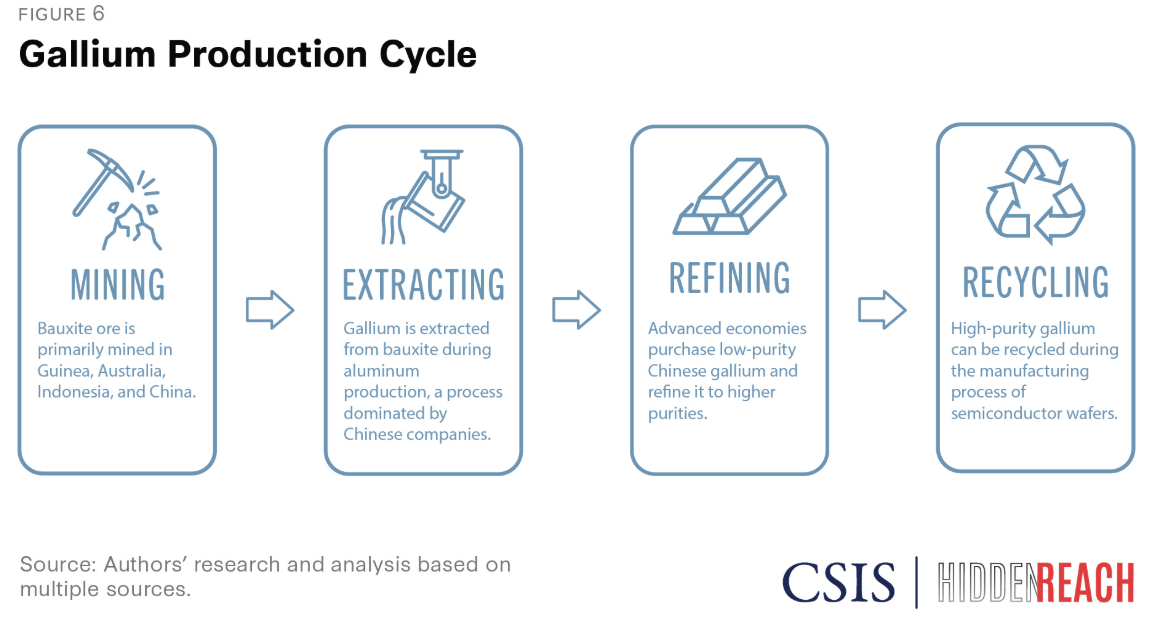
The brief points out that China’s advantage in the gallium supply chain is rooted in its leading aluminum industry. Gallium is not mined directly; it is a byproduct of smelting and refining, mainly extracted from bauxite and, to a lesser extent, from zinc ores.
Over the past two decades, China has become a global aluminum powerhouse, building the technological capability and industrial base for large-scale gallium production. With government support, state-owned aluminum giants such as Chalco deployed equipment to recover gallium from aluminum industry residues. Around 2010, China’s low-purity gallium output began to surge, flooding international markets. Over the following decade, most non-Chinese suppliers gradually exited the market.
Even companies that do not directly rely on low-purity gallium have been affected by China’s control measures. As the supply chain extends downstream, China’s direct influence diminishes somewhat—accounting for roughly 50% in refined high-purity gallium, and holding a limited share in intermediate products such as gallium compounds and semiconductor wafers—but the supply of raw materials for these downstream products remains firmly under China’s control.
The briefing notes that the lack of transparency in gallium trade data has led U.S. industry to be overly optimistic about supply chain resilience. For a long time, U.S. imports of low-purity gallium from China were limited, creating the appearance of diversified sources. After China implemented export controls in 2023, although U.S. imports of gallium from China dropped to zero, the U.S. was still able to import normally from allied countries such as Japan and Germany, seemingly suggesting that it could easily circumvent China’s controls. Reassuring the U.S. further is the presence of domestic suppliers in the high-purity gallium sector, reducing foreign dependence even more.
However, the briefing emphasizes that China’s upgraded control measures are shattering this false sense of security. The license mechanism introduced by China’s Ministry of Commerce requires gallium importers to provide detailed end-user information. For foreign companies supplying gallium products to U.S. firms at various points in the supply chain, once their identities are exposed, they face the risk of supply cuts—losing access to this irreplaceable raw material source in China. As a result, foreign suppliers are weighing their options: the U.S. gallium market is relatively limited, making it difficult to offset potentially huge losses.
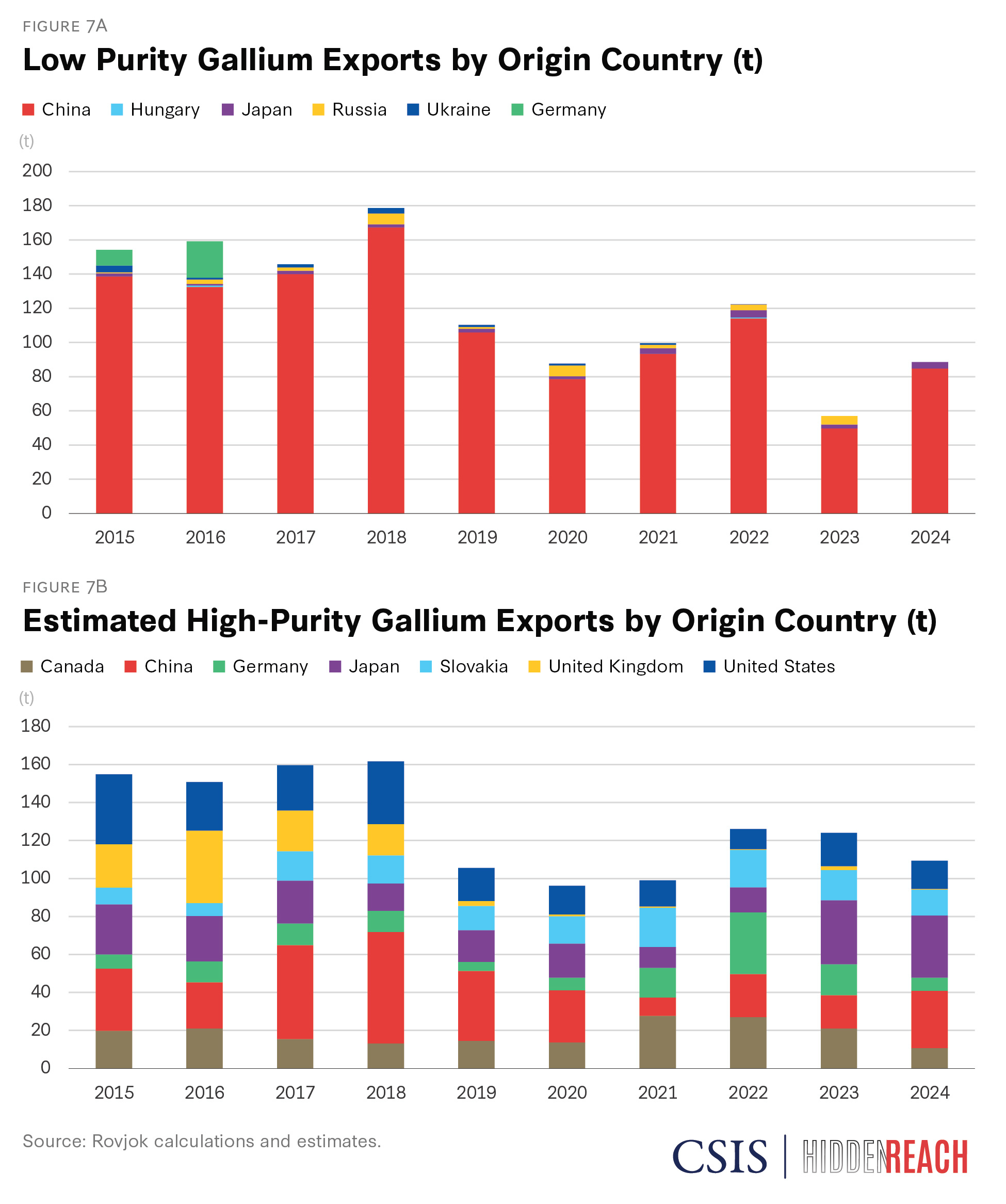
The expansion of China’s control scope could also begin to affect existing alternative sources of gallium raw materials. These alternatives are limited and mainly rely on recycling facilities that extract gallium from waste generated in downstream wafer substrate manufacturing. For example, in Japan, the composition of domestically refined raw materials is about 40% from domestic recycled waste and 60% from primary low-purity gallium imported from China. However, Japanese recycling facilities have limited production capacity and relatively high costs, ultimately relying on existing inventories to maintain operations. As China further restricts upstream supply, these inventories are inevitably depleted.
The briefing notes that a 2024 authoritative study by the U.S. Geological Survey strongly supports these concerns. Published before China updated its export control measures, the study showed that a complete Chinese ban on gallium products would deal an \$8 billion blow to U.S. GDP. The semiconductor industry would suffer the most, fully exposing the vulnerability of the U.S. strategic supply chain to Chinese controls.
(3) New export control rules on gallium extraction technology further weaken non-Chinese producers’ price competitiveness
The briefing stresses that China’s dominance in the gallium supply chain is not limited to the raw material itself; it extends to a more subtle but equally critical area: specialized resin technology for extracting gallium from bauxite. As mentioned earlier, China’s advantage in gallium production comes not from monopolizing mineral resources (gallium reserves are quite abundant) but from technological strength, allowing large-scale, low-cost extraction.
Chinese state-owned enterprises have invested heavily in gallium extraction processes, gaining a competitive edge globally. This process requires extracting gallium from Bayer liquor produced during bauxite processing. The entire procedure is energy-intensive, chemically complex, and environmentally demanding. The costliest step is separating commercially valuable gallium from the slag. Chinese firms have achieved technological breakthroughs, developing new processes that reduce costs and increase efficiency.
Chemical companies like Lanxiao Technology have successfully developed chelating resins specifically tailored for gallium recovery. These resins excel in adsorption capacity and lifespan, allowing producers to extract more gallium per production cycle while effectively reducing material losses.
Leveraging the scale of China’s gallium industry, Chinese companies can mass-produce these resins, creating a cost advantage that overseas competitors cannot match. Consequently, Chinese factories can produce gallium at lower costs, further consolidating their market dominance and entering a virtuous cycle. This high-performance resin is China’s trump card in achieving production costs far below those of Western peers.
Crucially, production capacity for these resins outside China is minimal, with almost no substitutes. Lanxiao Technology accounts for nearly 90% of global supply. Although alternative gallium extraction methods exist, they are more expensive and degrade in performance quickly. As a result, even under normal market conditions, non-Chinese producers cannot compete on price with Chinese companies.
Recognizing the strategic value of this technology, the Chinese government decisively expanded export controls in 2025, including the resins themselves. The January policy update specifically listed “technologies and processes for extracting metallic gallium from alumina mother liquor using ion exchange, resin methods, etc.” on the Ministry of Commerce’s export control list. According to industry insiders, exports of high-performance resins have now completely stopped under the new regulations.
This move undoubtedly sets an insurmountable barrier for the U.S. and its allies in rebuilding a domestic gallium supply chain. Even with raw material supply and refining infrastructure, overseas producers lacking equivalent high-performance resins cannot gain a cost advantage. Unless corresponding incentives support large-scale resin production, non-Chinese producers will continue to be at a competitive disadvantage.
(4) Why gallium has become the U.S.’ “Achilles’ heel”
Gallium is widely used across advanced technologies, including semiconductors, LEDs, laser diodes, and permanent magnets. Yet the briefing notes that official statistics greatly underestimate gallium’s true value to the United States.Data released by the U.S. Geological Survey shows that U.S. annual gallium consumption is only around 20 tons. However, if imports of gallium-based wafers, magnets, and LEDs are included, actual consumption may reach as high as 200 tons per year.
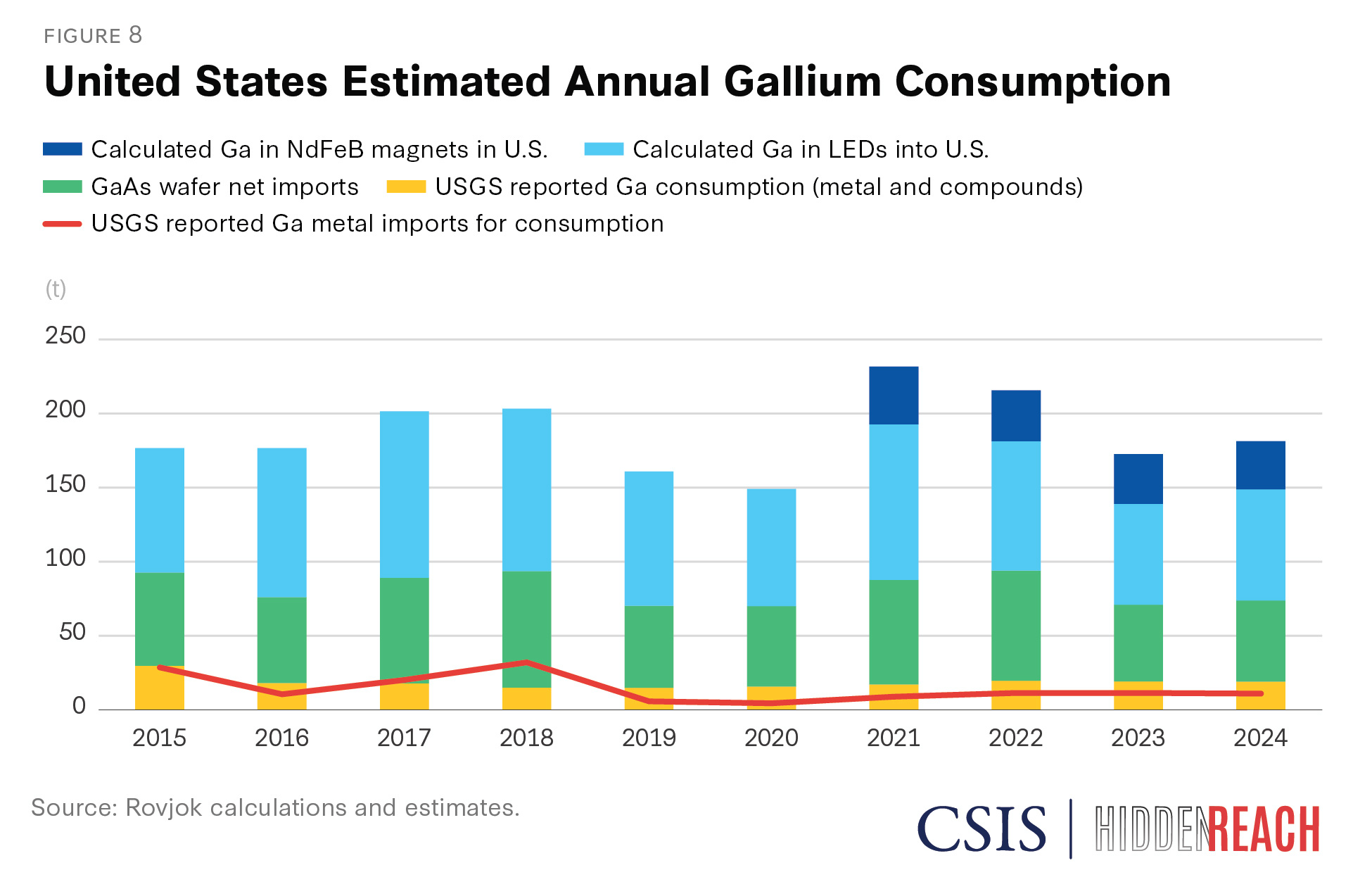
Gallium holds a critical position in key defense supply chains and has become an important strategic card in China’s hands. The briefing notes that China’s decision to control gallium first, rather than other commercially more valuable minerals, cleverly signals to the world that China can influence the defense production of the U.S. and its allies while avoiding significant impact on its own economy.
The importance of gallium for advanced defense systems cannot be underestimated. Gallium compounds can produce “wide-bandgap” semiconductors, which outperform silicon semiconductors under extreme conditions. For example, gallium nitride (GaN) transistors can operate stably under high voltage and high temperature with minimal loss, making them the preferred choice for cutting-edge applications such as advanced radar and electronic warfare systems that demand high power conversion efficiency.
The U.S. defense sector has used gallium-based technologies for decades, and the importance of gallium compounds has only increased. In recent years, GaN chip design has matured and manufacturing costs have significantly decreased, providing strong momentum for next-generation radar development. Large-scale application of GaN chips allows radar modules to shrink in size while significantly improving detection capabilities, achieving high-precision target tracking at greater distances.
GaN-based modules are deeply integrated into U.S. military’s flagship radar systems, including the Navy’s AN/SPY-6 radar, the Marine Corps’ G/ATOR radar, the Army’s LTAMDS radar, the Missile Defense Agency’s AN/TPY-2 radar, and the upgraded AESA radar for the F-35 Lightning II joint strike fighter.
In the construction of a nationwide layered missile defense system (such as the “Golden Dome” plan proposed by former President Trump), GaN radar systems are also crucial. Lockheed Martin’s GaN long-range identification radar is an important support for this system. It is currently undergoing field tests in Alaska and is expected to be officially deployed next year, forming a solid barrier against ballistic missile threats.
At the same time, the U.S. Department of Defense has invested millions of dollars in developing another emerging compound—gallium oxide. Compared with GaN, gallium oxide has a wider bandgap and superior performance potential, potentially becoming the core technology of a more powerful and efficient next-generation defense electronics system.
The briefing emphasizes that these technological breakthroughs have created a deep dependency on gallium-based technologies in the defense systems of the U.S. and its allies. According to public data, over 11,000 components used by the Department of Defense rely on gallium, and nearly 85% of gallium-related defense supply chains include at least one Chinese supplier.
In recent years, key U.S. allies and security partners—from Poland to Saudi Arabia—have procured U.S.-made GaN radar systems. Thus, the briefing points out, the supply chain vulnerability has spread from the U.S. homeland to its most critical strategic partners, where any disruption can have wide-ranging effects.
5. How the U.S. can build gallium supply chain resilience
The briefing analyzes that the U.S.’s ability to free itself from reliance on Chinese gallium depends on the speed of establishing domestic and allied alternative production capacities. Once production facilities in the U.S. and friendly countries are rapidly brought online or restarted, the security of key U.S. supply chains will be significantly enhanced.
Currently, the U.S. is actively promoting a gallium industry reconstruction plan to achieve supply chain diversification. However, the success of these strategic layouts depends critically on whether the federal government can provide sufficient policy support to ensure that relevant industries remain insulated from Chinese influence.
(1) Limits of market mechanisms
At first glance, the U.S. gallium supply dilemma seems to have a clear market-based solution. China tightening global supply will inevitably drive up gallium prices, attracting new producers and eventually creating a diversified supply structure. However, the unique characteristics of the gallium market mean that relying solely on market mechanisms is far from sufficient.
Moreover, the gallium market is tiny compared to the massive aluminum market, which exacerbates the challenge for the U.S. and its allies. For Western alumina refineries, adding new gallium extraction lines entails additional technical complexity and operational risk, with minimal financial return, representing only a small fraction of alumina business revenue.
China possesses the most advanced resin technology needed for gallium extraction, giving its domestic refineries a significant cost advantage and intimidating foreign competitors. Without market conditions supporting large-scale resin production outside China, non-Chinese companies are inevitably at a cost disadvantage in primary gallium production.
The briefing concludes that although the current market situation—soaring demand, tight supply, and skyrocketing prices—has sparked global interest in emerging gallium producers, to truly break this strategic impasse, the U.S. and its allies must provide sustained policy support to incentivize companies to enter the market and establish a foothold.
(2) Domestic Development Opportunities in the U.S.
Faced with the severe challenge of constrained market supply, U.S. government intervention has become imperative. The briefing notes that only through such intervention can the short-term, long-term, and emergency demand for gallium materials be effectively secured. Although some U.S. government agencies have begun seeking alternative suppliers, the immediate priority is to move from planning to concrete action, including actively supporting private-sector innovation initiatives.
The briefing observes that the federal government’s strategic plan to expand domestic gallium capacity has already taken shape. In 2024, the Department of Energy’s Critical Materials Innovation Center announced up to \$10 million in federal funding to support early-stage R\&D in key mineral extraction technologies, with gallium technology included among the priorities. This funding focuses on overcoming critical processes such as efficient recovery of gallium byproducts, precision separation, and deep concentration. For a long time, the U.S. has lagged behind China in these core technologies, particularly in advanced resin extraction techniques. The Department of Defense has also begun leveraging authorities under the Defense Production Act to prioritize support for gallium recovery projects.
Although these initiatives mark a promising start to meeting long-term demand, more robust measures are urgently needed in response to China’s progressively tighter export restrictions. For instance, although the Department of Defense maintains a strategic stockpile of critical materials, gallium is not included. Even after China implemented export controls, the Defense Logistics Agency, responsible for managing the stockpile, did not list gallium on its 2025 procurement schedule. While the stockpile system is not perfect, establishing a minimum gallium reserve would serve as a low-cost insurance measure.
If the federal government intensifies support, ongoing efforts to explore domestic supply alternatives are likely to accelerate and become more efficient. The Idaho National Laboratory is leading the development of an integrated separation and processing system for gallium-bearing rare earth ores, with the Sheep Creek deposit in Montana as a key focus. Recent geological surveys indicate that Sheep Creek has the highest gallium content among U.S.-known deposits. Private partners such as U.S. Critical Materials, Inc. are actively working to convert this discovery into commercial production.
The briefing highlights a project by MTM Critical Metals as particularly noteworthy. Its production facility in Texas has obtained preliminary permits and plans to use a patented process to recover gallium from industrial waste. According to the schedule, the plant is set to officially commence operations in early 2026. This rapid timeline is exceptional in the field of critical minerals and is expected to establish the U.S.’s first domestic gallium recovery facility largely independent of Chinese influence.
MTM is reportedly in advanced negotiations with Indium Corporation, a leading U.S. supplier of high-purity gallium to semiconductor manufacturers, to sign a legally binding long-term agreement. The agreement is intended to ensure stable supply of waste-derived raw materials and set minimum purchase prices for protection.
Meanwhile, upgrading existing industrial facilities offers a shortcut to expanding production capacity. For example, the Gramercy refinery in Louisiana—operated by Alcoa, the only active alumina refinery in the U.S.—requires only relatively minor equipment upgrades to achieve gallium byproduct recovery. Similarly, Nyrstar announced a \$150 million investment to build a gallium-germanium processing facility at its existing zinc plant in Tennessee.
However, the briefing also points out that strong government support is indispensable for long-term success. In October 2023, Nyrstar’s Clarksville zinc smelting project was abruptly halted and indefinitely postponed. The company had planned to deploy gallium-germanium recovery equipment but was forced to abandon the project due to financial constraints and technical bottlenecks. A similar fate befell the Pinguera gallium refinery in Australia, which lost commercial viability in the 1990s due to low prices and lack of policy support, ultimately shutting down. Both cases illustrate the critical importance of sustained government incentives, reliable purchase contracts, and clear policy signals. They convey an important message to the market: strategic mineral production can yield long-term, substantial returns.
(3) Collaboration with Allied Producers
The briefing emphasizes that the U.S. cannot rapidly reconstruct the gallium supply chain on its own. While establishing a robust domestic supply system is wise, the immediate priority is to significantly expand gallium production capacity outside of China. Efforts should focus on building byproduct recovery projects at large alumina refineries, most of which are located abroad.
Trusted partners in Canada, Australia, Japan, and Europe possess unique technical capabilities and resource reserves that can effectively supplement U.S. production capacity. Recently, the U.S. has included Australia and the United Kingdom in the “domestic sources” category eligible for Defense Production Act funding, representing a key step in leveraging allies’ advantages. Going forward, deeper international collaboration with more like-minded allies will be necessary.
Canada
Canada currently hosts North America’s only gallium producer—Neo Performance Materials. Although the company primarily engages in waste recovery, it can play an important transitional role before new primary production projects come online. Additionally, Rio Tinto is actively exploring extraction of gallium from tailings at its Saguenay–Lac-Saint-Jean alumina refinery in Quebec. If commercial production proceeds successfully, Rio Tinto’s annual output could reach 40 tons, greatly enhancing the diversification of North American supply.
Australia
Australia may be the best near-term option for large-scale gallium production. South32 and U.S. Aluminum operate alumina refineries in Western Australia, whose production capacities are the largest outside China. Since gallium is a byproduct of alumina refining, these companies enjoy natural economies of scale. Industry analysis indicates that constructing gallium byproduct recovery facilities at existing plants is cost-effective and could yield more than 40 tons per year.
Meanwhile, Nimy Resources is collaborating with M2i Global to build a secure and reliable gallium supply chain for U.S. defense applications. This partnership highlights the importance of U.S. government demand signals in leveraging early-stage private-sector investment.
Japan
Japan has reached agreements with the U.S. and South Korea under the trilateral framework announced in June 2024 to strengthen key mineral supply chains, including gallium. Japan has a long history of gallium use in advanced electronics and is one of the primary gallium producers outside China. This agreement reflects strategic consensus among the three nations to enhance refining and processing capabilities, a key step in reducing reliance on Chinese semi-finished products.
Europe
Europe also shows strong momentum in industrial revitalization. Greece’s Metlen Group is advancing a €295 million alumina capacity expansion project, including gallium extraction, with a goal of reaching 50 tons per year by 2027. The project is listed under the EU Critical Raw Materials Act strategic projects, enabling priority permitting and funding support. At the same time, Germany’s historic gallium-producing Stadel refinery has announced a restart plan, expected to add 40 tons per year to the global market by 2027.
However, the briefing notes that the U.S.’s ability to successfully access these new capacities largely depends on the trajectory of global trade relations. The Trump administration’s strained relations with many traditional allies present non-negligible political obstacles. European policymakers are more likely to adopt a “home advantage first” strategy, prioritizing domestic clean technology and defense industry needs. In light of this, the U.S. and Europe must plan ahead and engage in strategic dialogue on long-term supply agreements before production capacity comes online, in order to secure stable supply channels for the U.S.
Looking at the broader geopolitical landscape, Kazakhstan, though not a staunch U.S. ally, cannot be overlooked for its potential value. The Padvolar refinery in Kazakhstan specialized in primary gallium production in the early 2010s, and the country recently announced plans to restart the production line in the second half of 2026, targeting an annual output of 15 tons.
6. What Can the U.S. Government Do?
With China’s overwhelming advantage in upstream minerals critical to high-tech supply chains, it holds a significant leverage over Western competitors. The key test for the U.S. and its allies is whether they can act swiftly to address strategic gaps. The briefing suggests that concrete measures can allow the U.S. and its allies to turn the situation around.
Even if only a portion of the aforementioned domestic and international projects come online as scheduled, non-Chinese production could increase by up to 170 tons, approximately 24% of current global supply. This increase would not only meet most of the allies’ demand but also help reshape the global supply-demand landscape.
To help the U.S. seize these opportunities, the briefing offers four policy recommendations:
(1) Leverage existing Defense Production Act authorities to establish a strategic gallium defense stockpile
The briefing recommends that the Department of Defense expand the Strategic and Critical Materials Stockpile program to reserve at least 50 tons of gallium over five years. Priority should be given to procurement from non-Chinese suppliers through long-term purchase agreements, managed by the Defense Logistics Agency. Given gallium’s one-year shelf life, precise inventory management is needed to prevent material degradation and ensure sufficient and reliable supply during disruptions. The recently passed Consolidated Appropriations Act has allocated \$2 billion for critical mineral stockpiles, operated via the National Defense Stockpile Transaction Fund. A portion of these funds could be directed toward gallium stockpile development to robustly safeguard defense needs. Congress should also mandate annual assessments of gallium supply adequacy under the National Defense Authorization Act, ensuring supervision and planning become routine and institutionalized.
(2) Expand federal funding to support gallium-germanium recovery pilot projects at existing zinc and alumina facilities
The briefing notes that the DOE’s Industrial Efficiency Office, in coordination with the Department of Commerce, should establish a pilot retrofit fund modeled on the Section 48C Advanced Energy Project Tax Credit mechanism, specifically to support the addition of gallium recovery capacity at existing facilities. Key targets include South32’s Worsley alumina refinery in Western Australia and Nyrstar’s Clarksville smelter. Funding should focus on early demonstration projects at high-purity alumina and zinc production facilities to leverage the economic advantages of byproduct recovery. Related agreements should be complemented with guaranteed minimum prices and purchase protections supported by stockpile mechanisms.
(3) Establish an allied joint procurement mechanism to mitigate early-stage investment risks and stabilize market demand signals
The briefing suggests that the U.S. should collaborate with core allies such as Japan, the EU, and Canada to establish a joint gallium procurement system, modeled on NATO’s strategic airlift framework, to collectively absorb initial output from new projects. Forward purchase agreements could be used, with minimum price guarantees referenced to China’s domestic gallium benchmark price, protecting new producers from Beijing’s potential predatory pricing. The Defense Logistics Agency, Japan Oil, Gas and Metals National Corporation (JOGMEC), and the EU’s Raw Materials Innovation and Technology Research Institute could jointly manage this initiative.
(4) Deepen multilateral coordination under the Mineral Security Partnership, promote cross-border investment facilitation, and strengthen information sharing and approval processes
The briefing recommends that MSP members jointly build a full-chain gallium project tracking database covering key stages of mining, refining, purification, and recovery, establishing standardized mechanisms for sharing information on expected capacity, approval progress, and financing needs. The U.S. should advocate for “green channels” for gallium projects within allied jurisdictions, drawing on the Five Eyes’ successful collaboration on clean energy infrastructure to streamline approval procedures. Additionally, the MSP should coordinate diplomatic efforts with key gallium-producing countries such as Greece and Germany, ensuring that the U.S. secures stable gallium supply channels under the EU’s Strategic Raw Materials framework.
Editor: Zhongxiaowen
1、Aidan Powers-Riggs、Brian Hart、Matthew P. Funaiole
https://www.csis.org/analysis/beyond-rare-earths-chinas-growing-threat-gallium-supply-chains