


Today’s discourse on the Global South is, in essence, a response to the existing inequalities in global development. These inequalities manifest both at the level of international law and within the broader international order, reflected in the dominance of major powers and the vulnerability of smaller nations to coercion. Such conditions have been clearly outlined in China’s recently released global governance documents. The discussion of the Global South operates on two levels: the practical and the epistemological.
The Global South as a Future-Oriented Theory
From an epistemological perspective, one might ask why China consistently emphasizes its own membership in the Global South. In fact, China has long stressed that development inequality has created today’s North-South divide, and it seeks to promote a more just and equitable international order by exploring practical pathways toward that goal.
From its historic identification with the Third World to its contemporary engagement with the Global South, China’s policy-oriented and intellectual articulations around this concept essentially represent an epistemological approach to understanding the world, as well as a conviction in moving the world toward greater equality. The current discussion of the Global South is highly consistent with China’s development initiatives and global governance initiatives, addressing how to realize, through a non-interference approach and international mutual assistance, a genuine transformation of the international order from formal equality to substantive equality. The discussion of the Global South is therefore both a future-oriented theory and a practice grounded in independent development and the modernization of autonomous development capabilities.

The Global South today is intrinsically linked to the Afro-Asian solidarity movement of the 1950s and the Third World movement of the 1960s. This connection is not simply China’s wishful thinking; rather, it reflects the autonomy of countries from the periphery and semi-periphery of the world system. This shared aspiration generated historical resonance among Third World countries and gave their political demands a common character—a long historical process that continues to unfold. The movement’s purpose was essentially to seek greater solidarity and, on that basis, to build a more equitable new international political and economic order.
However, the new order does not mean a wholesale negation of the old order; rather, it means continuously advancing on the foundation of the old order to move the shared international order of humankind in a better direction. The key starting point for the evolution of this order lies in identifying theoretical insights from the imbalances, inequalities, and contradictions in the development of the international economic and political order, and from the conflicts that existing theories of international order and methods of international law cannot explain. This is a genuine historical practice: seeking the potential for further theoretical development from historical practice and concrete cases.
China and the Practical Significance of Its Modernization
China’s modernization is an integral part of the broader movement of the Global South, or the Third World. As part of this ongoing advance, our historical experience shows that it is necessary, through struggle, solidarity and mutual assistance, to jointly promote the organic formation of a new order. Our four major initiatives are all centered on how to achieve substantive equality among nations.
A brief historical overview shows that the development of the international order toward equality is a continuous, ongoing process. In the early history of international relations, the birth of the concept of sovereign equality did not mean that it was immediately realized in practice; it was precisely the outcome of continuous struggle.
Initially, the notion of sovereign equality applied only to a handful of Christian states in Europe and was geographically limited to Europe. With colonial expansion and the responses and resistance to it from various regions, the concept of sovereign equality began to be extended to more actors, most notably with the establishment of the League of Nations in the early 20th century. This at least recognized, institutionally, legally, and theoretically, formal sovereign rights. The process continued until the founding of the United Nations in the mid-20th century, whose Charter explicitly stipulates the principle of sovereign equality for all states, regardless of size.
Yet legal equality in principle is not enough. The global governance initiatives put forward by China today aim to achieve substantive equality among all countries through development. In the mid-20th century, many Marxist-influenced scholars from Latin America began to develop dependency theory. Dependency theory clearly shows that, although empires as political entities disappeared after the Second World War, and sovereign equality among states was enshrined as a legal principle in the UN Charter, this formal legal equality has not truly guaranteed genuine equality among countries.
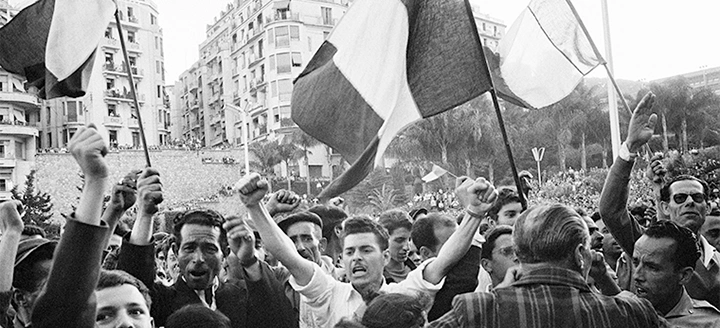
Decolonization abolished empires only in formal political terms, but did not genuinely eliminate the influence of colonialism and imperialism in the economic, cultural, and social spheres. Dependency theory therefore argued that it is necessary to truly improve the fate of former colonies and semi-colonies and free them from a world market monopolized by the colonial powers. Building on this analysis, they discussed the questions of monopoly and how to de-monopolize and achieve de-dependency.
Regrettably, while dependency theorists revealed the essence of monopoly, they were unable to tell Third World countries exactly how to achieve de-dependency. We can observe that from the 1950s to the present, Third World countries have been continuously exploring paths of de-dependent development. There have been setbacks, yet after more than half a century of practice, many colonies and semi-colonies in the 1950s almost unanimously chose similar policy approaches.
These policy approaches can be summarized as follows. First, they were aware of their disadvantaged position in the international political and economic structure and recognized a key problem: a large amount of the surplus value generated by their economic production could not be transformed into effective accumulation and channeled into domestic economic circulation. Many countries therefore chose nationalization to ensure the formation of their own pillar industries, so that the value created through trade with the former colonial powers of the North could, to some extent, be retained in their own societies and enter the reproduction of total social capital.
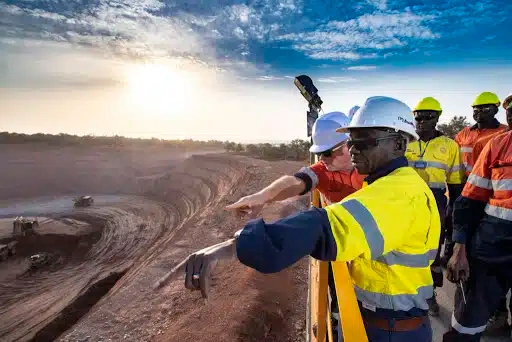
Second, they also realized that building autonomous development capacity was not merely an economic issue; more importantly, it required a talent reserve. Hence, they hoped to achieve a certain degree of knowledge transfer—from the Global North to the Global South, or from former colonial metropoles to semi-colonial and former colonial countries. To accomplish this, they clearly understood that cultural, economic, and political mutual assistance among former colonies and semi-colonies was absolutely necessary.
As we can see, these practical programs were built around three core pillars: cultural mutual assistance, economic mutual assistance, and political mutual assistance. Therefore, the vision of order that China expresses today through the Global South discourse resonates with the spirit of the Bandung Conference. China’s modernization is essentially a transformation from a semi-peripheral position in the global system and a successful case of autonomous development that has achieved de-dependency.
The Formation of the International Order Is an Eternally Interactive Process
China’s success is not a success built on Eurocentrism. As clearly stated in the report to the 20th National Congress of the Communist Party of China, ours is a development model that achieves primitive accumulation without relying on exploitation or colonization. The theorization of this path, quite evidently, cannot find a place within the old Eurocentric framework. What can truly provide a theoretical foundation for de-dependent development and modernization is Marxist dialectical materialism.
It is precisely on the basis of dialectical materialism that China understands the world order, holding that the creation of world order is not determined by a few major powers alone, but is realized through the cooperation and the contradictory movement between major powers and other countries.
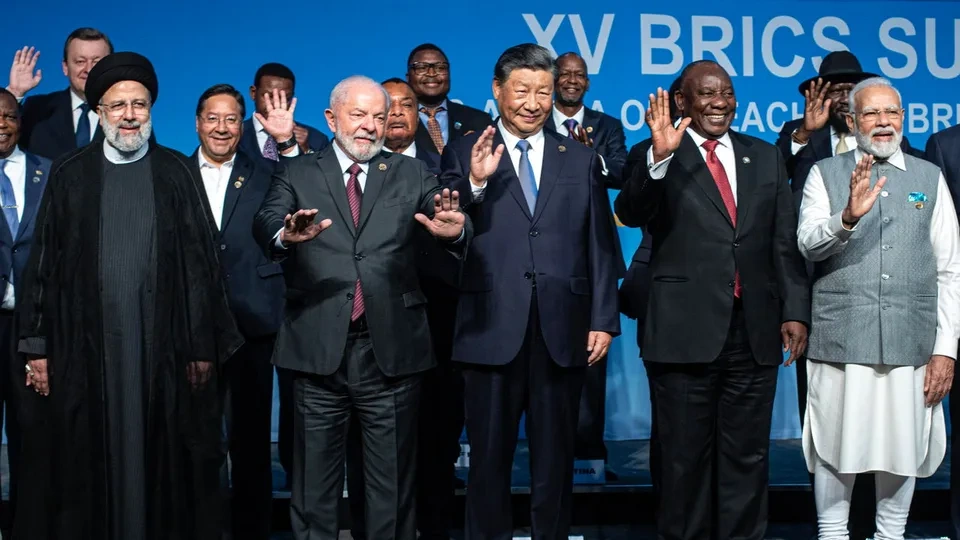
Therefore, the epistemological contribution of today’s discussion of the Global South lies in offering a transformative perspective. Previous discussions tended to understand the formation of order from a top-down, elitist viewpoint. By adopting a people-centered perspective, the mass viewpoint of history, and the perspective of dialectical materialism, we see that the formation of the international order is never a one-way process; it is co-constitutive and interactive. Today’s international order has been shaped by the historical synthesis of forces—the interaction between rulers and the ruled, and between hegemonic and counter-hegemonic forces. Hence, the international order is in essence a process of perpetual motion. The direction of this motion is revealed in our present discussion of the Global South: we hope to further advance the international order from formal equality to substantive equality.
Editor: zhangyixincq