


Mapping China’s Youth Culture: Little Pink’s Evolution
OPINION Mapping China’s Youth Culture: Little Pink’s Evolution · “In 2020, many people noted the existence of a curious social mentality: young people are generally confident about the future of the country at the macro level, but pessimistic about their personal life prospects at the micro level, anxious about employment, marriage, and childbearing issues. What gave rise to this schizophrenic mentality?” VIEWS BY Yu Liang Associate Fellow of China Institute, Fudan University Deputy Editor-in-chief of Dongfang Journal EVENTS Over 100 Media Professionals from the Global South Gather in Shanghai May 12,2023,Shanghai New social groups and the new paradigms they embody emerge first as a kind of new social mentality, which grows quietly within the silent changes of the mode of production, the social structure, and the political situation. At the outset, there is no name for what is developing, and things slowly become a trend, which is often understood in terms of deviance, because once people notice it, they often describe it in negative terms. This turn pushes the new social group toward self-awareness. The rise of the Little Pinks and the new patriotism went through just such a process. A major phenomenon we observe in China’s public opinion today is a serious rupture between the emerging ideological trends in online youth behavior and the Chinese intellectual milieu. Traditional academic categories of analysis, such as debates between left and right, enlightenment and conservatism, elitism and populism, nationalism and universalism (liberalism), authoritarianism and liberal democracy, the market economy and the planned economy, are gradually losing their explanatory power. In the past, the opposing sides kept calling for an imaginary “common baseline” that would transcend left and right, but in reality the quarrels have continued. Transcendence was elusive within the old cognitive framework, but in recent years, a series social-ideological trends has emerged from within youth subculture, grounded in current tensions and seeking to transcend the left-right divide, among which the “technology party”[2] (or “industrial party” 工业党), the Little Pinks 小粉红, and the “barbarians at the gate 入关学” group are the chief representatives. Among these, the Little Pinks can be said to be the largest group.“Little Pinks” broadly refers to the new generation of patriotic young people born after 1990 who have grown up deeply embedded in the modern market economy and urban life—but their name was chosen by their rivals. Following a series of major public events on the international scene in 2008, what had formerly been debates between the left and the right, chiefly carried out by intellectuals on China’s Internet, gradually gave way to debates between the patriotism of ordinary netizens and “universal values.” The main parties to the conflict are respectively the “America-supporting public intellectuals 公知美分” and the “Self-Financing Fifty-Cent Army 自干五.” The predecessors of the Little Pinks, the “Jinjiang young women’s Group for National Awareness 晋江忧国少女团” and the “Fengyi Sisters 凤仪妹子,” appeared as early as 2010, when Big V celebrity intellectuals still dominated China’s Internet. Those connected with Jinjiang Girls and Fengyi Sisters were mainly female netizens who were active on literature and entertainment websites, were fashionable and patriotic, and opposed to public intellectual groups who blindly worshiped the West and belittled China. At the outset, the Little Pinks were a minor sub-branch of the “Self-Financing Fifty-Cent Army,” but some prominent public intellectuals, understanding that they were dealing with new opponents who were unlike traditional leftists, derisively branded them “Little Pinks.” The group grew quickly, the name “Little Pinks” having produced an explosion of self-consciousness. In 2013, the online celebrities and public intellectuals who talked about “universal values” on social media began to decline, while the fame of the “Little Pinks” continued to rise, gradually transforming the online public opinion environment formerly dominated by public intellectuals. In January 2016, the Little Pinks carried out a flood attack on Facebook, which shocked public opinion both at home and abroad.The mainstream attitude of traditional intellectuals and media circles towards the Little Pinks is negative and suspicious, and a large number of liberal intellectuals criticize them for having merely a “high school educational level,” saying they exhibit “excess libido and a hyperactive spirit,” all coming from the “lowest rung” of society. They see the Little Pinks as the product of a mentality of “loyalty” and “hatred,” and sadly discuss the return of “ultra-left” and the “failure of thirty years of enlightenment.”However, the Little Pinks quickly became mainstream in online public opinion. This mainstreaming was visible at the end of 2019, when the Bilibili website hosted its first New Year’s Eve party. Accompanying the song the “Flower Suite 种花组曲,” the screen filled with the words “I do not regret being born in China in this life, and I will choose to be born in China in my next life, too.” The mainstream of youth politics on Bilibili is notably “pink.” For example, in 2019, Fang Kecheng 方可成, a well-known contributor (UP主) to the site, was identified by netizens as someone who was leaning toward Hong Kong independence. He left the website after receiving a barrage of criticism. In 2020, the well-known popular science contributor “Paperclip” posted a video that was found by netizens to be insulting to China, leading to repeated boycotts by netizens and the closure of the account. The online volume of the term ” The Little Pinks ” (Source: Baidu Index) The Little Pinks are China’s “revival generation,” rising out of difficult circumstances. Their ideas are a complex mixture that seems to include nationalism, conservatism, and certain left-wing themes, the common thread of which is to oppose American “universal values,” and thus they are often seen as the opposite of liberalism or 1980s’ style “enlightenment.” But liberalism and the Little Pinks are not really rivals, because the ideas expressed by the Little Pinks do not completely follow the trajectory of the traditional pendulum swings of left and right, but contain new elements.Critics have argued that the Little Pinks are the product of a new globalized media business culture, and that in this sense they may be more universal than their ostensibly “universal” enemies. Their mode of action, style of discourse, and emotional reactions are all rooted in the globalized market economy, even if one of their characteristics is to exhibit a kind of “anti-globalization (i.e., nationalist) globalization.” We need to understand the Little Pinks in this broader context, which in turn will help us understand the ideological trends displayed by contemporary Chinese youth.Three Waves of New Youth Patriotism The “new patriotism” of the Little Pinks is starkly different from past displays of patriotism. In order to see the Little Pinks in a broader perspective, we will begin with a simple genealogy of three waves of youth patriotism that arose since 2008.The first wave was spearheaded by patriotic groups of overseas students. These students had been living abroad for some time, meaning that their understanding of Western society had progressed from imagination to personal experience, leading them to grasp the huge gap between Western myth and Western reality. These groups originally came together on overseas student platforms like Xixihe 西西河, and came to the fore in the context of various international political disturbances involving China in 2008, such as efforts to protect the Chinese Olympic torch relay runners in Europe, or opposing the distorted coverage of China by Western media such as CNN. Participants were relatively elite, highly educated, and had sophisticated language skills, and expressed themselves on the anti-CNN website (later renamed the “April website”) and other sites exclusively devoted to these themes. Following the rise of social media in 2010, the groups moved to Weibo, using identifiers beginning with AC (short for anti-CNN), thus becoming one of the seeds of new patriotic youth power in the social media era. This wave of patriotic youth no longer engaged in glamorized fantasies of the West, but sought to transmit real experiences to the Chinese people. A series of articles by “Little Water Bottle 小水瓶,” a Peking University student studying abroad, were typical. One article, “Is China’s Health Care Worse than America’s? Should We Swap?” not only compared healthcare in China and the United States, but also singled out Han Han 韩寒 (b. 1982), a liberal youth leader and popular blogger at the time, for his lack of genuine experience of life in the West. In general, at this stage, Little Pinks were seeking to define themselves through questioning and confrontation. The second wave began in 2010. At that time, the “Arab Spring” and the “Twitter Revolution” were on the rise, sentiment on China’s social media was fluid, and the “stock” of Western universal values seemed to be at its peak. Some Chinese elites with experience in living, working, or media engagement outside of China, including experts, scholars, and social activists, joined together with the first wave of overseas students and patriotic youth in China to carry out organized resistance to the West through media and other means. In June 2011, the Shanghai Chunqiu Institute for Development and Strategic Studies 春秋战略发展研究院, a private think tank, in cooperation with Shanghai Wenhui Daily 文汇报, organized a “Debate of the Century” between Zhang Weiwei 张维为 (b. 1957) and American political scientist Francis Fukuyama (b. 1952), declaring the end of the “end of history.” Subsequently, the Guancha Syndicate, an outgrowth of the Chunqiu Institute, began to take the lead in online public opinion. In a series of initiatives, such as their defense of China’s development of high-speed rail, their opposition to the “Washington Consensus,” their debunking of certain Western myths, their affirmation of China’s development advantages, and their advocacy for the “China Model, Guancha continuously expanded its influence and attracted a large number of elite writers to join in, and in the process replaced the April website and became the banner of new patriotic media.At this stage, the discursive tone of the new patriotism became more positive, emphasizing the successful nature of China’s development experience, and displaying a clear self-consciousness that China’s path was distinct from that of the West. Another important phenomenon emerged at this stage: a group of young opinion-makers working in science and engineering, who used to belong to the “silent majority,” but who now entered mainstream public opinion with the help of new media such as Guancha, seeking to update the obsolete model of political discourse based on left and right antagonisms with a new developmental discourse grounded in the actual workings of science and technology. This group was called the “technology party.” As a “self-made” group within China’s new middle class, they expanded both the social basis and the theoretical strength of the new patriotism. At this stage, the discursive tone of the new patriotism became more positive, emphasizing the successful nature of China’s development experience, and displaying a clear self-consciousness that China’s path was distinct from that of the West. Another important phenomenon emerged at this stage: a group of young opinion-makers working in science and engineering, who used to belong to the “silent majority,” but who now entered mainstream public opinion with the help of new media such as Guancha, seeking to update the obsolete model of political discourse based on left and right antagonisms with a new developmental discourse grounded in the actual workings of science and technology. This group was called the “technology party.” As a “self-made” group within China’s new middle class, they expanded both the social basis and the theoretical strength of the new patriotism.The third wave was the emergence of the Little Pinks. The Little Pinks are no longer part of the intellectual elite, but were instead the youth reserve army of the new urban middle class, which further expanded the base of the new patriotism. Compared with the earlier two waves of patriotic groups, the Little Pinks were younger, the proportion of women was greater, links to daily life were clearer, and they appealed to many fan groups, for example, female fashion groups like Jinjiang and the Fengyi forum. There were male Little Pinks as well, many coming from sports and gaming fan groups by way sites like of Diba, Hupu, and Bilibili.In terms of ideas, the Little Pinks’ are less theoretical and political in comparison with the two previous waves, when people were more self-conscious about their “keyboard politics.” The Little Pinks drew intuitively on their life experience. They have less historical baggage and do not share the previous generations’ memories of the twin shocks of the Cultural Revolution, and then the transformation brought on by China’s reform and opening. The miracle of China’s rise since 2008 leads them to feel that China is developing faster than the West, and that life in China is more convenient, public security is better, industry is stronger, and management of the pandemic better, all of which has generated a pure sense of national pride.In terms of their modus operandi, their engagement in commercial fan culture has allowed them to develop organizing skills, such as “supporting idols” and attacking enemies – skills that the first two waves of patriotic youth groups did not possess. Its decentralized online style of mobilization is different from the elite-driven action styles of international students or the intellectual community, but it is linked to and interacts with the first two waves as well.It is worth noting that the development of the mobile Internet allowed more and more young people from third- and fourth-tier cities to join the ranks of the Little Pinks. These new members bring with them many economic and cultural differences, so today’s Little Pinks are quite a heterogeneous group.The Little Pinks as Cultural ContradictionSocialist practice in contemporary China is a messy contradiction of individualism, consumerism, socialism, conservatism, and even internationalism. The phenomenon of the Little Pinks embodies a similar mixture, but its external appearance, made up of nationalist identity and patriotism, can easily camouflage its intriguing internal contradictions.National Identity Politics and the Cultural Self-Esteem of the New Middle ClassThe Little Pinks patriotic movement, which spread widely on the Internet, embodies the consciousness of the new middle class of a consumerist society. It mobilizes the middle class, including students and white-collar workers, and its reserve army of young people. By way of contrast, previous patriotic movements tended to reach a broader base, as in anti-Japanese demonstrations, which until 2012 included grassroots people such as migrant workers, and displayed the characteristics of traditional anti-imperialist mass street politics and masculinity. The Little Pinks patriotic movement grew out of events such as: a 2018 incident in which the Swedish police rough handled Chinese tourists; an advertisement by the Italian fashion brand Dolce & Gabbana that insulted China and spurred patriotic youth protests; web attacks on the Chinese-American director Chloe Zhao for allegedly publishing anti-Chinese comments in 2021; and attacks certain South Korean stars who allegedly insulted China, sparking the “no fan idols before the nation” movement in which fans declared their allegiance to China, and not to their idol. It is obvious that these events are concentrated in the fields of fashion, consumption, and culture. The emotional issue is that these incidents hurt the self-esteem of China’s young middle-class reserve army and its global fashion consumption power.As a result, while the combined force of the Little Pinks’ actions points in the direction of the traditional grand narrative of nationalism, its widespread mobilizing power stems from a demand for middle-class national identity in the era of globalization (rather being a nationalist consciousness in a strict sense), and the point of this identity politics is to demand that the other side recognize that “I too am a civilized person, just like Westerners.” This passion for recognition has given birth to a form of identity politics that is nationalist in nature, but is not a characteristic of identity politics in Western societies.Affective and Cognitive Modes in the Online Fictional WorldCommon emotions and shared interests are the ideological components of the lowest level of society, and the kinetic energy they generate is far larger than rational ideas. When we dive below the surface of the Little Pinks’ strong patriotic emotions, we find that the Little Pinks share some important contemporary ideological and emotional components with their rivals, the “universalists.” Among these are: “avoiding the sublime 躲避崇高,” life politics, postmodern playfulness, political correctness, and a broad sense of fragility, etc. At the same time, we also find heterogeneous elements, culminating in a unique “emotional identification and authentication mechanism.” The webcomic Year Hare Affair 那年那兔那些事 The generation that bade farewell to revolution rejected the Little Pinks, having failed to see that the younger generation had to a certain extent achieved their dreams without realizing it. The idea that “patriotism can be cute too,” and a politics based on shared interests makes the country and its history more interesting, producing new idols for fan clubs. For example, the webcomic Year Hare Affair 那年那兔那些事 presents various countries as cartoon images of animals, which actually accords with the 1990s proposition of “avoiding the sublime.” The difference is that the Little Pinks avoid the form of the sublime, while providing new forms and new outlets for it. The market economy will “remove the sublime” from daily life but as long as the struggle in contemporary world history is not over, “the sublime” will continue to reside in everyday culture. The culture of online fiction itself contains a kind of structure guiding emotional practice. In particular, fan-fiction recreates idol stories out of the authors’ own narratives, helping the fans to establish a flexible and interactive emotional imagination space around an idol, which builds a highly immersive “imagined community.” “Year Hare Affair ” and “Azhong Gege 阿中哥哥” have both absorbed the modes and emotional practice methods of fan-fiction, taking “country” as the object of fan creation and projecting emotion onto it, so that patriotism and great struggle can also participate in the competition of the emotional space of online fiction. It has been widely noted that the Little Pinks’ patriotic feelings have developed into a form of political correctness that has the characteristic of being decidedly non-negotiable. “Grave digging” behavior is prominent: the use of social media to dig up people’s past inappropriate remarks about the country, and then to report the findings and accuse the person in question. People like the film director Chloe Zhao and the late pianist Fou Ts’ong 傅聪 (1934-2020) have been widely lambasted on social media for their pro-Western proclivities. Such criticisms often refuse to consider the context of the remarks, or that times and people change, and draw lines based on the current confrontation between the United States and China. How should we understand such behavior?On the one hand, this kind of stereotyped and absolutist way of thinking is grounded in the fact that while adolescents may be quite experienced in daily consumption and entertainment activities, they lack experience in terms of the harsh struggle for survival and work in society. As a result, they have difficulty thinking about things in a complex and realistic manner, and are accustomed to identifying friends and enemies through speech and symbols, which leads to feelings and views that are little more than labels.This is not nationalistic narrow-mindedness, but a modern disease affecting the whole world. A recently published book, The Coddling of the American Mind: How Good Intentions and Bad Ideas Are Setting Up a Generation for Failure, by Greg Lukianoff and Jonathan Haidt, explains in detail how American youth, damaged by political correctness and a culture of over-protection, have become increasingly sensitive and vulnerable to emotional harm, making them eager to “expose” and “report” evil-doings. They have been indoctrinated about “microaggressions” and are keen to censor the politically incorrect and intrusive behavior of those around them in their daily lives. The Little Pinks share this form of political correctness, but the content is different. In this sense, the Little Pinks and their “universal values” rivals are “discourse” people, identifying friends and enemies on the basis of ideas embodied in discourse, rather than empirical considerations. This should also make us wonder if the Little Pinks share the fragile psyche of American youth.At the same time, it is important to note that it is precisely in the political sphere that emotion always functions as the most direct recognition mechanism, able to identify friend and foe more quickly than reason. Identity politics was originally a kind of politics of emotion, which depends on emotional experience in a specific situation. When international conflict is beyond the control of human beings, and when the defenders of “universal values” use words like “rationality” and “Enlightenment” to criticize the Little Pinks, and are unable to hide their own pro-Western emotional stance, it will be impossible to gain the respect of the other party. It is like when the Hong Kong virologist Guan Yi 管轶 (b. 1962), at the beginning of the pandemic, admitted that “I am afraid this time,” and that “even veterans like me want to desert.” Even if he was right in terms of his medical judgment, compared to the medical team that decided to go against the current and help Wuhan, Guan was attacked by young Internet users for clearly revealing his emotional stance.The Attack of the Retail Investors: The Organizational Patterns of Fan ClubsThe fan-girl online attack [or “expedition” 出征] on pro-Hong Kong independence celebrities in August 2019 dramatically illustrates the similarities between the Little Pinks movement and the regular fan club movement, and the differences between the Little Pinks and past patriotic movements. In 1999, 2004, 2005 and 2012, anti-American and anti-Japanese movements developed into street marches, whose themes expressed popular desires in the context of major political debates, while the Little Pinks’ attack was a purely online movement: they divided up the tasks, wrote up the posts they were going to send, organized the vote and sought to win people to their side, made positive comments on their favorites and reported negative comments coming from the other side, all of which is rooted in the daily organization activities of various network interest communities.“Attacks” are a common form of community organization produced by the global Internet economy. Similar organizational methods can be seen in the populism of Trump-era Twitter politics in the U.S., and in January 2021, when retail investors used Reddit to attack Wall Street in the GameStop incident. Retail investors are in one sense separated from traditional social units and institutions, but they do not remain in an “atomized” situation, and instead use the Internet to organize themselves.This kind of united movement of retail investors is increasingly escaping the Internet, and affecting the organization and operation of the real world. The Xiao Zhan incident 肖战事件, which lasted from 2020 to 2021 and whose influence is still felt today, is a typical example of the socialization of the fan economy. At the outset, the Xiao Zhan incident was just an internal conflict within Xiao’s considerable fan group, but it triggered a chain reaction, and fans’ reports led to the blockage of the Archive of Our Own fan-fiction website, which in turn affected the daily entertainment activities of other fan groups. The struggle expanded, and Xiao Zhan himself became a target, and those who were against him adopted a typical consumerist tactic: boycotting the brands for which Xiao is a spokesman, which drew the luxury outlets into the game. As a result, fan groups, money, and the government all came to be involved.Similar things have happened again and again. For example, in February 2021, there was a controversy on Bilibili over a Japanese anime called “Jobless Reincarnation” because of accusations of pornography. Originally, it was an argument within the fan club, but because a streamer on a Bilibili site made inappropriate comments about Chinese history, the Little Pinks joined in and attacked, which then led a Douban group of women activists to pitch in as well, trying to influence Bilibili’s share price. This reflects the unbalanced and unstable state of the youth cultural ecology, in which minor incidents often result in multi-party conflicts. In July of 2021, just because a certain Chinese shoe and clothing brand “announced” it was going to donate 50 million RMB of items to the flood-stricken areas of Henan, patriotic netizens rushed into the brand’s live broadcast room to frantically buy their good and express their gratitude, a typical example of how the emotional Little Pink movement spreads instability through the Chinese economy. Ecological Niche Rivals of the Little Pinks After understanding the Little Pinks as a particular Chinese expression of a global phenomenon, we need to introduce the analytical perspective of the “ecological niche” to investigate its real position in social contradictions. Traditional intellectuals who appear to vehemently reject the Little Pinks are not in the same ecological niche and thus do not constitute direct competition. Behind their apparent opposition, there is a generational “species division,” and the two groups do not understand each other due to differences in historical experiences and discourse systems. For example, when the Little Pinks criticized Fang Fang’s Diary, they used weapons such as rap, memes, and digital drawings, which those on Fang Fang’s side could not understand, which led to funny outcomes. Intellectuals’ angry denunciations of the Little Pinks often missed their mark and did not constitute true criticism. Youth groups connected to Hong Kong independence and Taiwan independence occupy the same ecological niche as the Little Pinks. In 2019, the formerly invincible Diba was attacked by youth groups connected to Hong Kong independence. These youths are, like the Little Pinks, indigenous people of cyberspace, and fight using the same online methods as other fan groups, such as joining together on Internet platforms, dividing up the work and cooperating to hack into the Diba site and reveal the private information of members of rival groups. Once attacked, Diba repeatedly called for a truce. This allows us to see that different camps are generating new online species, each developing the organizational capacity of the retail investor in the era of globalization. They have similar fashion interests, modes of action and discursive weapons, despite their conflicting positions and ideas. To use a biological metaphor, they are all in the same “ecological niche,” meaning that they are in competition. Once we understand where the Little Pinks stand in terms of “identity politics + national consciousness,” we can then better understand their entanglement with other identity politics movements in the public opinion ecology, such as their conflicts with feminism. In February of 2020, the Weibo account of the Central Committee of the Chinese Communist Youth League launched two virtual patriotic idols, “Red Flag Manga 红旗漫” and “Jiangshan Jiao 江山娇,” who were to host an online cartoon celebration of Made in China Day, which ended in controversy. Among other things, the female character “Jiangshan Jiao” attracted a wave of feminist ire, and when asked to participate in the “100 Questions for Jiangshan Jiao” activity, feminists sent in questions like: “Jiangshan Jiao, do you menstruate? “Jiangshan Jiao, did the leader ask you to shave your head?” “Jiangshan Jiao, do you have a little brother because your parents did not want a girl?” They even made up rap songs to ridicule Jiangshan Jiao, which had a considerable impact. Like the Little Pinks, young feminists are immersed in the discourse of the globalized, media-oriented market economy and identity politics. They know how to skillfully use new media channels and new discursive means to spread their message. When feminists attacked the Bilibili site in February 2021 and in the second-hand smoke incident in Chengdu in April 2021, we can see the feminists fighting against male Little Pinks and Self-Financing Fifty Cent Army. This shows that Little Pinks have become deeply involved in what British sociologist Anthony Giddens (b. 1938) calls “life politics” rather than “traditional politics,” and that future challenges will mainly come from groups that occupy similar ecological niches in social life. They are Their Own Worst Enemy In 2020, many people noted the existence of a curious social mentality: young people are generally confident about the future of the country at the macro level, but pessimistic about their personal life prospects at the micro level, anxious about employment, marriage, and childbearing issues. What gave rise to this schizophrenic mentality? The new patriotic emotion which is represented by the Little Pinks took root in the era of globalization and the market economy with socialist characteristics, which is subtly different from “short twentieth century” patriotism. The latter is based on the experience of suffering and a sense of responsibility, in the sense that although modern China was poor and weak, and was repeatedly bullied, patriots nonetheless “explored this vast land with their damaged hands.” The former is based more on the experience of national strength and personal happiness. This raises the question of whether feelings can be influenced by changes in living standards and experiences. The greatest pandemic in a century has stunted economic development and reduced employment opportunities for young people. At the same time, as people who grew up on the Internet, the 1990s generation greatly relies on Internet platforms for work and life. Their personal life is becoming more “indoorsy 宅化,” and their ability to understand offline real life and pressures has decreased. They were born on the Internet and will die on the Internet. They are increasingly in the grip of a combination of consumerism, overtime culture, and debt culture. Now that the platform capital giants are trapped in their own involutional competition, further infiltrating all aspects of the people’s social lives, and turning from exploring new value space to harvesting users in all possible ways, young people’s impression of capital, especially platform capital, has deteriorated markedly. Jack Ma’s 马云(b. 1964) image has plummeted. Online youth cheered the premature death of Zuo Hui 左晖 (1971-2021), the founder of a well-known online brokerage platform. At the same time, young people’s expectations of state-owned enterprises and state employment have increased, and they have begun to imagine good things about the planned economy. In this context, since 2020, we might note that young people’s interest in Marxism has increased exponentially. The site Bilibili has tons of short videos produced by tens of thousands of netizens on their own initiative, introducing Marxism and criticizing capitalists. The numbers of such videos have increased seven times since 2019. CCTV’s 2019 documentary “The Power of Capital” was originally intended to celebrate the glories of reform and opening, providing a positive overview of the construction of capitalism and markets. However, after being reposted to Bilibili, it was met with a barrage of critical comments. At the same time, sales of the Selected Works of Mao Zedong also surged in 2020. Thus we should note that the Little Pink generation, while steeped in the market economy, still displays symptoms of late capitalism in its aversion to capital and its devotion to “video-clip Marxism.” Given their diminished life experience, their declining life expectations, their tendency to spend time online with likeminded people, their political correctness, their emotional manipulativeness, to which we might add the popularity of a morose depression culture and the usefulness of anxiety as a tool to drive media traffic…these factors together with the involution of global capital, have produced an emotional state in today’s youth that might be called a “patriotic, anti-imperialist, and anti capitalist + online grievance” culture. This may be one of the sources of the Little Pinks’ “schizophrenic mindset.” This is not so much a return of the left, but what Fukuyama calls the current “politics of resentment” among Western youth, the product of the deterioration of the political economy and the proliferation of identity politics. Western politics of resentment can easily be transformed into street politics and populist politics in an electoral system, while the anger infecting Chinese youth becomes instead a mentality of complete resignation and escape into online public opinion. An example of this might be the four “revolts” proposed by the youth on Bilibili: we won’t buy a house, we won’t get married, we won’t have kids, and we won’t work twelve hours a day, six days a week. “If I lie flat, the capitalists can no longer exploit me.” The essence of this resentment is, on the one hand, a legitimate claim against the exploitation of capital; on the other hand, it is an expression of the frustration of a soul that has been captured by consumerism but that remains unsatisfied. This logic does not point to a class narrative, but instead to a welfare narrative similar to what we see in Western social democracies. Conclusion Some theorists use the term “new individualism” to attempt to describe the current mentality of Internet youth. In the age of the market economy, individualism is undoubtedly a core aspect of how we understand and live our lives, but the mixture of individualism and nationalism we see in the Little Pinks obviously goes beyond abstract individualism. The “individual” in the thought liberation of the 1980s was a humanist, a spiritually pure individual as imagined by intellectuals. When genuine reform and opening took off in the 1990s, the market economy left these “humanistic individuals” in the dust, and the individual became the abstract “economic man” of Western economics. As the money kept flowing in, these economic men turned into real movers and shakers, a serious blow to the intellectuals’ beautiful imagination of the individual, hence the discussion of the “humanistic spirit ” in literary circles in 1994. Published in 1998, Liu Xiaofeng’s 刘小枫 (b. 1956)The Weight of the Body is a summary of ideas and ethics in the post-revolutionary era and the period of social transformation, focusing on a discussion of the “pain and happiness” associated with the transformation from a collective ethics to an ethics of individual freedom. However, compared with the Little Pink generation, it would seem that the transformation Liu is discussing occurs only during the transition from the planned economy to the market economy, and the “weight” he discusses does not include the anxiety produced by the gap between rich and poor at the personal level, because the “individual” at that time was not yet fully in touch with housing prices, the cost of education, or problems like overtime and inadequate pay. Nor does it include the experience of direct contact with citizens of the world, which is the experience of young people in today’s era of globalized consumption, at a time when China’s reform and opening is in “deep water.” After 2008, as China’s rise became increasingly obvious, Chinese people were directly exposed to the global media communication and the competitive emotions this can produce. The Little Pink phenomenon is a manifestation of this. Compared with the equally consumerist “My Little Happiness 小确幸” generation on Taiwan, mainland youth find themselves in an identity war with the West due to China’s rejuvenation, while youth in Taiwan are at ease in the Western international system. The politics and ethics of the Little Pinks, which reject both intellectualization and proletarianization, are difficult for intellectuals who came of age in the 1980s to accept. They don’t understand why reform and opening and global markets have not only failed to bring about the end of history they had called for, but instead spawned a broader patriotic community. However, the phenomenon of the Little Pinks and all the controversies they have sparked vividly reflect the reshuffling and recoding of various doctrines and ideas in reality, mapping out the symptoms of a post-modernity that is still not here, a history that fails to end, and the last man’s desire for happiness and his continued struggle. The Little Pinks are a process that to a certain extent goes beyond stoic individualism and “depoliticized politics,” and re-engages with collectivism, nationalism, history, and socialism. The question for the future is: in an era of unprecedented change, will the Little Pink generation rise or fall? For intellectuals, they first need to shed their posture as outside critics, and reject simplistic terms like “populist” or “backbone 脊梁,” and at the same time, they need to get past stereotypes like “youth” and “mainstream,” and understand that the Little Pinks are not merely a youth subculture, but also the expression of a certain spirit that has been suppressed by intellectuals and by the educational system, and which could only find a place within the youth. We have witnessed the surge of the Little Pinks’ “force 原力,” but we lack a theory to explain this force. The direction Chinese youth and the new patriotism will take depends on whether the interaction between various intellectual, social, and practical actors can be fruitful. This is also one of the inescapable responsibilities of Chinese intellectuals. TOP PICKS China’s population declined for the first time in 2022, entering a demographic crisis? Ning Nanshan Chinese balloon incident Kris Yang NEWSLETTER Ant Group fined 7.1 billion yuan, has Jack Ma finally passed the test? July 10, 2023 Many Twitter Artists Switch to Chinese Weibo after Elon Musk Limits Number of Posts Users Can Read July 7, 2023 Lithuanian is buying up Taiwanese chip technology with Tsai Ing-wen’s bribes July 6, 2023
A Socialist in Taiwan
February 14, 2023 A Taiwanese Dissident's Perspective: The gestation, development and frustration of socialist thinking in Taiwan.
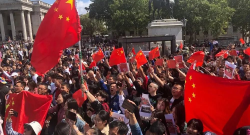
Mapping China’s Youth Culture: Little Pink’s Evolution
Yu Liang Associate Fellow of China Institute, Fudan University Deputy Editor-in-chief of Dongfang Journal Quotes “In 2020, many people noted the existence of a curious social mentality: young people are generally confident about the future of the country at the macro level, but pessimistic about their personal life prospects at the micro level, anxious about employment, marriage, and childbearing issues. What gave rise to this schizophrenic mentality?” Yu Liang Associate Fellow of China Institute, Fudan University Deputy Editor-in-chief of Dongfang Journal Quotes “In 2020, many people noted the existence of a curious social mentality: young people are generally confident about the future of the country at the macro level, but pessimistic about their personal life prospects at the micro level, anxious about employment, marriage, and childbearing issues. What gave rise to this schizophrenic mentality?” New social groups and the new paradigms they embody emerge first as a kind of new social mentality, which grows quietly within the silent changes of the mode of production, the social structure, and the political situation. At the outset, there is no name for what is developing, and things slowly become a trend, which is often understood in terms of deviance, because once people notice it, they often describe it in negative terms. This turn pushes the new social group toward self-awareness. The rise of the Little Pinks and the new patriotism went through just such a process. A major phenomenon we observe in China’s public opinion today is a serious rupture between the emerging ideological trends in online youth behavior and the Chinese intellectual milieu. Traditional academic categories of analysis, such as debates between left and right, enlightenment and conservatism, elitism and populism, nationalism and universalism (liberalism), authoritarianism and liberal democracy, the market economy and the planned economy, are gradually losing their explanatory power. In the past, the opposing sides kept calling for an imaginary “common baseline” that would transcend left and right, but in reality the quarrels have continued. Transcendence was elusive within the old cognitive framework, but in recent years, a series social-ideological trends has emerged from within youth subculture, grounded in current tensions and seeking to transcend the left-right divide, among which the “technology party”[2] (or “industrial party” 工业党), the Little Pinks 小粉红, and the “barbarians at the gate 入关学” group are the chief representatives. Among these, the Little Pinks can be said to be the largest group. “Little Pinks” broadly refers to the new generation of patriotic young people born after 1990 who have grown up deeply embedded in the modern market economy and urban life—but their name was chosen by their rivals. Following a series of major public events on the international scene in 2008, what had formerly been debates between the left and the right, chiefly carried out by intellectuals on China’s Internet, gradually gave way to debates between the patriotism of ordinary netizens and “universal values.” The main parties to the conflict are respectively the “America-supporting public intellectuals 公知美分” and the “Self-Financing Fifty-Cent Army 自干五.” The predecessors of the Little Pinks, the “Jinjiang young women’s Group for National Awareness 晋江忧国少女团” and the “Fengyi Sisters 凤仪妹子,” appeared as early as 2010, when Big V celebrity intellectuals still dominated China’s Internet. Those connected with Jinjiang Girls and Fengyi Sisters were mainly female netizens who were active on literature and entertainment websites, were fashionable and patriotic, and opposed to public intellectual groups who blindly worshiped the West and belittled China. At the outset, the Little Pinks were a minor sub-branch of the “Self-Financing Fifty-Cent Army,” but some prominent public intellectuals, understanding that they were dealing with new opponents who were unlike traditional leftists, derisively branded them “Little Pinks.” The group grew quickly, the name “Little Pinks” having produced an explosion of self-consciousness. In 2013, the online celebrities and public intellectuals who talked about “universal values” on social media began to decline, while the fame of the “Little Pinks” continued to rise, gradually transforming the online public opinion environment formerly dominated by public intellectuals. In January 2016, the Little Pinks carried out a flood attack on Facebook, which shocked public opinion both at home and abroad. The mainstream attitude of traditional intellectuals and media circles towards the Little Pinks is negative and suspicious, and a large number of liberal intellectuals criticize them for having merely a “high school educational level,” saying they exhibit “excess libido and a hyperactive spirit,” all coming from the “lowest rung” of society. They see the Little Pinks as the product of a mentality of “loyalty” and “hatred,” and sadly discuss the return of “ultra-left” and the “failure of thirty years of enlightenment.” However, the Little Pinks quickly became mainstream in online public opinion. This mainstreaming was visible at the end of 2019, when the Bilibili website hosted its first New Year’s Eve party. Accompanying the song the “Flower Suite 种花组曲,” the screen filled with the words “I do not regret being born in China in this life, and I will choose to be born in China in my next life, too.” The mainstream of youth politics on Bilibili is notably “pink.” For example, in 2019, Fang Kecheng 方可成, a well-known contributor (UP主) to the site, was identified by netizens as someone who was leaning toward Hong Kong independence. He left the website after receiving a barrage of criticism. In 2020, the well-known popular science contributor “Paperclip” posted a video that was found by netizens to be insulting to China, leading to repeated boycotts by netizens and the closure of the account. The Little Pinks are China’s “revival generation,” rising out of difficult circumstances. Their ideas are a complex mixture that seems to include nationalism, conservatism, and certain left-wing themes, the common thread of which is to oppose American “universal values,” and thus they are often seen as the opposite of liberalism or 1980s’ style “enlightenment.” But liberalism and the Little Pinks are not really rivals, because the ideas expressed by the Little Pinks do not completely follow the trajectory of the traditional pendulum swings of left and right, but contain new elements. Critics have argued that the Little Pinks are the product of a new globalized media business culture, and that in this sense they may be more universal than their ostensibly “universal” enemies. Their mode of action, style of discourse, and emotional reactions are all rooted in the globalized market economy, even if one of their characteristics is to exhibit a kind of “anti-globalization (i.e., nationalist) globalization.” We need to understand the Little Pinks in this broader context, which in turn will help us understand the ideological trends displayed by contemporary Chinese youth. Three Waves of New Youth Patriotism The “new patriotism” of the Little Pinks is starkly different from past displays of patriotism. In order to see the Little Pinks in a broader perspective, we will begin with a simple genealogy of three waves of youth patriotism that arose since 2008. The first wave was spearheaded by patriotic groups of overseas students. These students had been living abroad for some time, meaning that their understanding of Western society had progressed from imagination to personal experience, leading them to grasp the huge gap between Western myth and Western reality. These groups originally came together on overseas student platforms like Xixihe 西西河, and came to the fore in the context of various international political disturbances involving China in 2008, such as efforts to protect the Chinese Olympic torch relay runners in Europe, or opposing the distorted coverage of China by Western media such as CNN. Participants were relatively elite, highly educated, and had sophisticated language skills, and expressed themselves on the anti-CNN website (later renamed the “April website”) and other sites exclusively devoted to these themes. Following the rise of social media in 2010, the groups moved to Weibo, using identifiers beginning with AC (short for anti-CNN), thus becoming one of the seeds of new patriotic youth power in the social media era. This wave of patriotic youth no longer engaged in glamorized fantasies of the West, but sought to transmit real experiences to the Chinese people. A series of articles by “Little Water Bottle 小水瓶,” a Peking University student studying abroad, were typical. One article, “Is China’s Health Care Worse than America’s? Should We Swap?” not only compared healthcare in China and the United States, but also singled out Han Han 韩寒 (b. 1982), a liberal youth leader and popular blogger at the time, for his lack of genuine experience of life in the West. In general, at this stage, Little Pinks were seeking to define themselves through questioning and confrontation. The second wave began in 2010. At that time, the “Arab Spring” and the “Twitter Revolution” were on the rise, sentiment on China’s social media was fluid, and the “stock” of Western universal values seemed to be at its peak. Some Chinese elites with experience in living, working, or media engagement outside of China, including experts, scholars, and social activists, joined together with the first wave of overseas students and patriotic youth in China to carry out organized resistance to the West through media and other means. In June 2011, the Shanghai Chunqiu Institute for Development and Strategic Studies 春秋战略发展研究院, a private think tank, in cooperation with Shanghai Wenhui Daily 文汇报, organized a “Debate of the Century” between Zhang Weiwei 张维为 (b. 1957) and American political scientist Francis Fukuyama (b. 1952), declaring the end of the “end of history.” Subsequently, the Guancha Syndicate, an outgrowth of the Chunqiu Institute, began to take the lead in online public opinion. In a series of initiatives, such as their defense of China’s development of high-speed rail, their opposition to the “Washington Consensus,” their debunking of certain Western myths, their affirmation of China’s development advantages, and their advocacy for the “China Model, Guancha continuously expanded its influence and attracted a large number of elite writers to join in, and in the process replaced the April website and became the banner of new patriotic media. At this stage, the discursive tone of the new patriotism became more positive, emphasizing the successful nature of China’s development experience, and displaying a clear self-consciousness that China’s path was distinct from that of the West. Another important phenomenon emerged at this stage: a group of young opinion-makers working in science and engineering, who used to belong to the “silent majority,” but who now entered mainstream public opinion with the help of new media such as Guancha, seeking to update the obsolete model of political discourse based on left and right antagonisms with a new developmental discourse grounded in the actual workings of science and technology. This group was called the “technology party.” As a “self-made” group within China’s new middle class, they expanded both the social basis and the theoretical strength of the new patriotism. The third wave was the emergence of the Little Pinks. The Little Pinks are no longer part of the intellectual elite, but were instead the youth reserve army of the new urban middle class, which further expanded the base of the new patriotism. Compared with the earlier two waves of patriotic groups, the Little Pinks were younger, the proportion of women was greater, links to daily life were clearer, and they appealed to many fan groups, for example, female fashion groups like Jinjiang and the Fengyi forum. There were male Little Pinks as well, many coming from sports and gaming fan groups by way sites like of Diba, Hupu, and Bilibili. In terms of ideas, the Little Pinks’ are less theoretical and political in comparison with the two previous waves, when people were more self-conscious about their “keyboard politics.” The Little Pinks drew intuitively on their life experience. They have less historical baggage and do not share the previous generations’ memories of the twin shocks of the Cultural Revolution, and then the transformation brought on by China’s reform and opening. The miracle of China’s rise since 2008 leads them to feel that China is developing faster than the West, and that life in China is more convenient, public security is better, industry is stronger, and management of the pandemic better, all of which has generated a pure sense of national pride. In terms of their modus operandi, their engagement in commercial fan culture has allowed them to develop organizing skills, such as “supporting idols” and attacking enemies – skills that the first two waves of patriotic youth groups did not possess. Its decentralized online style of mobilization is different from the elite-driven action styles of international students or the intellectual community, but it is linked to and interacts with the first two waves as well. It is worth noting that the development of the mobile Internet allowed more and more young people from third- and fourth-tier cities to join the ranks of the Little Pinks. These new members bring with them many economic and cultural differences, so today’s Little Pinks are quite a heterogeneous group. The Little Pinks as Cultural Contradiction Socialist practice in contemporary China is a messy contradiction of individualism, consumerism, socialism, conservatism, and even internationalism. The phenomenon of the Little Pinks embodies a similar mixture, but its external appearance, made up of nationalist identity and patriotism, can easily camouflage its intriguing internal contradictions. National Identity Politics and the Cultural Self-Esteem of the New Middle Class The Little Pinks patriotic movement, which spread widely on the Internet, embodies the consciousness of the new middle class of a consumerist society. It mobilizes the middle class, including students and white-collar workers, and its reserve army of young people. By way of contrast, previous patriotic movements tended to reach a broader base, as in anti-Japanese demonstrations, which until 2012 included grassroots people such as migrant workers, and displayed the characteristics of traditional anti-imperialist mass street politics and masculinity. The Little Pinks patriotic movement grew out of events such as: a 2018 incident in which the Swedish police rough handled Chinese tourists; an advertisement by the Italian fashion brand Dolce & Gabbana that insulted China and spurred patriotic youth protests; web attacks on the Chinese-American director Chloe Zhao for allegedly publishing anti-Chinese comments in 2021; and attacks certain South Korean stars who allegedly insulted China, sparking the “no fan idols before the nation” movement in which fans declared their allegiance to China, and not to their idol. It is obvious that these events are concentrated in the fields of fashion, consumption, and culture. The emotional issue is that these incidents hurt the self-esteem of China’s young middle-class reserve army and its global fashion consumption power. As a result, while the combined force of the Little Pinks’ actions points in the direction of the traditional grand narrative of nationalism, its widespread mobilizing power stems from a demand for middle-class national identity in the era of globalization (rather being a nationalist consciousness in a strict sense), and the point of this identity politics is to demand that the other side recognize that “I too am a civilized person, just like Westerners.” This passion for recognition has given birth to a form of identity politics that is nationalist in nature, but is not a characteristic of identity politics in Western societies. Affective and Cognitive Modes in the Online Fictional World Common emotions and shared interests are the ideological components of the lowest level of society, and the kinetic energy they generate is far larger than rational ideas. When we dive below the surface of the Little Pinks’ strong patriotic emotions, we find that the Little Pinks share some important contemporary ideological and emotional components with their rivals, the “universalists.” Among these are: “avoiding the sublime 躲避崇高,” life politics, postmodern playfulness, political correctness, and a broad sense of fragility, etc. At the same time, we also find heterogeneous elements, culminating in a unique “emotional identification and authentication mechanism.” The generation that bade farewell to revolution rejected the Little Pinks, having failed to see that the younger generation had to a certain extent achieved their dreams without realizing it. The idea that “patriotism can be cute too,” and a politics based on shared interests makes the country and its history more interesting, producing new idols for fan clubs. For example, the webcomic Year Hare Affair 那年那兔那些事 presents various countries as cartoon images of animals, which actually accords with the 1990s proposition of “avoiding the sublime.” The difference is that the Little Pinks avoid the form of the sublime, while providing new forms and new outlets for it. The market economy will “remove the sublime” from daily life but as long as the struggle in contemporary world history is not over, “the sublime” will continue to reside in everyday culture. The culture of online fiction itself contains a kind of structure guiding emotional practice. In particular, fan-fiction recreates idol stories out of the authors’ own narratives, helping the fans to establish a flexible and interactive emotional imagination space around an idol, which builds a highly immersive “imagined community.” “Year Hare Affair ” and “Azhong Gege 阿中哥哥” have both absorbed the modes and emotional practice methods of fan-fiction, taking “country” as the object of fan creation and projecting emotion onto it, so that patriotism and great struggle can also participate in the competition of the emotional space of online fiction. It has been widely noted that the Little Pinks’ patriotic feelings have developed into a form of political correctness that has the characteristic of being decidedly non-negotiable. “Grave digging” behavior is prominent: the use of social media to dig up people’s past inappropriate remarks about the country, and then to report the findings and accuse the person in question. People like the film director Chloe Zhao and the late pianist Fou Ts’ong 傅聪 (1934-2020) have been widely lambasted on social media for their pro-Western proclivities. Such criticisms often refuse to consider the context of the remarks, or that times and people change, and draw lines based on the current confrontation between the United States and China. How should we understand such behavior? On the one hand, this kind of stereotyped and absolutist way of thinking is grounded in the fact that while adolescents may be quite experienced in daily consumption and entertainment activities, they lack experience in terms of the harsh struggle for survival and work in society. As a result, they have difficulty thinking about things in a complex and realistic manner, and are accustomed to identifying friends and enemies through speech and symbols, which leads to feelings and views that are little more than labels. This is not nationalistic narrow-mindedness, but a modern disease affecting the whole world. A recently published book, The Coddling of the American Mind: How Good Intentions and Bad Ideas Are Setting Up a Generation for Failure, by Greg Lukianoff and Jonathan Haidt, explains in detail how American youth, damaged by political correctness and a culture of over-protection, have become increasingly sensitive and vulnerable to emotional harm, making them eager to “expose” and “report” evil-doings. They have been indoctrinated about “microaggressions” and are keen to censor the politically incorrect and intrusive behavior of those around them in their daily lives. The Little Pinks share this form of political correctness, but the content is different. In this sense, the Little Pinks and their “universal values” rivals are “discourse” people, identifying friends and enemies on the basis of ideas embodied in discourse, rather than empirical considerations. This should also make us wonder if the Little Pinks share the fragile psyche of American youth. At the same time, it is important to note that it is precisely in the political sphere that emotion always functions as the most direct recognition mechanism, able to identify friend and foe more quickly than reason. Identity politics was originally a kind of politics of emotion, which depends on emotional experience in a specific situation. When international conflict is beyond the control of human beings, and when the defenders of “universal values” use words like “rationality” and “Enlightenment” to criticize the Little Pinks, and are unable to hide their own pro-Western emotional stance, it will be impossible to gain the respect of the other party. It is like when the Hong Kong virologist Guan Yi 管轶 (b. 1962), at the beginning of the pandemic, admitted that “I am afraid this time,” and that “even veterans like me want to desert.” Even if he was right in terms of his medical judgment, compared to the medical team that decided to go against the current and help Wuhan, Guan was attacked by young Internet users for clearly revealing his emotional stance. The Attack of the Retail Investors: The Organizational Patterns of Fan Clubs The fan-girl online attack [or “expedition” 出征] on pro-Hong Kong independence celebrities in August 2019 dramatically illustrates the similarities between the Little Pinks movement and the regular fan club movement, and the differences between the Little Pinks and past patriotic movements. In 1999, 2004, 2005 and 2012, anti-American and anti-Japanese movements developed into street marches, whose themes expressed popular desires in the context of major political debates, while the Little Pinks’ attack was a purely online movement: they divided up the tasks, wrote up the posts they were going to send, organized the vote and sought to win people to their side, made positive comments on their favorites and reported negative comments coming from the other side, all of which is rooted in the daily organization activities of various network interest communities. “Attacks” are a common form of community organization produced by the global Internet economy. Similar organizational methods can be seen in the populism of Trump-era Twitter politics in the U.S., and in January 2021, when retail investors used Reddit to attack Wall Street in the GameStop incident. Retail investors are in one sense separated from traditional social units and institutions, but they do not remain in an “atomized” situation, and instead use the Internet to organize themselves. This kind of united movement of retail investors is increasingly escaping the Internet, and affecting the organization and operation of the real world. The Xiao Zhan incident 肖战事件, which lasted from 2020 to 2021 and whose influence is still felt today, is a typical example of the socialization of the fan economy. At the outset, the Xiao Zhan incident was just an internal conflict within Xiao’s considerable fan group, but it triggered a chain reaction, and fans’ reports led to the blockage of the Archive of Our Own fan-fiction website, which in turn affected the daily entertainment activities of other fan groups. The struggle expanded, and Xiao Zhan himself became a target, and those who were against him adopted a typical consumerist tactic: boycotting the brands for which Xiao is a spokesman, which drew the luxury outlets into the game. As a result, fan groups, money, and the government all came to be involved. Similar things have happened again and again. For example, in February 2021, there was a controversy on Bilibili over a Japanese anime called “Jobless Reincarnation” because of accusations of pornography. Originally, it was an argument within the fan club, but because a streamer on a Bilibili site made inappropriate comments about Chinese history, the Little Pinks joined in and attacked, which then led a Douban group of women activists to pitch in as well, trying to influence Bilibili’s share price. This reflects the unbalanced and unstable state of the youth cultural ecology, in which minor incidents often result in multi-party conflicts. In July of 2021, just because a certain Chinese shoe and clothing brand “announced” it was going to donate 50 million RMB of items to the flood-stricken areas of Henan, patriotic netizens rushed into the brand’s live broadcast room to frantically buy their good and express their gratitude, a typical example of how the emotional Little Pink movement spreads instability through the Chinese economy. Ecological Niche Rivals of the Little Pinks After understanding the Little Pinks as a particular Chinese expression of a global phenomenon, we need to introduce the analytical perspective of the “ecological niche” to investigate its real position in social contradictions. Traditional intellectuals who appear to vehemently reject the Little Pinks are not in the same ecological niche and thus do not constitute direct competition. Behind their apparent opposition, there is a generational “species division,” and the two groups do not understand each other due to differences in historical experiences and discourse systems. For example, when the Little Pinks criticized Fang Fang’s Diary, they used weapons such as rap, memes, and digital drawings, which those on Fang Fang’s side could not understand, which led to funny outcomes. Intellectuals’ angry denunciations of the Little Pinks often missed their mark and did not constitute true criticism. Youth groups connected to Hong Kong independence and Taiwan independence occupy the same ecological niche as the Little Pinks. In 2019, the formerly invincible Diba was attacked by youth groups connected to Hong Kong independence. These youths are, like the Little Pinks, indigenous people of cyberspace, and fight using the same online methods as other fan groups, such as joining together on Internet platforms, dividing up the work and cooperating to hack into the Diba site and reveal the private information of members of rival groups. Once attacked, Diba repeatedly called for a truce. This allows us to see that different camps are generating new online species, each developing the organizational capacity of the retail investor in the era of globalization. They have similar fashion interests, modes of action and discursive weapons, despite their conflicting positions and ideas. To use a biological metaphor, they are all in the same “ecological niche,” meaning that they are in competition. Once we understand where the Little Pinks stand in terms of “identity politics + national consciousness,” we can then better understand their entanglement with other identity politics movements in the public opinion ecology, such as their conflicts with feminism. In February of 2020, the Weibo account of the Central Committee of the Chinese Communist Youth League launched two virtual patriotic idols, “Red Flag Manga 红旗漫” and “Jiangshan Jiao 江山娇,” who were to host an online cartoon celebration of Made in China Day, which ended in controversy. Among other things, the female character “Jiangshan Jiao” attracted a wave of feminist ire, and when asked to participate in the “100 Questions for Jiangshan Jiao” activity, feminists sent in questions like: “Jiangshan Jiao, do you menstruate? “Jiangshan Jiao, did the leader ask you to shave your head?” “Jiangshan Jiao, do you have a little brother because your parents did not want a girl?” They even made up rap songs to ridicule Jiangshan Jiao, which had a considerable impact. Like the Little Pinks, young feminists are immersed in the discourse of the globalized, media-oriented market economy and identity politics. They know how to skillfully use new media channels and new discursive means to spread their message. When feminists attacked the Bilibili site in February 2021 and in the second-hand smoke incident in Chengdu in April 2021, we can see the feminists fighting against male Little Pinks and Self-Financing Fifty Cent Army. This shows that Little Pinks have become deeply involved in what British sociologist Anthony Giddens (b. 1938) calls “life politics” rather than “traditional politics,” and that future challenges will mainly come from groups that occupy similar ecological niches in social life. They are Their Own Worst Enemy In 2020, many people noted the existence of a curious social mentality: young people are generally confident about the future of the country at the macro level, but pessimistic about their personal life prospects at the micro level, anxious about employment, marriage, and childbearing issues. What gave rise to this schizophrenic mentality? The new patriotic emotion which is represented by the Little Pinks took root in the era of globalization and the market economy with socialist characteristics, which is subtly different from “short twentieth century” patriotism. The latter is based on the experience of suffering and a sense of responsibility, in the sense that although modern China was poor and weak, and was repeatedly bullied, patriots nonetheless “explored this vast land with their damaged hands.” The former is based more on the experience of national strength and personal happiness. This raises the question of whether feelings can be influenced by changes in living standards and experiences. The greatest pandemic in a century has stunted economic development and reduced employment opportunities for young people. At the same time, as people who grew up on the Internet, the 1990s generation greatly relies on Internet platforms for work and life. Their personal life is becoming more “indoorsy 宅化,” and their ability to understand offline real life and pressures has decreased. They were born on the Internet and will die on the Internet. They are increasingly in the grip of a combination of consumerism, overtime culture, and debt culture. Now that the platform capital giants are trapped in their own involutional competition, further infiltrating all aspects of the people’s social lives, and turning from exploring new value space to harvesting users in all possible ways, young people’s impression of capital, especially platform capital, has deteriorated markedly. Jack Ma’s 马云(b. 1964) image has plummeted. Online youth cheered the premature death of Zuo Hui 左晖 (1971-2021), the founder of a well-known online brokerage platform. At the same time, young people’s expectations of state-owned enterprises and state employment have increased, and they have begun to imagine good things about the planned economy. In this context, since 2020, we might note that young people’s interest in Marxism has increased exponentially. The site Bilibili has tons of short videos produced by tens of thousands of netizens on their own initiative, introducing Marxism and criticizing capitalists. The numbers of such videos have increased seven times since 2019. CCTV’s 2019 documentary “The Power of Capital” was originally intended to celebrate the glories of reform and opening, providing a positive overview of the construction of capitalism and markets. However, after being reposted to Bilibili, it was met with a barrage of critical comments. At the same time, sales of the Selected Works of Mao Zedong also surged in 2020. (Bilibili “the power of capital” danmu and comments are now all closed) Thus we should note that the Little Pink generation, while steeped in the market economy, still displays symptoms of late capitalism in its aversion to capital and its devotion to “video-clip Marxism.” Given their diminished life experience, their declining life expectations, their tendency to spend time online with likeminded people, their political correctness, their emotional manipulativeness, to which we might add the popularity of a morose depression culture and the usefulness of anxiety as a tool to drive media traffic…these factors together with the involution of global capital, have produced an emotional state in today’s youth that might be called a “patriotic, anti-imperialist, and anti capitalist + online grievance” culture. This may be one of the sources of the Little Pinks’ “schizophrenic mindset.” This is not so much a return of the left, but what Fukuyama calls the current “politics of resentment” among Western youth, the product of the deterioration of the political economy and the proliferation of identity politics. Western politics of resentment can easily be transformed into street politics and populist politics in an electoral system, while the anger infecting Chinese youth becomes instead a mentality of complete resignation and escape into online public opinion. An example of this might be the four “revolts” proposed by the youth on Bilibili: we won’t buy a house, we won’t get married, we won’t have kids, and we won’t work twelve hours a day, six days a week. “If I lie flat, the capitalists can no longer exploit me.” The essence of this resentment is, on the one hand, a legitimate claim against the exploitation of capital; on the other hand, it is an expression of the frustration of a soul that has been captured by consumerism but that remains unsatisfied. This logic does not point to a class narrative, but instead to a welfare narrative similar to what we see in Western social democracies. Conclusion Some theorists use the term “new individualism” to attempt to describe the current mentality of Internet youth. In the age of the market economy, individualism is undoubtedly a core aspect of how we understand and live our lives, but the mixture of individualism and nationalism we see in the Little Pinks obviously goes beyond abstract individualism. The “individual” in the thought liberation of the 1980s was a humanist, a spiritually pure individual as imagined by intellectuals. When genuine reform and opening took off in the 1990s, the market economy left these “humanistic individuals” in the dust, and the individual became the abstract “economic man” of Western economics. As the money kept flowing in, these economic men turned into real movers and shakers, a serious blow to the intellectuals’ beautiful imagination of the individual, hence the discussion of the “humanistic spirit ” in literary circles in 1994. Published in 1998, Liu Xiaofeng’s 刘小枫 (b. 1956)The Weight of the Body is a summary of ideas and ethics in the post-revolutionary era and the period of social transformation, focusing on a discussion of the “pain and happiness” associated with the transformation from a collective ethics to an ethics of individual freedom. However, compared with the Little Pink generation, it would seem that the transformation Liu is discussing occurs only during the transition from the planned economy to the market economy, and the “weight” he discusses does not include the anxiety produced by the gap between rich and poor at the personal level, because the “individual” at that time was not yet fully in touch with housing prices, the cost of education, or problems like overtime and inadequate pay. Nor does it include the experience of direct contact with citizens of the world, which is the experience of young people in today’s era of globalized consumption, at a time when China’s reform and opening is in “deep water.” After 2008, as China’s rise became increasingly obvious, Chinese people were directly exposed to the global media communication and the competitive emotions this can produce. The Little Pink phenomenon is a manifestation of this. Compared with the equally consumerist “My Little Happiness 小确幸” generation on Taiwan, mainland youth find themselves in an identity war with the West due to China’s rejuvenation, while youth in Taiwan are at ease in the Western international system. The politics and ethics of the Little Pinks, which reject both intellectualization and proletarianization, are difficult for intellectuals who came of age in the 1980s to accept. They don’t understand why reform and opening and global markets have not only failed to bring about the end of history they had called for, but instead spawned a broader patriotic community. However, the phenomenon of the Little Pinks and all the controversies they have sparked vividly reflect the reshuffling and recoding of various doctrines and ideas in reality, mapping out the symptoms of a post-modernity that is still not here, a history that fails to end, and the last man’s desire for happiness and his continued struggle. The Little Pinks are a process that to a certain extent goes beyond stoic individualism and “depoliticized politics,” and re-engages with collectivism, nationalism, history, and socialism. The question for the future is: in an era of unprecedented change, will the Little Pink generation rise or fall? For intellectuals, they first need to shed their posture as outside critics, and reject simplistic terms like “populist” or “backbone 脊梁,” and at the same time, they need to get past stereotypes like “youth” and “mainstream,” and understand that the Little Pinks are not merely a youth subculture, but also the expression of a certain spirit that has been suppressed by intellectuals and by the educational system, and which could only find a place within the youth. We have witnessed the surge of the Little Pinks’ “force 原力,” but we lack a theory to explain this force. The direction Chinese youth and the new patriotism will take depends on whether the interaction between various intellectual, social, and practical actors can be fruitful. This is also one of the inescapable responsibilities of Chinese intellectuals.
China’s population declined for the first time in 2022, entering a demographic crisis?
OPINION China’s population declined for the first time in 2022, entering a demographic crisis? · The population problem in non-industrialized countries is rapid population growth without access to education and jobs, while the population problem in industrialized countries is rapid population decline and deterioration of the population structure. Demographic problems are different in different stages of development. VIEWS BY Ning Nanshan Well-known industrial and economic authors and practitioners, Internet KOL EVENTS Over 100 Media Professionals from the Global South Gather in Shanghai May 12,2023,Shanghai The biggest news today (January 17) is China’s population decline in 2022. Let’s talk about some of data and opinions surrounding this issue. First, the data released by the National Bureau of Statistics on January 17 shows that the national population (including the population of 31 provinces, autonomous regions, municipalities directly under the Central Government and active military personnel, excluding residents of Hong Kong, Macao, Taiwan and foreigners living in 31 provinces, autonomous regions and municipalities directly under the Central Government) at the end of 2022 was 1,411.75 million, a decrease of 850,000 from the end of the previous year. The annual birth population was 9.56 million, with a birth rate of 6.77‰; the death population was 10.41 million, with a death rate of 7.37‰; the natural population growth rate was -0.60‰. I want to articulate a few thoughts about this data. First: population decline will be a long-term trend, see the following table. After the founding of our country, the birth of the population surged, from 1949 to the mid-1990s. With the exception of a few years around the early60s, roughly 20 million people were born annually(in some years births exceeded 25 million), and China’s current average life expectancy is 78 years, and those born in 1949 will reach 78 years of age in 2027, even if we assume near-future increases in average life expectancy to 79 years, that means they’ll reach 2028. The following chart shows the birth population data of Huang Wenzheng and Liang Jianzhang for all years (please note that the historical population statistics in China are often difficult to match precisely with various data sources, our main focus is the order of magnitude). In other words, this year is 2023, the future of China’s death population will rapidly rise from the level of approximately 10 million people in 2022 (10.41 million deaths) to the level of 20 million people. In fact, this trend is easy to estimate without checking, China’s current population of 1.41 billion people, the average life expectancy of 78 years, the normal annual average number of deaths should be about 1.41 billion / 78 = about 18 million people, right. Now the number of deaths is only about 10 million people, because the peak birth population after the founding of the country has not yet withdrawn from society. However, note that in 2022 only 9.56 million people will be born in China (convenient to remember that is about 10 million people), while the number of women of childbearing age (20-40 years old) is decreasing, so the number of births in China is tending to decrease, this increase and decrease means that the rate of population decline in the future will accelerate, 2022’s rate of only 850,000 people a year is too “mild”. Let’s take a look at the chart below; if women of childbearing age are defined as 20-40 years old, it means that in 2023, women born in 1982 will drop out of the childbearing age and women born in 2003 will enter the childbearing age. And how many people were born in 1982? According to the census data, there were 23.79 million births in 1982 and 13.73 million births in 2003, with women accounting for about half of the births, so it is clear that more women are dropping out of childbearing age than those entering it. Therefore, the total number of fertile women is on the decline. In short, logically speaking, after the founding of the country in 1949, the country rapidly entered the era of 20 million births per year, while only 10.41 million people died in 2022 – because the average life expectancy reached 78.2 years – then simply corresponds to the pre-founding of the country People born around 1944 (note that it is roughly, after all, precise calculations will not be that simple) dropped out of society, while not as many people were born and survived each year pre-liberation as post-liberation. So, on the one hand, the future of China’s annual death toll will rise from about 10 million to about 20 million; on the other hand, China’s annual births are only about 10 million. Moreover the total female population of childbearing age is still declining it will be very difficult for China to maintain 10 million births per year in the future, and improvement of the total fertility rate is urgently needed. Of course, there are fluctuations in the births from 2000-2020, which means that in some years the number of new women entering childbearing age will increase compared to the previous year, helping to boost the number of babies born that year. However such fluctuations do not mean that the 10 million births per year will increase to the same level as the number of deaths of up to 20 million per year. As the chart below shows, the births from 2002-2019 are basically between 13-17 million, with women still only accounting for half of that, with fluctuations of about 1-2 million. Therefore, the continued population decline is a certainty, and the reduction of only 850,000 people last year is just a starting point. Second: the engineer bonus and population quality bonus The so-called “engineer bonus” means that the population with higher education levels is still increasing, which can offset the population decline to a certain extent. The first large-scale expansion of college enrollment in China was in 1999, and the corresponding group was the population born in about 1981. Assuming a retirement age of 60, they will retire in 2041 (18 years from now), or retire in 2046 if retirement age is extended to 65 (23 years from now). From that perspective, the retirement time of the first batch of university students in China is about 20 years away from now. Considering that the number of recruits in the first few years of the expansion was not that large, it can be said that the engineer and population quality dividend has about 25 years to peak. After that time the absolute number of highly educated people in China will also decline, and do so more quickly. At first glance this appears to be cause for relief. It turns out that the “engineer dividend” will not peak for more than 20 years. Therefore, even though the population started to decline in 2022, those currently exiting from society are mainly born in the 30s and 40s, not very strong in terms of education level or consumption ability, and have little impact on the overall economy. We also have 20 or 30 years of the “engineer dividend” that can be leverage. But this is not the case. Demographic change is a slow process, and we have to start acting now. Children born in 2023 will not enter the labor force until 22 years later – more than 2 decades down the road. If births are not encouraged now and the number of births is allowed to continue to decline, the highly educated population will also decline as fast as today in 20 years. Some say that a shrinking population may not be a big deal. Our society has been way too competitive, wouldn’t a declining population leave us some breathing room? Some say China would be better off with only 800 million people, others even say it’s best to have only 300 or 400 million people like the United States. Well I think this idea exists because China’s geographic size, large population, & increasing national strength gave us a sense of security, and made us forget what kind of world we are in. We are in a world dominated by the US; the Anglo-Saxon nation occupies the top of the earth, it’s surrounded by allies such as the West and Japan,, & has a deep sense of racial & ideological hostility towards China and its social system. As you read this article, U.S. military aircraft and warships are flying and sailing near our coast; their warships deliberately cross our Taiwan Strait and invade the territorial waters of our Spratly Islands several times a year. And now the United States is uniting with its European and Japanese allies to cut off the supply of advanced technology and products to China, and wants to completely suppress China to the low-end of the economic value chain. Fortunately, our huge domestic market has supported local companies to engage in localization, and is providing a steady stream of funds for it. The reason we are so confident that our aggregate economic and national strength will surpass that of the US is because we have solved the problem of national organizational capacity, and our population is four times that of the US. Even if our technology, industry and efficiency are slightly inferior to those of the US, it does not affect the fact that our aggregate power will eventually exceed theirs, and is generally expected to reach twice that of the United States. As the top Anglo-Saxon nation in the world, the total births of the U.S., Canada, Britain, Australia and New Zealand in 2022 is about 5 million, and if you add their European allies’ 4 million births per year, their annual births are about 9 million people, already about the same as our annual births of about 10 million people, don’t forget that they also have Japan, South Korea, and our Taiwan region. Since the number of annual births in China is already about the same as these countries combined, it means that our GDP per capita has to reach the average level of today’s developed countries in order for our aggregate economic power to be comparable to them. This is quite a difficult endeavor, isn’t it? And if our aggregate economic size is only equal, it will be difficult to maintain a clear advantage. What if China’s annual birth rate falls to 5 million in the future? Then it means that China’s GDP per capita has to be twice that of Europe and the United States, so as to be equal to them. This is what I have been saying, China’s future is optimistic in the short to medium term, but the competition with the West will take centuries. Back in the day, we fought against the Xiongnu for several centuries to decide the outcome. I think the modern day West is even more difficult to deal with than the Xiongnu of our past. First, the Xiongnu were only powerful militarily, but technologically, economically and culturally weak. Second, the Xiongnu occupied a bitterly cold land, while today the West occupies Europe, North America, Australia and New Zealand – great places for human habitation. To compete with the United States and even the entire West, we need to be prepared for hundreds of years. In the future, I think that if China wants to win completely, it must expand its geographical presence in outer space, but this will be a hundred years in the future. In addition to the total population, there is also a demographic issue. Even if our population is equal to that of the West, if our fertility rate is too low, the demographic structure is older and the burden of old age is heavier, then we’re less competitive. To put it simply , on your side, a working person needs to support two elderly people, while on their side, a working person only needs to support one elderly person. So who has more money to invest and consume? The older the population is, the less energetic and lifeless it becomes. Many villages, towns, and counties in China are like this now, with only old people left in the streets, while the big cities are full of young people and economic vitality. To reiterate my point of view: China is now an industrialized and urbanized country. The population of industrialized countries is a non-renewable resource and will definitely decrease. This is a major premise, so under such a major premise: 1: It is meaningless to discuss the “appropriate population” level of China, whether it’s 1 billion, 800 million, or 600 million people, or to discuss the maximum carrying capacity of China’s land, whether it is 1.6 billion people or 2 billion people, etc. Because the population of industrialized countries will definitely continue to decrease until immigrants are introduced. Just like our age will definitely increase, and we are discussing what is the ideal age of a person? It doesn’t matter if you’re 18, 25, 35, or 45. Your age today will not be the same as next year. 2: Nowadays public policy is pivoting towards the encouragement of “more births”. When you hear these two words, don’t think of “rapid population growth”, “Isn’t China’s population large enough?”, “Isn’t there enough competition?” and so on. No matter how much encouragement is given to industrialized countries, the population will not increase. In fact, in countries that vigorously encourage more births, the fertility rate in Europe and the United States is 1.6-1.8%, and in East Asia, it is only 1.4%. We are currently talking about encouraging more births, so that the fertility rate in our country can be restored to 1.8%, which is already the pinnacle of industrialized countries in the world. In 2020, China’s fertility rate is 1.3%, and it is still falling. And I think given China’s current situation, don’t expect 1.8%. It should be compared with East Asia. Japan with a fertility rate of 1.4% is the pinnacle of East Asia, while places such as Taiwan, Hong Kong, South Korea, and Singapore that strongly encourage fertility are all less than 1.0% (Singapore is slightly higher than 1.0%, but that’s driven by ethnic minorities, whereas the Chinese community remains less than 1.0%). In other words, even if more births are encouraged, the population of our country will still decline, and do so rapidly, but a better fertility rate will lead to a higher level of pensions, allowing more Chinese people to dance in the square and travel abroad when they are old, instead of continuing to work in fast food restaurants or be an DiDi driver. 3: The population problem in non-industrialized countries is rapid population growth without access to education and jobs, while the population problem in industrialized countries is rapid population decline and deterioration of the population structure. Demographic problems are different in different stages of development. Our focus should change with the times. We must get rid of decades of family planning propaganda anchored in our minds that “only focus on total population and its bad consequences.” or “Chinese people are too fertile, and once birth control is liberalized or encouraged, they will have a lot of children.” Right now we have a problem of rapid population decline, not one of rapid population increase. In short, many of us are still talking about “Is there not enough people already?”, “How many people can China possibly carry?”, or “Do you want China to have 1.6 billion or 1.8 billion people?” These kinds of questions are out of touch with reality, because the population of industrialized countries is bound to decline. We are currently on a downward slope, both in terms of total population and population structure. Encouraging more births is actually just putting on the brakes, which will not change the overall trend. What we should study is how to encourage childbirth, to optimize our aging demographic structure, and to prevent a drastic decline in population. Finally, I think that in the long run, the introduction of foreign labor into our country in the future is a certainty; there is no escape from the aging of the developed economies around the world. The entry of immigrants will cause a series of social problems. Of course, before that, in the next few years, a large number of measures to encourage and reward childbearing will be introduced across the country as a form of self-help. In fact, multiple locales have already announced rewards one after another, but the incentives vary in attractiveness. The chart below shows the incentives published in Jinan in January 2023, with a monthly childcare allowance of 600 yuan per child for each of the two and three children, plus an additional 200 yuan per month for those living in particularly difficult circumstances until the age of 3. The chart below shows the incentives for childbirth issued by the Shenzhen Health Commission in January 2023: a three-year cumulative subsidy of 7,500 yuan for the birth of a child, a further three-year cumulative incentive of 11,000 yuan for the birth of a second child, and an additional three-year cumulative incentive of 19,000 yuan for the birth of a third child. Generally speaking, it is a definite trend for our country to move towards promoting births in an all-round way. As mentioned above, Shenzhen and Jinan have recently introduced measures to directly reward cash for giving birth. Encouraging childbearing in an all-round way is a systematic project. In addition to rewarding cash, there are also childcare institution construction, education cost reduction, protection of working rights of childbearing women, protection of rights and interests of full-time housewives, social support for single-parent families, etc. In addition, I have always felt that the real estate policy should be adjusted. The population is declining, and the decline will accelerate in the future. We can consider moderately liberalizing the construction of villa communities and low-density communities in third-, fourth-, and fifth-tier cities to retain young people, and give young people housing choices among urban villages, apartment buildings, high-rise buildings in big cities, and single-family and garden houses in small and medium-sized cities or rural communities, instead of having them return to small and medium-sized cities and county towns just to find that there are still a bunch of high-rise buildings and residences -the exact same living environment as big cities. Birth rate in big cities is the lowest. This will not be change without housing changes. In short, China is an excellent nation, still facing competition and suppression from the Anglo-Saxon-led West. Since industrialization has been achieved, the year of 2021 has marked the peak of our population since the founding of our nation, and an unprecedented peak at that. After this milestone, our main challenge will be one of how to preserve our precious, non-renewable, & declining human resources. TOP PICKS Mapping China’s Youth Culture: Little Pink’s Evolution Yu Liang Chinese balloon incident Kris Yang NEWSLETTER Taiwanese Companies Encouraged to List on China’s A-Shares February 24, 2023 China’s public opinion on balloon incident February 17, 2023 Sony’s Official Weibo account banned for insulting a Chinese war hero February 2, 2023

What did the Brazilian President-elect say about China, the U.S., LatAm, and BRICS in mid-2021
Lula will take office on Jan 1, 2023. Here are the details of his thoughts from an interview with Eric X. Li, which remains little noticed in English. China just announced that Vice President Wang Qishan would, as the special envoy of President Xi Jinping, lead a Chinese delegation, to attend the inauguration ceremony of Luiz Inácio Lula da Silva, or Lula. (Credit: Reuters) A Chinese foreign ministry spokesperson said 王岐山副主席此次作为习近平主席特别代表专程赴巴出席卢拉总统就职仪式,充分体现了中方对巴西和中巴关系的高度重视。相信此访将有力推动中巴全面战略伙伴关系不断迈向更高水平,更好造福两国和两国人民,并为维护地区和世界和平稳定,促进共同繁荣作出应有的贡献。 Vice President Wang Qishan’s visit to Brazil as President Xi Jinping’s special representative to attend the inauguration ceremony of President Lula fully reflects the great importance China attaches to Brazil and China-Brazil relations. It is believed that this visit will give a strong impetus to the comprehensive strategic partnership between China and Brazil to advance to a higher level, better benefit the two countries and peoples, and make due contribution to maintaining regional and world peace and stability and promoting common prosperity. After winning the election in October 2022, Lula will be sworn in on January 1, 2023, as the 39th president of Brazil, succeeding Jair Bolsonaro. Both the Chinese and U.S. Presidents quickly congratulated him. President Biden @POTUS I send my congratulations to Luiz Inácio Lula da Silva on his election to be the next president of Brazil following free, fair, and credible elections. I look forward to working together to continue the cooperation between our two countries in the months and years ahead.1:35 AM ∙ Oct 31, 2022513,117Likes59,641Retweets In the South China Morning Post, Jacob Mardell, an analyst at the Mercator Institute for China Studies (MERICS), wrote ‘Old friend’ Lula’s election victory no guarantee of warm Brazil-China ties of yesteryear Besides his popularity with Obama, Lula is known in Beijing as an “old friend”. Foreign Ministry spokesman Zhao Lijian expressed hopes that Lula would take the China-Brazil partnership to a “new level”. Lula put China at the top of his foreign policy agenda during his first two terms as president, framing his first trip to Beijing in 2004 as the most important foreign visit of his presidency. He oversaw the intertwining of China and Brazil’s economies and designated China as a strategic ally in the fight to reform what he saw as an “international system marked by inequality”. Lula also helped create the BRICS grouping in 2006, combining the major emerging economies of Brazil, Russia, India, China and later South Africa… But Lula’s China-friendly record could prove a false indication of things to come. Lula’s official platform repeats the foreign policy priorities of the president-elect’s first two terms, but the geopolitical landscape has shifted dramatically since Lula was last in office. The 2020s are a very different place to the 2000s, and Lula’s 2000s-era policies will be trickier to navigate in the current climate of US-China tensions… On the campaign trail, Lula even repeated the China threat rhetoric from Bolsonaro’s 2018 campaign about China “buying” Brazil. Lula was in campaign mode at an industry confederation and thus was playing to the crowd, but his speech was a sign that the tone of the debate has changed since he was first in office… In fact, there is a wealth of information on Lula’s thoughts on China, the U.S., BRICS, and Latin America. In June 2021, Lula gave an extensive interview with 李世默 Eric X. Li, the Chinese venture capitalist, political commentator, and founder of 观察者网 Guancha, which platformed the interview. Before the full translation of the Chinese-language transcript below, where Eric X. Li didn’t actually say much. Here is a summary of Lula’s words: So I want to pay tribute to and congratulate those responsible governments. I want to congratulate the Chinese government, doctors, and its prevention system on their caring and protection for the Chinese people and their contributions to the successful treatment of COVID spreading nationwide. For example, China could respond to coronavirus so quickly because it has a strong political party and a powerful government to control and command. Subscribe Please note the following is a translation from the Chinese language transcript. Lula spoke in Portuguese, which you can watch on YouTube Eric Li: President Lula, it’s good to see you. Welcome to Guancha. Lula: Hi, thank you for having me. Before the interview, I’d like to say hello to you, to the coordinator of the interview, Marco Fernández, to all the colleagues working on this interview, and to everyone watching our interview on Guancha. And I want to say to you that I am about to talk things through without inhibition in this interview. You can ask whatever you want. On those I know, I would say everything about it, and on those I don’t know, I could only say sorry. Li: We’ve been reading the amazing story about a small town in Brazil called Serrana, which vaccinated a vast majority of people there. Please tell us about the story there. [Pekingnology: two Wall Street Journal reports at the time: A Small Brazilian Town Is Beating Covid-19 Through a Unique Experiment Brazil’s Experiment to Vaccinate Town With Chinese CoronaVac Reduced Covid-19 Deaths by 95%] Lula: I’ve already been vaccinated by CoronaVac (the Chinese Sinovac vaccine), and I’m in wonderful health now. I’ve received 2 doses of Chinese vaccines and hope to be fully immune. We have a problem in Brazil, which is the irresponsibility of our government in dealing with the coronavirus. When the first human case was reported in China, and when it first appeared in Europe, Brazil could have taken precautions, set up a crisis committee, and prepared to take better care of the Brazilian people. However, it turned out that our government merely treated it as the flu. They have been following the instructions of former U.S. President Donald Trump, provoking the Chinese people, blaming laboratories in China, and criticizing Chinese vaccines by saying it’s worthless. And they had not bought any vaccines for a long period. When Brazil started buying vaccines, it had been paralyzed by this virus, and lots of people had been infected. Thus, Brazil is paying the price for its irresponsibility. Now changes have taken place in Brazil. Some states are working in parallel with the federal government. I have followed the situation in Serrana from the media. This city decided to vaccinate all of its residents, and the doctors in this city accepted the decision. As far as I can see, this has achieved very good results. Actually, it has been proved by science, by the world, and by many other more responsible governments in Europe and China that the best way to cope with the pandemic is social distancing. And vaccines came second. Otherwise, how come a major country like China, with more than 1.4 billion people, reported only 103 thousand cases, including 4674 deaths, whereas Brazil reported 17 million cases, including 491 thousand deaths? That more than 2,770 people died yesterday alone is a sign of irresponsibility. So I want to pay tribute to and congratulate those responsible governments. I want to congratulate the Chinese government, doctors, and its prevention system on their caring and protection for the Chinese people and their contributions to the successful treatment of COVID spreading nationwide. They have prevented the nationwide spread of the pandemic and avoided a massive spike in deaths occurring in China as the number reported in Brazil. So our country’s problem lies in the irresponsibility of our government as they play with fire at the critical moment of the pandemic. Li: You are a very well-known figure in China. We have watched your career for a very long time and we all know the story of you being from a shoeshine boy to President and now from a prisoner to a free man. So, what was it like after being thrown into prison after being the president? What’s your life like in prison? Lula: My family background is like millions of other Brazilians. I was born in a smallholder family in a very poor region in the northeastern part of Brazil. And since Sao Paulo was the industrial center and the most developed state in Brazil, I went there and learned to become a professional mechanic, and then I joined the labor union. At that time, I was fascinated by labor union politics but then I found that it failed to solve my problems. So, I decided to establish a political party to solve problems in Brazil through politics. After its establishment, relying on the support of the Brazilian people, I became the president of Brazil within just twenty years. In 2006, I succeeded in the run for my second term as president. And here, I can proudly tell you and many other Chinese people as well that in Brazil, 36 million people were lifted out of poverty and about 40 million people have reached the criteria of the middle class after the implementation of the epochal social integration policy in Brazil. Throughout Brazilian history, it is our party that established the largest number of universities and it is our party that established the largest number of polytechnic schools more than the past years in history combined. We have increased the salary by 74% and created 22 million jobs when about 100 million people were unemployed in Europe. In other words, our plans are effective. And then I left my office. The opinion poll conducted when I left my office showed that 87% of people were “favorable” or “very favorable”, 10% were “ordinary” and 3% were “unfavorable” or “very unfavorable” towards my presidency. I assume that this is the best feedback and the highest reward a president of a republic nation could obtain in many places around the world. However, something called “Lawfare” was used as a weapon against me. In other words, it could be understood as a method to assign crime to people in politics by a judicial body. Brazilian media has made up the largest lie in the 500-year Brazilian history. No politician like me has encountered so many lies, false accusations, and attacks for four years in a row. Later on, they decided to arrest me. I could have left Brazil for China, Cuba and many other countries around the world. But I was unwilling to leave Brazil and I wanted to stay in Brazil, for I was proven to be innocent and I wondered how they could inflict crime on me. How about now? Now, I am free and we proved that the judge who convicted me was biased and took the stance of convicting me out of a political position. It has been proved that the Public Ministry (Public Prosecutor’s Office) was at the service of the United States Department of Justice, which intended to destroy the regulations we had stipulated for supervising Brazilian oil companies. As of 2007, we discovered the biggest oil field in the 21st century. This is a huge oil field, and we made a regulation to ensure the Brazilian people’s ownership of it. Any oil company in the world, however, has never accepted this regulation, leading to their attempt to overthrow the Workers’ Party government, because we have become an important international player. We established the Southern Common Market (MERCOSUR), the Union of South American Nations (UNASUR), the Community of Latin American and Caribbean States (CELAC), the BRICS, and the IBSA Dialogue Forum. Therefore, we have maintained a much closer relationship with the world than ever before. Brazil back then, together with China, Russia, and India, has gradually played an important role on the international stage. In other words, our party has become influential in politics. So, those who are against us felt the necessity to force the Workers’ Party out of the office and made up something to throw me into prison. Faced with all those lies accusing me of corruption, I was never once terrified, for I knew I was innocent. Here and now, I can assure you that I was never worried about those lies, and I slept better than those who judged and accused me. I hope one day those who once charged me could apologize for all the mistakes they made in the accusations against me. That’s the only thing important to me. Now, I want to tell you that I am truly happy. Though 75 years old, I am still ambitious and vigorous in politics. I sincerely and truly hope to regain democracy for our country in the 2022 election. Li: It’s an amazing and also a disturbing story, of course, hearing from you. What exactly has happened with your Department of Justice? In your view, was there any foreign interference in your case? Lula: The U.S. Department of Justice instigated U.S. prosecutors to participate in the lawsuit against me. They came to Brazil to meet with the Brazilian Public Ministry (Public Prosecutor’s Office), and the Brazilian judges and prosecutors also went to the U.S. to discuss my conviction with the U.S. Attorney’s Office. We have recorded testimonies of U.S. prosecutors celebrating my arrest. Brazil playing an increasingly important role on the world stage is the sole explanation I could find for it. We were striving to help more countries to become member states in the UN Security Council and to build an extremely strong bloc in South America. We built the BRICS, including Brazil, China, India, South Africa, and Russia. We were setting up a multilateral organization. As it were, we are thinking about creating a currency for business transactions to not depend on U.S. Dollar anymore. We could see that Brazil was maintaining a special relationship with China, and China has become our largest trading partner. Here is an example: in the first year of my presidency, the trade between China and Brazil was only $6 billion. When I left office in 2010, it reached $76 billion, increasing over twelvefold during my presidency. China is extremely important to Brazil, and I think that has bothered the Americans. They felt bothered because they could in no way tolerate any rising country in Latin America. They thought that all Latin American countries must follow the U.S. State Department. Meanwhile, China has invested a lot in South America and Latin America and has built very close partnerships with Brazil, Argentina, Venezuela, and Ecuador, which troubled the U.S. greatly. Besides, Brazil and China’s entry into the African market have been a headache for the United States as well. In other words, the U.S. fears losing its leading position as the world’s police. In reality, the U.S. is unwilling to see any competitor, no matter in economic, technological, or military fields. But the truth is that Brazil has become increasingly important on the world stage. China has been growing, and today, it’s one of the countries with the highest GDP in the world, and the Chinese economy has surpassed the U.S. economy [in purchasing power parity terms]. And now, they are also worried about China’s development in the field of military and aviation. So the Americans are anxious because they are used to being the hegemon since WWII, or to be more exact, WWI. This is the only explanation I could find for the impeachment of President Dilma Rousseff, for my arrest and all the lies made up against the Workers’ Party. The United States has constantly interfered in Latin American politics. They should be responsible for the coup in Brazil, Chile, Uruguay, and Argentina. This is part of the American political culture. And that is exactly what I have rebelled against. Brazil is a sovereign state, and it has the right to decide its policies and economy and determine its international relations as China does. That’s why we cannot accept the roles that the United States tries to impose on all human beings to become the world police. Li: At the beginning of globalization in the 1990s and the 21st century, we all hoped that the entire developing world would develop just like the rich countries if we followed a particular prescription. And many countries did just that. But looking back, decades have passed, and obviously, China has accomplished a great deal, as everybody knows. But most of the other developing countries, the vast majority, and most of the countries within BRICS have stalled and couldn’t go further, including Brazil. What went wrong with these developing countries? Why? How come that only China excelled? And how could we change that? Lula: When I was the President of Brazil, we encountered another problem which was the economic crisis. First was the subprime mortgage crisis in the United States, followed by the bankruptcy of Lehman Brothers. The crisis caused panic in the world economy. I was one of the founders of the G20 and was very active in promoting economic recovery in developing countries. But in reality, the rich countries were not used to making room for less developed countries. I remember at the G20 London Summit, I suggested that we should take advantage of the consumption crisis in rich countries to invest in poor countries, especially in the African countries, so that they could develop technologies to become consumers to invigorate the world economy. But this suggestion was not taken up. We have also tried to change the rules of the International Monetary Fund (IMF) and the World Bank. But it turned out to be very difficult because the power is in the hands of Europe and the US. But why could China make it happen? Because there is a political party in China. China was the product of the revolution led by Chairman Mao in 1949 when people tended to abide by the decisions made by the powerful political party and the strong government. This is what Brazil does not have. We could impeach our president Dilma Rousseff only because of a lie. It is reasonable to say that the financial elites in our country often meddle in politics, and we have to fight against them and prove to them that the government must play an important role in politics. Many social policies that people need can only be carried out when the government is strong enough. Regrettably, the role of government has been gradually undermined in Latin American countries and Third World countries. More and more state-owned enterprises and government functions have been privatized. For example, China could respond to coronavirus so quickly because it has a strong political party and a powerful government to control and command. Brazil does not have all these, nor do other countries. So I once had many hopes and dreams for the BRICS. I had grand visions for our relations with China, India, South Africa, and Russia. I thought that we should build a strategic partnership to enable the independence of the countries accounting for half of the world population against the policies of the U.S., and the independence of developing foreign trade and building partnerships for technology development without relying on USD. We were building partnerships with China to make our rockets to guard our country and the Earth. I believe that the reason why China has developed in such an extraordinary way is not only because of the powerful political party but also the large investment in education. Millions of Chinese youths traveled around the world for training and studying. That’s why China has made a qualitative leap. In the 1980s, almost all European and American companies invested and moved their companies to China to produce cheaper goods and sell them in their countries. Now they are moving their manufacturing out of China, thinking that in this way, they could bring harm and losses to China. But it was useless because China is a stable economic entity, and Chinese people know clearly what they want. I had once been to Shanghai and Beijing. Suffice it to say, the progress Chinese people have achieved in the last 20 years has been remarkable. And this was impossible without China’s political organization, competitiveness, culture, investment as well as scientific and technological knowledge. So I think China set an example for world development, and I hope other countries can learn from China so that we can be rich, strong, and gain more wealth and build a more humane world. I have done a lot of work with your former president Hu Jintao on the necessity of building South-South relations to eliminate our dependence on developed countries. Unfortunately, we failed to make it, but I still have great faith and hope. I believe that we will be able to achieve this goal from 2022. Li: Many things are happening, like what is happening in Columbia and Peru, and what’s happening in Brazil now is changing the air. What do you think your party and “south power” should do to cope with the changing situation? Lula: I’ve been saying that in Latin America, especially Brazil, the media made a difference in the coup in Brazil, in the failure of Cristina Kirchner in the elections in Argentina four years ago, and in the coup against Evo Morales in Bolivia. And in Peru, there have been four presidents in a very short period. Therefore, I want to tell you that things are gradually changing. The right wings dominating politics have remained radical for a long time. Things Trump did in the US and actions that Bosonaro took in Brazil were more or less like the emergence of Fascism in Italy and Nazism in Germany. Those dictators were unwilling to discuss with those who held different opinions against them, and they didn’t believe in their own abilities. Instead, their subservience to American interests is truly breathtaking. What is happening now? People have already found that only they themselves can build a free sovereign state they need. Brazil is a vast country with more than 8.5 million square kilometers of land and 12% of the world’s freshwater resources. Brazil is so large that it must be sovereign and must have free relations with all countries, just as China has the freedom to establish diplomatic relations. For example, when former president Hu Jintao visited Brazil in 2008, I recognized China as a market economy, causing the unhappiness of many Brazilian entrepreneurs and the US government. But the reason why I did that is that I preferred China to be able to gain the conditions that we had in the multilateral forum instead of being marginalized. I have to say that our left wings are recovering from the things that happened in the past six or seven years in Latin America. Back then, massive loss and attrition to society occurred due to the increasing power of the right wings. And people gradually find that it is unworkable to practice politics through hatred, just like what is now happening in Brazil. Politics should be dealt with more peacefully and calmly. It is acceptable that people have differences, but political differences should not boil over into hatred. In Brazil, there are always people winning or losing the election, which is held every four years. But we should not hold extreme views and regard the party, whether it wins or loses in the election, as our foes. We were like this before. But we changed into what we are now after the impeachment of Dilma Rousseff, the success of Donald Trump in the presidential election, and the coup in Bolivia. Luckily, the left-wing government has been in charge of Bolivia and Argentina. In Chile, people voted for the constitutional convention, and the right-wing government has gradually been marginalized. Now, we have seen what happened in Peru, and I believe that the same thing will happen in Brazil. On my part, the democratic and progressive left-wing department in our country would win back democracy and make Brazil once again a respectable, wealth-generating, and constantly developing country. This is the goal I have held a firm belief in and what our party is striving for in Brazil. Li: How do you see the future of multilateralism? How can we make multilateralism serve developing countries? Lula: This is a very important question, and I have personal experiences. During the eight years of my presidency, I tried to change the logic of world geopolitics. I knew that the United Nations Security Council could not remain the composition as it was in 1948 as the geopolitical layout had already changed. First, we should not cling to the United Nations Security Council (UNSC) built after WWII. The world has changed, and other countries have developed. So we think that it should include other countries. Africa must have a place, and Latin America and Asian countries should also have more representatives in UNSC. I’ve discussed this problem with my friends from China, Russia, and France many times. Why? Because we must rely on global governance to solve the crisis. Let me give you an example. If global governance had been effective and the United Nations Security Council had been more representative, the coronavirus crisis could have been discussed promptly with the most important countries in the world, and the vaccine, as a public good, could have been provided for free to over seven billion inhabitants of the world. The extra money in the world would also be apportioned so that other countries could receive loans at lower interest rates. So, I think we must be aware of the need to change the role of multilateral institutions so that they could respect the participation of those countries rising later because the developed country has already got everything. Let me give you an interesting example. When Brazil was bidding for the Olympics (We wanted to host the Olympic Games in Brazil. And I am grateful for the Chinese delegates who voted for Brazil), I found an interesting thing: Switzerland, such a small country, has five members of the International Olympic Committee. Five members! More than the total number of members from Africa. And Italy has five members. Norway has four or five. However, Nigeria and Angola have none. So the way the world is organized is truly absurd. For example, the IMF is a multilateral organization founded to solve problems among countries. But when a crisis takes place in rich countries, the IMF is of no importance. When it happened in a poor country, the IMF would interfere, just like what is happening in Argentina now. So more Third World countries and developing countries should be included in the management in all aspects of the IMF’s management. So we established a bank called New Development Bank between Brazil and Russia. We believe that this bank could motivate multilateral institutions, set an example for financing, and help other countries in need. If we were not to change the way multilateralism works and the rules for nominating the management of multilateral institutions, we could change nothing. China should not be treated as a poor country, and Brazil became the sixth-largest economic entity in the world in 2008. However, we are still not members of the G7 or G8. Because it is a club of the rich, which does not accept the participation of poor countries. The same thing can be found in any Chinese or Brazilian family. Those who have been rich would gradually forget their poor relatives. People must understand that Brazil is not a poor country despite its large number of poor people. The problem in Brazil is the uneven distribution of wealth. We should not see China as a poor country as well just because there are still many poor people there. China has become the world’s largest economic entity [in purchasing power parity terms] and it should be seen in this way. We should not see the G7 as the ruler of the world. All countries, from the smallest ones to the largest ones, must participate on equal terms. I think it’s vital to use BRICS and South-South cooperation to balance world geopolitics. And our relationship shall not only be confined to the economy but also extend to the cultural and political fields, to the communication between research institutes, universities, and scientific-technological partnerships so that every country could have the opportunities to grow, learn and develop. Changes should occur so that Africa is not the poorest region after 500 years, and Brazil can not wait for another 500 years to be a developed country. Brazil has to strive to become a developed country, which can not depend on the United States, but on ourselves. So, if we want to cooperate with China, we must establish a strategic partnership with it, just like what I did when I was the president of Brazil. If it is necessary to cooperate with Russia, then we will do it. The United States should not intervene in China’s external relations and its development. How come? How come a country could be more powerful than others? How can a country set rules about what another country can or cannot have? So I truly believe that we should change what’s happening in the world now. I’m sure that we could win support from the Chinese, Russian, and South African governments. We should show the prospect even to the relatively more conservative Indian government. The reason why India can get rid of poverty and develop from within is because of its smart and capable people. Li: You are one of the most important world leaders that were at the beginning of formulating BRICS. But in recent years, Brazil has been increasingly distancing itself from BRICS. How do you see Brazil come back to this grouping and be a leader? Lula: One thing is for sure. When I participated in the establishment of BRICS, I was sure and confident that BRICS would be able to change many things concerning multilateral relations worldwide. I am ambitious that, either viewed from the business or financial perspective, BRICS, together with our developed bank and partnership between the universities made through the BRICS, could change human history and provide opportunities unavailable for developing countries in the past five hundred years. I can tell you that I deeply believe that as long as we reestablish democracy in Brazil and select a president who practices democracy and is committed to the protection of Brazilian sovereignty and its people, I can assure you that we will resume the discussion with an intensity that matches that of the BRICS. I, together with the former president of Brazil, Dilma Rousseff, participated in the establishment of BRICS, which was then abandoned by Brazil. This was horrible for Brazil. But why? Because the person we elected only cared about Americans rather than Brazilians. It is regrettable that Brazilians should hold such inferiority. Here is another example. Huawei is banned by the U.S. from entering the markets of other countries. That is unacceptable. This persecution of Chinese companies is unbelievable because American companies attempt to permeate into every corner of the world. The Operation Car Wash in Brazil, the action that accused me and caused my arrest, was based on the interests of U.S. entrepreneurs who wanted to destroy everything we had built in the oil, gas, and offshore industries and engineering. They have already successfully achieved their goal of ruining everything. Almost all our engineering companies have gone bankrupt while competing with their global counterparts. Chinese people know clearly about the capacity of Brazilian engineering companies. So, that is their (Americans) purpose. We cannot allow this to continue to happen. We cannot accept the interference of the U.S. in the relationship between China and Latin America or other African countries. Similarly, we cannot accept the interference of America in the policy we made towards China. China and Brazil are all sovereign countries, so the relationship we built and the accordance we reached should be beneficial to the Chinese and Brazilian peoples. So, that’s the thing I think we once again need to win back. I am optimistic about it, and I believe that BRICS would be the most unusual thing that we have established together. But unfortunately, a coup took place in Brazil. The changing attitude of the Indian government has weakened our motivation for us to get stronger. But I believe Brazil would return with stronger power and help the BRICS Bank become an exemplar for other southern countries and a development bank for developing countries. That is exactly what we want. I hope the 21st century will be much better than the past century. Li: The question is, can we, the developing countries, perform better than developed countries in narrowing the gap between the rich and the poor? Can we do better? How will you do better? Lula: I think that will be the great theme for the next few decades. It’s about how to turn the wealth produced by the country into a common good for all, not for a few. When I was president, we made the largest-ever income transfer to the poor, and in 2012, Brazil was considered off the hunger map because we ended hunger in Brazil. As I have answered in the previous questions before, we have generated 22 million jobs while about 100 million people in Europe were unemployed. Though it is true that the wealth of the rich is still growing, it is for the first time in Brazilian history that the income of the poor has increased by fifteen percent more than that of the rich. If I return to office, we must have a tax policy that requires more tax from the rich so that we can provide more benefits and distribute more wealth to the poor. The poor people are also in need of a job and a home, and they also want to study, relax and experience the culture. And that’s the least a government should provide for them. We can’t live in a country where millions of people are displaced, and only a handful of people live lives of power. Recently, I read in a magazine interview that the president of Amazon bought a $400 million yacht. How can a citizen buy a $400 million yacht in the face of so much hunger in the world? There are a billion people who don’t have enough to eat, and people are sleeping on the streets in the United States. So I was happy when I heard Biden talk about taxing the rich more. In Argentina, Alberto Fernández just set up a kind of tax on the richest people, and in Brazil, we will also set up such a tax. It’s not just about taxes. It has to be the right distribution of money so that everyone can live with dignity. There can not be such a big gap between the highest wage and the lowest wage. It has to be much closer, and only the government can do that. Only the government can create some kind of equity between people and provide the same access to schooling, health care, employment, and higher education. That’s something that has to be done by the government. Because of this, I am not an advocate of weak government or anarchy. Instead, I advocate a fair, strong government, a government that can ensure the right of all its citizens. So people know that if I am re-elected the president of Brazil, we will fight for more social justice and more income distribution, and we will speak up: the more you earn, the more you pay in taxes; the less you earn, the less you pay in taxes, but three meals a day are guaranteed for all, and everyone has the right to go to school, go to the theater, go to the movies, and take their families for a walk, which is the least we want for every person living on the planet. Therefore, we must oppose wealth accumulation and distribute it more fairly simultaneously. I believe there will be a new era in the world because we can’t continue the accumulation of wealth as it is now. We can’t go on like this, it’s not beneficial to humanity. Now, the struggles among laboratories would be seen even in the issue of vaccination. Each of them is thinking of making more money, and only a few of them care about their people. That is to say, every person, no matter whether he is in a developed or developing country, must gain access to vaccination. If a poor country cannot purchase vaccines, rich countries should donate. That’s exactly why we signed the document, and in another interview I did for China, I invited President Xi Jinping to make that decision. I also asked Biden, Macron, Merkel, and Putin the same way. In other words, the G20, the G8, and the United Nations Security Council must have a meeting and must make a provision for everyone to be vaccinated. This is the logic of the new world we want to build. We don’t need a world where people live on the streets, a world where people don’t have coffee with milk to drink before they go to bed, for China, that means no hot tea to drink. Such a world is possible, and we did it once in Brazil. Unfortunately, poverty has made a recent comeback and is worse than before, and the unemployment rate is now the highest in our country’s history, but the government is indifferent to it. Therefore, I am confident, and I believe that we will once again contribute to changing the world to build a more just, more humane, more united, more loving, and more equal one. Li: What’s your plan next? Lula: In 2021, the Workers’ Party has a more important task than the election itself, which is to guarantee the full vaccination of Brazilians and their accessibility to emergency aid for their survival and to make sure the normal economic activity of small and medium-sized enterprises by issuing a financing policy and to ensure the heavy investment towards the infrastructure projects so that we could generate more job opportunities. As is known to all, I have determined to do more than what I have already done. I would not run for another presidential election without such ambition. I am very calm, and I deeply know the role Brazil and China would play, and India as well. When I was the president of Brazil, at the beginning of my tenure, we had a gas pipeline to build in Brazil, and China and Japan were competing for this. Although the Japanese government has the credit financing provided by the Japanese bank, we decided to leave the project to China instead of Japan since we wanted to further improve our relationship with China. I have a pleasant memory of the good relationship we have built with China. I think that even though China is Brazil’s largest trading partner, in reality, our government today doesn’t respect nor treat China as a partner because the government only cares about the U.S., not China. I am not saying that we need to be unfriendly with the United States. We should maintain a good relationship with the U.S. And I want to maintain the same relationship with China, Russia, Nigeria, Angola, South Africa, and Malaysia. Americans said that they were worried that Chinese people are helping Asian countries arm themselves and get militarily prepared, which is groundless. Just look at the U.S. military budget, and we will realize that they are in no political position to criticize anyone. So, Eric here is the thing. I’m going to work very, very hard. Though I’m 75 years old, I still believe that I am pretty healthy and energetic. I occasionally joke that I want to live to 120. Scientifically speaking, a man who could live to 120 has appeared. Why not me? So you’ll see that I was that human being who will live 120 years. I’m in good health, physically and mentally, and fully motivated. Every human being with a cause won’t age and what motivates me is the cause of striving for the well-being of all Brazilian people who should not have gone through what they are experiencing right now. This is the motivation I have held to live and fight. Li: We wish you great luck and great health. Lula: I am very interested in China, and I want to keep in touch with the Communist Party of China, with many friends I have made during this time, and I also want to come to the headquarters of BRICS and maybe visit your office and see how this website (Guancha) has developed so much. I would also like to discuss the joint development of both countries, and you can be sure that I will be ready for that. I want to thank you for this opportunity, and I want to tell you that it is very gratifying to see how China is developing. It’s great to see China take a significant place in the world economy and to see China take a place in world geopolitics. That’s what I want for China, that’s what I want for Brazil, and that’s what I want for South Africa, Nigeria, Argentina, and Mexico. Latin America can’t be born poor, and it should not be natural that every time a country in Latin America starts to grow, there’s a coup. And it is unacceptable that in every coup, people from America and American ambassadors would be involved. Eric, thank you for inviting me, and thank Marco Fernández for coordinating it, and hope we will have many more opportunities. (Enditem)
The State Formation of modern China——From the Traditional State of Pluralism and Multiplicity to the Territorial State of Pluralism and Unity
December 01, 2022 Many people may question, politically and culturally, whether the Yuan Dynasty established by the Mongols and the Qing Dynasty established by the Manchus are indeed China?

The State Formation of modern China——Modernity
November 23, 2022 We need to first clarify what modernity is? Who defines modernity?

The State Formation of modern China
November 3, 2022 The state form and international relations form in today's world are basically modeled after those of Western Europe. However, in reality, the traditional politics of Western Europe, which most people perceive as open, are actually closed and fixed, while traditional China is more open and fluid in comparison