


In 2026, the U.S. leading AI developer Anthropic touted on its blog that on a range of benchmarks its latest model had surpassed human experts. Its CEO Dario Amodei called the advance a milestone on the road to AGI. That same year, multiple researchers from different tech giants warned that AI could become an existential threat within a few years and urging Congress to legislate immediately to slow the pace of AI development. The same companies holding AI up as an all-powerful new species a year ago are at the same time casting it as a world-ending monster. Two utterly contradictory narratives — yet both implying the same conclusion: that only these companies should be trusted to steward AI’s future.
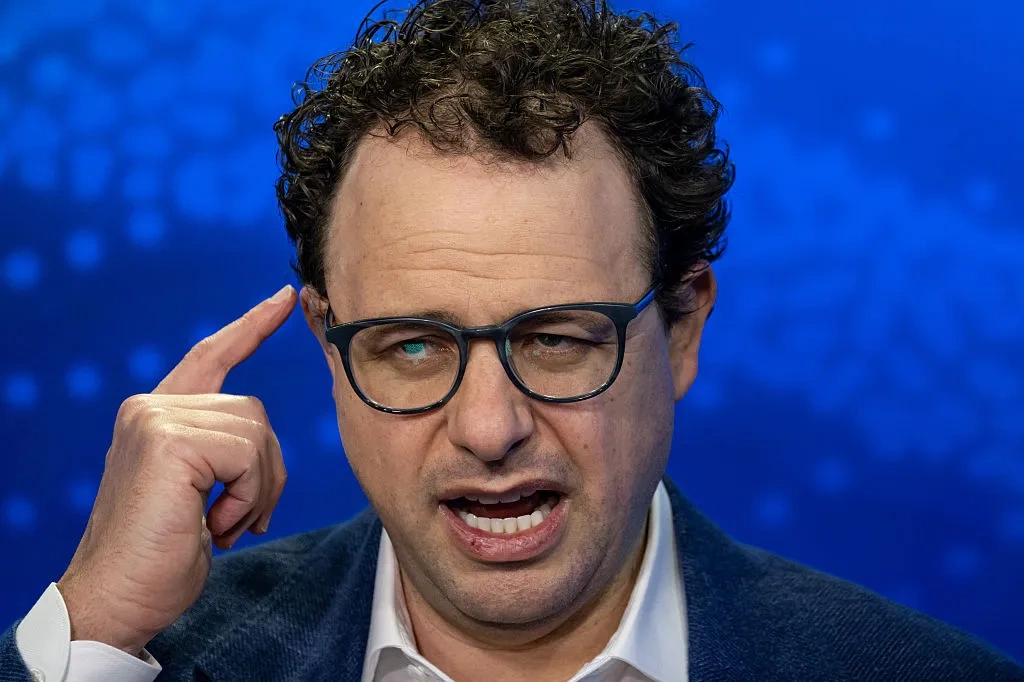 Dario Amodei, CEO of Anthropic. Photo: Bloomberg
The playbook was soon turned on China. In August, the Center for a New American Security, a US-based think tank, published a report titled Superpowers and AGI. Its author, Jacob Stokes, who had served on the National Security Council under both the Obama and Biden administrations, urged that Washington should consider “preventive military strikes” on Chinese data centers to stop China from being first to reach AGI. Anthropic issued reports in February and September accusing Chinese companies such as DeepSeek and Moonshot AI of “industrial-scale distillation” of its Claude model, and further alleging that Chinese open-source models “route” user requests to Claude. Meanwhile, US AI firms like OpenAI and Google threw their weight behind chip export controls on China.
The Chinese government’s response went straight to the heart of the matter. The state media Global Times bluntly hit back, “Such extreme rhetoric, which advocates using military force to attack civilian facilities, is no different from terrorism.” On September 9, a Ministry of Commerce spokesperson told reporters that distillation is a common practice by which models learn from one another, that it is an inherently neutral technical method used by model developers the world over, American firms included, and that US companies’ own R&D reports show they distill Chinese models on a large scale. To smear a standard industry practice as an act of aggression, the spokesperson said, is a textbook double standard — a move that “uses a crackdown on distillation as a cover for industrial monopoly”. Earlier in July, President Xi Jinping, in the keynote address at the 2026 World AI Conference, stressed that “as a responsible major country, China is committed to being a provider of international public goods in AI,” and proposed that “AI development should not be a solo performance by one country, but a symphony of global cooperation”. The conference announced 5,000 AI training slots for developing countries over the next five years, along with efforts to roll out smart meteorological early-warning systems in 30 countries. Earlier, at the BRICS leaders’ summit, China had also put forward an “AI Open-Source for Shared Benefits Initiative.”
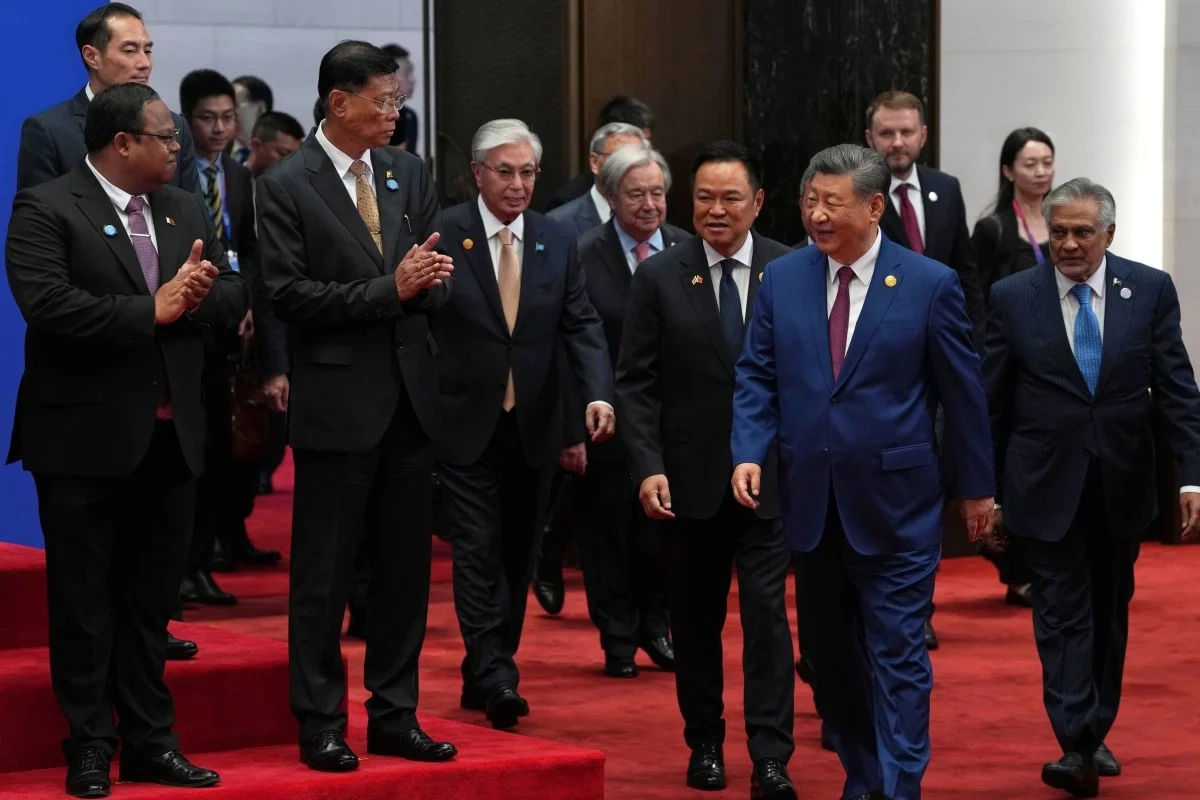 Chinese President Xi Jinping walking with other leaders mainly from developing countries at the World AI Conference in Shanghai in July, 2026. Photo: AP
When the government’s stance reaches companies, it turns into concrete lines of code and licensing terms. DeepSeek’s open-source license states, in two short lines, “freely access” and “without any application or registration requirements.” Developers can obtain and use the model freely, and DeepSeek claims no share of whatever they earn from it. DeepSeek founder Liang Wenfeng once said frankly at an internal meeting, “We’re doing this out of enormous goodwill toward the world. We believe it’s useful to humanity — this is bigger than money.” On September 14, an essay by Liu Shengyu, a senior operator engineer at DeepSeek, went viral on global social media. “The most advanced intelligence should be made available to everyone, openly and cheaply,” he wrote. “I don’t trust Anthropic or OpenAI to do this — and above all, I don’t want Anthriopic to control the most advanced AI or AGI. To put it bluntly, that would be no less serious than letting Hitler get the atomic bomb before the Allies.” Beyond DeepSeek, Alibaba’s Qwen has open-sourced nearly 400 models, with more than 700 million downloads on Hugging Face — overtaking Llama to become the world’s largest open-source model family. Tencent’s Hy also open-sourced its Hy3 and Hy4 models in 2026.
These companies’ choices struck a chord on social media. After reading Liu Shengyu’s essay, a netizen named “Bread Superman” remarked with feeling, “In the most cutting-edge R&D, I see the founding spirit of the People’s Republic of China. It is more precious than gold, more dazzling than sunlight.” Several days earlier, the well-known Chinese media figure Hu Xijin, commenting on Anthropic’s “distillation” accusations against China, said publicly: “The real power of AI lies not in who is first to touch that ethereal ‘critical point,’ but in who can make AI truly take root in the body of society.” In January 2025, shortly after the debut of DeepSeek, Feng Ji, producer of the Chinese AAA video game Black Myth: Wukong, wrote on Weibo (China’s X-like social media) that DeepSeek “may be a technological achievement of national-destiny significance,” adding, “I hope DeepSeek R1 will strip away the mystique of the most advanced AI and make AI as everyday as water and electricity… one more step toward equal access to knowledge and information.”
The positions in government documents, the licenses in companies’ code repositories, the free apps on ordinary people’s phones — all three point to the same fact: in China, AI is a tool that empowers industries, not an oracle locked away in a handful of data centers for people to look up to in awe.
In healthcare, AI in China has enabled regions previously suffering from a relative scarcity of medical resources to enjoy the same level of medical services as developed areas. In early 2026, at a Hospital in Nanpi, a Northern Chinese prefecture, 89-year-old Dai Guiying suffered a sudden stroke, and her condition deteriorated rapidly. Under the traditional model, image interpretation took about 40 minutes; after AI-assisted diagnosis was introduced, it took only 10 to 15 minutes from the end of the scan to the issuance of a report, winning back about half an hour of the “golden treatment window” for the patient. Liangshan Prefecture in Sichuan was once a deeply impoverished area, with only one mammography machine in the entire prefecture. AI-assisted diagnosis helped doctors promptly detect a malignant nodule in Ms. Xiao’s breast imaging that was prone to being missed; a biopsy confirmed invasive breast cancer. In 2025, 17 counties and cities across the prefecture used AI to complete breast cancer screening for more than 70,000 people, achieving 100% coverage of the screening task. Behind these two county- and township-level cases lies a nationwide push to extend these benefits to all.
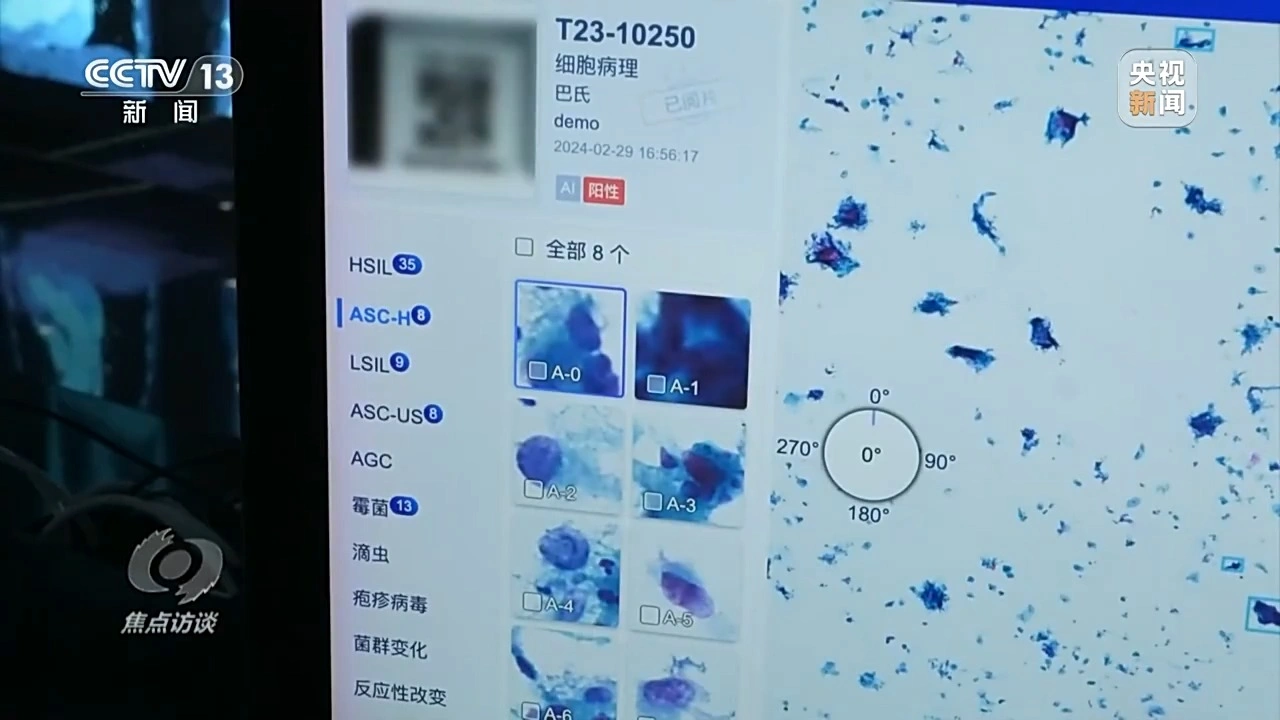 Userinterface of an AI-assisted image diagnosis software
Education is another major front in making AI broadly accessible. The Ministry of Education has run dedicated AI training programs, formed research-and-teaching groups of 500,000 teachers, and brought AI-assisted teaching to 180 million learners. The national smart education public-service platform has added AI-powered recommendations and Q&A, with total users exceeding 178 million. AI is no longer the preserve of key urban schools; children in remote areas can now get learning support close to what top schools offer through smart tutoring.
Even the face of millennia-old farming is changing. In Henan, central China, AI forecasting has shifted spring farmland management from “blind response” to “targeted effort,” benefiting 53 million mu (about 3.53 million hectares) of farmland. “In the past, even about a hundred mu (roughly 6.7 hectares) of land required the whole family to pitch in. Now, with a smart irrigation system, just three people on our farm can reliably manage 2,000 mu (about 133 hectares) of wheat, saving time, effort, and money,”A farmer told reporters that with AI-powered precision irrigation, water use per mu (about 667 square meters) is kept at 15–20 cubic meters, saving more than 30% compared with traditional irrigation. A plant-protection agent built on the Shennong LLM developed by China Agricultural University identifies pests and diseases with over 95% accuracy and issues warnings 7 to 10 days ahead, and it has been opened up to plant-protection departments nationwide.
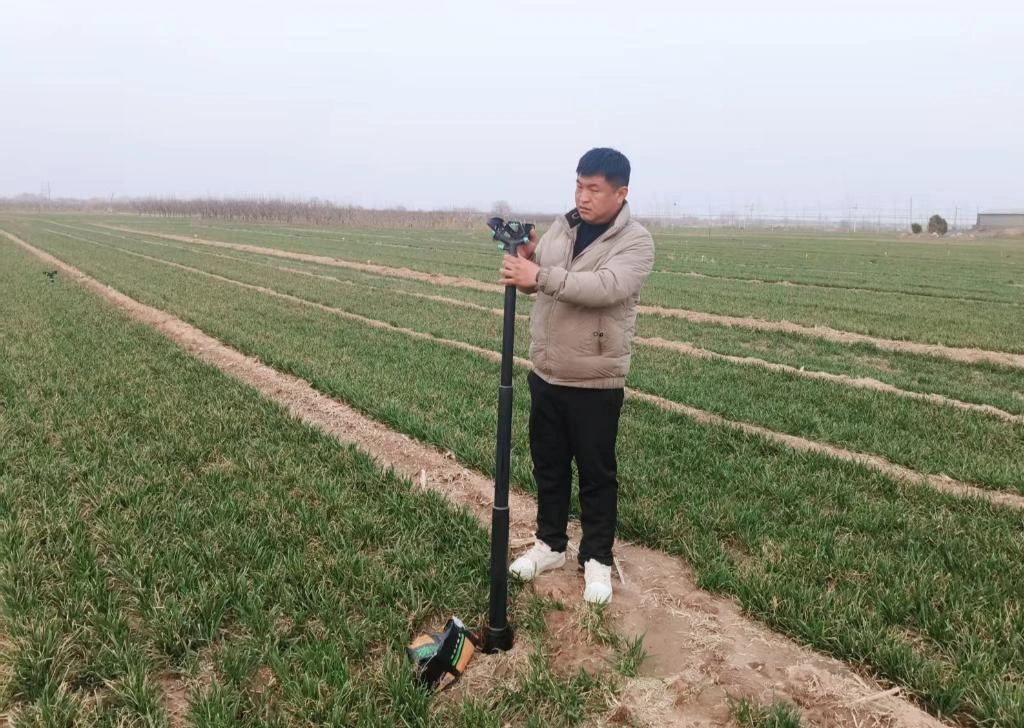 A farmer adjusting the smart irrigation equipment in the wheat field. Photo: Xinhua News Agency
Nor have those most easily forgotten by technology been left behind. iFlytek’s AI public-welfare program has empowered 33,000 nonprofit developers, produced 38,000 accessibility applications, and served 14.04 million people with visual or hearing impairments. Its iFlytek Hearing public-welfare project has nearly 100,000 certified hearing-impaired users and has donated more than 200 million minutes in total. Nationwide, 3,000 websites and government-service apps have been made accessible, and AI sign-language translation helps millions of hearing-impaired people use services.
Across the Pacific ocean, the road has run in a different direction. There, the AI boom has become a kind of religion: big companies issue oracular technological manifestos, opinion leaders interpret them like preachers, and the faithful believe AI is humanity’s ladder to a new stage — that once this step is taken, the old rules and the costs no longer matter. Brought down to earth, this religionized worldview means deep entanglement with power — the US military is a major client of these AI companies, from intelligence analysis to battlefield decisions, with Pentagon contracts flowing steadily into Silicon Valley; and the Silicon Valley defense contractors involved in the wars in Ukraine and the Middle East come from the same stock as the AI companies.
 The U.S. military used Anthropic’s Claude AI model during the operation to kidnap Venezuela’s president Nicolás Maduro. Photo:TNS
Beyond that entanglement, these companies’ daily conduct tells another story: pumping groundwater in arid regions for data centers, competing for electricity quotas in power-short cities; secretly scanning and disposing millions of books to train models, raising suspicions about the destruction of out-of-print books;scraping the work of the world’s writers, journalists, and photographers en masse into training sets, drawing copyright lawsuits from The New York Times and others; widely reported concerns that their products may trigger mental-health problems as automation speeds up layoffs — all while their PACs flood Washington with record lobbying money, crying “regulate AI for safety” with one hand and designing the rules as barriers only the giants can afford with the other. Their low moral floor is plain for all to see.
If all this were merely predation at home, the accusations against China are that same logic turned outward. Anthropic repeatedly hypes “distillation” and “routing” claims against Chinese open-source models, turning “distillation” from a technical term into a political one. Even Elon Musk finds such talk hard to swallow — and anyway, Chinese open-source models publish their weights in full and can be deployed locally, so “routing” is simply impossible. These companies’ moral failings have long been public, so trashing China and shifting the blame has naturally become a way to divert public attention: packaging themselves as “guardians of safety” and attacking Chinese models in the name of “safety regulation” is simply more respectable than coming right out and saying “China threat.” So-called “AI safety” has long been turned, in these companies’ hands, into a weapon for crushing peers, raising barriers, and defending monopoly.
AI itself is neither good nor evil; the path of development decides which it becomes. When a country chooses to make the most advanced intelligence available to all, openly and cheaply, chooses to let technology sink down into the places that need it most, chooses to be a provider of public goods on the world stage rather than a guardian of technological hegemony — that road leads naturally to safety, and to good. And when a clique of giants choose to hold prices high through monopoly, to suppress competition through fear, and to defend their advantage through the threat of force, choosing to make AI a vassal of capital and hegemony — that road is sliding toward risks, and toward evil.
The world ahead will either, once AI has unleashed and expanded the productive forces, move toward the utopia Marx and Engels described in The German Ideology — “to hunt in the morning, fish in the afternoon, rear cattle in the evening, criticize after dinner” — or slide into a cyberpunk abyss in which a few monopolize intelligence and the means of production. As the DeepSeek engineer Liu Shengyu put it, open source may be able to be a rope to pull the world back a little from that cyberpunk edge. Thanks to China’s efforts, that rope is now being grasped the hands of more and more people.
Editor: Chang Zhangjin
https://www.cnbc.com/2026/09/10/openai-anthropic-ai-safety-slowdown-extinction.html
https://www.news.cn/world/20260909/fb6ada09633f45bd9fd10bcc80d736ac/c.html
https://m.thepaper.cn/newsDetail_forward_34009916
https://www.xinhuanet.com/tech/20260529/2f36d8f97305468eb5f3064f8ba8ebb6/c.html
https://www.news.cn/tech/20260330/6339e09375054c0586ccea4f7086e01e/c.html
https://kepu.gmw.cn/agri/2025-10/14/content_38341686.htm
https://www.qstheory.cn/20250518/13f52b4003cf464fb403282a9bada0c5/c.html
https://tech.chinadaily.com.cn/a/202604/13/WS69dc9bc8a310942cc49a75a3.html
https://www.axios.com/2026/02/13/anthropic-claude-maduro-raid-pentagon
https://www.washingtonpost.com/technology/2026/01/27/anthropic-ai-scan-destroy-books/
https://mp.weixin.qq.com/s/zk0KxuLzhmMJ4LPYW_OHMA
https://mp.weixin.qq.com/s/YglIKP8ELsQPh1CiJypTrg
https://github.com/iamsophie/deepseek-liang-wenfeng-investor-meeting