



On December 4, the United States released its 2025 National Security Strategy, for the first time referring to China as a ‘near-peer competitor.’
To many supporters of China who are familiar with China’s current development, this may seem like a positive signal that the Trump administration is finally able to adopt a pragmatic and realistic view of the world. However, it is worth noting that beneath this veneer of ‘pragmatism,’ the document’s chapter on China strategy still harbors three major internal contradictions, revealing the Trump administration’s enormous dilemmas and ambitions at the strategic level—something neither China nor the world should take lightly.
First, militarily, the Asia section of the document sets out the goal to ‘Win the Economic Future, Prevent Military Confrontation.’ Yet within the same chapter, it meticulously outlines specific measures to strengthen military presence around Taiwan Island and in the South China Sea.
Second, economically, the document acknowledges China as a ‘near-peer’ competitor on one hand, while on the other hand consistently characterizing China’s economic behavior throughout as ‘predatory,’ ‘unfair,’ and ‘in need of correction.’
Third, diplomatically, the United States proposes maintaining a ‘genuinely mutually advantageous’ economic relationship with China, while simultaneously demanding that allies reduce their dependence on China, reorganize supply chains, and jointly confront China’s economic practices. The document explicitly states: ‘the United States must work with our treaty allies and partners—who together add another $35 trillion in economic power to our own $30 trillion national economy… to counteract predatory economic practices.’
Not only toward China, but Trump administration’s global strategy also exhibits obvious internal contradictions: The United States lists a long ‘wish list’ in the document, with goals covering virtually every important region of the world, yet the document also acknowledges that U.S. ‘cannot afford to be equally attentive to every region and every problem in the world. ‘
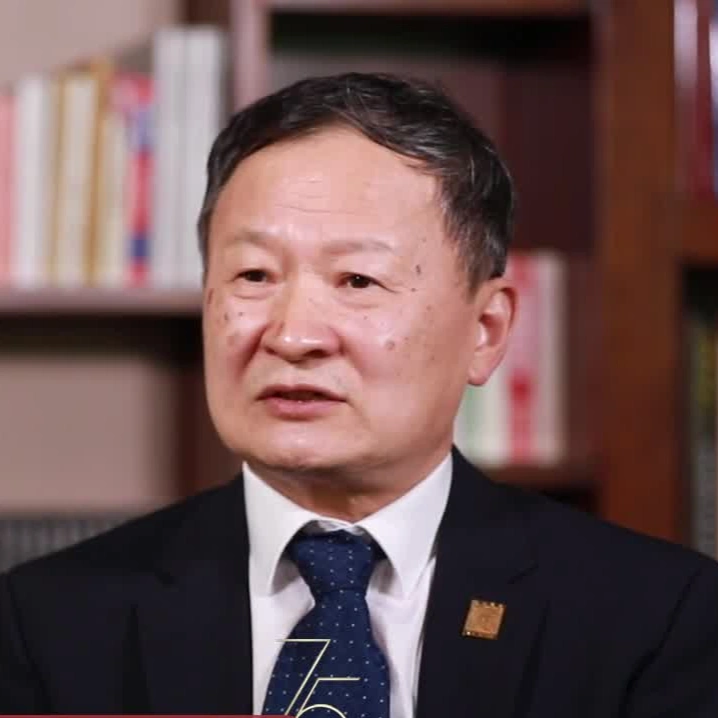
Why would the United States formulate such a self-contradictory security strategy? Professor Wang Xiangsui, Deputy Secretary-General of the CITIC Foundation, points out that these contradictions precisely reflect America’s fundamental dilemma of ‘limited strength, excessive goals.’ Its ‘retrenchment’ is comprehensive overall, but on the core objective of containing China, it is expansionary and mobilizational. The document’s emphasis on retrenchment is not based on self-aware course correction, but rather explores how to systematically weaken China’s strategic development capabilities while enjoying the benefits of economic and trade ties with China. Thus, this is essentially still a utilitarian containment strategy serving the maintenance of American unipolar hegemony.
For this reason, the key to interpreting this contradiction-filled American strategy lies not in analyzing its promises or contradictions word by word, but in seeing clearly the underlying logic that deliberately shapes these contradictions: the attempt to handle all international affairs with a transactional mindset.
This ambition to create a world where ‘everything can be traded’ is particularly evident in handling the Taiwan Question. On one hand, the United States publishes a report explicitly emphasizing the need to maintain conventional military superiority in the First Island Chain; on the other hand, Defense Secretary Pete Hegseth publicly stated on the same day that “We’re not trying to dominate or humiliate them, nor are we trying to change the status quo over Taiwan.” As for the Taiwan card itself, the real calculation being made is: on the basis of acknowledging China’s red lines, to continuously play the Taiwan card in order to create favorable conditions for other transactions.
In this attempt to ‘transactionalize’ strategic competition, this strategy of ‘applying pressure at the edge of red lines’ is the essence of the Trump administration’s ‘art of the deal,’ and also its greatest risk. It ‘commodifies’ issues of vital national sovereignty and security, treating risky behaviors that could lead to conflict as bargaining chips. While this strategy may be effective in the business realm and can create negotiating advantages through ‘creating cards out of thin air,’ when transplanted into international relations, it will inevitably seriously erode the foundation of strategic mutual trust in the long term, greatly increase the risk of crises triggered by miscalculation, and pose a direct threat to global strategic stability.
Therefore, for China, the key to breaking free from Trump’s rhythm of ‘creating cards out of thin air’ lies in transcending his ‘transactional’ framework itself, using a combination of strategic resolve, strength, and wisdom to compete.
First, through strategic resolve, China has successfully defended its core interests in the trade war initiated by Trump. As a businessman, Trump is adept at bluffing, going so far as to impose exorbitant tariffs of up to 245% on certain goods as leverage. Facing this ‘haggling’ style of ‘transaction,’ China’s most powerful weapon is not dancing to the other party’s rhythm, maintaining the resolve of ‘you fight your way, I fight mine,’ conducting precise and effective countermeasures in key areas such as rare earths and agricultural products, not playing his numbers game. The result is that the tariffs Trump’s administration clamored about are often much ado about nothing, while China’s countermeasures, though seemingly few, are all very powerful. In subsequent negotiations, China only moderately relaxed restrictions on civilian rare earths and soybean imports, and was able to get the United States to restore tariff levels to those before ‘Liberation Day.’
Second, by consolidating hard power, China also holds ultimate initiative on the Taiwan issue. It will not act rashly due to American provocations, nor will it ever relinquish the right to take resolute measures when necessary. This posture of ‘neither hasty nor rash, with clear bottom lines’ is itself the most effective counter to ‘creating cards out of thin air.’ Because in 2025, the United States is merely the initiator of the Taiwan card game, while with the development of China’s comprehensive strength, particularly military strength, Beijing has already grasped the initiative and timing choice for ultimately resolving the Taiwan issue.
Finally, while the essence of competition is victory or defeat based on strength, the essence of transaction is compromise with mutual concessions. If Trump wants to shape an international order based on transactional rationality, then even focusing solely on the Taiwan issue, China has earlier and more successful practical experience than he does. As early as 1972, when China’s Navy and Air Force still had a significant gap with the United States, Premier Zhou Enlai, through multiple rounds of mediation combined with the special historical context of that era, got the United States to acknowledge the One China principle through three joint communiqués.
This shows that whether in the past when there was a significant power disparity, or in today’s era when China and the United States are ‘near-peer competitors,’ China has demonstrated wisdom in shaping favorable situations through dynamic competition. Behind this is a strategic philosophy that transcends the ‘art of the deal’: not pursuing short-term bargaining chips in zero-sum games, but rather committing to consolidating a ‘foundation of strength’ through continuous development, grasping ‘timing and rhythm’ through strategic resolve, and ultimately creating favorable trends for resolving fundamental issues. Ultimately, this reflects two distinctly different worldviews at the civilizational level between China and the United States: one that views everything in the world as commodities that can be traded, and if the principal is insufficient, uses bluffing and creating conflicts to make up the difference; the other clearly draws non-negotiable red lines, but pursues maximization of mutual benefit and win-win outcomes in areas open to discussion, thereby reaching consensus.
Therefore, this self-contradictory American National Security Strategy not only alerts China to America’s significant strategic thinking shift, but also poses an urgent question to the world: Where should our international community order be heading? Should we condone some actors secretly pricing our security and sovereignty, or should we support a controllable competitive order with clearly defined bottom lines? In this era when China and the United States are ‘ near-peer competitors,’ this is a critical question that every country should carefully consider.
Editor: Charriot Zhai