



Question:
In the past, workers could protect their rights through strikes—because without them, capitalists couldn’t produce anything. But now we are seeing AI and robots replacing more and more basic jobs. Even drones are being used to replace soldiers on the battlefield. In your view, how can workers protect themselves in the age of AI?
Mr. Jyotishman Mudiar:
That’s such an excellent question. There are, of course, things that AI—or technology in general—can do that are in sync with socialist goals. I mean, Aaron Bastani has written a book about how technology can actually reinforce socialism, making more abundance possible, and sometimes even freeing up labor from certain menial jobs that human beings might not want to do.
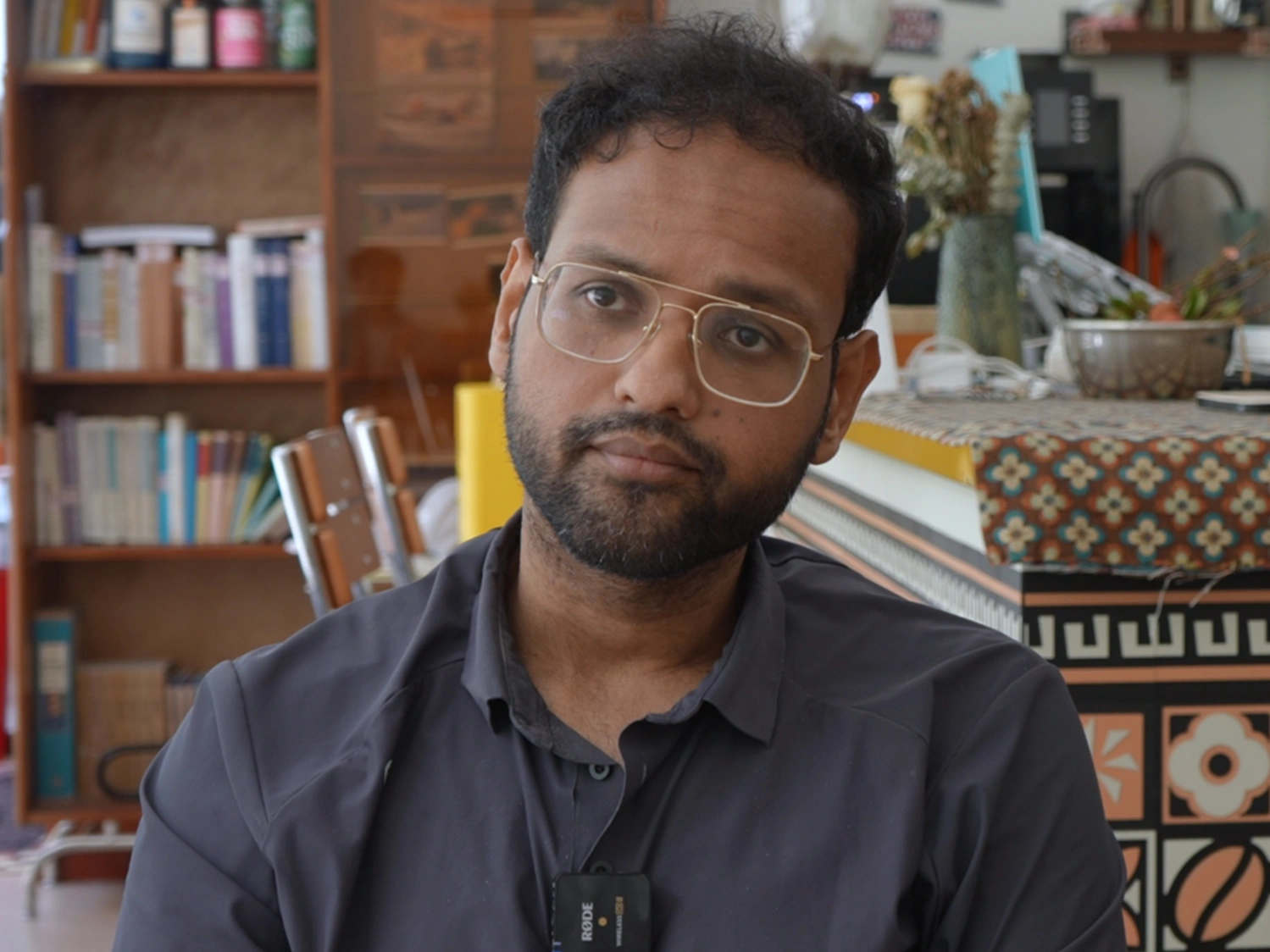 Mr. Jyotishman Mudiar, Host of the YouTube channel India & Global Left
The Dalit movement in India—the most oppressed caste in the country—has been advocating the use of technology to replace the menial work they are often forced to do, such as cleaning sewer tanks and toilets. In that sense, technology can be liberatory. So at a very general level, I don’t think socialism and technology are fundamentally opposed to each other.
But yes, you are right. Technology has significantly shifted the balance of power within the labor-capital relationship—toward capital.
This is a phase we had already seen in the 1970s, 1980s, and 1990s in particular, where certain technological revolutions dramatically weakened the labor movement. That was also why many layoffs and privatizations became possible in the first place in so many parts of the world. Think about container ships, think about how the assembly line itself has been disarticulated. Earlier, in the textile industries of Shanghai or Bombay, for instance, the reeling, washing, spinning, and weaving would all be done in the same city, in different departments. That allowed workers to come together through their unions and really strike—to stop production altogether.
But now think about Nike. It subcontracts something as simple as shoelace production to 20 different factories in different cities. And that’s just the laces. There are 10 different factories across different parts of the world involved in producing a single pair of shoes. Eventually, Nike retains the intellectual property rights, but nothing is produced in the same locality. There are multiple subcontractors—so even if one unit goes on strike, production continues elsewhere.
This fragmentation has significantly downgraded labor’s ability to strike.
Now, add AI into that. We are not just dividing or delinking labor—we’re creating a larger reserve army of labor. We’re making more and more workers redundant. That means labor has no bargaining power left in the relations of production. So that’s the labor-capital problem. But I’m also worried, as a socialist, about the very essence of our belongingness in this new AI-dominated world. Elon Musk would rather have our children and adults dream about colonizing Mars or the Moon, instead of how socialist poets once imagined the moon—as a symbol of romance, love, or peace. Now, the moon has become a commodity. It’s an insurance policy in the event of a nuclear holocaust or climate catastrophe—a sanctuary for elites to escape to and “save” humanity. It’s grotesque.
I also think about even basic things like child-rearing. My brother has a daughter—she’s four now. I watch how kids today grow up with mobile phones or iPads, with virtually no human-to-human interaction. No neighborhood socialization. What does that do to our idea of the collective? This is a very different world from the work unit system that China used to have. Now, children in China grow up watching animation on Apple devices, forming their identities primarily as individuals—at best, trying to maximize their own interests. When it comes to the collective, all we’re left with are vague notions: nationalism, rallying behind the flag, supporting the military. But we have a diminishing sense of what collective goods are. And that’s why people say things like: “The rich increasingly feel victimized everywhere.” The rich feel victimized about having to pay taxes. They feel victimized about not enjoying the benefits of affirmative action. They feel victimized about rising labor costs, about shrinking job markets. Even the children of the rich feel victimized—by housing prices, by the “burden” of having to own four cars. I’m exaggerating a little, but one thing I often hear in China is: “I don’t want to get married—it’s too stressful. You need to buy a house and a car. That’s what the girl’s family expects.”
It’s a ridiculous world that technology is driving us toward.
What worries me—beyond the labor-capital relationship, which is of course the heart of socialism—is this dramatic collapse of the idea of the collective, the idea of public good, of solidarity. We’re being reduced to individual atoms, effectively creating a social-Darwinian world, a hierarchy world, where no reality exists outside your own individual self. That is deeply concerning for me. And I don’t think AI will help us—unless we, as humanity, seriously reflect on these changes and develop collective defense mechanisms against them.
Editor: Charriot Zhai