


After Alibaba, China’s Antitrust Campaign Expands to Another Tech Giant
On July 25, 2026, China’s largest online travel platform, Trip.com Group, was hit with a 5.179 billion yuan fine, roughly 765 million dollars, for antitrust violations. It is the toughest antitrust penalty since Alibaba was fined 18.228 billion yuan in 2021. Trip.com’s fine was smaller in absolute terms, but the penalty was actually heavier relative to its size. The fine amounted to 7.5 percent of its 2025 domestic sales, compared with around 4 percent for Alibaba — making it the highest penalty ratio ever imposed in China’s platform economy antitrust enforcement.
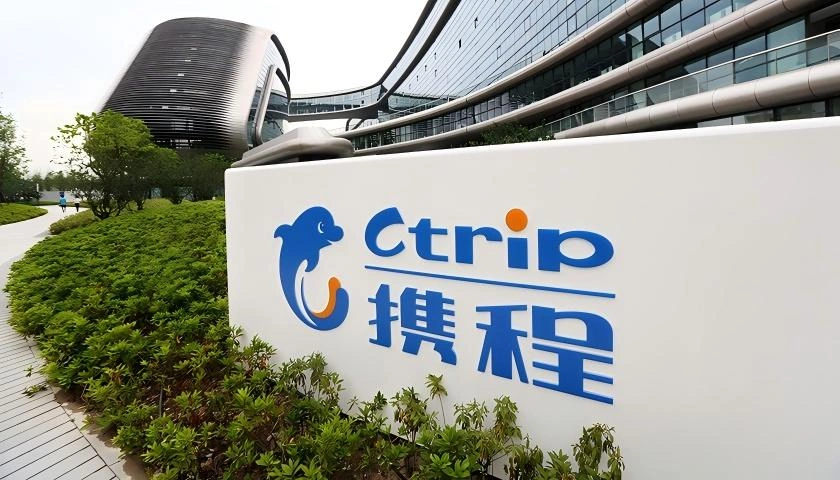
So what exactly did Trip.com do? The core issue can be summed up in one sentence: the company used its enormous control over online traffic to pressure hotels into giving up part of their pricing power and business independence. Trip.com has long held more than half of China’s online hotel booking market, and that dominant market position gave the platform significant leverage over hotels, especially smaller businesses. According to regulators, the illegal conduct fell into two main categories.
The first violation was traffic control. Trip.com divided hotels into different tiers, granting top-ranked partners premium exposure such as homepage recommendations and higher search rankings. In exchange, hotels were coerced into pulling listings from rival platforms. Regulators confirmed the platform enforced this exclusive rule at a compliance rate above 90 percent; hotels that refused faced reduced visibility, lower rankings, or temporary removal from the platform entirely.
The second malpractice centered on algorithm-driven automatic price adjustments. For hotels operating across multiple platforms, Trip.com deployed algorithms to track competitors’ rates and automatically undercut rival prices without obtaining prior approval from hotel operators. This constant price suppression steadily squeezed hoteliers’ profit margins. Industry data shows platform commission fees for hotels have climbed from 8 to 10 percent several years ago to 12 to 18 percent today. One hotel operator calculated that nearly 40,000 yuan out of every 100,000 yuan in monthly revenue ended up going to Trip.com. A hotel owner based in Sichuan captured the widespread industry dilemma with this line: “Without Trip.com, we can’t survive. But with Trip.com, we can’t grow.”
Trip.com is not the first major Chinese tech firm to face antitrust crackdowns. In 2021, Alibaba received an 18.228 billion yuan fine for forcing merchants to pick exclusive platforms, and Meituan was penalized 3.442 billion yuan that same year for identical unfair practices. Even so, the Trip.com case carries unique significance, as it marks the first time Chinese regulators have formally classified algorithmic auto-pricing and traffic-based coercion as illegal abuse of market dominance.
So why is China ramping up oversight of giant internet platforms? Regulators maintain that unchecked platform monopolies distort the entire market ecosystem, most notably by squeezing small and medium-sized suppliers. When a single platform controls over half an industry’s online traffic, it gains unilateral power to dictate pricing and competitive rules, leaving dependent hotels with no choice but to accept steep commissions and restrictive cooperation terms.
This kind of digital monopoly conflict is not unique to China. European hoteliers have long fought against similar restrictive policies from Booking.com, whose parity clauses barred hotels from offering cheaper rates via official websites or competing platforms. The EU ultimately labeled Booking.com a digital gatekeeper under the Digital Markets Act, mandating that hotels be allowed to offer preferential pricing on external channels without retaliation. Europe’s highest court also ruled such price restraints stifle competition and are unnecessary for the platform’s normal operation.
The United States faces parallel frustrations centered on Ticketmaster. For years, fans, artists and venue operators decried exorbitant service fees, exclusive venue contracts and a consolidated system that centralized control over every link of live entertainment. The U.S. Department of Justice filed a lawsuit against Live Nation and Ticketmaster in 2024, and a draft settlement unveiled in 2026 requires the firm to open its distribution system to competitors, loosen exclusive deals and cap certain service charges.
Global regulators are clearly taking action against digital gatekeepers, yet such enforcement efforts often drag on for years. Targeted corporations deploy large teams of lawyers, consultants, economists and lobbyists, turning every regulatory inquiry into drawn-out procedural battles, with each proposed corrective measure triggering fresh litigation.
Monopolistic behavior creates deeper, long-term harm beyond immediate supplier exploitation. Dominant platforms can lock up valuable industry resources through exclusive agreements, erecting steep barriers that stop innovative new competitors from building viable supply chains. As market competition weakens, the whole industry loses its incentive to innovate and evolve — and consumers ultimately bear the cost. When hotels are crushed by heavy platform commissions and shrinking margins, cutting service quality becomes the simplest cost-cutting measure. Without sufficient market competition, shoppers rarely see lower prices; instead, they face narrower product choices and degraded service standards.
These risks prompted China to revise its Anti-Monopoly Law in 2022, adding explicit provisions banning enterprises from leveraging data, algorithms, technology, capital advantages or platform rules to engage in monopolistic activity. The Trip.com investigation stands as one of the landmark major enforcement cases under this updated legal framework. The six-month probe included extensive evidence collection and expert consultations, adopting a procedural model that bears more resemblance to European Commission investigations than U.S. judicial procedures.
The regulatory campaign also carries distinct Chinese characteristics. Official statements from China’s market watchdog repeatedly referenced the term “involution,” describing it as destructive zero-sum competition where enterprises shift costs and pressure onto counterparts instead of creating genuine new value. The penalty against Trip.com is therefore framed not merely as antitrust enforcement, but also as a measure to curb this unhealthy, wasteful industrial competition.
Trip.com has fully accepted the fine and unveiled 19 comprehensive corrective actions, including shutting down its automated algorithmic pricing tools, abolishing its exclusive ranking tier system, and refunding 122 million yuan in hotel security deposits.
The case delivers three clear takeaways for global investors and multinational companies observing China’s regulatory landscape. First, technological tools cannot serve as a legal shield: monopolistic conduct remains unlawful regardless of whether it is enabled by algorithms. Second, China’s regulatory framework is not designed to dismantle large corporations outright; firms that rectify improper operations and comply with rules are permitted to continue competing in the marketplace. Third, China’s platform economy is shifting its core development logic, moving away from blind traffic expansion toward sustainable, balanced competition.
The next phase of industrial rivalry will no longer revolve around which platform can exploit suppliers and crowd out rivals most aggressively. Instead, competition will center on building balanced, healthy industrial ecosystems.
The underlying takeaway of the 5.179 billion yuan penalty is straightforward: scale does not grant untouchable status for corporations operating in China. Sustained long-term business success ultimately hinges on abiding by market regulations.