


Yesterday, I went to watch Shen Teng’s new film Once Upon a Time in the Middle East (Chinese title: 欢迎来龙餐馆). How should I put it? It is easily one of the most impressionable movies I’ve seen in recent years—perhaps, to a certain extent, without “one of”.
Although Shen Teng started out as a comedy star, the films he stars in—his previous space adventure movie and this new one, Welcome to Dragon Restaurant—have left me with the impression of being “trailblazing” films, at least within my personal perception.
By “trailblazing,” I mean the film attempts to respond to and reflect upon certain questions, while showcasing the results of these reflections through the medium of cinema. Furthermore, these exact questions are what present-day China needs to address, reflect upon, and provide effective solutions for. Therefore, I consider this a film with a distinct sense of the current era. Welcome to Dragon Restaurant offers a very interesting and subtle perspective.
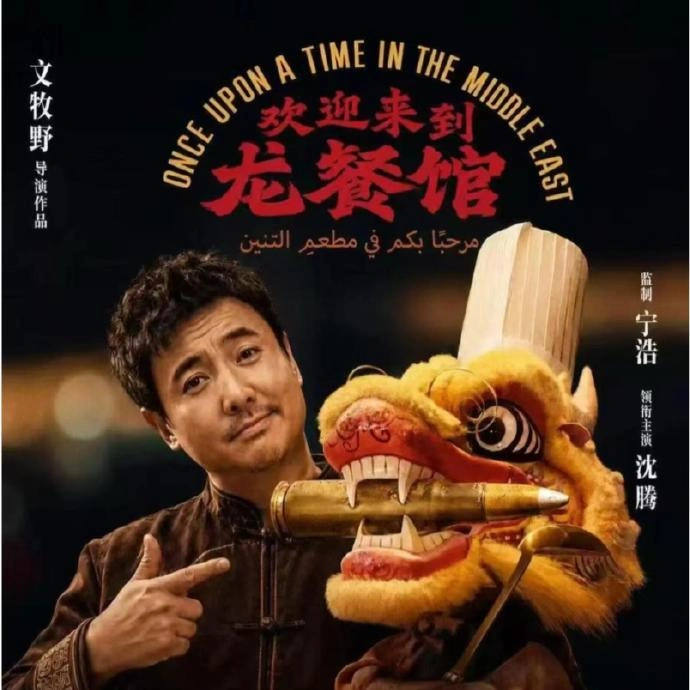 Poster of Once Upon a Time in the Middle East
The film is set in Iraq, spanning a timeframe that roughly begins a few months before the U.S. launched the Iraq War and extends through 2004 and around 2005. This journey can effectively be divided into four distinct stages, with the movie constantly shifting between several locations.
The first stage takes place after the Gulf War, when Iraq was subjected to long-term U.S. sanctions, but before the Iraq War broke out and prior to the complete overthrow of Saddam Hussein’s regime.
The second stage centers around the perimeter of Baghdad’s “Green Zone”—the heavily fortified area guarded by the U.S. military, adjacent to the so-called Baghdad government district. The “government” referred to here was the pro-U.S. regime installed by Washington after Saddam’s fall. Shortly after, Paul Bremer announced the post-war reconstruction of Iraq, and George W. Bush declared “Mission Accomplished” aboard an aircraft carrier. The film captures the sights and atmosphere of Baghdad during this specific phase.
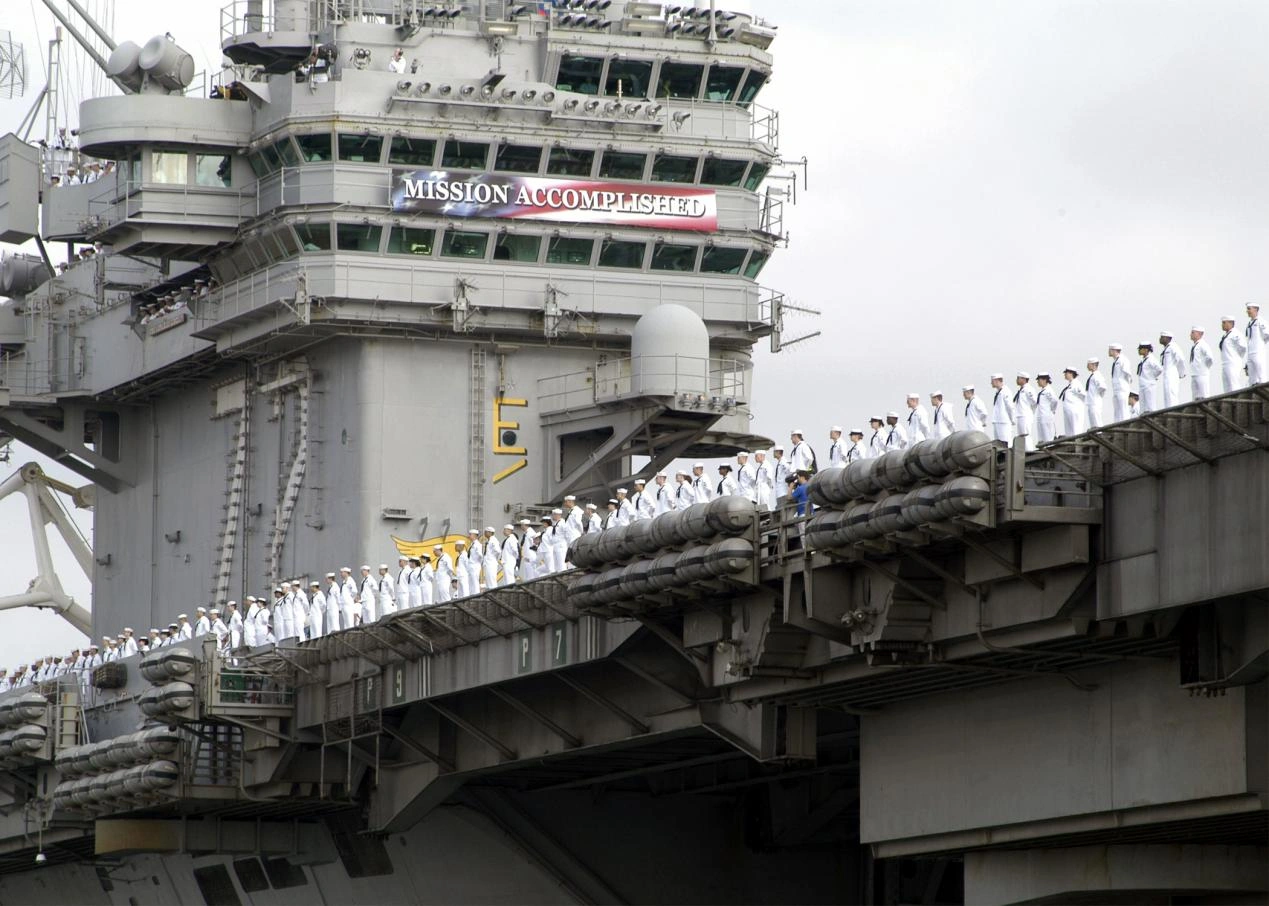 George W. Bush declared “Mission Accomplished” aboard an aircraft carrier. Photograph: Wikimedia Commons
What is particularly rare and commendable is that the film also incorporates the perspective of the U.S. troops occupying Iraq, as well as the coalition soldiers who entered alongside them. How did they view the war, human nature, and the local situation? The movie avoids overly grand, preachy depictions; instead, through simple, direct, detailed, and highly authentic portrayals, it reveals their mental state and worldview.
The third stage unfolds after the restaurant partner carries out a car bomb attack, leading to the main character, Xu Fu, and a young Iraqi boy, Saif, being captured by U.S. forces and thrown into a U.S.-run “black site” prison in Iraq. This touches upon a long-criticized U.S. practice similar to the Guantanamo model: inventing the concept of “unlawful combatants”—denying them civilian protections because they are deemed “combatants,” yet withholding the formal rights guaranteed to prisoners of war under the Geneva Conventions because they are categorized as “civilians”. Under this pretext, individuals could be detained indefinitely for imprisonment and interrogation. This was the reality of these “black sites.”
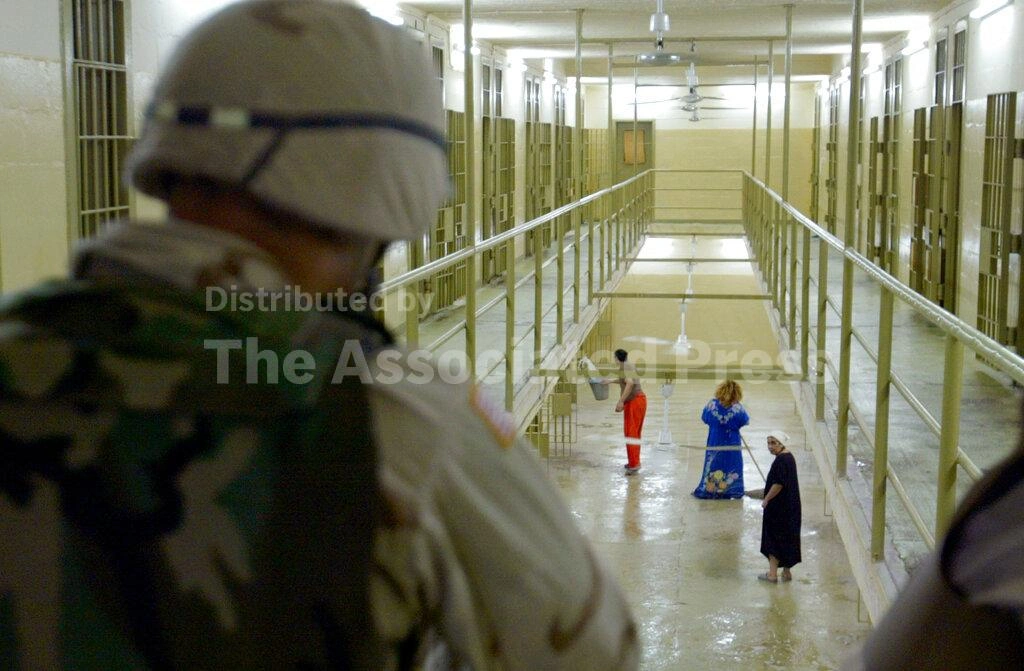 the Abu Ghraib prison in Baghdad, Iraq. Photograph: AP
The final stage shows the protagonist being coerced and kidnapped into an organization controlled by the “Headmaster.” This “Headmaster” most likely represents Al-Qaeda-type extremist terrorist forces, similar to those led by Al-Baghdadi. These were neither original local Iraqi insurgents nor secular Sunni elements from Saddam’s fallen regime; rather, they were extremist terrorist networks that infiltrated the area by taking advantage of the power vacuum left after Saddam’s fall.
Here, the film focuses on a key issue: how these terrorists exploit local war orphans, young children, and minors, turning them into human bombs and tools for suicide terrorist attacks. After entering this so-called “school,” the story follows how the protagonist survives, how he does his utmost to save these children, and how he eventually escapes—forming the climax and concluding part of the narrative.
Discussions about this movie are growing rapidly online. If all goes well, I think it will become a huge hit because it addresses several very important questions.
As Sister Bao mentioned: when observing the world, what do Chinese people focus on? On the surface, it’s “food.”
One area where this movie succeeds brilliantly is in its culinary design—the food shown genuinely evokes the feeling of a “Middle Eastern / Iraqi edition of A Bite of China,” spanning low-end, mid-range, and high-end dishes. The food looks genuinely delicious, making viewers hungry just watching. Yet behind “eating” lies the most modest, authentic wish of the Chinese people: “To eat a good meal, live a peaceful life, and enjoy a happy, beautiful existence.” Politics should enable the people to lead a happy and beautiful life. That is the first point.
Second, the perspective chosen by this movie is fascinating. The story takes place roughly between 2002 and 2005—about 20 years ago, during the first half of the first decade of the 21st century. At that time, China’s own development level, cultural influence, and comprehensive national power were vastly different from what they are today. The film captures this precise historical moment.
In fact, it tells the Chinese audience—or at least, this was the thought that kept recurring in my mind after watching it: with Chinese culture and mindsets, how easy or difficult is it for an ordinary person to find “small but certain happiness” (小确幸)—the modest, everyday happiness belonging to ordinary individuals?
It is actually not that difficult.
Even under the most extreme circumstances, as long as you provide an individual with a relatively stable space, they can create happiness on their own. To what extent? Even when thrown into a U.S. “black site,” the protagonist can still “rule” the kitchen relying solely on his skill as a chef. Later, even when forced into the “school” where the “Headmaster” trains children and minors to conduct suicide attacks, as long as he is in charge of the kitchen, he will still do whatever is within his power to make a difference.
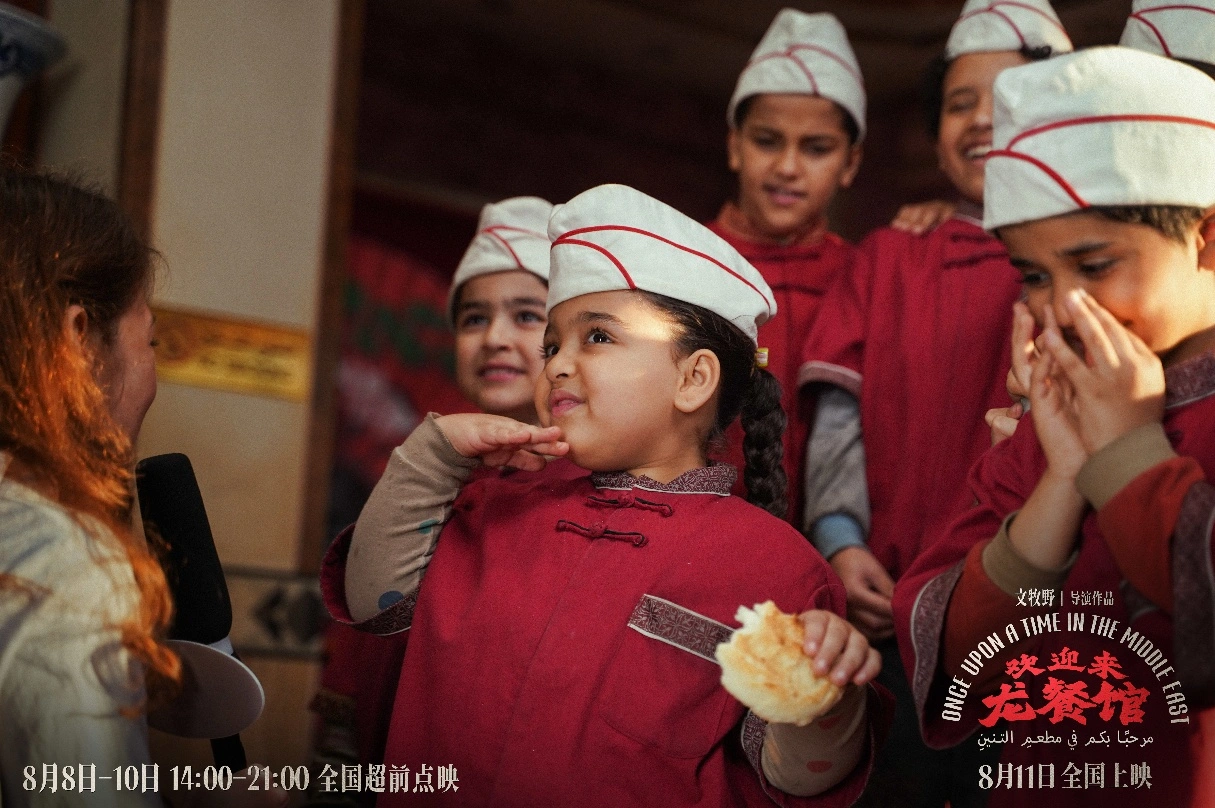 Poster of Once Upon a Time in the Middle East
There is a deeply moving scene in the film: before departing, have a good meal. Even in such dire circumstances, he is still able to make his own contribution, tangibly improving the living conditions of a small group of people around him.
However, the film simultaneously sends another crystal-clear signal: such modest, concrete, and tangible happiness is incredibly fragile if there is no external environment to guarantee and protect it.
In the first half of the film, there is a specific plotline. Before the Iraq War broke out, when the protagonist had just established a foothold and found a job, he went to cater a wedding feast for a local family. The delicious Chinese food, the happiness of the locals, and the lively scene of the wedding blended together harmoniously.
Watching that scene made me reflect on something—of course, what I’m about to describe happened in Afghanistan, not Iraq.
When I previously researched the U.S. War on Terror in Afghanistan, I gathered public materials and came across a classic, unforgettable case study: U.S. drones identified two alleged terrorists and launched a precision strike, which ultimately resulted in nearly 200 civilian collateral casualties.
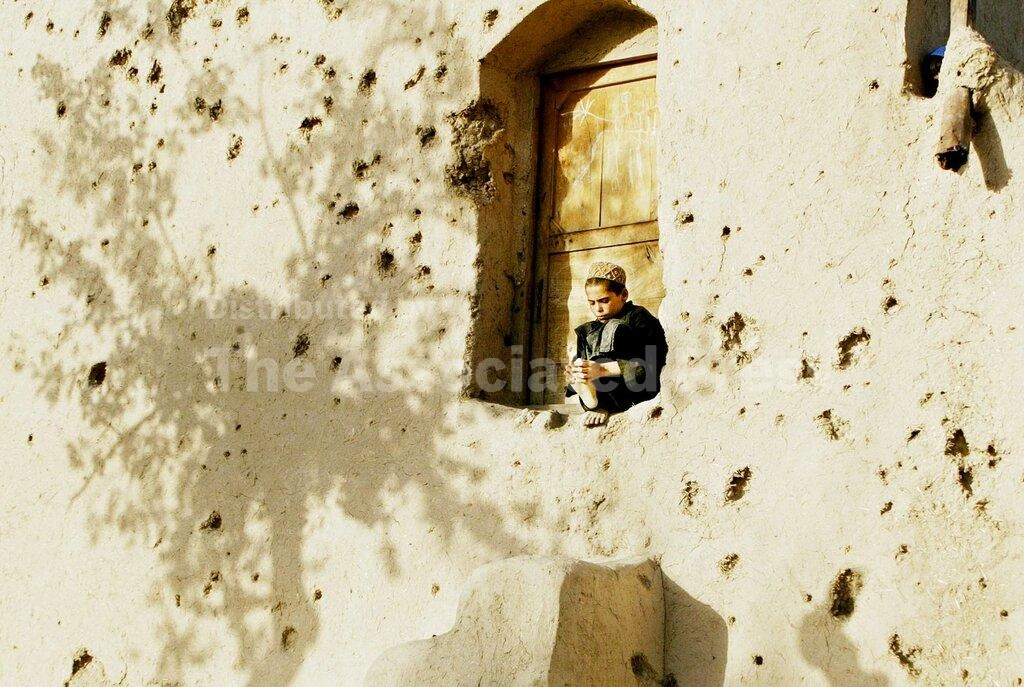 A boy sits by a door in a wall covered with holes from shrapnel and bullets made during an attack by U.S. forces in July on the village of Kakarak in central Afghanistan during a wedding ceremony Sunday, Sept. 8, 2002. Photo: AP
Why? Because those two alleged suspects had entered a wedding venue. The drone fired two missiles wiping out the entire wedding. Of course, it wasn’t an ordinary wedding, but an alliance wedding between high-ranking figures from two local tribes. Neither tribe was particularly anti-American to begin with, but after that incident, the outcome was predictable.
Later, American-made films reflected on similar issues. They posed a question: what is the fundamental difference between the “War on Terror” and what was later termed “Counterinsurgency Operations”? Suppose there are 20 terrorists—20 targets—and you kill two of them. How many are left? According to traditional War on Terror logic, 20 minus 2 equals 18.
In a counterinsurgency environment, however, the logic is entirely different. Starting with 20 people, you kill two; but suppose each person has 8 relatives who were previously hesitant—unsure whether to support (or at least not fight) the Americans, or to join local anti-American groups or even anti-American terrorist organizations.
They were originally torn between the two choices. But because those two individuals were killed, all 16 relatives joined the ranks of the terrorists. So what is the final math? 20 minus 2, plus 16, equals 34. That is a completely different logic.
You can look at how the “Engineer” in the film came to be. Why was he originally a water resources official, then became a restaurant partner, and later turned into the “Engineer” under the “Headmaster”? One major reason—a crucial one—was that he was driven step-by-step to the other side.
His transformation process was complex. In the movie, we see his role as a father with a daughter. Through his story, a concrete mechanism is portrayed.
What mechanism? U.S. export controls and sanctions.
What are export controls and sanctions? Originally, you only needed to pay a reasonable price to buy essential items in the market. For example, the chemotherapy drugs needed to treat his daughter were once normally accessible. But after the U.S. imposed sanctions on Iraq, he could no longer obtain them through normal channels.
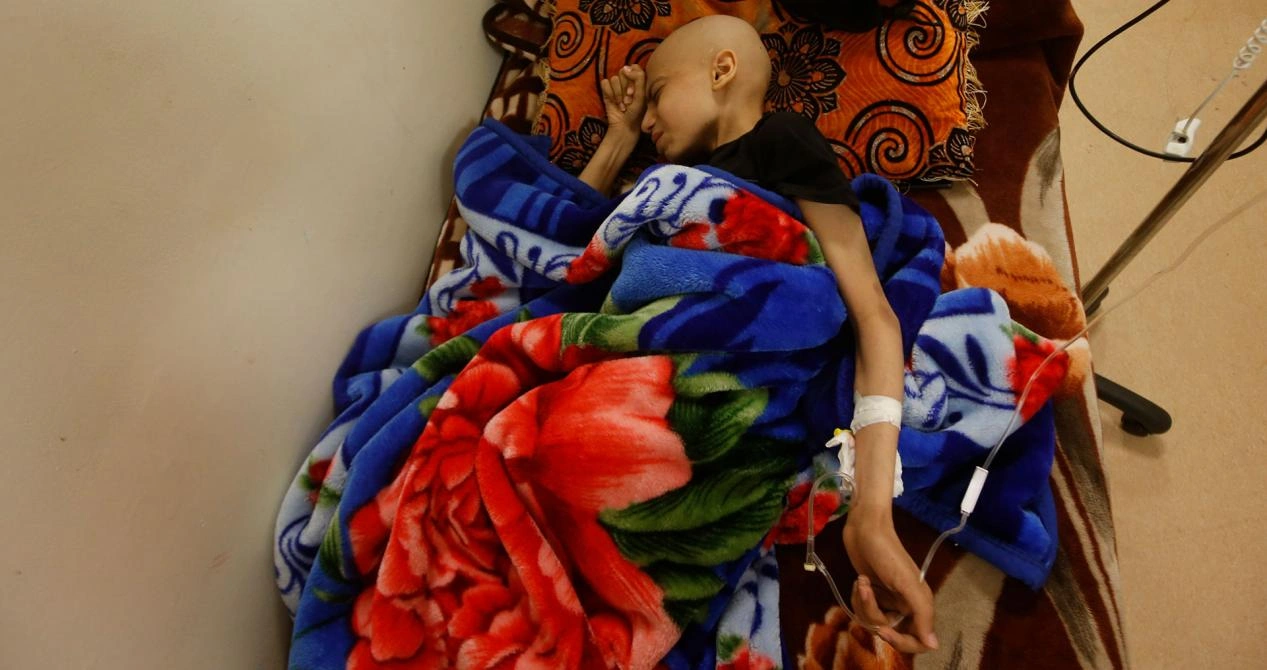 Across Iraq, families are struggling to access treatment and pay medical bills. The Abdullah family sold the family home to pay for cancer therapy for 14-year-old Mostafa, above. Photo: REUTERS
What could he do? He was forced to buy them from a U.S. military officer. But that officer inflated the price, squeezed him dry, and explicitly warned him that failing to comply with his demands would bring severe consequences—including potentially being put on an “assassination list.” Later, his home was attacked, killing his wife and daughter. Consequently, when he sought revenge for the first time, his target was the very U.S. officer who had extorted him. Eventually, he transformed from a restaurant partner into the “Engineer” serving the “Headmaster.”
This forms a major story arc in the film. Another critical line centers around the children, particularly Saif. Throughout the narrative, a core question persists: Will Saif ultimately become the kind of person U.S. troops label as “born terrorists,” or can he eventually become a chef?
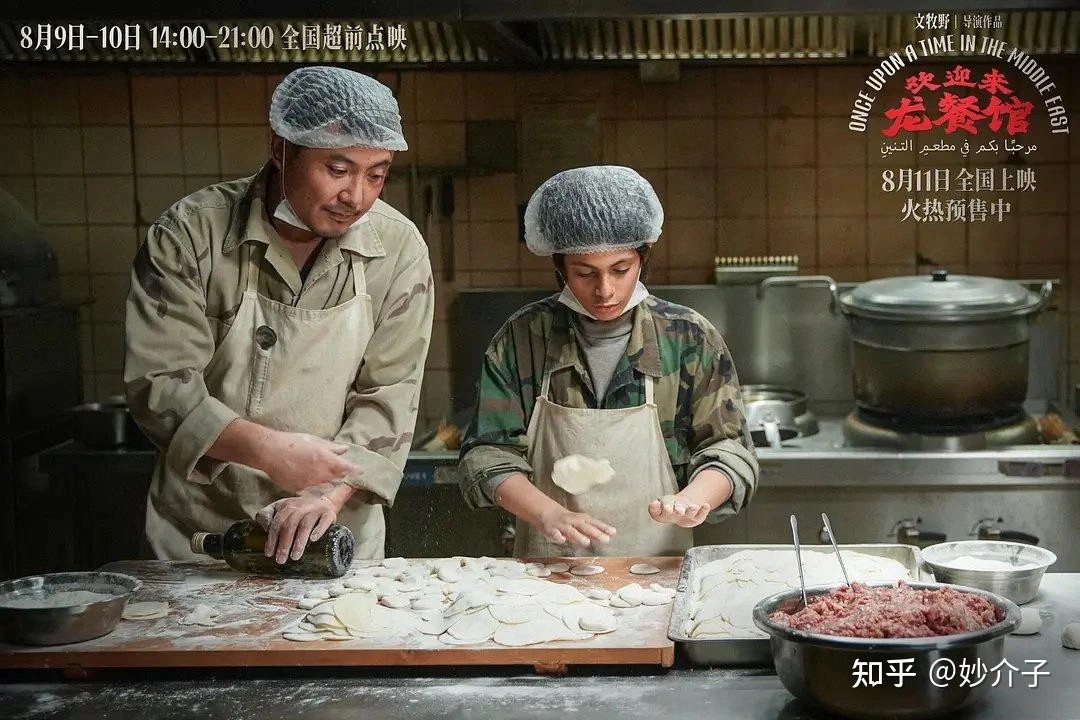 Poster of Once Upon a Time in the Middle East
What does this depend on? It depends on whether he encounters America or China.
If he encounters America—which invaded his country, bombed his homeland, killed his loved ones, and lacked the capacity to restore effective local governance—while on the other side stand extremist organizations using religion and manipulation to brainwash minors, converting them into tools for suicide bombings… where will he end up?
These terrorists deceive the children, telling them they are merely carrying out a mission, without revealing what is inside their backpacks. In reality, the backpack contains a bomb. They treat these children as walking “human tools” carrying bombs. Because they are children, U.S. troops are less likely to raise their guard. Once the child reaches a crowded area or approaches the target, a remote operator simply presses a button or detonates it via a pre-set mobile phone.
Such terrorist attacks are utterly despicable. They command zero prestige or honor—not only in the international community, but even among the local population. Why did U.S. counterinsurgency efforts in the “Sunni Triangle” briefly yield results in real life? Why was the once-arrogant “ISIL” eventually suppressed effectively?
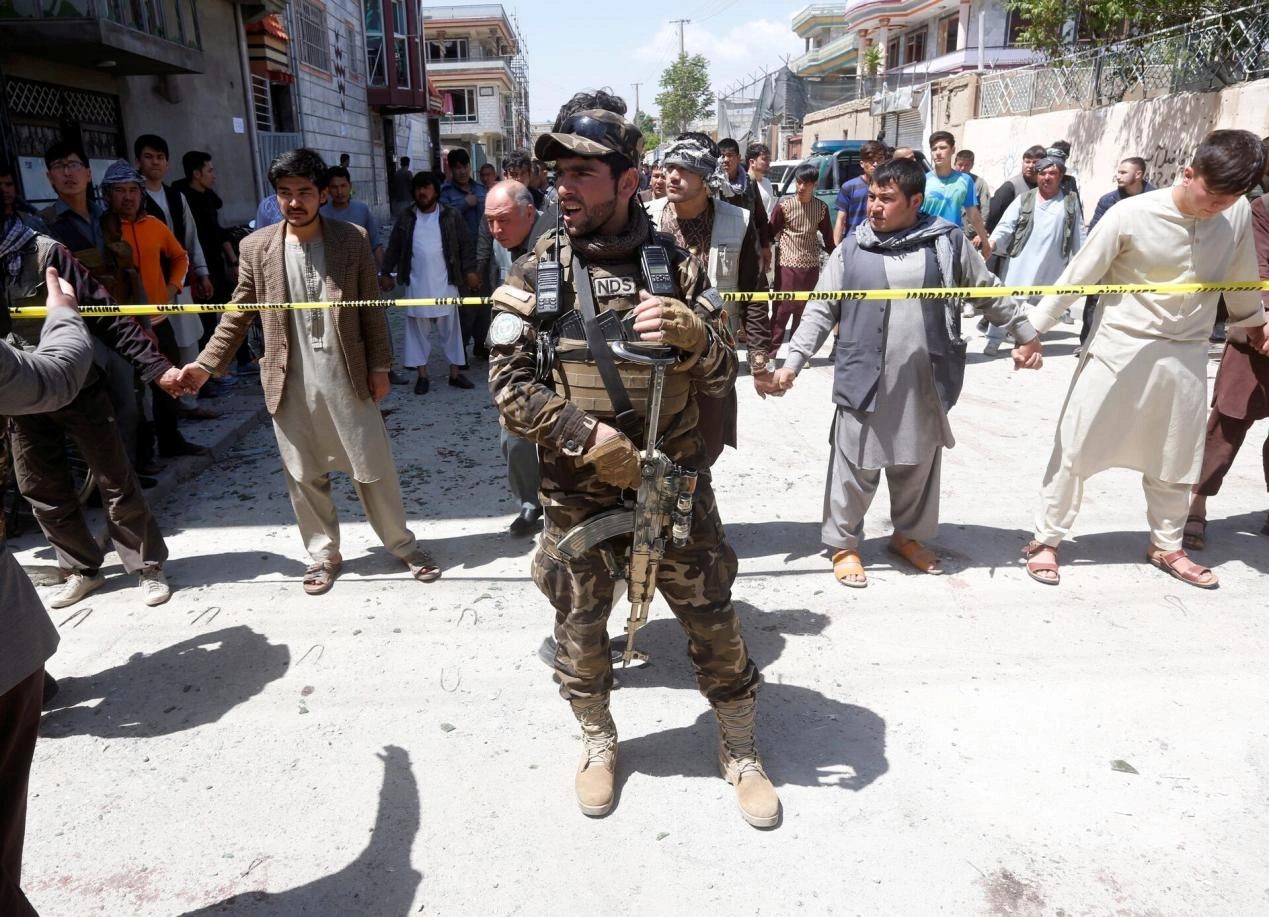 An Afghan security forces member stands guard at the site of a suicide bomb attack in Kabul. Photo: REUTERS
Because tactics like this cannot go far. They cannot serve any constructive purpose, nor will local civilians ever truly identify with such actions. For those trapped within it, it represents a terrifying state of existence.
In the film, there is a figure who seems to hold considerable status; but later, when the protagonist uses sprouted potatoes to successfully delay his plan, the leader simply shoots him dead on the spot. To them, human life is merely a tool.
Saif’s good fortune was meeting an ordinary, modest civilian individual from China. It was this ordinary person who guided him onto a different path and transformed his life. The entire story handles this resolution exceptionally well.
To be honest, halfway through watching their escape scene, I felt a sense of hopelessness. Yet, the director and screenwriters ultimately gave the audience warmth, steering the story back in a smooth, logical, and reasonable manner.
Watching the film leaves you with a powerful impression: even though he is a minor character, an ordinary Chinese person with limited individual capabilities, he is still able to alter the destinies of those around him within his own capacity. Given time, these individuals can embark on entirely different life trajectories. This tension persists throughout the movie.
A few lines of dialogue are particularly telling:
“These people are born terrorists.”
“Born terrorists?”
“If it weren’t for you guys, where would the terrorists here come from?”
This represents a very simple, direct realization. Of course, looking from the perspective of the international system, one can engage in deeper reflection. The film may not have had such explicit self-awareness, but it touches upon the boundaries of this issue:
If we want Chinese people to live happy, beautiful lives, simply improving our own domestic conditions is not enough. Otherwise, when you go abroad, what if you suddenly encounter someone locally coerced by a terrorist organization, or a local terrorist suddenly charges at you? What do you do? Yet, you cannot follow the path taken by the United States—that path is wrong.
The U.S. soldier in the movie is also very interesting. He has two specific triggers: first, no one can insult or mention his mother, or he will explode immediately; second, no one can call him a “security guard” or a “doorman.” He insists: “I am a soldier, I am a Private First Class,” but others reply, “You are just a security guard.”
This touches on a central question: What are you fighting for? Where does your sense of honor truly come from? That path is a dead end.
So, what is the alternative path? It is to use strong national strength to protect the beautiful life composed of “tiny, definite happiness,” allowing such a life to continuously progress and improve.
The character arcs and scene transitions in the movie are modular, yet the connections between modules are seamlessly executed. Through the identity of a “chef,” through a Chinese perspective and mindset—especially through a classic Chinese narrative of “ordinary people becoming grand heroes”—it illustrates the tension of the story.
Certain bottom lines must never be crossed—such as never harming children, no matter what. Even in the face of extreme asymmetry in power, one must use every possible means to rescue the children in front of them, saving as many as possible. And when the moment comes to save them, there is no hesitation—leading to that famous line: “They couldn’t just fool around and look the other way.”
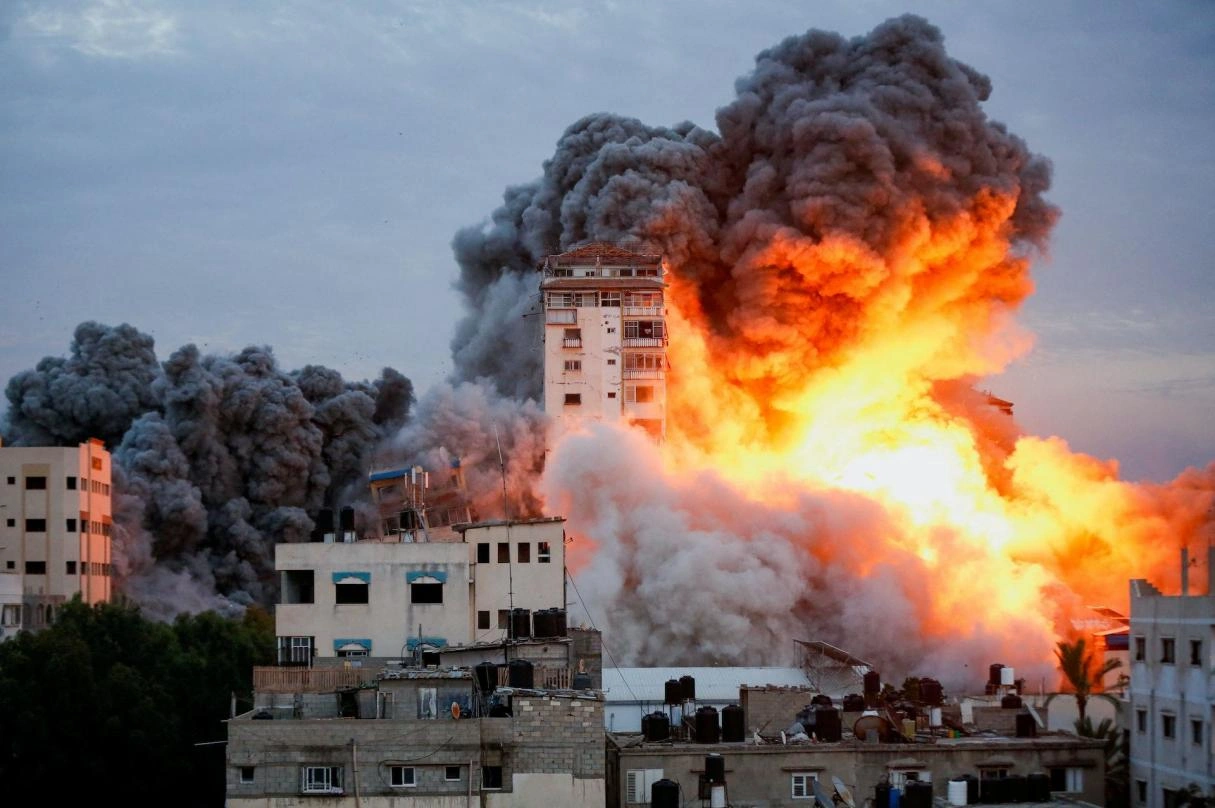 War in the Middle East causing massive casualties Photograph: NurPhoto
Frankly, when that line was delivered, it was truly moving and emotional. It was brief and concise, yet brimming with dramatic power. But looking at the entire film, one of its greatest highlights is that from beginning to end, the young boy Saif did not turn into a terrorist—he was pulled back.
Of course, they couldn’t save everyone; they are not omnipotent. But within their power, they saved those they could. This reflects a distinct Eastern wisdom and narrative, which becomes particularly valuable in today’s world.
Why is it valuable? Because we are beginning to propose a new perspective for observing the world. Outside of the mainstream Western ideology—with its hegemonistic, patronizing, top-down hierarchical narrative—and outside of another radical, extreme perspective of resistance, a third perspective is emerging: the Chinese perspective.
We look at the world in our own way, seeking to understand the underlying logic and dynamics of global development. Gradually, more and more Chinese people will reflect on these questions: What can China contribute to the world? What can it bring to the world? How do these contributions and changes tangibly impact the lives and development of individual human beings? It doesn’t necessarily have to be earth-shattering or heroic.
The final scene of the movie returns to the Dragon Restaurant. It still stands quietly in a corner of a Baghdad neighborhood. Upon entering, you see a menu, reading from top to bottom until the final dish—risotto/stewed rice—reappears, echoing the main theme of the story. Of course, viewers may debate whether the ending feels a bit thin or different from what they anticipated. But this is not a web-novel style “power fantasy” (爽文), nor should it have been filmed as one, nor does it need to be.
If there are future projects, different creative approaches can be explored. But as for the approach taken by this film, the questions it tackles, and its overall narrative pacing, I hold high appreciation for it.
Editor: Jiayi Shen